Unlearning

Much of the work of my adult life has been unlearning the internalized messages I have picked up inadvertently. Messages about my identity, about how the world works, about the value of others, and even about my faith are regularly being viewed under a microscope to see if they hold up to scrutiny.

The first time I remember doing this was in the counselor’s office in the mid 80s where I was being treated for an eating disorder. Regularly in my sessions, my therapist would ask me questions that would confuse me. Why did I need to lose weight? Why did I believe I would be more attractive if I was thinner?

Why would he ask me such questions when the answers seemed obvious. Throughout my whole twenty year life, I had learned to believe that thin was better than fat, that I’d better watch my weight, that “those fat people over there” were disgusting, probably lazy, and not worth as much as “we” thinner people. I was ever anxious that I, in my body, which was just a tad larger than those of my friends and my sister, was ounces away from losing my status as one of “us” and becoming one of “them”.

In fact, in my freshman year of college, like many overwhelmed, depressed, and floundering college students, I did put on ten or fifteen pounds, and people I barely new — dorm mates and classmates — repeated the refrain I’d heard at home, I’d better be careful. I should get my weight under control. Did I really want to eat that dessert?

I believed their messages, and in fear and trembling, I overcorrected. I began a regimented way of life that escalated into anorexia nervosa. I lost all the weight I’d gained my freshmen year plus another 20 or so pounds over the summer before transferring to a much smaller school in the fall.

There, my excessively thin body soon gained its reward. That very fall, I was selected for the Homecoming court. I’m guessing I was selected solely based on my appearance because no one could have known the real me. When I wasn’t studying in the library, I was secretly writing down every food I ate, calculating calories, and sneaking to step on the industrial scale in cafeteria where I worked to make sure the number continued to go down — the only way I knew to measure my value.

I felt so out of place on the stage being crowned in one of the most ironic moments of my life. My cohort was apparently applauding my external worth, while I was trembling on the inside — afraid of being revealed as an imposter, knowing that what they saw was artificial, a fragile facade concealing a very broken interior.

That was close to 40 years ago, so you might think I have completely unlearned that lie. That might be true if everyone in the culture I live in had learned it, too. Alas, they have not. Messaging about the connection between thinness and beauty persists today. It has lost some of its power what with the greater diversity of representation of women in the media, the elevation of body positive messaging (if you are willing to look for it), and the shift in the fashion industry toward inclusivity, but the message remains among us — thin is better than fat, especially for women who live under continuous pressure to present themselves in flawless well-toned bodies despite genetics, health, or circumstance.

So, my unlearning continues. When I hear my mind say, You’ve put on a couple of pounds; you’d better be careful. I ask myself questions that I started hearing from my therapist years ago: Why are those pounds bad? What will change about you if you decide to keep them rather than lose them? Why are you connecting those pounds to your value as a person?

Why indeed.

What is true about my body is that it is strong — it has carried my children, it has finished half marathons, it has communicated with me when I have overworked, it has kept going when my mind has refused to rest. It is strong and beautiful and resilient. It has value at any size. Period.

Do you see how it works? It takes awareness, diligence, and intentionality to unlearn the messages we carry with us all the time, often unknowingly.

My students and I just started reading Born a Crime by Trevor Noah, a memoir of the comedian’s life growing up in South Africa during Apartheid. Before we read the book, we start with learning about unconscious bias — the beliefs that we have that shape the way we view the world. We talk about bias against people of other races of course, but we also talk about gender bias, religious bias, disability bias, and even weight bias.

The very nature of unconscious bias is that we don’t know that we have it. That’s why I was confused when my therapist asked me questions that challenged my unconscious bias– my beliefs were so ingrained, I accepted them as fact — didn’t everyone feel this way? didn’t everyone know that being overweight was bad?

So as my students and I learn about unconscious bias, I have them take the Harvard Implicit Associations Test. This is an ongoing study that gathers data from participants regarding their bias around a variety of topics. It takes about 10 minutes per topic such as race, age, weapons, or weight. The participant clicks on images in response to the directions, and the speed of the response reveals the participants’ unconscious associations. It’s fascinating.

Now, I will admit that this is uncomfortable work. In all my years of teaching students of color, I have been working to unlearn the racist beliefs that permeate our culture — the not always subtle implication that Black people are poor and dangerous and not as smart as white people. I know that these statements are untrue. I have countless examples of students, coworkers, and friends of color who are wealthy and brilliant and successful and generous and kind, and yet my unconscious bias still sometimes reveals itself. I don’t like when this happens.

Let me give you an example. I was venting to my instructional coach one day. She is a brilliant educator who, like me, is committed to educational equity. She has taught in Detroit Schools for thirteen years and has risen through the ranks because of her commitment to excellence and her undeniable ability to support other educators in instructional design and implementation. Also, she is Black. It had been a difficult school day and the halls were loud and unruly, and I said, “Man, it is zoo-y in here today.”

She replied, “Well, I wouldn’t use the word zoo-y.” She was matter of fact, not accusatory, not incriminating. She just said it, and gave me a beat to process.

“Oh, wow,” I said out loud. “I never considered that using that word implies that our students are animals. Yikes. I won’t say that again. Thank you for bringing it to my attention.”

Even typing the words right now, I have an ache in my chest. How could I have used such language when I work so hard to push against racist ideas?

My coach happened to be in my classroom a few weeks ago when I shared this example with my students. I said, “If we really want to uncover our unconscious bias, we have to give the people around us permission to point it out to us. It was brave of my colleague to say something to me. She did not know how I would react.”

“Wait, why is zoo-y a bad word,” one of my students asked.

My colleague stepped in, “For many generations, white people used language that made Black people seem like animals so that they could justify the way they treated them — with slavery, with separate bathrooms and water fountains, with unequal schooling, you name it. To say that the school feels zoo-y implies that you are animals. And, you are not.”

All eyes on her. Silence. Reprogramming in process. A moment of unlearning. Priceless.

I continued, “Maybe you have heard me say something that revealed my unconscious bias in this class. I am giving you permission right now to let me know when that happens. It is the only way I can bring these beliefs to my consciousness, put them under a microscope, and reveal them for what they are. That’s the only way I can hope to change.”

A few days later, one student, my boldest, most confident rising star, interrupted me when I was explaining the term “white privilege” and how I have benefitted from it. I’m not sure what I said, to be honest, but she challenged my delivery and said, “I wouldn’t say it like that again.” It takes a lot of courage for an 18 year old girl to challenge her teacher in the middle of a lesson, so I stopped, heard what she had to say, thanked her for her courage, and practiced rephrasing my thoughts.

It was an uncomfortable moment for me, to be sure, but I am hopeful that it was a moment of agency for her. Perhaps she, too, will start on a lifelong journey of unlearning the things she has picked up about herself, her world, and the ways that she can operate within it.

The alternative is staying where we are, holding fast to every lie we have ever believed, which for me has felt like a trap. The unlearning, although at times uncomfortable, is liberating. In fact, it’s a transformation.

Be transformed by the renewing of your mind

Romans 12:2

We Don’t Know Everything, a Reprise

You may have seen that I’m running a Thursday series called “10 Years Later” — a weekly reposting of something that I’ve written in this space over the last 10 years. This past Thursday, I re-posted We Don’t Know Everything, a reflection I wrote in January of 2015 about how if we knew everything that would happen in the wake of a major life decision, we might choose differently and how our limited vision allows us to step out in faith that God will provide for every eventuality.

I re-read that post again this morning, and it feels particularly apropos in this moment.

Over the years, we (like you) have made many major life decisions — the time I enrolled in graduate school, for example, or the time when we quit our jobs before securing new employment because it was just that important for us to move closer to our oldest son, whose other family had just relocated to the west side of the state.

When making these decisions, we look at the information we have in the moment, try to anticipate future needs, and make the choice that seems to make sense.

When I enrolled in graduate school in 2002, our younger children were in 1st, 3rd, and 4th grades. I thought that since I had been home with them for the last 10 years, it might be wise to ease in, maybe take one class at a time, in order to put less strain on the family. My husband disagreed. He said, “If you are going to do it, I suggest you go full time. Fully immerse yourself. We have no idea what is coming next.”

I was kind of surprised that he was willing to make that kind of commitment because I knew that in addition to his full-time ministry position, he would have to pick up more of the burden of caring for our children — after school pickups, homework, dinner, etc. But, if he was willing to do that, I was willing to — gulp — take three graduate courses at a time for two years.

We didn’t know at the time that we would, just two years later, be moving to St. Louis for him to attend the seminary. Turns out, I finished my program about one month before we moved. And because of that degree, I was situated to easily secure immediate employment, first teaching at a community college, then at a public high school (once I had obtained my Missouri teaching credential), and then in the Lutheran high school that would become such a formative place in my career.

When, in 2013, my health was very poor, and it was becoming clear that I could no longer sustain my role in that school, my husband was offered a position here in Michigan, and although it was our daughter’s senior year of high school, the position was such a good fit, that he decided to make the move ahead of us to not only take this new role but also to prepare a space for me to land when she was finished with high school and situated in college. We didn’t know how desperately I would need to convalesce, but that decision which was very difficult given that he would miss large portions of her senior year, set us up for a season of healing, not only for me but for our whole family.

It was that season that allowed me to learn new ways of living that supported my health, to process some trauma that could no longer be ignored, and to — after a while — be ready to land in the position I have now, a position that is incredibly fulfilling. We had no idea when I started this position if I would be able to sustain it, but for over three years I have, and this past fall it became apparent that we should consider a shift for my husband.

We had long discussed that he would one-day shift to private practice counseling, but we didn’t have a firm timeline, and we sure didn’t know what was coming when we sat down with our financial advisor this past fall to determine that this was indeed a good time for him to make that shift.

We just looked at the information that was available to us and made the choice that seemed to make sense.

We had no idea that the week before he intended to open his practice one family member would be diagnosed with cancer nor that the following week another one would. That’s right, two close family members in two weeks diagnosed with cancer.

We’ve had a little anxiety coming into this shift — what if he doesn’t get enough clients right away? What if he doesn’t get approved to take insurance for several months?

What would we do?

Well, we needn’t have been concerned. We didn’t know what was coming, but God did.

In these past weeks when he hasn’t had all the responsibility of his former position, he’s had time to rest, to take care of family details, to spend lots of time on the phone, to make extra trips, and to care for himself.

I don’t make it a practice to tell anyone else’s story in my blog, so I won’t right now share the details of those who are ill or go any further with what this transition has meant for my husband. That is his story to tell.

Suffice it to say, that I am noticing, once again, that God goes before us. He is always preparing us for what is next. He provides what we need at just the right time — even when we cannot see that that is true. He is always working on our behalf, always making a way.

This, my friends, is most certainly true.

Because of your great compassion you did not abandon them in the wilderness…[You] did not fail to guide them on their path

Nehemiah 9:19

Assignment 2024

It’s been 10 years since I wrote that first post, and since then I’ve written 652 more (653, if you count this one). In the beginning, I wrote almost every day. Having been instructed to be still after years of routine — first teaching, then parenting young children, then graduate school, then teaching and parenting combined — I needed something that would bring order to my day. So in those first months in the little house by the river, I woke every morning, made my tea, and wrote a post before I did anything else.

I think I began blogging because I needed a purpose, something that I could accomplish each day, something that I could produce — a physical representation that I could still do something. I didn’t really know what I was going to write each day, but an instinct — perhaps after years of journaling and teaching others the value of daily writing — pushed me to the keyboard every morning, and this writing became a lifeline.

Some of you began to read perhaps out of curiosity — why would someone daily post about their life? why would a teacher at the height of her career walk away? why were we moving to Michigan after years in Missouri? Some of you have told me that you resonated with the chronicling of my autoimmune disease. You, too, suffered with chronic health issues and my willingness to write about being stuck on the couch or lying on the bathroom floor writhing in pain let you know that you were not alone. Some of you read because you knew me as a child and wondered what I was up to. Some of you are my family and friends (or my husband) and you read out of care, concern, and solidarity.

Whatever the reason you read, the fact that someone — anyone — was reading gave me the encouragement I needed to keep going.

And when I kept going, kept writing, day after day after day, I dug deeper into my interior and discovered things about myself that had long been buried or that simply needed articulation — precious memories from my childhood that revolved around my grandparents and godparents, deep sadness over losses that had never been processed, my ongoing journey with autoimmune disease, my strong feelings about political issues, and probably more than anything my passion for educational equity.

I often tell my students (and my friends and anyone else who will listen) that I (and perhaps you) don’t know what I am thinking or feeling until I see what I have written on the page. Perhaps it is because I have spent a life in motion, constantly doing, producing, going, and moving, that I have pushed my thoughts and, even more so, my feelings deep down inside without taking the time to process them.

Having a health crisis and being forced to stop and be still provided the space in which I could — finally — pull up all those thoughts and feelings and begin to examine them, evaluate them, feel them, grieve them, and in some cases, move on from them.

So I’m sitting here, in my little home with the garden, ten years later, candle burning on my desk, still in my pajamas, reflecting on how far I (we) have come. In over 600 blog posts I’ve moved from debilitating pain and fatigue to manageable symptoms that remind me to move slowly and to routinely pause to take stock. I’ve transitioned from taking daily anti-inflammatory medication and monthly injectable biologics to mostly just daily vitamins and supplements with occasional Motrin added in. I’ve been growing in my ability to write and subsequently speak about my deepest hurts, greatest losses, daily struggles, and strongest passions. And, most tangibly, I’ve gone from my insecure 2014 self that felt like an invalid to my confident 2024 self, which my instructional coach recently described as “effortlessly dope”. (I think that’s the most treasured compliment I’ve ever been given.)

Do I owe it all to the writing? No, I wouldn’t say all, but I would say I wouldn’t be where I am today without the discipline of this blog. My commitment to write regularly and truthfully — sometimes painfully truthfully — has been not only the evidence of the miraculous growth and healing I have experienced in this next chapter, but also a primary instrument in that healing.

I don’t think I can unpack what I mean by that in one blog post, so the assignment I’m giving myself this year is to share a “vintage” post each Thursday and a new post most Mondays. The objective is to deeply reflect on the power of writing, of routine, of discipline, of transparency, of community, and of vulnerability. I can’t predict where this assignment will take me — I won’t know what happens until I see it on the page, but I invite you to come along with me.

If you dare, I challenge you to write along — you might just open a blank page and write for 5 minutes each morning to start. You might find that’s not enough. You might find it’s too much. But if you’ve read my blog for any amount of time, I hope you will see the possibility for transformation that might happen if you are willing to take a chance.

I’d love to hear from you — what you are finding out about yourself, what are you unearthing, what is happening for you as you write. It doesn’t have to be for the public eye as I am allowing here. Writing can be magical even if it is for your eyes only.

Whatever you choose — reading along on my journey, writing along with me, or doing something altogether different, I pray God’s blessing upon you — may 2024 be a year of growth, of healing, of transformation. May it be filled with love, with joy, and with a renewed sense of hope.

If you don’t believe that God can restore what is all but lost, let my blog be a testament that nothing is beyond His ability.

Behold, I am going to do something new,
Now it will spring up;
Will you not be aware of it?
I will even make a roadway in the wilderness,
Rivers in the desert.

Isaiah 43:19

Process(ing)

We’re two weeks away from Christmas Break, and I’m having my seniors write a personal essay. This essay could be used for a variety of purposes — to submit with a college application, to enter a scholarship contest, or simply to explore one’s own identity.

The students read and analyze several models, we practice using sensory language, and then we prepare to write. The first step is to choose from a variety of prompts such as “describe a time when you overcame a challenge” or “tell us about a time you stepped up as a leader”. Then, I direct them to identify a trait they want their reader to recognize in them. Are they hardworking? resilient? creative?

The big lift comes next. Students must respond to the prompt they have chosen while also displaying the strength they have selected by describing a scene — a snapshot or highlight tape — from their lives in which they have embodied that characteristic.

As has been my practice for going on twenty years, I write alongside my students, modeling my process for them in real time so that a) they can see an “expert” at work, b) they can see that even “experts” struggle and fumble, and c) so that they can acknowledge that even for “experts” the writing process is messy, laborious, and non-linear.

This past week, I was doing that modeling when I wrote about the time almost 10 (TEN!) years ago when I left my classroom in St. Louis convinced that I would likely never teach — at least not in a high school — again. I was reading this highlight tape to my students, describing how I tearfully carried a milk crate out of my room, and they looked at me with blank faces. What was I talking about that I might never teach again? I’m standing right in front of them — teaching! — and I’ve been in this classroom since they were freshmen. Was this story supposed to be fiction?

And, you know, sometimes I start to believe it is — maybe I wasn’t really that sick. Maybe I didn’t need to step away from my work. Maybe I don’t have symptoms right now. Maybe I’ve made it all up.

I was feeling that way last night. It was my youngest daughter’s and my youngest granddaughter’s birthday yesterday. I was on the phone wishing my daughter a happy birthday, struggling to sustain a conversation after 5pm on a Friday, “Happy birthday! What did you do today?” She shared how she had spent her day and asked what we were up to this weekend. I explained that her father had travelled to Cincinnati for her niece’s birthday, but that I didn’t have the gas in the tank to go.

“Oh? What do you mean?”

“I just find that in December I have very little margin to do something like a weekend trip.”

“Oh, why? Is it because it is the end of the semester and you have a lot of papers to grade?”

“Well,” I struggled to articulate the thing I have been trying to articulate for going on 10 years — that it doesn’t matter if I have a pile of papers in front of me or not, I am just on E, and E won’t get me to Cincinnati.

The same thing happened when I was FaceTime-ing with my six year old granddaughter. My husband called from Cincinnati to let me watch her open her gifts. She was sitting in her Grogu chair grinning and talking as she tore the paper. The rest of her grandparents, other family members, and some friends would be there soon for a party with pizza, butterfly decorations, and, of course, a purple cake. I watched, smiling, but internally I was interrogating myself, “Seriously, you couldn’t find it in you to go to Cincinnati for one weekend? It’s your granddaughter’s birthday!”

I do this sometimes, I question whether I really need the weekend at home, or if I am just being selfish.

I logically know the answer — even without 4 hours in the car, a change in routine, sleeping in a different bed, and the drain of social interactions, I woke up this morning with a splitting headache and an electric/IcyHot heat in all of my joints from my toes to my neck. During this time of year, it takes a whole weekend to recover from a week in the classroom. I will spend a couple hours this morning writing, then I will go for a long walk followed by an epsom salt bath. Hours might be spent reading a novel or watching The Crown, and I’ll have to somehow fit in about an hour of prep time so that I’m ready to teach my students on Monday. Sunday is more rest — Zoom time with our small group followed by worship and another long walk, followed by more writing and resting, and prepping for the start of the week.

When I interrupt that rhythm, like I did over Thanksgiving, I walk into Monday less resilient than I need to be — I am more likely to be reactive, I am less likely to be on my A game. I will likely miss things — like a small cue that someone is angry and tempted to fight, that another is sad and needs someone to listen, or that my room is too hot or too cold or that someone in my room didn’t get breakfast or lunch. I will be more likely to get an inflammatory issue like pain behind my eye or a headache or extreme fatigue that has me wondering how I drove myself home.

While I can occasionally take the risk and do something social on the weekend, it is really best if I stick to the routine which means saying no to fun opportunities like a whirlwind trip to Cincinnati.

You might ask if I should continue teaching if it costs me weekends with a granddaughter or my parents or our friends? The answer is still yes, absolutely yes.

For one thing, I will see that granddaughter and her sister in three weeks. That doesn’t make up for missing her birthday, of course, but I do get time with both of our grand girls on a fairly regular basis. We FaceTime and send letters, and, honestly, their lives are busy, too. I miss them, but I’m not sure I would see them more if I wasn’t teaching.

And, the reason I continue in the role I have now is because it gives me life. Leaving my classroom in June of 2014 was only slightly less than devastating because my autoimmune disease is absolutely real — I was flaring so badly in that season that I could barely function. I would have never left the classroom if there was any other option.

The six months that I was unemployed and the slow crawl back was a very difficult time. In my mind I was sick, compromised, washed-up, old, past my prime. As I regained my health, as I gradually built more teaching back into my life, I regained confidence and a sense of purpose.

I am not a perfect teacher — I don’t always have the most engaging activities or the cutest classroom decor. I sometimes lose my sense of humor, overuse sarcasm, and fail to give students the one-on-one attention they deserve. Despite all that, I am my best self when I am connected to education, for now that means in the classroom, particularly a high school classroom, especially in a context where I can call out injustice and work to bring a more equitable experience for my students.

When I get to spend my days being the best version of myself, I get more moments of sharing that best version with the people that I love — my husband, my children, and my grandchildren. For a few years there, I think that much of what they got from me was shrouded in self-doubt, self-pity, and an overwhelming sense that I was past my prime.

On Monday, I’ll share my second highlight tape with my seniors, the scene where I carry my items back into the classroom I work in now. I’ll share a glimpse at the slow crawl back, but I’ll focus on the triumphant return. Then I will prod, cajole, and cheer them as they write their own highlight tapes. I’ll nudge them to add more sensory detail, I’ll celebrate their risk-taking, and I’ll gently introduce MLA format and model Standard Academic English norms. I’ll do my best to help them finish strong.

Then, near the end of December, I’ll take a break to catch my breath, and then I’ll pack my bag and head to the land of grand girls where we’ll snuggle, do crafts, eat yummy foods, watch movies, and giggle. I’ll tell them how proud I am when they read hard words and ask good questions — they’ll get the imperfectly best version of me because that is what I am right now.

And for this I am thankful.

give thanks in all circumstances…”

1 Thessalonians 5:18

A body in motion….A body at rest

It must be some law of physics that when an object in motion that is staying in motion finally has an opportunity to stop.freaking.being.in.motion it takes some time to transition.

I’m no scientist — obviously — but I observed myself over the past week attempting to move from the fast-paced, repetitive, intentional, and hectic rhythm of the school year into a more relaxed, spontaneous, restfulness of summer, and I must report that the shift has not been sudden.

If you are familiar with this blog (or if you know me at all), you know that movement, action, doing, soldiering have been a comfort to me, and slowing down, being still, and resting often come only when I am plunked down unwillingly due to health concerns.

I have been trying to find a different way for going on ten years now, and my intention leading up to the last day of school was to slow down, be silent, and allow myself the time and space I needed to thoroughly and actually unpack and tend to the recent re-opening of an old wound I’ve been covering up for the past several weeks. Certainly, I thought, when school is done, I will have the time and capacity to let this thing air out, to let new flesh form, to find a new way forward.

But, motion staying in motion as it does, and me being the habitual soldier that I am, it took me about six days to find myself plunked down, packed in ice, and submissive to my need for rest.

I’ll pause to let you shake your head and roll your eyes.

Between last Friday and this Thursday, I deep cleaned a bathroom (it really needed it!), purged a bedroom (the closet and drawers were crammed full!), and organized an office (I hadn’t seen the top of my desk in weeks!). I also visited two thrift stores — more to let go than to pick up– washed who knows how many loads of laundry, drove back to school for one in-person interview, and bought shoes for my daughter’s wedding.

I was still going pretty strong when I arrived at my therapy session Wednesday night, peeled back the bandages a bit, and began to verbalize the newly forming diagnosis. Despite my busy-ness, I had been able, over the past several days, to, through writing and processing time, identify the present issues that were connected to more life-long issues. It was liberating for me — I was putting words to some of the suppressed thoughts I have for decades. I was able to recognize how I had internalized beliefs about myself based on my perceptions of the actions of others. I was able to identify that my strategies for protecting myself — my busy-ness, kicking butts and taking names, being defensive — have not served me and have in fact kept me from being honest with those most dear to me. As these realizations flew out of my mouth, I saw them hit the other family member in the room, and I noticed the pain of their realization.

I felt lighter having released the burden into the air, but I had to acknowledge that the burden found another place to land, at least for a while.

After some dinner, I slept deeply, and awoke with the intention of working in the garden, taking a walk, and making a meal. I was going to keep on going!

I got up, put a little writing on the page, and moved to my yoga practice. About fifteen minutes in, I felt a twinge inside my right hip (my personal Achille’s heel) and thought, Huh, I was just moving out of child’s pose. What happened? Maybe it’ll adjust as I keep moving.

I cautiously finished my flow, ate a little breakfast, and headed to the garden. By this point, my hip was stiffening, my movements were slowing, and my right arm, which has been lately screaming “tendonitis, tendonitis” increased its pitch and volume. Nevertheless, I slowly moved through the front half of the garden, pulling weeds and reseeding carrots and beets. I harvested some rhubarb and then said to myself, Ok, that’s enough.

I put away my tools and switched into my walking shoes, resolved to get in my steps with a two mile walk.

Stop looking at me like that!

I slowly walked the two miles, listening to a podcast and enjoying the sun, and when I returned home, I crawled into an epsom salt bath.

And that is when I realized that I was depleted. From the bath, I crawled to my bed and read for a while, then I found the energy to slowly and methodically prepare the foods I had pictured for dinner — potato salad, rhubarb crisp, a garden salad, and some wings.

By the time my husband had grilled the wings and we had sat down at our patio table, I was ready to admit that my body was in distress. I was completely exhausted, all my joints hurt, and I was having difficulty finding words to sustain a conversation. We didn’t finish the wings, and I wasn’t even interested in the rhubarb crisp.

Having been here before, it didn’t take us long to realize I needed tot be packed in ice. So while he cleaned up from dinner, I grabbed the packs and moved to the couch. I pulled on a sweatshirt, covered myself in a blanket, and placed packs at my back, my hip, my neck, and my arm, and slowly I started to feel relief.

That was Thursday. Since then, I haven’t done much but sit, take another epsom salt bath, ice again, eat as cleanly and freshly as possible, and forget about my need to meet a step goal. It’s just not gonna happen for a couple of days.

This body is at rest, and apparently, it wants to stay here.

It’s what I’ve been needing, and I’ve known it.

It just took this body, which was in motion, a little while to stop being in motion. We’ll see how long it is comfortable with staying at rest.

In repentance and rest is your salvation. In quietness and trust is your strength.

Isaiah 30:15

Second Half Living

A couple of years ago, I turned 55.

I imagine when some people hit an age like 55, they begin to think about retirement and the end of their careers, but since I had already been in a long season where I thought my career was over and had recently returned to my profession, I was still energized about teaching, still excited about being in the classroom, and still looking forward to many more years.

That didn’t stop the reality of my age though — the fact that the number 55 is just ten years away from 65, the age when Americans qualify for Medicare.

Ten years sounds like a long time until you glance backward and realize that ten years ago was when I first visited a rheumatologist, when we first considered moving back to Michigan, and when we were starting to say goodbye to St. Louis, to our teenagers, and to the life we had come to know.

It wasn’t that long ago, and ten more years will surely pass quickly.

I think it was out of the recognition of that reality that I jokingly declared 55 to be my halfway point — I was going to live to be 110!

I was finally enjoying life again having learned to manage my chronic illness and having navigated a long season of grief. I was learning so much about myself — what makes me tick, what I like, what I don’t like, how I think, how I believe, what makes me wonder, and what I want to impact. Surely I needed another half a lifetime to further explore what I was learning and to put that learning to good use.

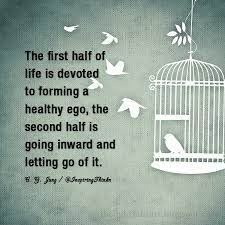
Now, who knows whether I will actually live to be 110 or 85, or 58, but regardless, I am certainly in the second half of life, what Carl Jung and Richard Rohr describe as the phase of “undoing much of what has been accomplished in the first half in order to get at a deeper heart of human life.”

Rohr (and Jung) say that the first half of life is “focussed on the development and enhancement of our Ego and its mind-set: ambitions, plans, competitiveness, judgments about others, looking after oneself, one’s career, one’s family” and mine certainly was! Didn’t you, like me, run from high school to college to marriage to children to parenting and career, making snap decisions to take care of yourself and those that you loved only to come to the screeching realization around 45 or so that many of those decisions, though well-intentioned and possibly even prayerful and consulted upon, were ill-founded, poorly motivated, and simply wrong?

Didn’t you, like me, stand in the wreckage, grieving, wondering how it passed so quickly and why we don’t get a chance at a do-over?

That, according to Rohr, is the kind of devastation that leads to the openness that allows for growth in the second half of life. He says, “The supposed achievements of the first half of life have to fall apart and show themselves to be wanting in some way, or we will not move further.’

Sheesh. Does that make me feel any better? I don’t know.

What it does help me lean into though, is my current reality.

I am, at now 57, learning more and changing more than I believe I have at any other time in my life. I have not only a therapist but also not one, but two, instructional coaches, and a small group that my husband and I meet with weekly. My therapist is helping me unlearn behaviors that are deeply rooted in my childhood — ways of coping that once allowed me to navigate my realities that became patterns that are no longer useful. My instructional coaches help me see how strategies that were effective in the classrooms I served in the 1990s and early 2000s can be modified to meet the needs of the students I have now. Our small group provides a judgment-free space in which to interrogate long-held beliefs, to sit in unanswered complexity, to admit our failures vulnerably, and to be loved unconditionally.

Thirty year old me wouldn’t have received so much input from others. She was busy kicking butts and taking names — doing what she needed to do to look after herself and her family. She “knew” she was right and she didn’t have time for the input of others.

But after all those “right” moves and the “supposed achievements” of that era have fallen apart, I’m in a new position.

I am, as they say, “coachable”.

I was getting ready for an uncomfortable encounter recently, and the anxiety was building as the date grew closer, so I kept bringing up the pending situation with my therapist. Because of my history in similar situations — of feeling unheard, undervalued, and “tolerated”, I had some real emotions, so I couldn’t see clearly. I could no longer define the purpose for the encounter — why was I going to meet with this person if the potential for hurt was so great? My therapist prompted me to think about what I needed from the interaction and reminded me to set my “past baggage at the door” so that it wouldn’t clutter the reality of the current situation. She helped me practice language to express my needs, and even though I had some anxiety throughout the interaction, I was able to manage my expectations and come away feeling content, even though the outcome might not have been exactly what I had pictured.

That’s something, isn’t it?

One of my instructional coaches and I are working on my ability to not let the way my students show up impact how I show up. You would think that after three decades in the classroom, I would have this down — that I would be steady Eddy in the face of student behavior, and for the most part I am. However, these past three years have put me to the test. The students I see today are in some ways very similar to the students I taught back in the fall of 1989. However, in some ways they are very different. They have been through a lot and they show up erratically — late, loud, hungry, irritable, disrespectful, and unconcerned about how their white middle-aged teacher might feel about it. Mostly, I greet them at the door smiling and hopeful and navigate through class with a no-nonsense approach, but guys, I am also a human being who gets tired, who loses her patience, and who falls back on muscle memory. I still have the default switch that flips over to kicking butts and taking names when the going gets tough, and while that might’ve worked in the past, today calls for a different strategy — a calm, sure response rather than a powerful reaction.

That was super easy to type, but much more complicated to execute.

Many of my students enter the classroom unable to leave their “past baggage at the door”.

(How could a teenager know how to do that, when I am still practicing at 57?)

They don’t leave it at the door, but they lug it right in, dripping debris in their path and dumping the entire mess all over my classroom. Picture all the shit of 20 or so teenagers heaped among the desks of my classroom. It’s a little crowded. And smelly. And uncomfortable.

One student shoves another student because she is crowding his space. Another puts her head down because she “just can’t deal” with the chaos. Others try to position themselves in such a way to ignore the heaping stench so that they can opt in to learning, complete their assignment, and move through their day.

My students don’t need me in those moments to shout or demand or ridicule. No, they need me to draw on the coaching that I am receiving and the years of experience I have gained from living my life dragging around a heaping pile of my own.

They need me to be unfazed by the stench. They need me to be prepared and engaging. They need me to have compassion when they “just can’t deal” and they need me to be nonjudgmental so that they can choose, at any moment, to join whatever it is we are doing.

I was having some difficulty with a particular student. We’ll call him Tyler. He comes to school almost every day, but he makes it to my class just once or twice a week. When he does come, he arrives late and loud, making comments that draw all the attention toward him, interrupting my class and disrupting any hope of learning.

I was complaining about this student to my coach and she said, “Make him feel like he is part of the classroom.”

I stared at her with jaw gaping,.

“Use what he has to say to direct him back to the class.”

As I sat staring at her, I realized that I had been falling back on old faithful — trying to get him in line by shaming him, telling him that the reason that he acts out is because he doesn’t know what we are doing, rather than doing everything I could to rope him in so that he would know what we are doing,

Damn.

And because I’m not still 30, not still sure that I have all the answers to everything, not still consumed with the advancement of my self and my family, I gulped and said, “Wow. You’re right.”

I went on to tell her that this very student had surprised me with his written work and that perhaps I could use it for a model in class. She said, “Don’t do that! He thrives on negative attention, and he will sabotage that attempt! Instead, tell him quietly, privately, that you were impressed with his work. Let him know that you see him, but do it quietly.”

And you know what? I did. And he received my compliment and turned in his assignment on time and lowered his volume just a little bit that day. It was a very little bit of movement in the right direction, but I will take it, because I know that he is still in the first half of life — he is still developing his ego, still looking after himself and his ambitions, and in his context, that is much more challenging than I think I could ever comprehend.

It’s quite a juxtaposition — me in my second half of life spending so much of my day surrounded by the unfiltered, confident bravado of teenagers, but I have to believe we were made for each other — they with their uncensored commentary on my wardrobe choices and teaching strategies followed by their genuine questions about what my prom was like and how I spend my money and me as a spectator in the room watching them navigate love, friendship, and loss as they plan for their future.

I know what’s coming for them — a season of challenge and discovery as they plan for and navigate their way into adulthood and the inevitable realization (at some point) that they’ve gotten a lot of things wrong. Maybe the best thing I can provide for them right now is a normalization of the fact that we make a lot of mistakes but that we can try again. We can learn, we can grow, and more importantly, we can give one another grace along the way. I think that’s what I wish I would’ve liked to have known in the first half of life. It’s what I’m thankful to know now.

for from His fullness, we have all received grace upon grace.”

John 1:16

The Art of the No

You know that time during the pandemic, when I was working full-time from home and I was outraged by the killing of George Floyd, and I felt called to go back to the classroom to return to fighting for educational equity? Do you remember how I’d been recovering from a major health crisis for almost six years and I felt I had finally arrived at a place of health that would support my return to this work?

Do you remember the first year — the fully virtual year where I sat in an empty classroom zooming with students I had never met in the flesh, students who may or may not have turned on their cameras to let me see their faces? Do you remember how giddy I was, how energized, how I found the work almost easy because I could get it all done within my scheduled work day and still have some space for self-care — for yoga, and walking, and therapy, and all the stuff I need to do to stay well?

And do you remember how even last year when we “returned” to in-person learning and I got to see my students face to face, I was thrilled? how I had enough steam to still maintain my physical and emotional health, probably because we regularly shifted to virtual learning and I could catch my breath and reset my rhythms from time to time? how it wasn’t until the very end of the year that the fatigue caught up with me and I lost my shit over a small unintentional slight on my students’ graduation day?

And do you remember how I committed last summer to being not only a master teacher, but also a reading interventionist, a cooperating teacher for a colleague who needed to student teach, and a fellow in the Michigan Teacher Leader Collaborative (MTLC)? How I wondered if saying yes to all of these responsibilities was was taking on too much or if I would finally find a limit to what I could do?

Yeah, guys, it appears that I have found that limit. I’m starting to see some warning flags.

However, I can’t always tell that I’m at my limit. Ninety-nine percent of the time, I am on my game. I am an experienced teacher, so I see results. My students are learning and the data reflects that fact. I’m open to coaching because I see its impact on my instructional practices. I’m building relationships both in and out of school — relationships that are mutually impactful.

And the need is there! Each year I get asked to do more, to take on more responsibility, as all effective teachers do. And because we see the need — the students who might benefit from our instruction and the gaps that we might fill — we agree to do it. We fit in one more class, sit on one more committee, and assist with one more project. In a school building, everyone is busy, and there is always more to be done, so we take turns adding more to our to-do list.

And in some ways, it’s affirming. We feel needed and valued and appreciated when our leadership approaches us and says, “You are doing such a great job with all the things you are doing, and we want you to do even more!”

We get celebrated for our accomplishments. We get a pay bump. All is good!

But, guys, humans have limitations, and eventually all that piling on of responsibility, all that added weight, begins to drag a person down and their effectiveness begins to flag. They begin to feel fatigue. They make a sharp comment to a student or a colleague. They begin to wonder if they can sustain the rhythms. They begin to look at other opportunities where they might not have to work quite so hard.

Yet the offers to work even harder keep showing up. Right now I have an opportunity to apply to be a senior fellow for the MTLC. I will likely be asked to add another section of students for the reading intervention I do. I’ve already been slated to work on a committee to discuss our school’s improvement plan. And to be honest, I’d love to do it all. I really would. I am sitting in the heart of the work that I have been called to my entire career. This is what I was created for — to see systemic inequities in education, to bring excellent instructional practices to students who have historically not been well-served but who are highly capable nonetheless, to speak into the policies that perpetuate educational inequities, and to work at the school level to make change a reality. This is it, guys. This is my lane.

And if I want to stay here, in this lane, and continue to impact individual students, I have to have a boundary that allows me to remain healthy. I have to practice the art of the no,

No, I won’t be applying to be a senior fellow in the MTLC.

No, I won’t be adding another section of the reading intervention.

No, I won’t be writing an article for your publication, volunteering at your fundraiser, or teaching during your summer program.

I have to say no sometimes so that I will be able to continue my yes.

Yes, I will still teach seniors at Detroit Leadership Academy.

Yes, I will stay on the Cougars to College/Post-Secondary Plans team.

Yes, I will continue to do one section each semester of the Adolescent Accelerated Reading Intervention.

Yes, I will continue to sit on the leadership team, support the overall success of this school, and participate in visioning and implementing practices that work to eliminate systemic inequities that disadvantage students of color.

The yesses are so important that I have to practice the art of the no. I have to guard my time, my space, my influence so that it has the most sustainable impact in the lane that is most important to me.

I have to practice the art of the no, so that I can say yes to myself, even though that is contrary to much of what I was taught. I need to oxygenate myself first — through yoga, and writing, and reading, and rest, and play — so that I have the health and the energy to say yes to the people that I love — my husband, my children, my grandchildren, my parents, and my friends — and to those that I serve — my students and my colleagues.

This is a learned practice, my friends. I have learned (and am still learning) how to say no because I once too often said yes, sure, of course, I can do that. And I piled on responsibility after responsibility while fully denying the needs of myself, my family, and my friends. I paid a high price with my health and my relationships. And I’m not willing to do that again.

We are not called to be all things to all people. We are called to use our gifts as part of the body, part of the system, part of a mechanism that utilizes the strengths of each individual to benefit the whole. We are called to support one another, and to encourage one another to take rest and to stay well, and to celebrate each of those individual strengths.

My strength, my husband playfully said last week, is “an insufferable belief in restoration”.

I believe in restoration because I am very noticeably being restored — physically, mentally, spiritually, emotionally. I don’t take that for granted, and I won’t throw it away. I will practice the art of the no, so that I can carry my “insufferable belief in restoration” into a few little spaces who need someone like me.

What more can a girl hope for?

‘My grace is sufficient for you, for My power is made perfect in weakness.”

2Cor 12:9

Humming Along

When I woke up this morning, my cells were vibrating. I don’t know how else to describe it other than to say it feels like my body is humming. I’m not a doctor, but when this happens, I imagine I’m having an inflammatory response. To what? To living my life.

This is the fullest fall I have had since probably 2011 or 2012. By 2013, I was collapsing on the couch immediately after arriving at home, wondering if we had something edible in the fridge or if I had enough energy to drive to Chipotle to pick up “dinner”.

After a years-long journey back to wellness, I am in the third year of the great experiment called, “Can Mrs. Rathje really return to the classroom?” and this year I’m pretty close to matching the load I had prior to being diagnosed with autoimmune disease. Granted, I don’t have teenagers living at home or even a pet to take care of. I am “simply” returning to the “regular” demands faced by teachers across the country, and two weeks shy of Christmas break my body is humming.

A typical work week for me includes 5 hours of commuting, 16+ hours of instruction, 14+ hours of grading and planning, a handful of meetings, some lunchtime and hallway supervision, and all kinds of miscellaneous “duties” such as separating teenagers who are verbally escalating toward a fight, texting with a student who doesn’t have transportation to get to school, doling out snacks to students who are “starving, Mrs. Rathje”, or listening to a student tell me why she got into an altercation with someone she thought was her friend and why that altercation resulted in her one-day suspension.

I am fully invested in my work and the lives of my students, but school and my students are not the totality of my life.

My husband and I have also been blessed to invest quite of bit of time with family this fall. Since October, we’ve travelled to Ohio, Missouri, and the Dominican Republic. Not only that, we have traveled within Michigan to see our parents and siblings and have enjoyed an extended visit from our son.

We’ve also connected with several friends — through our weekly small group community, coffee dates, and other social functions.

And, we’ve participated in some personal and professional enrichment including presenting at a couple of conferences, both separately and together.

We are living a pretty typical professional life, but my body is not wired for ‘typical’.

I will note that this old girl has been hanging in there. Yes, Covid knocked me down in October, but I got right back up (and was temporarily knocked down again and again got back up). Other than that, the bod has been getting it done.

But over the last few weeks she’s been clearing her throat (Ahem!) and raising her hand (Excuse me?) and asking for a little attention.

It started when we were in the Dominican Republic over Thanksgiving. We were totally relaxing — our hosts wouldn’t let us lift a finger! And while we were sitting on the lovely patio surrounded by luscious plants and later lounging on the sofa, listening to Adrea Bocelli on surround sound, my body began to quietly whimper.

There, there, I said. Relax. You’re on vacation. Try to enjoy it. We’ll be home before you know it.

But she continued to whine, so I loaded up on Motrin, did some yoga, took some deep breaths, and soaked up the surroundings and the lovely company we shared.

And, when I got home, I hobbled directly to the chiropractor.

“It’s the travel,” he said, “it always has an impact.”

Then, I met with my therapist who said, “Don’t underestimate the impact of your work stress and the emotion of family interactions on your body.”

And then I went to my physical therapist who said, “You might want to consider getting a pain injection.”

[Dammit.]

I’d been hoping I could do it all and manage my pain without an injection. I had been believing that my discipline — my yoga, my diet, my writing, my therapy — would be enough.

I’d been hoping I could teach at full capacity and travel and present at conferences and still enjoy my improved health.

And, really, for the most part, I think I can, if I also get periodic pain injections and continue being disciplined, and that includes taking significant rest at intervals. I’ve known this, but it seems I’ve always got to test my limits.

And, my body has told me that we are at our limit. Period.

So, this morning, as my humming body and I crawled out of bed, we said goodbye to my husband who is making a whirlwind trip — involving eight hours of driving inside of the next 24 hours — so that he can attend our granddaughter’s birthday party.

I am sad to be missing the festivities. I miss stuff sometimes — that is my reality.

And, at 10am on Saturday, I am still in pajamas. I have done 20 minutes of yoga, eaten a noninflammatory breakfast, drank a lovely cup of green tea with ginseng, am finishing my first of many tumblers of water, and am writing this all down because I need to admit that it is true.

I love my life. I really do.

I have a supportive and loving husband, a remarkable family, a cute little house with an extraordinary garden, a career designed especially for me, and countless high-caliber friends.

And, I sometimes spend quiet weekends at home alone, reading, soaking in the tub, putting together a puzzle, or working on a sewing project.

It’s the miraculous rhythm I get to live in this next chapter.

[He] is able to do immeasurably more than we can ask or imagine.”

Ephesians 3:20

A Limit Exists

Please forgive morning voice if you choose to click the arrow above.

Eight years ago, I closed up my classroom, thinking I would never go back. I was sidelined due to chronic health issues, and I was headed for the couch. For six years — yes, years — I attended to my recovery, slowly crawling my way back, Then, in the wake of the George Floyd murder, I found the courage to believe I might still be able to make a difference in the lives of kids, and I started applying to high schools in Detroit.

When I took my current teaching position two years ago, it was an experiment. My husband and I, knowing how ill I had been, decided I should give it a full year to see how my body managed the stress. My heart was very willing to provide excellent instruction to historically underserved students, but we had no idea if my body could handle it.

For the first year, my body did just fine. We taught the entire year over Zoom, so the physical toll on my body was actually quite minimal. I would drive to the school in the morning, zoom with students for a little over an hour, stand and stretch, do another hour, go for a lunch time walk, teach one more class, then drive home. On alternating days, I had time for planning and grading. In the world of teaching, this load was light. Compared to other situations during Covid, where teachers had both live children in the classroom and students zooming in from home — my load was extremely light, and I knew it.

At the end of last school year, my husband and I remarked that my body had handled the transition and the new environment well, but it had not been a true test of whether or not I could handle full time teaching. We wouldn’t know that until I taught in-person classes with real, live students.

That is what I have been doing this year. I have driven to Detroit, met my students at my classroom door, and managed their learning, their emotions, their behaviors, their interruptions, their questions, and their concerns, along with my own inside an environment that is mostly consistent but that frequently has unexpected interruptions — a fight among students, a quick transition to virtual instruction, a building in need of repairs, or an immediate shifting of plans due to staffing issues. Much to my students’ dismay, I have taken only one day off this year because I have been healthy and energized, and my passion for bringing high quality education to my students has not waned.

I have written curriculum, contacted parents, attended meetings, collaborated with colleagues, and attended events. I have been stern, silly, serious, and — on occasion– sarcastic. I have fist-bumped, high-fived, hugged, and danced with my students, and for the most part, my body has come along for the ride.

I have been thrilled, in fact, by my stamina, and I have credited this phenomena to the years I have spent learning to care for my body, to the team that keeps me well, to the yoga I practice every morning and the walks I take with my buddy at lunch time, to my dietary choices, to my writing routine, and mostly to the grace of God. I have been riding the wave all year thinking, “Man, I was really ready! I am doing good in the classroom! I am not finding any limits to my ability to be effective here!”

But, friends, it turns out that, contrary to Cady Heron and the laws of math, the limit does indeed exist.

I mean, I knew it did, that’s why my husband and I don’t make excessive plans on the weekends but instead schedule lots of recovery time — time for rest, writing, reading — so that my body can repair. We don’t make a ton of plans – we don’t have a lot of people over, we go out with others only sparingly, and our idea of entertainment is streaming something from the comfort of our own couch. We do this because one thing we have learned since the beginning of this journey is that my body needs loads of rest.

I got plenty of rest all last year when we were teaching virtually. This year, too, since we moved back and forth between in person and virtual instruction at fairly regular intervals, my load was intermittently lightened. My body continued to be fine.

When we returned to school on May 2, after being at home for over a month and began the home stretch, I was operating under the false assumption that I would be able to manage the end of school and all the activities involved in the life of seniors and their teachers without any consequences. In fact, I was so confident that we also fit in dinners out with friends, a couple trips out of town, and a speaking engagement in addition to my teaching responsibilities which included leading a training session, attending prom, being present for a parent meeting, and helping with graduation.

And, as you might have guessed, I discovered that I do indeed have a limit.

What happens when I’ve crossed that limit? The warnings signs are subtle; I get a little snippy with a student, a coworker, or my spouse. I wake up feeling heat radiating beneath my skin, especially around my joints. A nagging pressure forms behind my left eye. I get a headache.

If I notice these warning signs, take a little Motrin, put my feet up, attend to some self-care rituals, and sleep, I can avoid larger consequences. But when you think you are invincible, you aren’t really looking for warning signs. So, you just keep stepping, kicking the occasional butt, taking the occasional name, and then out of nowhere, you overreact to an inconvenience or a miscommunication.You start to cry in the middle of a song or while listening to a sermon. You sleep 10 hours and wake up feeling nauseous, like you’d better not move or you will surely throw up.

And it all comes back — remember that time when you had to leave your career because you kept stepping instead of heeding the warning signs and taking care of yourself? Remember all those months you sat on a couch watching Law and Order because you did not even have enough gas in the tank to meet a friend for lunch? You wanna go back there?

No. I certainly do not.

I was built to teach, and I love working in the environment I have found myself in. I do not want to go back.

So, what’s the answer?

I have just over one week left before my summer break starts — a summer break where I will rest, garden, travel, see family and friends, and do a little bit of school work before I head back next fall. I’ll have a slightly lighter teaching load next year, but I will have a student teacher, I’m participating in a fellowship, and I will be facilitating reading interventions for a small group of students.

Yes, it does indeed sound like a lot.

Is it over my limit?

I don’t think so — not if I remember that there is indeed a limit. Not if I remember to take care of myself. Not if I remember that this privilege can disappear if I am not diligent about maintaining boundaries, taking rest, and lifting up the things I cannot manage to the One who indeed has no limits.

Come to me, all you who are weary and burdened, and I will give you rest.

Matthew 11:28

Pieces of Quiet

The house is quiet, I’ve brewed some tea, and I am alone with nothing on the schedule.

Why do I never get tired of days like this?

I’ve had so many!

I had a five-day weekend for Thanksgiving followed by two weeks off at Christmas. Then, shortly after returning from that break, we had three snow days in a row! I leaned into the space, read a book, watched movies, and slept long sleeps. We weren’t even back in the classroom for two weeks when this week’s weather brought us home from school for two days of remote learning followed by a four-day weekend.

We’d had plans — again — to get away, to go north, but Chester, our golden retriever who will turn 14 next month, needs an increasing amount of care and attention, and our old ways of having someone come stay for the weekend, don’t quite seem doable.

Having canceled our plans, my husband went to visit his parents, and I volunteered to stay at home with Chester.

Here I am luxuriating in the quiet expanse of time. I didn’t have to pack a bag or traverse the miles, I merely needed to close my laptop and move to rest. I’ve been reading, washing our bedding, baking some gluten-free bread, making soup, and bingeing season two of Love is Blind (I care not, in this blissful state, iffest thou judgest me.)

Last night I had popcorn for dinner then hoisted Chester onto the bed beside me. We slept spine to spine through the long, cold night. Outside the wind whipped the snow, building drifts across the driveway that our neighbor had not so long before blown clean. Nevertheless, we slept snugly and soundly, tucked safely together.

Chester rousted me early for the necessary, and then we returned to our nest to drift back to sleep. We woke later, took another trip outside, and then sat with the first cup of tea, reading in the sun-filled living room,

Image credit

After some yoga, I managed a shower and then layered on leggings and sweaters, bundling myself up. I’m sans makeup, of course, because the only beings who will see me today are Chester and a few neighbors who are growing accustomed to my pajama-clad dog walks. I’m not trying to impress anyone. I am leaning in to rest.

How many times I have written about rest in this space? I’ve shared stories of being on the couch, in the bed, and the general stillness I try to practice now. I’ve told the tales of my soldiering years — the nonstop pace of going and doing and my attempts at being everything for everyone only to find that if I wasn’t taking care of myself, no one would really get me anyway.

I’ve recited the story of how all that motion came to an abrupt stop against my will, and how that ending was the beginning of a deep and thorough healing that is still in the works.

For a long time, I was in intensive care — unemployed and tending only to my healing. Then I was moved to a general ward — where I managed part-time work in addition to a full schedule of doctors, meds, and learning a new intentionality, a way of working rest into my rhythms. For a few years now, I’ve been ambulatory. I am free to move about — even teach in a classroom full time! — as long as I continue to return to my care. And, boy, have I learned to love to return to my care.

Probably the most important piece of my wellness, the piece that is hard for others to fully understand, is a regular insistent return to quiet and rest.

Each day, I start with a now automatic routine of writing, reading, and yoga. This daily beginning with stillness is a reminder that I must oxygenate myself first. I am best for my students, my colleagues, my friends, and my family when I have first checked in with myself and attended to my own emotions, my own body, my own spirit.

Midway through each day, I step away from work, thanks to my reliable work buddy who daily walks about a mile with me. We may talk nonstop or not at all as we join each other in breaking from our work to once again check in with ourselves and to rest from being in charge, on task, and fully engaged.

At the end of the day, I pack up my bags, load them in my vehicle, and drive home. There, I transition to home life by taking a walk or quietly preparing a meal. Again, I find the quiet, the slowing, to be a healing balm.

In the evenings, I join my husband, who is also in need of rest. We share a meal, catch up on the day, watch a show or two, put a few pieces in a puzzle, then move to our bed early, where we again find the quiet, reading before we drift off to sleep.

On weekends we set the expectations bar low. After a week of work interacting with others, we know that our capacity is spent, so we prioritize down time, knowing our bodies, our minds, our spirits need time to heal, to recover, to restore.

It may seem like a lot — all this resting and quiet and down time — but for some reason, I always crave more. Perhaps I’m still recovering from the soldiering years, perhaps I still need the time and space to grieve all that I missed when I was moving so quickly, perhaps this is just a better rhythm of life.

I’m certainly reaping the benefits. After several years of life-limiting pain, fatigue, and bouts of autoimmune flare, I am stable. People who work with me now would hardly suspect that I spent a few years limping around, lying in bed, and lacking the energy to do what now seems routine.

And the benefits aren’t just physical — I have a broader emotional capacity, too. I have the capacity to see my students’ behaviors as messages to me rather than assaults on me. I can find the space to feel regret and sorrow and even pride and joy.

I have the space to consider how others are feeling rather than using all my energy to keep my own feelings in check.

I have the room to apologize, to imagine, to restore, and to dream.

I hardly thought this was possible when I was walking away from my career, when I couldn’t get off the couch, when we were suffering through a devastating family trauma, when we first started praying for healing.

But if I am nothing else, I am a walking testimony to the power God to transform a life, to bring beauty from ashes, to bind up a broken heart.

So, when He says that we can find our rest in Him, I believe Him like I’ve never believed before. When He says I can cease striving, I stop what I am doing and say, “You’re right. My soldiering ways were not meant to sustain me; they were meant to bring me straight to You.”

I celebrate these days — these pieces of quiet. I lean in, gratefully, and find rest for my soul.

Return to your rest, my soul,

    for the Lord has been good to you.”

Psalm 116:7