Ten Years Later #10, What World Do We Live In? Part 2

On Monday I wrote a post about inequity in schools. It’s not the first time. In the fall of 2020, I wrote a piece called “What World Are We Living In” when I first started commuting from Ann Arbor to Detroit to teach in a small charter school and began to daily witness the disparity between the two communities. In the spring of 2023, I wrote the following after a day spent in a suburban school district. I’m posting it again because I’ve spent the last three weeks facing the realities of life in my school — inadequate staffing, building issues, and a paucity of resources — and I feel compelled to share these realities and to call for change.

Last Wednesday, instead of driving to Detroit first thing in the morning, I drove to Oakland County to participate in a day of professional development along with a dozen other teachers who use the Adolescent Accelerated Reading Intervention. I’ve been using the program for a little over a semester with great results, but I have been aware that I might not be crossing all my t’s and dotting all my i’s. Having the opportunity to be a fly on the wall of two separate classrooms as other teachers implemented this intervention would hopefully help me see what I’ve been missing.

The beginning of my commute looked largely the same as it does on my daily trip to Detroit — interstate highway merging onto surface streets. However, I noted that while my regular route takes me past fast food, gas stations, minimarts, and older working class neighborhoods, this route into Oakland County took me past Starbucks, Trader Joes, and nicer restaurants before it led me through residential sections with large suburban homes. And then, when I took the final turn, I saw the school where I would begin the day.

It was a sprawling two-story building on a large piece of property surrounded by multiple well-lit and freshly-lined parking lots. I found a spot, grabbed my stuff, and made my way to the guest entrance at the front of the building. I approached a door, pushed a button, and looked into the camera before I was buzzed in to a glass-enclosed foyer.

There, a staff member looked me over and buzzed me through the second door. She knew why I was there and directed me to room “two-oh-something or other”.

“Which way is that?” I asked.

“Up those stairs and follow the signs.”

I walked up the open carpeted stairway in the expansive atrium to the second floor, also carpeted, and found the group of teachers already in conversation.

They sat in a semicircle in the [also] carpeted classroom. I found a seat in the back of the room in a bar stool height chair next to a tall table. The students had not yet arrived, and the teachers were discussing what was on the agenda for the class this day — one of the final steps of reading a book in the AARI program, mapping the text.

I heard the bell ring in the hallway, and the students started coming in, finding their resources in a strategically placed filing system, then making their way to the table where I was sitting. I relocated myself and began to observe.

Right away I noticed a t I hadn’t been crossing when I looked at the big piece of butcher paper where they had started their text map. My students and I had mapped our own text the day before, and it looked somewhat similar to, if noticeably messier than, the one I was looking at, but there was one big difference — ours was written all in black on white paper. The map in this classroom was color-coded to illustrate its organization — sections of the book written in sequential order were outlined in pink, those written in a compare/contrast format were outlined in green, etc. I mentally thunked my forehead with my palm and said, “the colors! why do I always forget the colors!” And then I noticed the posters hung on the wall in this spacious classroom. At both the front and the back of the room, the teacher had full-color posters representing each of the eight text structures. Oh, I’d like to have those, I thought. If I had full color posters in my classroom instead of the black-and-white print outs I have, I might remember to use the color coding system!

One teacher asked, “Where did you get the posters?”

“Oh, I just printed them on our poster printer!”

Oh, I thought, they have a poster printer.

The class functioned mostly as my class does. The teacher had seven students around the table; one was absent. I have ten on my roster right now; typically one is absent. She used the socratic questioning that I use, and her students engaged as much as mine do, if slightly more politely, but then again, when I had a guest in my room last semester, my students were on their A game, too.

The second building was a literal carbon copy of the first, down to the same double buzzered entryway and carpeted stairs. We gathered in a classroom that “isn’t currently being utilized” where we found flexible seating — restaurant like booths, chairs on wheels at tables, and the one I chose, a rocking pod-like chair, where I noticed I could quietly shift my weight and stay better engaged in the discussion we were having before our second observation. Wow, I thought, I have some students who would benefit from chairs like these.

When the bell rang, we walked down the hall where our second teacher met us at the door and invited us first into her classroom and then across the hall to another room that “isn’t currently being utilized” so that she and her students could map their text.

Like me, she had a projection system where she displayed a slide that she used for her gathering — the time when we engage with our students to set the climate and build community. Her students were seated, much like mine are, around the room at desks. The difference I saw was, again, the carpeted floor, the colorful text-structure posters, and stacks of resources in every corner of the room.

In the room across the hall, we again found flexible seating — bar-height chairs with optional attached desks, lower seats on wheels, and one other form of desk-like seating. Again, full-color posters on the wall illustrating each of the text structures and some key questions to ask during the AARI process.

The students again were on their A-game, and I wondered if that was the case every day, even when they didn’t have a dozen teacher-y observers. I mean, what would get in the way of their learning in an environment like this?

As I drove home, I continued wondering, why do these schools look so different from my school? Why do students in Oakland County walk into a brand spanking new building every morning, pick what kind of chair works best for them, experience the warmth of carpeting, the advantage of full-color visual aids, and, when it’s hot outside, the benefit of air conditioning, while my students just thirty minutes down the road are bussed onto a crumbling parking lot, walk into an aging building with an inadequate gym, some windows that open and some that don’t, no air conditioning, no rooms that “aren’t currently being utilized”, one seating option whether it is appealing or not, and a jillion other obstacles to learning on any given day.

Is it just a case of money?

I spent some time this morning trying to figure out Michigan’s formula for school funding that might explain this disparity — why one child’s experience is so different from another’s when they both reside in the same state. But guys, I don’t understand the model.

It’s complicated and based on per student funding from the state, property taxes, income taxes, and even cigarette taxes! Low-income (and underperforming) districts like mine are supposed to get supplemental funding from the state — which is earmarked, but historically not always allocated. And even when it is allocated, why are most Detroit schools in disrepair, lacking in resources, and understaffed when schools in higher income districts are well maintained, richly resourced, and fully staffed with high quality instructors?

Why do they get the cool rocking pod chairs and my students don’t?

Is it because those students deserve better?

No! All students deserve better! Yet these disparities continue to exist — for going on centuries now.

And why?

The simple answer is systemic racism — in education, yes, but also in real estate, in health care, in hiring, in so many sectors of our society. It’s the historical practice of separating those who have from those who don’t to ensure that those who have will always have and those that don’t never will. And the remedy is anything but simple. It begins with recognizing that selfishness and greed have created the structures in our country that enable some to have a lovely experience and to guarantee that others do not.

Now, if you are in the camp that thinks I am completely off base and that the difference in schools is sheer economics and not based in historical racism at all, I ask you why the establishment is so up in arms about our students learning African American history or looking at history through the lens of Critical Race Theory? If there is nothing there to see, why not let our kids take a look for themselves? Maybe you’d like to take a look for yourself. If so, I recommend you check out the 1619 Project* which is available through The New York Times, on Apple podcasts, or in video form on Hulu. And if you still think I’m out of my mind, come spend a day with me at my school. Get to know my students and decide for yourself if you think they deserve more.

Yes, I feel pretty strongly about this.

It probably won’t come as a surprise that my seniors and I just finished learning about systemic inequities in preparation for reading Trevor Noah’s Born a Crime, where we see through the lens of his experience the structural racism of Apartheid and how it impacted his childhood experience. We learned terms like unconscious bias, prejudice, racism, and systemic racism, and my students created posters to illustrate disparities in health care, generational wealth, criminal justice, and education.

When I returned to my students on Thursday and we started our class with a review of terms, I saw that not everyone understood that Apartheid was like the systemic racism we see in the US. In order to help them fully make the connection, I asked them to recall examples of where we experience inequities in our community. As they started to list them off, I told them about my experience in the Oakland Schools.

I wondered if it was necessary — to point out the details I had experienced. Would I be rubbing it in their faces?

But then I thought, Don’t they deserve to know what the experience of students 30 minutes away is like? especially as we prepare to read this book? especially since some of them are about to go to college and may study beside some of these very students who are walking carpeted hallways, sitting in rocking pods, and enjoying an air conditioned full-sized gym? (Let alone taking AP classes, music, and other electives we are unable to offer.)

I described what I had seen, and I could see their faces register the reality — the reality that their experience is not equal to the students I observed just 24 hours before.

“This is educational inequity,” I said. “It is one aspect of systemic racism. And why do you suppose it’s not easy to change?”

“Because,” one student answered, “it’s part of so many systems — not just education. And they don’t want it to change.”

Who doesn’t want it to change?”

“The people in power.”

“Yes.” I gulped. “I suppose you are right. The people in power don’t want it to change.”

Pretty astute observation for a kid from Detroit? No. Kids from Detroit have this down, folks. They understand disparity; it’s the world they live in.

And the people in power can do something to change it. We are the people in power, my friends — people who vote, people in education, people in the church, white people — we can make choices that begin to make a difference for my students and their children and grandchildren. If we do nothing, this pattern will continue for more generations, and we shouldn’t be ok with that.

It’s not enough to fight for what’s best for our kids; we have to do what’s best for all kids.

As we established in my last post, I have “an insufferable belief in restoration.” The first step in restoration is acknowledging that our stuff is broken down, dilapidated, and no longer working, so I’m gonna keep talking about what’s broken to those who have the power and resources to fix it.

I hope you’ll start talking (and doing something) about it, too.


Do not withhold good from those to whom it is due, When it is in your power to do it. Proverbs 3:27

*The 1619 Project is one of many places to start learning about historical systemic racism in the United States. For a list of other resources check out Harvard’s Racial Justice, Racial Equity, and Antiracism Reading List.

**You can support underfunded schools wherever you live, but if you’d like to support mine, here is my current wish list

***Since the first time I posted this, someone donated the funds to pay for full-color posters for my classroom.

Thank you for reading!.

Inequitable Education

Across the country, students are returning to school. My social media feeds are beginning to fill with first day pics of kids (including my own granddaughters) in new clothes and bright smiles, ready to launch into another year.

And teachers, like me, are putting last touches on their classrooms — arranging desks, putting up posters, checking supplies– and preparing to share the school year with their students.

And what will that experience look like? It varies widely. All American schools are not created equal.

Some students are born into families who have the means to spend any dollar amount on their children’s education. These students might find themself on brick and ivy campuses wearing plaid uniforms with jackets. They might spend their mornings with highly qualified teachers in experiential labs mixing chemicals or gathering eggs from the campus micro-farm. They might dine on one of many selections prepared by the campus chef for lunch, then work in an outdoor creative writing space before moving to the art studio for some time throwing pots. After the final bell, they can choose to dabble in fencing, interpretive dance, Japanese club, or any of dozens of other extracurricular choices. They can certainly count on an air conditioned ride home at the end of the day.

Many students have parents who send their children to public schools in districts with a strong tax base — the kind of areas that realtors refer to while driving their clients around looking at homes, saying “Oh, the schools here are excellent!” In these schools, students stream in by car or bus, walk through clean, well-lit and spacious hallways, and choose from a variety of electives taught by certified teachers — multicultural literature, environmental science, personal fitness, or Chinese. Further, they can enroll in cooperative programs such as cosmetology, auto mechanics, or computer-aided design, and choose from a variety of lunch options — pizza, salad bar, sandwich station, or hot entree. After school, they might participate in any number of pursuits — chess club, soccer, swimming, musical theater, or the model UN, and then catch a bus or ride home with their parents or friends.

This is America, after all, where the children are our future, where we provide the best education possible, where the sky is the limit — unless you are poor, or live in a less than desirable area.

In that case, you might experience school differently. You might wait for a bus that arrives late or not at all. You might then walk a mile or so to get to school or, more likely, walk the few blocks back home and simply crawl back into bed. If you do arrive at school, you will probably walk through a metal detector, have your bags examined, and then wait in a common area. In that space you will have access to a free breakfast, if you call a cold bagel and a packet of cream cheese breakfast. When the bell rings, you will be released into the building to find teachers of varying skill and experience, some trained and certified, some not, who have been assigned to teach the classes required for you to earn a high school diploma — English Language Arts, physical education, financial literacy, and United States History. Your schedule has been pre-built for you, because there isn’t the funding or staffing for enough electives to provide a choice. You get what you get, and you have learned to not throw a fit. You assume this is just the way it is, because you have no idea what students are experiencing just a few miles down the road — it couldn’t be possible that just one zip code over you could be choosing African American literature instead of the standard ELA III that everyone at your school takes. Surely that kid you sometimes run into at the mall doesn’t have a different lunch than the lukewarm burger and fries you were just served in your gym/lunch room.

I mean, how would you feel if you knew that not every school has a parking lot with a huge crater in the middle that has flooded into a lake for the past four school years? What conclusions would you draw if you knew that not every school has inoperable windows in every classroom or that some schools have air conditioning? How would you process the reality that for many students in America, having a fully-staffed building is just…normal?

I know how I feel about it. I feel angry.

Every time I pull into the parking lot, I have to dissociate just a bit so that I don’t go off on a rant about the crumbling asphalt beneath my feet. Each morning, I shake my head when I see the tax-payer provided “meal” such as a Fruity Pebbles bar and a child-sized juice box. Daily, I ignore the window in my classroom with “do not open” written on a piece of notebook paper that’s affixed to it with Scotch tape. I have to look past all these realities because I have to convey to my students that they are valuable, worthy, and full of potential even when their physical space is telling them differently.

I don’t fault my administration or our school network. They are working their asses off to provide instruction that is trauma-informed, culturally responsive, and well-prepared inside of a system that is, at its heart, inequitable.They are doing everything they can to find teachers, but that is difficult when schools like mine are stigmatized as unsafe, failing, or insufficient because they exist inside of contexts that have been historically underfunded, underserved, under-resourced, understaffed, and undervalued.

How can this be in a country that pays lip-service to the credo that “all men are created equal”? How can teenagers growing up in neighboring counties have such vastly different experiences? How do we let this continue? How can we hope for a better future for our children if we allow these inequities to persist?

The way things stand, wealth begets wealth and poverty begets poverty. Those students with the best resources will matriculate to the best post-secondary programs followed by the best job opportunities. Students with a substandard experience will go on to less than stellar programs and be afforded less impressive opportunities.

Nothing will change until something changes.

I know, I know, you’ve heard all this from me before.

And, if you continue to spend time with me or my blog, you’ll hear it again.

I will continue drawing attention to these inequities until those who have the power and means to do something about it — do something.

Many of you partner with me by providing snacks and needed supplies for my students. Please, continue to do that — you are making a tangible difference in the lives of the small group of students that I interact with each day.

Also, please, please, look around you. Where do you see similar inequities in your community? How can your voice, your vote, your labor, your dollars make a broader impact?

It is very easy to look past inequity, but we must begin to turn our eyes directly at it. We must see how devastating it is to the people it impacts, and those of us who are able must act. Period.

I don’t see an easy solution to the systemic inequities in our country, but I do know there will be no solution until we are willing to admit that we could do much better. We can, and we must.

do justice, love mercy, walk humbly (Micah 6:8)

Instructional Support

When I got my first teaching position back in 1989, the principal showed me my classroom, pointed to some textbooks, provided a spiral bound lesson plan book, and said, “Good luck.”

Ok, it probably wasn’t that bad. However, the expectation was that as a college graduate and a certified teacher, I should know what to do. Never mind that my degree was in Secondary English and that this job was a self-contained classroom for students with learning disabilities. Sure, I had had a few special education classes in my undergraduate studies, but was I prepared to teach all subjects every day to a group of seventh graders with specific needs?

Not at all, but I’m sure my naive self thought, “how hard can it be?” and got busy.

Other than the morning devotions we were encouraged to attend and chatting over the lunch table with the other middle school teachers, I don’t remember much interaction with anyone who had more experience than I did. I think the principal dropped into my class once. I had to report a few incidents to the vice principal, of course. And there was that one time when a couple of my colleagues pulled a prank on me, placing my teacher’s desk in the boys’ bathroom.

I felt like I was part of the team, but I definitely had no indication that anyone was supporting me in my instructional strategies other than the time I asked for help ordering a film and someone said to make sure it was relevant to what I was teaching.

The following year, I was moved to a high school resource room, which was a totally different experience! In fact, I was at one high school in the morning and a second high school in the afternoon. I supported my students the best I knew how, but other than a few instructions on a tour of both schools, I wasn’t given much support, and certainly no coaching. In fact, I only found out I was doing a less than stellar job in the spring when my supervisor dropped by and observed one student who was refusing services. She seemed rather upset that I wasn’t forcing him to learn.

What can I say? I was young, inexperienced, and not yet aware of when and how to ask for support.

This pattern continued as I moved next to a residential treatment facility where I taught English Language Arts, social studies and even a little math to a self-contained group of students with severe emotional disturbances. There, I at least had a full-time aide in the room with me– another adult to bear witness to what I was doing. I also had a principal who would meet with me to share new curriculum or updated expectations. I remember one day I was sitting in her office and she was sharing the latest change when I just started crying. She asked me what was wrong, and I had no idea! Looking back, I’m sure I felt overwhelmed and unsupported. I needed someone who would thought-partner with me, who wasn’t so busy that I felt like I was bothering them every time I showed up, who had as part of their job description the mentoring and coaching of teachers.

But that was in the early nineties when we had a surplus of teachers, If I didn’t cut it, they would find someone who could. The pressure was on! I’d better figure it out, or I wouldn’t have a position!

It wasn’t until after a break to stay home with my young children, after I’d earned my Master’s degree, after I’d taught in a couple of community colleges and one public high school, that I landed at Lutheran North in St. Louis. In many ways, LHSN was a pioneer — it was operating with a block schedule, was stocked with Apple products, and even had a projector and SMART board in every classroom. Not only that, they had a dedicated position, the curriculum coordinator, who not only oversaw curriculum adoption and implementation but also had as part of his job description observing teachers and providing objective data on engagement, teaching strategies, and the behavior management of the classroom. In my first year at LHSN, he visited my room several times and provided me with the kind of feedback I’d been looking for: this strategy seemed to work, did you notice that you speak mostly to the right side of the room and the left side disengages, how are you measuring mastery of this skill?

His questions and comments caused me to examine my practice, and when I reflected, I saw small changes I could make that would impact my effectiveness. Inside this model, I grew! Eventually, I became the curriculum coordinator and did my best to provide for other teachers what I had received. The only problem was that in this new position I was on my own again. On his way out the door, the previous curriculum coordinator gave me some pro tips, and I could reach out to him with questions, but I was not observed in my role and did not receive feedback, so I truly don’t know how effective I was or what moves I could’ve made to improve.

After my break from teaching, I re-entered the educational space at Lindamood-Bell, where coaching was the norm. We implemented two very prescribed programs that dramatically improved the reading and comprehension of our students. Parents were paying high dollar for these programs, and if instructors didn’t implement them with fidelity, the results would be less significant. I was regularly mentored in the moment — a mentor would observe my practice and sometimes jump in to model something that needed a tweak. I learned so much in this role! In time, I became a mentor and then a coach for others on my team. One added layer was that I continued to receive support from my supervisor who had held the role before me. She checked my data, followed up on my coaching, and nudged me when I needed to move in a slightly different direction.

You’d be amazed the confidence you gain when you know you are being supported so specifically toward a common goal.

In my interview for the ELA teaching position at Detroit Leadership Academy, when I was 54 years old, the principal looked me right in the eyes and said, “All of our staff members have coaches. How do you feel about having someone in your classroom on a regular schedule providing you with in the moment feedback?”

I think she thought I was going to push back. I mean, I’d been an educator for decades! I can see why she’d think I would resist coaching, but my response was the opposite, “I love it! I’m coming from a culture of coaching, and I am always looking to improve!” I don’t know if she believed me, but over the last four years, she has seen me receive feedback, reflect on my process, and make changes to improve the effectiveness of my teaching over and over again. I have had three coaches in the last four years, each of whom has had a coach to support them as they execute their role. Their coach has had her own coach. This organization believes in investing in the continuous improvement of all of its staff members.

Obviously, I love it.

So, when my coach moved in to the principal’s position over the summer, I applied for her position. I interviewed, shared my experience, answered the questions, and got the job.

So, this fall, I will continue to have a coach, but I will also be supporting eight other teachers in my building. The past two weeks I’ve been learning the tools and bonding with the team who will support me in this new role. I’m a little sad to let go of my seniors, but I will be coaching their new teacher, so I will still have my hand in their learning. And, I’ll have my hand in the learning of students in other classrooms.

Everything about my work at DLA seems to be a culmination of my journey in education. All the threads seem to come together in this space. I look forward to telling you more about it as I move into this next chapter.

He is before all things, and in Him all things hold together. Colossians 1: 17

**While my needs are slightly different this year, I do still have a wish list. You can find it here

A Week in the Desert

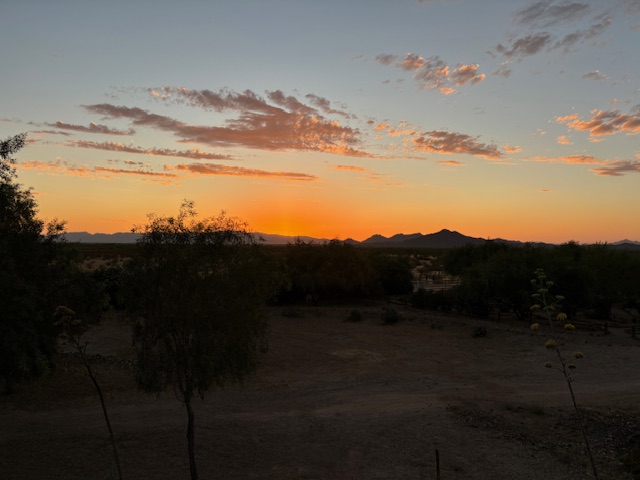
I’ve spent this week in the desert — the literal desert.

My husband, who is both an ordained pastor and a licensed therapist, is serving this week at Shepherd’s Canyon Retreat, outside Phoenix, Arizona. SCR is an organization that exists to assist Christian ministry leaders who are navigating a season of difficulty. Several times a year, eight participants come to the retreat and are served by a chaplain and two therapists who guide the participants through group, individual, and couples therapy.

Why am I here? Well, the chaplain and the therapists are allowed to bring a spouse for the week! When my husband suggested I come with him, I was thinking, that is the first week after school dismisses! Wouldn’t it be great to escape to the desert to read, write, and recover from the school year? I can sit poolside, and simply let my body heal from the strain of the year. Great plan, right?

I thought so, too!

About a month before our scheduled arrival, we received an email that asked if I’d be willing, while here at the retreat center, to volunteer in the kitchen. Well, I thought, I will be eating everyday, of course, and even if I were at home, I would have to spend some time in the kitchen — cooking, doing dishesand really, I reasoned, I don’t mind helping out a little each day. So, I responded to the email, “Of course, I’ll help! I love washing dishes!” And, I do! I really do love the rhythm and the industry of bringing order to post-meal chaos.

So, last Monday, we left our home at 4am EST, traveled to the airport, boarded our flight, stopped off for a change in aircraft, then landed in Phoenix many hours later. From there, we were picked up in a van and driven another hour, past mountains and hundreds of enormous saguaro cacti to a small town where we stopped to eat and gather whatever snacks and provisions we would need while staying — in the middle of the desert — at the ranch for the next week. Finally, about thirteen hours after we left our home, we arrived at the retreat center, were shown our rooms, and received some orienting information about where to go for meals, how to use the in-room humidifier, and why drinking water is so important.

Then, a little before dinner time, as I had been directed, I arrived at the kitchen and received my initiation to the crew. I was kind of in a dazed stupor, since we had been awake for over 16 hours by that time, but I followed directions, did as I was told, and even learned how to operate the kitchen’s dishwasher. When I walked away from the kitchen a couple of hours later, soaked to the skin across my belly and noticing the raisin-like quality of my fingers, it became clear to me what I had signed up for.

It took me a minute to adjust my vision of what the week would hold, but it wasn’t difficult. While I wasn’t really ever in the same room with the participants, I saw them coming and going from the dining room. I didn’t know any of them, but I saw familiarity. I saw clergy, missionaries, and other professional church workers who looked as I have looked in the past — weary and perhaps a little wary about what this week held for them.

I briefly flashed back to seasons in our lives when we could have used a week away in the desert, where someone else planned and prepared our meals, where we left dishes sitting on the table for someone else to clear, where snacks were mysteriously restocked, and refrigerators were continuously filled with cold drink. More than once in our lives of ministry, we would’ve benefitted from getting away from it all with some trained professionals who might’ve helped us navigate the unthinkable, process the traumatic, and begin to heal what Ann Voskamp calls our “unspoken broken”. Because of the careful confidentiality SCR practices, I don’t know the names of the participants or, of course, the issues they are navigating, but I do know that most professional church workers suffer from overwork and unreasonable expectations and many have been betrayed by their leadership, suffered personal family trauma that they don’t feel they can process in the public eye, or are journeying through their own personal struggles with mental or physical health.

The five of us in the kitchen, two paid staff members (both professional church workers), and three volunteers (all of us educators and two of us pastor’s wives), remarked early in the week that each of us have “been there”, and then got busy with the task at hand, preparing and presenting meals, and attending to the associated housekeeping tasks — dishwashing, packaging leftovers, vacuuming floors, and quietly attending to the needs of the participants.

After each “shift”, I would escape to my previously scheduled activities — daily journaling, re-engaging with The Artist’s Way, sitting poolside, reading an enormous novel, and taking daily dips in the pool. Then, I would make my way back to the kitchen, to join my “crew”. Together we chopped vegetables, arranged beautiful salads, poured condiments, and told stories about our lives. One has partnered with her husband in camp ministry for almost forty years, and it shows. She has endless cheer and positivity and a tireless ability to pivot when the propane tank runs out of gas before breakfast, when five of the week’s participants have specific dietary challenges, when there is no way that the baked potatoes will be ready to serve on time. Another has also spent her career in camp ministry and is one of those people who can chat about the difficulties of her life while browning ground beef or making French toast, and then stop everything she’s doing to show you a photo of the most beautiful sunset she’s seen in her months here in the desert or to tell you about the local movie theater’s habit of showing cowboy or alien movies on Tuesday nights. One woman joined us this week just because she loves the place. She paid her own airfare to come from Alaska and sleep in a camping trailer for two weeks, helping out in the kitchen for almost every meal. Another is the wife of the chaplain for the week. She not only worked in the kitchen three meals a day but made it her job to walk around in the the heat (of the desert) with a bucket of soapy water, scrubbing down any chair or bench that had become soiled.

Over the week, we have worked as a team, learning little known facts about Alaska, sharing stories of foods we like (or don’t like) to make, and laughing at one another’s silliness, and mostly making sure that the participants got what they needed when they needed it.

And, (you might have seen this coming), I got what I needed, too. When I was explaining to my colleagues that I was going to Arizona the week after school let out, I said I was looking forward to the abrupt transition into summer, a break in my school year routine, and an opportunity to detach from reality a bit. I got all of that, and I got another thing that I almost always need — a sense of purpose, of mission, of teamwork, of collaboration.

Even more, I’m walking away with some new lifelong friends — my kitchen crew — may we meet again, here or elsewhere.

‘Come away with me by yourselves to a quiet place and get some rest.” Mark 6:31

*If you or someone you know is a ministry leader navigating a personal, family, or ministry challenge, check out Shepherd’s Canyon Retreats.

**If you’d like to support this ministry, check out their latest newsletter for current needs.

The Buried Difficult

Dude.

Bruh . [or, Bro,]

That’s what the kids say these days when they just. can’t.

I think we used to say, “Ok, Ok!” And maybe our parents said, “Uncle!”

It’s what we say when we just don’t have a response because we are at the end of our rope.

I was trying to think of what to write today after several weeks of posting nothing, and all I could think was….

Dude.

Been there?

Have you been in those seasons when life is coming at you from all directions and you just. can’t. even?

I mean, this is definitely not the worst season of my life. In fact, the roughest seasons have given me so many tools that I am using to navigate this one — therapy, self-care, boundaries, yoga, music, laughter, and Netflix. [By the way, if you need something to carry you through difficulty, I have often recommended The Great British Baking Show; I now add to that Somebody Feed Phil (Netflix) and The Reluctant Traveler (Apple).]

But guys, there’s a lot going on right now. Some of it is great — my work, my husband’s new role as a private practice therapist, the fact that Spring is now here, our kids are doing great things and really stepping into their adulthood– but much of it is hard — the death of an extended family member, the cancer journeys of two others, and the uncovering of hidden realities that will need to be faced in the very near future.

And all I can say is…

Bruh.

It’s a lot.

It’s nothing uncommon to the human experience to be sure. Anyone reading this has navigated similar — illness, addiction, failure to communicate, and the accumulation of it all that someone eventually has to deal with.

And sometimes the ones who have to deal with it are the adult children of those who kept putting off the difficult.

Here’s the thing, though. The difficult doesn’t go away just because you don’t talk about it.

In fact, if you bury the difficult, keep it in a dark place, and even continue to water it from time to time, the damn thing grows. And often, it devours the beneficial, the beautiful, the healthy, the wonderful.

It just eats the good up and continues to grow until it bursts into the open — often at the most difficult of times — and somebody, finally, has to look it in the face, call it what it is, and give it its reckoning.

Dude.

I have been training for this moment my whole adult life, and still, I don’t wanna do it!

Just like my student didn’t wanna write a simple 300-600 word retelling of a day of his life where he learned a hard truth, I don’t want to look the difficult in the face.

But guys, the difficult thing has already surfaced. It’s sitting in the middle of the room, and everyone is trying to avert their eyes for just a little bit longer.

Fine. Look away if you must, but the difficult is not going anywhere.

It will not get easier to look at in a day or a week or a month.

I have been there.

Thing is, most things surface over time. Some of us learn this the hard way.

I’m not scared to look this thing in the face, but it’s not mine.

If it was mine, I might be throwing extra dirt on it right this minute.

But that would not keep it buried.

Nope.

It’s just a matter of time until all things surface.

So, here’s the thing. I have no judgment for the bury-er. Some anger, yes, but not judgment. I have no idea what led to the development of this difficulty. I don’t know the full story. I don’t even need to or want to. That is not my business.

It is truly none of my business to know about a “coming of age” moment that my student may or may not have had, but I always give the opportunity to students to tell their story, because telling about the difficult is where transformation happens.

But that kind of vulnerability is not for everyone. It can be downright terrifying to look the difficult in the eye.

But here’s the thing — once you have stared down the difficult, called it by name, navigated the ugly, grieved the devastating, and realized the freedom that comes with the uncovering, once you have tasted the power of transformation —

Dude.

You won’t wanna bury anything ever again.

I can almost guarantee it.