Front Row Seat

The Thursday before school started, we the staff of Detroit Leadership Academy took our stations around the building, preparing for the open house where students would come to get their schedules and chromebooks and begin to reconnect with the world of school after eight weeks away.

I was at the main entrance, checking students in. I didn’t know the freshmen, of course, they were new to our building, but I was watching for those students I recognized, especially the small group of students I had had in my reading class the previous year.

“Hey! How was your summer?” I said as I stood from my seat to receive a hug. “It’s so good to see you!”

I was also watching for last year’s juniors, who would be my new senior class. I knew some of their names, but we aren’t familiar enough for a hug.

“Are you ready for this?” I would say, “You ready to be a senior?”

The replies were varied: “Of course!” “Hell, yeah!” “I think so.” “I’m not sure.” “I’m scared.”

I’ve seen it from every group of seniors I’ve ever taught. Some things don’t change; others do.

The first day of school was predicted to be in excess of 90 degrees, and since our school doesn’t have air conditioning, our administration determined to have an early release. We would see each group of students for just 30 minutes, and then they would board their non – air conditioned busses for the sweltering ride home,.

I had two box fans and two ceiling fans blowing, and my two operational windows as far open as they go. I stationed a cooler full of water bottles covered in ice at the front of my room, and kept the lights off to keep the room as cool as possible.

When the bell sounded, my students met me at the door, got their seat assignments, and made their way to their desks. It took me a while — perhaps until this reflective moment — to register that something felt different.

This wasn’t the fall of 2020 where I met my students inside the small square of the zoom room.

It wasn’t the fall of 2021 where my students entered my room mask-clad, the vibration of anxiety among us palpable.

And it wasn’t the manufactured bravado and audaciousness of 2022 — the defiant swagger born of two years of persistent trauma.

No, this past week, the first week of school year 2023-24 felt….light…spacious…and maybe even hopeful.

As I shared the big picture goals for the year — the district-wide vision that all of our students would be accepted to a college, that 80% of them would enroll in some kind of post-secondary training, and that all of them would attend school more than 90% of the time — I watched the faces of my students, expecting the usual push-back, disinterest, or defiance, but what I saw was a collective subtle nod, an acceptance of this reality, and (an at least temporary) buy in.

Now, don’t be mistaken. I still saw seniors struggling to stay off their phones. I still had one student who, when I mentioned that we would be filling out the FAFSA together, stood up from his desk and said, “I ain’t doing that.” I still had at least one student who proclaimed his main post-secondary goal to be “making music”. It was a room full of high school seniors after all, but something felt different.

While our community regularly struggles with chronic absenteeism, the majority of my students attended all four days last week — even though the temps did crawl into the nineties and both my classroom and the busses were stiflingly hot. Not only that, all of my students made eye contact with me this week. All of my students, even on day one, responded to my call for attention. All of my students participated in gatherings, like the one below, where I asked them to stand and move to the four corners of the room to demonstrate their preferences and interests.

And all of my students participated in the making of our class contract, and when asked, every single student in my class stood up and signed their name in agreement to our class norms.

Some teachers may not think this is a big deal. Perhaps they get 100% buy in on every activity they do in their classrooms, but this has not been the case for me. Not since Covid. Not in my little charter school in Detroit. Not with seniors. Not in this demographic that has historically and recently suffered so much.

In the past few years, it has taken me quite a bit of time to build the relationships and trust that lead to this kind of engagement. When I first started at this school, I was some middle-aged white lady from Ann Arbor — how could I have any idea of what life was like on the other side of the zoom camera where an adolescent Black student sat on her bedroom floor trying to figure out what a URL was and how she was going to move from one zoom room to the other.

The following year, my giddiness at finally getting to be “in the flesh” with students was met with distrust, apprehension, and the layers of protectiveness that Covid and generations of systemic racism had produced. My students were stand-offish, skittish, and surly. It was well into the second semester before I had any meaningful relationships.

Last year, it took less time to build trust with most, but some still refused to engage for the entire year. Yes, the entire year.

So when I got 100% opting in on the first day last week, I was a little stunned.

I was even more surprised on Thursday when I collected the student survey I had handed out and started to read the vulnerable responses to my question: What are you concerned about as you start this year?

Do I have enough credits to graduate? Will I be able to fill out the FAFSA if I’m undocumented? Will I be able to stay focused?

I was in awe of their transparency with their answers to my question: What do you want me to know about you?

English is not my first language. I get mad easily. I am a hard worker. I am funny. I hate school.

And I was touched by their responses to my question, How can I support you this year?

Push me. Help me understand. Explain things when I am confused. Be patient with me.

I’ve just finished the first week of school and I know more about this year’s seniors than I have known about many of the grads for the last three years. Why is this? Is it a sign that the trauma from Covid is waning? Is this just a more self-aware and confident group? Have I been in this school long enough that I have built a reputation of being one who can be trusted? Or is this just evidence that God’s grace is flooding my classroom?

Perhaps it’s some of all of that, but I am not going to look away. I am sensing a rare opportunity with this group. It is smaller than any senior class I have ever had, and they have already opened themselves up so much. I am sensing that we just might become a little family, and I am here for it.

So pray for me, if you would. Pray that I would truly see these students, that I would hear them, and that I would be willing to share with them what I know about the English language, of course, but more importantly what I know about life, about vulnerability, and about change.

Because guys, one thing I know about people who are willing to open themselves up is that they are on the verge of transformation, and I am going to have a front row seat.

What types of changes do I think I’ll see? I’m not sure of all of them, but I have already told my students several times this week that “this is the year when we make the transition from childhood to adulthood.” And for many of these students that is more true than I know. One just had a baby. Some will move straight into the military. Some will go straight to work. And even those who are moving on to more education in college will be shifting to a world that they have never seen before — one where the students around them will be from vastly different backgrounds, one where they won’t necessarily be near the family they have been used to, one where they are going to feel potentially more vulnerable than they have ever felt before.

So the fact that they are already willing to bare a small bit of themselves to me gives me a lot of hope that they will be ready for all the change that is coming at them, and because of that I am sitting on the edge of my front row seat.

I will see the goodness of God in the land of the living.

Psalm 27:13

Not So Disappointing, a Retrospective

I sat down this weekend to write about our daughter’s wedding — to describe the setting, the food, and the ceremony, but what I ended up writing about is a personal miracle — one that no one else could see, one that caught me by surprise.

Over the nine (yes, NINE!) years that I have been writing this blog, I have been healing. At first, the healing I was looking for was physical; I didn’t know nine years ago that I also needed emotional healing. It seems ridiculous to me now that my frayed emotional health wasn’t yet obvious to me and that I didn’t yet understand the connection between my emotional and physical wellness.

Both physical and emotional healing have come over time and sometimes in waves. I’ve changed so much about my daily life — what I eat, how I move, where I get support, and who is on my team — but it seems that one of the most critical elements in my healing has been this writing — particularly my commitment to being brutally honest and admitting that I am broken.

It has been a hard but fruitful work — over the last nine years, we have seen not only improvements in my physical and mental health but also, perhaps consequentially, restoration in many relationships.

You might think that in nine years I would’ve worked through everything — every childhood hurt, every adult regret –but then, a major life event brings some old business to the surface. This happened in the lead up to our daughter’s wedding — several old hurts surfaced and a few new blows almost brought me to my knees.

Just a couple months ago, I wondered if the blows, being so recent, would render me incapable of fully enjoying the celebration. I was doubled over emotionally, protecting my vital organs. How could I struggle to my feet and gather the strength to host family in our home? How would I be able to simultaneously attend to my wounds, attend to the countless details of hosting, and also enjoy time with the people I love? It seemed very unlikely that I would be able to be present and observe the little (and big) miracles of the occasion.

I wasn’t expecting what happened.

In those doubled-over months, through some intensive therapy and some encouragement toward bravery, I found a new way. At first, it was just speaking the disappointment, actually saying “That is disappointing,” to people I had never said that to before. Just uttering those words felt liberating, but it wasn’t enough. If I truly wanted to move forward in a different way, I also had to identify what I needed from a few of my key relationships (not as easy as it sounds) and then make my expectations and needs very clearly known.

This was entirely new territory.

It seems that with a few key people in my life, and maybe more than a few key people, I have been so focused on not upsetting or disappointing the others that I have routinely and habitually swallowed my own disappointments, hurts, and desires. Not only was this pattern potentially harmful for my emotional and physical health, I also had to admit that it had severely limited the connections in those relationships.

I know, I know. I’m speaking in vagaries again, and you need me to put some flesh on it. Let me give one example.

Imagine a seven year old girl getting tucked in by her dad at night. He sits on the edge of her twin bed, letting her know that he is going away for business. He says it won’t be long before he buys a home in that other state and moves her, her siblings, and her mom to be with him. She beams with excitement. She loves her dad, and when he has a plan, it always works out good.

But, as devastations go, this is a big one. The family falls apart. The dad moves to the other state, and the rest of the family stays put and begins a different kind of reality that isn’t always great. But that little girl, whenever she talks to her dad — on the phone or in person — stays frozen in that seven-year-old desire to be excited, to tell him the good news, to please him, to make him happy. Even when it’s clear that his focus has shifted to a new family, to a new reality that doesn’t include her, she still tries to elbow her way in, to find a space, to stay connected. But she does so on eggshells, not wanting to upset or disappoint in any way.

Here’s the thing though — when you walk on eggshells in relationships, other people never get to hear or recognize the sound of your footsteps. They can’t know the full you if they can’t hear your full voice, but when you are used to using the voice of a seven year old, it isn’t easy to start using the voice of a grown-ass adult, even when you are comfortable doing so in most other areas of your life.

In the weeks leading up to the wedding, this pattern revealed itself in a handful of relationships where I was too afraid of disappointing to use my full voice, to say how I was actually feeling. The only way forward was to step into my adulthood — to voice my disappointments, my desires, and my needs. I took a chance. And once I got started, the liberation was intoxicating. I started showing up as my full self in all of my relationships. This year. Last month. At FIFTY-SEVEN YEARS OLD.

I wasn’t hurtful, or spiteful, or accusatory. I was just honest. This is how I feel actually — how I’ve always felt. And [most of] the people who love me heard me.

“I can see why you would feel that way.”

“You’re right; that happened. I’m sorry.”

More importantly, I heard me. I sounded confident and strong in relationships where I had long been functioning in some ways as a scared little girl.

I wasn’t expecting my spine to straighten. I wasn’t expecting my heart to open wider. I wasn’t expecting my insecurities to start dropping to the floor. And I sure wasn’t expecting to fully enjoy three weeks of house guests lounging in our family room, sitting on our patio, laughing, working through logistical details, cooperating, supporting, and caring for one another.

I wasn’t expecting myself to be so free.

And I sure wasn’t expecting the freedom I felt on the actual wedding day — the freedom to greet dozens of family members, to do the chicken dance and a very pedestrian version of the bachata, to speak Spanish in one sentence and English in the next, to be fine with the ceremony starting over 30 minutes late (“we’re on island time after all!”), to be grateful that guests were willing to run out to buy more ice, to manage minor disappointments and to celebrate — fully celebrate– all the healing that has happened in our immediate and extended family over the last many years.

Because that is what I saw, friends, I saw once-invisible family members finally get a seat at the table. I saw those who had felt ashamed step into grace. I saw once-strangers embracing, dancing, laughing. Even for a girl with an insufferable belief in restoration, this day was breathtaking.

It wasn’t perfect, because life is not perfect, and I didn’t try to take ownership of the imperfections. I didn’t try to fix them. I observed them for what they are and then went back to embracing, dancing, and laughing.

I celebrated the fact that God had used the pain of the last several months to free me, to restore me, to allow me to see and enjoy all He has restored.

Guys, the wedding was great. It was beautiful. It was a stage to display the miraculous. And I am so, so thankful.

And He who sits on the throne said, ‘Behold I am making all things new’.”

Revelation 21:5

So Disappointing

People are disappointing. I am, and so are you.

It’s not like we get up in the morning and say, “Let us go forth and disappoint people.”

It’s not our intention; it’s just our way.

Let’s be honest — we even disappoint ourselves.

All summer, I have had the intention of using my iPhone less — to scroll less in the morning, to spend less time on my word games, and to check email and texts less. Three weeks into my official summer vacation, and I can assure you that I am disappointed with my progress.

When I disappoint myself, I might give myself a little scolding and reset my intention to “do better” but I don’t usually get hurt by the ways that I’ve disappointed myself. I don’t take it personally. I don’t see my failure to use my phone less as an indication of my value or as a reflection of how others feel about me.

But I do often make that leap when the actions of others disappoint me, or when my actions have been a disappointment to others, which happens with more frequency than I would like to admit.

And while none of us set about our day intending to disappoint the people we love, it is invariably those very people who suffer the collateral damage of our humanity.

And that’s all we are talking about here, really, just humanity — the imperfect experience of people on the planet. It’s so ubiquitous — so much the air that we breathe — that we forget to see human failure for what it is.

Let me put some skin on what I am talking about. Let’s say, hypothetically, that one was looking forward to the wedding of one’s offspring. I am not sure there is a bigger stage for the disappointment of humanity than dozens of friends and family members being invited to one space at one time for a significant life event.

First of all, there is so much unspoken expectation. The couple wants the day to be perfect, the parents of said couple want the day to be everything the couple is hoping for, and both the couple and the parents expect that everyone else feels the same — that they, too, want to celebrate this momentous occasion. Invitations start flying out to family and friends months before the actual event and the couple and the parents start to envision the actual wedding day and all those who will be in attendance.

And that expectation is a set up — when reality doesn’t match our ideal expectations, that is when we feel disappointment. Can you think of a day more likely to breed ideal expectations than a wedding? I cannot.

Now, one would think that the months leading up to a wedding would be a time of joy, but one might be surprised to find that while envisioning these ideal expectations, their own experiences with the family and friends who have been invited might begin to fuel a steady hum of anxiety around the reality of mixing said friends and family on a day that has so much emotional weight. How will this person interact with these people? Will racist family member A say something ignorant around BIPOC family member B? Will alcoholic-family-member-who-is-still-in-denial be appropriate in this setting? Will family member C who has beef with family member D say something out of pocket and get something started? Will everyone be on their best behavior and live up to the ideal expectations of the couple and the parents or will someone be disappointing?

The answer? Someone will definitely be disappointing.

In fact, they might even be disappointing months before the actual day. They may drag their feet on an RSVP. They may say racist shit before they even get to the venue. They may say they are going to come and be a team player to make it all happen and then in the eleventh hour back out for a number of acceptable reasons that are still — disappointing.

So, one might be surprised to find themselves in the weeks leading up to la boda feeling a little tender and even hyper-sensitive. And you’ll never guess what happens when someone feels tender and sensitive — they start doing things that are insensitive. They think they are being thoughtful, but they end up doing shit that is — well — disappointing.

One might, say, in an effort to prevent drama at pre-wedding event #1 decide not to invite family member E because family member F just might act inappropriately in their presence. The intention might actually be to protect family members E and F, but the impact ends up being — wait for it — disappointing. So, when family member E calls to say that such actions were hurtful and mean, one must admit that she has joined the mass of disappointing humanity that she’s been pointing her finger at. And that, my friends, is one hard pill to swallow, .

Until, one recognizes that humans (including oneself), by definition, are disappointing.

And that realization leads one to ask the question — what might happen if we went into situations expecting people (including ourselves) to be disappointing? Would we then be freer to celebrate when miracles happen?

Miracles like one friend (who is not even invited!) who offered months before the nuptials that her house would be available for out of town guests or the friend (also not invited!) who offered to do a major CostCo run before the wedding. Crazy generosity like the son who drove from Houston to Ypsilanti to help frame out a bathroom or the future son-in-law who coordinated a business trip so that he could be in town to help lay flooring. Remarkable support from a husband who attended a bridal shower and did much of the heavy lifting with the help of a brother who gave up a Sunday afternoon to do the same.

All kinds of people do amazingly thoughtful things every day when their default setting is to be disappointing. And that, my friends, should be celebrated!

I forget that. Instead of celebrating the miraculous, I get shocked when people are disappointing. I take it personally. I think they are inconsiderate of me because I am unlovable, but really, they are inconsiderate of me because they are human. I need to be able to extend them grace for that — the same kind of grace that I hope to be extended when I have been found to be disappointing.

So, my counsel to anyone who might be just three or so weeks shy of one of their offspring’s wedding day is to set realistic expectations for how people are going to show up to an event full of all kinds of personalities and backgrounds, and to choose to look for the moments to celebrate. One might glimpse strangers smiling at one another as they join in the Chicken Dance. One might witness second cousins who haven’t seen each other since before Covid joining in a game of tag on the playground next to the wedding venue. One might receive a hug from a parent, a child, a sibling, or a friend. One might feel proud, or happy, or relieved, or content. One might witness the miraculous.

And if those kinds of things happen, one should celebrate! However, when disappointment happens, and it likely will, one might consider extending grace — an understanding shrug of “it happens”, a reassuring pat on the back of “it’ll be ok”, or even a gentle knowing smile of “been there, done that” — and then an invitation to return to celebration on a day that is rare, full of humanity, and beautifully imperfect.

One might give that a try.

For of His fullness, we have all received grace upon grace.”

John 1:16

Staggering

The human capacity for emotion is staggering. How do I know this? I’m staggering.

In the last seventy-two hours I have felt contentment, fatigue, joy, satisfaction, frustration, annoyance, responsibility, discontent, dissatisfaction, love, pride, calm, irritability, anger, happiness, anticipation, gratitude, betrayal, shame, hurt, connectedness, emptiness, gratitude, concern, apathy, hopelessness, and deep sadness. And those are just the ones that come to mind right now.

How did I feel so much in just three days time? Did I go to a wedding? a funeral? a spiritual retreat? Nope. I went to work, came home, went to a graduation party, and came home again.

We can have all kinds of feelings in the midst of our everyday life.

I have known this my whole life. I was, if you remember, labelled “moodiest” in my high school yearbook. That label had all kinds of judgment and shame attached to it, and I felt it. The people who labelled me didn’t know my experience and why I had so much emotion. And I didn’t know yet that my bandwidth for emotional expression was my superpower.

It doesn’t always feel like a superpower, though. It sure didn’t on Friday when I went from the pleasure of watching three LGBTQ+ students participate in an online conference — sitting in my room with one of their advisors, listening to presenters, coloring, and finding a small pocket of safety away from their usual volatile surroundings — to the stress of navigating a chaotic high school hallway back to the quiet contentment of sitting at my desk, planning the details for next week’s instruction, to the frustration of failing to capture the combined attention of nine erratic and impulsive freshmen.

Then, I was faced with the challenge of metabolizing the adrenaline from feeling disrespected in my own space so that I could traverse the once-again chaotic hallways and become an “effective” supervisor of a hundred or so young adolescents on the Friday of a full moon as they remained “contained” in the unimpressive space of an out-of-date gym eating a subpar lunch. I made my way there, as I always do, continuously processing the inequities of my students’ realities — the very ones that contribute to their impulsivity and disrespectful behavior. A coworker and I stood together, quietly venting while intermittently addressing the most egregious behaviors such as vaping — which is prohibited — and running — which the students really need, but which is not tenable in such a small space.

From there, annoyed, I walked — again — through the chaotic hallway, calling out, “head to class, everyone!” I grabbed some supplies from my room and gathered two ninth graders (have I mentioned it was a full moon) from their assigned classes so that we could do a reading intervention where I fluctuated between pride (“nice job!”) and irritability (“put your phone down and look at this page”). I then had to shake off that tension and shift my mind and emotions to the impartial business of grading and then make “non-emotional” phone calls to the parents of the feral freshmen who had disrespected me earlier, saying “please remind your students that we have just six weeks to finish strong.”

I packed up my things for the weekend, and felt less irritated than I imagined as I made an additional phone call to book five hotel rooms for family members who are attending my daughter’s wedding this summer. In fact, I felt a little pleased with myself for finally checking it off my list, and I chatted playfully with my colleague as we shared our ride home. Then I got a little miffed when I discovered that my husband and father-in-law were sitting in our living room, simultaneously wanting me to sit and chat and expecting that at some point we would eat dinner, which I had yet to prepare.

The visit was expected, and I had a plan, but I am always tired on Fridays, and I really wanted to pour a glass of wine, curl up in a blanket, and watch something ridiculously pointless on TV, but I conjured up a meal, did my best to chat for a bit, and then retreated to my puzzle table in the basement where I sat non-communicatively listening to the men chat upstairs.

Of course I couldn’t sleep because I was still mentally processing my ineffectiveness during the one class I had to teach, so I got back up and watched mindless television until I could barely keep myself conscious.

The next morning, I manufactured cheer for my father-in-law as I presented him and my husband with breakfast before running to the store for a few groceries, a gift, and a fistful of Mother’s Day cards then returning home to shower and dress in preparation for my friend’s graduation party. I was feeling satisfied in managing all of these details until I was suddenly and unexpectedly blindsided by a revelation of broken trust and personal betrayal that spiraled me into a dark anger (shielding hurt) that had to somehow be processed or parked so that I could show up for the friend who had overcome multiple obstacles to earn a master’s degree while working full time.

As I drove to her place, I mentally chose to set the new information on the shelf so that I could show up in a room where I knew no one and lend my hands to decorate tables, set out food, and mingle [even more chatting] with strangers. I posed for a photo, ate [and raved] over excellent food, and then [two hours later] repeated my congratulations and headed back home.

Alone, at last, I changed into work clothes, went to my garden, and kneeled in the dirt, determinedly pressing dried seeds from last year’s harvest into the soil, hoping against all probability that God can once again bring life from death, healing from brokenness, trust from betrayal.

How many times can He perform a resurrection?

How many times can the broken be made whole?

I have an insufferable belief in restoration, but I am staggering, friends, and I am very, very tired.

I made my way back to the puzzle, and sat, feeling my hurt and fatigue, and then, one of ours who has been through so much devastation of her own sent a photo — her left hand with a diamond on the ring finger. And I had to admit that God never grows weary of making all things new.

May it ever be so.

[Inhale] I have been restored and upheld, and I will praise you.

Stepping Away

For the past few months, I’ve been motoring through — plan, teach, grade then drive home, cook, laundry, sleep– on repeat day after day after day. I’ve been managing to fit in a few pages of scrawl every morning followed by a little bit of yoga and a walk (or two) with my work buddy each day. I’ve cleared the garden to get ready for spring planting, and I’m bracing myself for the onslaught of Spring events that have already positioned themselves on the calendar — senior this and faculty that.

It’s a regular type of busy but I find myself wiped out and a little bit irritable — especially with my students.

I prepare what I think is a home run lesson and my seniors wander into my room, as seniors often do — late, loud, and with little interest in the activity that I have planned. And, rather than doing what excellent teachers do to engage them — demonstrating the relevance of the work or connecting with something they are interested in — I get annoyed that they are being who they are — teenagers on the verge of graduation. And, I show them who I am — a teacher who is tired of the routine and just as ready as they are to be finished.

In the moment, I expect them to bend to my will — I fuss, I stomp, I sling demands, I utter my frustration. And, not shockingly, I am ineffective. Which just makes me more annoyed.

And because I’m motoring along, I don’t take the time to pause, to step away, to reflect. Instead, my frustration bubbles into tantrum, and I walk out of a classroom full of seniors, taking a lap of the building to calm myself down. Other staff step into my abandoned room and berate my students for doing whatever it was that set off “the most experienced teacher in the building”. My stunned students sit silently. I walk back in and do my best to salvage anything that is left of the hour.

Yikes.

It happens to the best of us. We lose our shit because we haven’t acknowledged the warning flags. We haven’t taken a step away. That is why we have to anticipate our need to step away — to schedule it in before our shit has been lost.

Every year for the past eight or nine years, I have met at a hotel with a hundred or so other women (pastors’ wives all) who carve out a few days from their also busy routines to step away, laugh, sing, and pray. Every year in January, when the registration materials come, I question why it’s so important for me to get away with this group of women that I see just once a year. Why do I want to spend the time and money to hole up in a hotel room, to sit at a table, to participate in corny mixer games, to disrupt my routine? I drag my feet, but typically sometime in late February, I remind myself (or one of my friends gives a nudge) that I always come away feeling refreshed, fed, and typically somehow shifted.

Last Friday, the day after I abandoned my classroom, I packed up my things at the end of the day and headed north. After two hours of driving, I dropped my things in my room, put a comb through my hair, and meandered down to our meeting room.

A cannabis dealer was set up outside our space (the display made complete by an 18 inch stuffed phallus). All of us — women aged early 20s to mid 80s — had to traverse the wares to find one another, and perhaps because of that, we met with laughter, disarmed, ready to embrace and lean into relaxation.

Almost immediately during the ice breaker game “two truths and a lie” I found myself blurting out a true confession to a table full of women (some of whom I barely know) that I had recently told a roomful of seniors that they were behaving like assholes. And not one of the pastors’ wives gasped in horror. Instead they laughed. Someone said, “well, they probably were behaving like assholes”. They normalized my frustration. They accepted me.

Throughout the weekend, I found friend after friend — some I have known for decades, others I’d met just once or twice before. In clusters of two or three or ten, we shared our lives with one another — affirming, listening, empathizing, smiling, laughing. We drank coffee and tea as we leaned into scripture. We sipped wine and noshed on cheese and crackers as we laughed late into the night.

I was so relaxed. I wasn’t really anticipating a major shift to happen during this weekend. I was mostly glad that I had the time to connect with friends instead of managing my regular responsibilities. I got myself busy on a project one of the women had brought to share — crocheting plastic grocery bags into sleeping mats to be given to people who are experiencing housing insecurity — and figured I would coast through the Bible study in typical fashion.

Why I thought that, I have no idea, because almost without fail the Bible study portion of this event, which is all of Saturday morning, a little of Saturday afternoon, with a finish on Sunday morning, is where much of what I have been experiencing in my personal life gets clarified.

Our leader, a veteran pastors’ wife, accomplished scholar, and down-to-earth friend, led us into a journey with Peter, disciple of Jesus, who though faithful and passionate, sometimes ignored the warning signs and occasionally lost his shit. We saw him walk on water, then sink. We saw him speaking with Jesus, and then, when the stakes were so high, denying him.

After we had journeyed with Peter, Jesus, and the Disciples all morning, and I had made substantial ground on my crocheting project, our leader asked us to turn to Psalm 51. She led us through lectio divina, a scripture reading practice wherein you read the passage, circle what stands out to you, reflect as you read it again, respond by writing freely about the words you had circled, and then rest in silence for several minutes. I set my crocheting aside and leaned in. I was stunned by what I found. As I moved through the process, and wrote out my thoughts, I remembered the story of my last several years — how God had restored me, upheld me, renewed me, and sustained me. I acknowledged that in spite of that story, I regularly try to return (especially with my students) to my soldiering ways. I try to plan perfection, to demand compliance, and to ensure my own success.

I sat in silence.

Next, our leader taught us a strategy called a “breath prayer”. She urged us to use some of the words from our earlier writing to craft a prayer that we could say in one breath when we are overwhelmed, or stressed, or perhaps, I thought, in moments when I am about to tell a classroom full of students that they are acting like assholes. The words fell immediately on the page: Father, you have restored me and upheld me, and I will praise you.

It seems we were soon packing our things, hugging goodbye, and climbing back in our cars.

And it wasn’t long before I found myself in front of the very group of students who I had grown frustrated with the week before. They weren’t miraculously changed. They were still seniors on the brink of graduation — falling asleep, scrolling on their phones, talking to one another, asking to use the bathroom while I was in the middle of presenting a perfectly prepared lesson.

But I had shifted — not perfectly, not permanently — but I was somehow standing differently in the front of my classroom. I breathed my prayer several times that first day: Father, you have restored me and upheld me, and I will praise you. I stood a little lighter. I spoke a little gentler. And perhaps, just perhaps, a few more students engaged in learning than had done so the week before.

However, later in the week, I was again feeling fatigued and frustrated. I started to hear myself say sarcastically, “You go ahead, stay on your phone while I’m presenting the lesson, just don’t come ask me for support when you’re doing your work.” Yeah, it was another warning flag. Time to get some rest over the weekend. Time to practice my breath prayer. Time to step away.

I think this is why I am insufferably obsessed with restoration — because I keep seeing it over and over again in my life. I lose my shit, God drowns me in his grace, and I am given an opportunity to shift — to find a different way.

And often, the opportunity to shift presents itself when I find the time to step away — to slow down, to gather with people who love me, to reflect on what has been happening, and to realize what really is true.

I did that again today — with the small group my husband and I meet with weekly. We shared the struggles and joys of our week, we acknowledged with amazement all that we have seen each other through, and we reminded one another of the relentless grace and mercy of God.

It’s the refreshing breath I needed so that I could head into this week with the prayer on my lips: I have been restored and upheld, and for that, I will praise Him.

Second Half Living

A couple of years ago, I turned 55.

I imagine when some people hit an age like 55, they begin to think about retirement and the end of their careers, but since I had already been in a long season where I thought my career was over and had recently returned to my profession, I was still energized about teaching, still excited about being in the classroom, and still looking forward to many more years.

That didn’t stop the reality of my age though — the fact that the number 55 is just ten years away from 65, the age when Americans qualify for Medicare.

Ten years sounds like a long time until you glance backward and realize that ten years ago was when I first visited a rheumatologist, when we first considered moving back to Michigan, and when we were starting to say goodbye to St. Louis, to our teenagers, and to the life we had come to know.

It wasn’t that long ago, and ten more years will surely pass quickly.

I think it was out of the recognition of that reality that I jokingly declared 55 to be my halfway point — I was going to live to be 110!

I was finally enjoying life again having learned to manage my chronic illness and having navigated a long season of grief. I was learning so much about myself — what makes me tick, what I like, what I don’t like, how I think, how I believe, what makes me wonder, and what I want to impact. Surely I needed another half a lifetime to further explore what I was learning and to put that learning to good use.

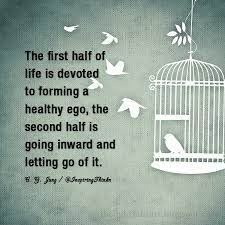
Now, who knows whether I will actually live to be 110 or 85, or 58, but regardless, I am certainly in the second half of life, what Carl Jung and Richard Rohr describe as the phase of “undoing much of what has been accomplished in the first half in order to get at a deeper heart of human life.”

Rohr (and Jung) say that the first half of life is “focussed on the development and enhancement of our Ego and its mind-set: ambitions, plans, competitiveness, judgments about others, looking after oneself, one’s career, one’s family” and mine certainly was! Didn’t you, like me, run from high school to college to marriage to children to parenting and career, making snap decisions to take care of yourself and those that you loved only to come to the screeching realization around 45 or so that many of those decisions, though well-intentioned and possibly even prayerful and consulted upon, were ill-founded, poorly motivated, and simply wrong?

Didn’t you, like me, stand in the wreckage, grieving, wondering how it passed so quickly and why we don’t get a chance at a do-over?

That, according to Rohr, is the kind of devastation that leads to the openness that allows for growth in the second half of life. He says, “The supposed achievements of the first half of life have to fall apart and show themselves to be wanting in some way, or we will not move further.’

Sheesh. Does that make me feel any better? I don’t know.

What it does help me lean into though, is my current reality.

I am, at now 57, learning more and changing more than I believe I have at any other time in my life. I have not only a therapist but also not one, but two, instructional coaches, and a small group that my husband and I meet with weekly. My therapist is helping me unlearn behaviors that are deeply rooted in my childhood — ways of coping that once allowed me to navigate my realities that became patterns that are no longer useful. My instructional coaches help me see how strategies that were effective in the classrooms I served in the 1990s and early 2000s can be modified to meet the needs of the students I have now. Our small group provides a judgment-free space in which to interrogate long-held beliefs, to sit in unanswered complexity, to admit our failures vulnerably, and to be loved unconditionally.

Thirty year old me wouldn’t have received so much input from others. She was busy kicking butts and taking names — doing what she needed to do to look after herself and her family. She “knew” she was right and she didn’t have time for the input of others.

But after all those “right” moves and the “supposed achievements” of that era have fallen apart, I’m in a new position.

I am, as they say, “coachable”.

I was getting ready for an uncomfortable encounter recently, and the anxiety was building as the date grew closer, so I kept bringing up the pending situation with my therapist. Because of my history in similar situations — of feeling unheard, undervalued, and “tolerated”, I had some real emotions, so I couldn’t see clearly. I could no longer define the purpose for the encounter — why was I going to meet with this person if the potential for hurt was so great? My therapist prompted me to think about what I needed from the interaction and reminded me to set my “past baggage at the door” so that it wouldn’t clutter the reality of the current situation. She helped me practice language to express my needs, and even though I had some anxiety throughout the interaction, I was able to manage my expectations and come away feeling content, even though the outcome might not have been exactly what I had pictured.

That’s something, isn’t it?

One of my instructional coaches and I are working on my ability to not let the way my students show up impact how I show up. You would think that after three decades in the classroom, I would have this down — that I would be steady Eddy in the face of student behavior, and for the most part I am. However, these past three years have put me to the test. The students I see today are in some ways very similar to the students I taught back in the fall of 1989. However, in some ways they are very different. They have been through a lot and they show up erratically — late, loud, hungry, irritable, disrespectful, and unconcerned about how their white middle-aged teacher might feel about it. Mostly, I greet them at the door smiling and hopeful and navigate through class with a no-nonsense approach, but guys, I am also a human being who gets tired, who loses her patience, and who falls back on muscle memory. I still have the default switch that flips over to kicking butts and taking names when the going gets tough, and while that might’ve worked in the past, today calls for a different strategy — a calm, sure response rather than a powerful reaction.

That was super easy to type, but much more complicated to execute.

Many of my students enter the classroom unable to leave their “past baggage at the door”.

(How could a teenager know how to do that, when I am still practicing at 57?)

They don’t leave it at the door, but they lug it right in, dripping debris in their path and dumping the entire mess all over my classroom. Picture all the shit of 20 or so teenagers heaped among the desks of my classroom. It’s a little crowded. And smelly. And uncomfortable.

One student shoves another student because she is crowding his space. Another puts her head down because she “just can’t deal” with the chaos. Others try to position themselves in such a way to ignore the heaping stench so that they can opt in to learning, complete their assignment, and move through their day.

My students don’t need me in those moments to shout or demand or ridicule. No, they need me to draw on the coaching that I am receiving and the years of experience I have gained from living my life dragging around a heaping pile of my own.

They need me to be unfazed by the stench. They need me to be prepared and engaging. They need me to have compassion when they “just can’t deal” and they need me to be nonjudgmental so that they can choose, at any moment, to join whatever it is we are doing.

I was having some difficulty with a particular student. We’ll call him Tyler. He comes to school almost every day, but he makes it to my class just once or twice a week. When he does come, he arrives late and loud, making comments that draw all the attention toward him, interrupting my class and disrupting any hope of learning.

I was complaining about this student to my coach and she said, “Make him feel like he is part of the classroom.”

I stared at her with jaw gaping,.

“Use what he has to say to direct him back to the class.”

As I sat staring at her, I realized that I had been falling back on old faithful — trying to get him in line by shaming him, telling him that the reason that he acts out is because he doesn’t know what we are doing, rather than doing everything I could to rope him in so that he would know what we are doing,

Damn.

And because I’m not still 30, not still sure that I have all the answers to everything, not still consumed with the advancement of my self and my family, I gulped and said, “Wow. You’re right.”

I went on to tell her that this very student had surprised me with his written work and that perhaps I could use it for a model in class. She said, “Don’t do that! He thrives on negative attention, and he will sabotage that attempt! Instead, tell him quietly, privately, that you were impressed with his work. Let him know that you see him, but do it quietly.”

And you know what? I did. And he received my compliment and turned in his assignment on time and lowered his volume just a little bit that day. It was a very little bit of movement in the right direction, but I will take it, because I know that he is still in the first half of life — he is still developing his ego, still looking after himself and his ambitions, and in his context, that is much more challenging than I think I could ever comprehend.

It’s quite a juxtaposition — me in my second half of life spending so much of my day surrounded by the unfiltered, confident bravado of teenagers, but I have to believe we were made for each other — they with their uncensored commentary on my wardrobe choices and teaching strategies followed by their genuine questions about what my prom was like and how I spend my money and me as a spectator in the room watching them navigate love, friendship, and loss as they plan for their future.

I know what’s coming for them — a season of challenge and discovery as they plan for and navigate their way into adulthood and the inevitable realization (at some point) that they’ve gotten a lot of things wrong. Maybe the best thing I can provide for them right now is a normalization of the fact that we make a lot of mistakes but that we can try again. We can learn, we can grow, and more importantly, we can give one another grace along the way. I think that’s what I wish I would’ve liked to have known in the first half of life. It’s what I’m thankful to know now.

for from His fullness, we have all received grace upon grace.”

John 1:16

What World do We Live In? Part 2

**I wrote a piece called “What World Are We Living In” in the fall of 2020 when I first started commuting from Ann Arbor to Detroit to teach in a small charter school and began to daily witness the disparity between the two communities. The following post grew out of an experience I had last week in another school district.

Last Wednesday, instead of driving to Detroit first thing in the morning, I drove to Oakland County to participate in a day of professional development along with a dozen other teachers who use the Adolescent Accelerated Reading Intervention. I’ve been using the program for a little over a semester, with great results, but I have been aware that I might not be crossing all my t’s and dotting all my i’s. Having the opportunity to be a fly on the wall of two separate classrooms as other teachers implemented this intervention would hopefully help me see what I’ve been missing.

The beginning of my commute looked largely the same as it does on my daily trip to Detroit — interstate highway merging onto surface streets. However, I noted that while my regular route takes me past fast food, gas stations, minimarts, and older working class neighborhoods, this route into Oakland County took me past Starbucks, Trader Joes, and nicer restaurants before it led me through residential sections with large suburban homes. And then, when I took the final turn, I saw the school where I would begin the day.

It was a sprawling two-story building on a large piece of property surrounded by multiple well-lit and freshly-lined parking lots. I found a spot, grabbed my stuff, and made my way to the guest entrance at the front of the building. I approached a door, pushed a button, and looked into the camera before I was buzzed in to a glass-enclosed foyer.

There, a staff member/gatekeeper looked me over and buzzed me through the second door. She knew why I was there and directed me to room “two-oh-something or other”.

“Which way is that?” I asked.

“Up those stairs and follow the signs.”

I walked up the open carpeted stairway in the expansive atrium to the second floor, also carpeted, and found the group of teachers already in conversation.

They sat in a semicircle in the [also] carpeted classroom. I found a seat in the back of the room in a bar stool height chair next to a tall table. The students had not yet arrived, and the teachers were discussing what was on the agenda for the class this day — one of the final steps of reading a book in the AARI program, mapping the text.

I heard the bell ring in the hallway, and the students started coming in, finding their resources in a strategically placed filing system, then making their way to the table where I was sitting. I relocated myself and began to observe.

Right away I noticed a t I hadn’t been crossing when I looked at the big piece of butcher paper where they had started their text map. My students and I had mapped our own text the day before, and it looked somewhat similar to, if noticeably messier than, the one I was looking at, but there was one big difference — ours was written all in black on white paper. The map in this classroom was color-coded to illustrate its organization — sections of the book written in sequential order were outlined in pink, those written in a compare/contrast format were outlined in green, etc. I mentally thunked my forehead with my palm and said, “the colors! why do I always forget the colors!” And then I noticed the posters hung on the wall in this spacious classroom. At both the front and the back of the room, the teacher had full-color posters representing each of the eight text structures. Oh, I’d like to have those, I thought. If I had full color posters in my classroom instead of the black-and-white print outs I have, I might remember to use the color coding system!

One teacher asked, “Where did you get the posters?”

“Oh, I just printed them on our poster printer!”

Oh, I thought, they have a poster printer.

The class functioned mostly as my class does. The teacher had seven students around the table; one was absent. I have ten on my roster right now; typically one is absent. She used the socratic questioning that I use, and her students engaged as much as mine do, if slightly more politely, but then again, when I had a guest in my room last semester, my students were on their A game, too.

The second building was a literal carbon copy of the first, down to the same double buzzered entryway and carpeted stairs. We gathered in a classroom that “isn’t currently being utilized” where we found flexible seating — restaurant like booths, chairs on wheels at tables, and the one I chose, a rocking pod-like chair, where I noticed I could quietly shift my weight and stay better engaged in the discussion we were having before our second observation. Wow, I thought, I have some students who would benefit from chairs like these.

When the bell rang, we walked down the hall where our second teacher met us at the door and invited us first into her classroom and then across the hall to another room that “isn’t currently being utilized” so that she and her students could map their text.

Like me, she had a projection system where she displayed a slide that she used for her gathering — the time when we engage with our students to set the climate and build community. Her students were seated, much like mine are, around the room at desks. The difference I saw was, again, the carpeted floor, the colorful text-structure posters, and stacks of resources in every corner of the room.

In the room across the hall, we again found flexible seating — bar-height chairs with optional attached desks, lower seats on wheels, and one other form of desk-like seating. Again, full-color posters on the wall illustrating each of the text structures and some key questions to ask during the AARI process.

The students again were on their A-game, and I wondered if that was the case every day, even when they didn’t have a dozen teacher-y observers. I mean, what would get in the way of their learning in an environment like this?

As I drove home, I continued wondering, why do these schools look so different from my school? Why do students in Oakland County walk into a brand spanking new building every morning, pick what kind of chair works best for them, experience the warmth of carpeting, the advantage of full-color visual aids, and, when it’s hot outside, the benefit of air conditioning, while my students just thirty minutes down the road are bussed onto a crumbling parking lot, walk into an aging building with an inadequate gym, some windows that open and some that don’t, no air conditioning, no rooms that “aren’t currently being utilized”, one seating option whether it is appealing or not, and a jillion other obstacles to learning on any given day.

Is it just a case of money?

I spent some time this morning trying to figure out Michigan’s formula for school funding that might explain this disparity — why one child’s experience is so different from another’s when they both reside in the same state. But guys, I don’t understand the model.

It’s complicated and based on per student funding from the state, property taxes, income taxes, and even cigarette taxes! Low-income (and underperforming) districts like mine are supposed to get supplemental funding from the state — which is earmarked, but historically not always allocated. And even when it is allocated, why are most Detroit schools in disrepair, lacking in resources, and understaffed when schools in higher income districts are well maintained, richly resourced, and fully staffed with high quality instructors?

Why do they get the cool rocking pod chairs and my students don’t?

Is it because those students deserve better?

No! All students deserve better! Yet these disparities continue to exist — for going on centuries now.

And why?

The simple answer is systemic racism — in education, yes, but also in real estate, in health care, in hiring, in so many sectors of our society. It’s the historical practice of separating those who have from those who don’t to ensure that those who have will always have and those that don’t never will. And the remedy is anything but simple. It begins with recognizing that selfishness and greed have created the structures in our country that enable some to have a lovely experience and to guarantee that others do not.

Now, if you are in the camp that thinks I am completely off base and that the difference in schools is sheer economics and not based in historical racism at all, I ask you why the establishment is so up in arms about our students learning African American history or looking at history through the lens of Critical Race Theory? If there is nothing there to see, why not let our kids take a look for themselves? Maybe you’d like to take a look for yourself. If so, I recommend you check out the 1619 Project* which is available through The New York Times, on Apple podcasts, or in video form on Hulu. And if you still think I’m out of my mind, come spend a day with me at my school. Get to know my students and decide for yourself if you think they deserve more.

Yes, I feel pretty strongly about this.

It probably won’t come as a surprise that my seniors and I just finished learning about systemic inequities in preparation for reading Trevor Noah’s Born a Crime, where we see through the lens of his experience the structural racism of Apartheid and how it impacted his childhood experience. We learned terms like unconscious bias, prejudice, racism, and systemic racism, and my students created posters to illustrate disparities in health care, generational wealth, criminal justice, and education.

When I returned to my students on Thursday and we started our class with a review of terms, I saw that not everyone understood that Apartheid was like the systemic racism we see in the US. In order to help them fully make the connection, I asked them to recall examples of where we experience inequities in our community. As they started to list them off, I told them about my experience in the Oakland Schools.

I wondered if it was necessary — to point out the details I had experienced. Would I be rubbing it in their faces?

But then I thought, Don’t they deserve to know what the experience of students 30 minutes away is like? especially as we prepare to read this book? especially since some of them are about to go to college and may study beside some of these very students who are walking carpeted hallways, sitting in rocking pods, and enjoying an air conditioned full-sized gym? (Let alone taking AP classes, music, and other electives we are unable to offer.)

I described what I had seen, and I could see their faces register the reality — the reality that their experience is not equal to the students I observed just 24 hours before.

“This is educational inequity,” I said. “It is one aspect of systemic racism. And why do you suppose it’s not easy to change?”

“Because,” one student answered, “it’s part of so many systems — not just education. And they don’t want it to change.”

Who doesn’t want it to change?”

“The people in power.”

“Yes.” I gulped. “I suppose you are right. The people in power don’t want it to change.”

Pretty astute observation for a kid from Detroit? No. Kids from Detroit have this down, folks. They understand disparity; it’s the world they live in.

And the people in power can do something to change it. We are the people in power, my friends — people who vote, people in education, people in the church, white people — we can make choices that begin to make a difference for my students and their children and grandchildren. If we do nothing, this pattern will continue for more generations, and we shouldn’t be ok with that.

It’s not enough to fight for what’s best for our kids; we have to do what’s best for all kids.

As we established in my last post, I have “an insufferable belief in restoration.” The first step in restoration is acknowledging that our stuff is broken down, dilapidated, and no longer working, so I’m gonna keep talking about what’s broken to those who have the power and resources to fix it.

I hope you’ll start talking (and doing something) about it, too.


Do not withhold good from those to whom it is due, When it is in your power to do it.

Proverbs 3:27

*The 1619 Project is one of many places to start learning about historical systemic racism in the United States. For a list of other resources check out Harvard’s Racial Justice, Racial Equity, and Antiracism Reading List.

The Art of the No

You know that time during the pandemic, when I was working full-time from home and I was outraged by the killing of George Floyd, and I felt called to go back to the classroom to return to fighting for educational equity? Do you remember how I’d been recovering from a major health crisis for almost six years and I felt I had finally arrived at a place of health that would support my return to this work?

Do you remember the first year — the fully virtual year where I sat in an empty classroom zooming with students I had never met in the flesh, students who may or may not have turned on their cameras to let me see their faces? Do you remember how giddy I was, how energized, how I found the work almost easy because I could get it all done within my scheduled work day and still have some space for self-care — for yoga, and walking, and therapy, and all the stuff I need to do to stay well?

And do you remember how even last year when we “returned” to in-person learning and I got to see my students face to face, I was thrilled? how I had enough steam to still maintain my physical and emotional health, probably because we regularly shifted to virtual learning and I could catch my breath and reset my rhythms from time to time? how it wasn’t until the very end of the year that the fatigue caught up with me and I lost my shit over a small unintentional slight on my students’ graduation day?

And do you remember how I committed last summer to being not only a master teacher, but also a reading interventionist, a cooperating teacher for a colleague who needed to student teach, and a fellow in the Michigan Teacher Leader Collaborative (MTLC)? How I wondered if saying yes to all of these responsibilities was was taking on too much or if I would finally find a limit to what I could do?

Yeah, guys, it appears that I have found that limit. I’m starting to see some warning flags.

However, I can’t always tell that I’m at my limit. Ninety-nine percent of the time, I am on my game. I am an experienced teacher, so I see results. My students are learning and the data reflects that fact. I’m open to coaching because I see its impact on my instructional practices. I’m building relationships both in and out of school — relationships that are mutually impactful.

And the need is there! Each year I get asked to do more, to take on more responsibility, as all effective teachers do. And because we see the need — the students who might benefit from our instruction and the gaps that we might fill — we agree to do it. We fit in one more class, sit on one more committee, and assist with one more project. In a school building, everyone is busy, and there is always more to be done, so we take turns adding more to our to-do list.

And in some ways, it’s affirming. We feel needed and valued and appreciated when our leadership approaches us and says, “You are doing such a great job with all the things you are doing, and we want you to do even more!”

We get celebrated for our accomplishments. We get a pay bump. All is good!

But, guys, humans have limitations, and eventually all that piling on of responsibility, all that added weight, begins to drag a person down and their effectiveness begins to flag. They begin to feel fatigue. They make a sharp comment to a student or a colleague. They begin to wonder if they can sustain the rhythms. They begin to look at other opportunities where they might not have to work quite so hard.

Yet the offers to work even harder keep showing up. Right now I have an opportunity to apply to be a senior fellow for the MTLC. I will likely be asked to add another section of students for the reading intervention I do. I’ve already been slated to work on a committee to discuss our school’s improvement plan. And to be honest, I’d love to do it all. I really would. I am sitting in the heart of the work that I have been called to my entire career. This is what I was created for — to see systemic inequities in education, to bring excellent instructional practices to students who have historically not been well-served but who are highly capable nonetheless, to speak into the policies that perpetuate educational inequities, and to work at the school level to make change a reality. This is it, guys. This is my lane.

And if I want to stay here, in this lane, and continue to impact individual students, I have to have a boundary that allows me to remain healthy. I have to practice the art of the no,

No, I won’t be applying to be a senior fellow in the MTLC.

No, I won’t be adding another section of the reading intervention.

No, I won’t be writing an article for your publication, volunteering at your fundraiser, or teaching during your summer program.

I have to say no sometimes so that I will be able to continue my yes.

Yes, I will still teach seniors at Detroit Leadership Academy.

Yes, I will stay on the Cougars to College/Post-Secondary Plans team.

Yes, I will continue to do one section each semester of the Adolescent Accelerated Reading Intervention.

Yes, I will continue to sit on the leadership team, support the overall success of this school, and participate in visioning and implementing practices that work to eliminate systemic inequities that disadvantage students of color.

The yesses are so important that I have to practice the art of the no. I have to guard my time, my space, my influence so that it has the most sustainable impact in the lane that is most important to me.

I have to practice the art of the no, so that I can say yes to myself, even though that is contrary to much of what I was taught. I need to oxygenate myself first — through yoga, and writing, and reading, and rest, and play — so that I have the health and the energy to say yes to the people that I love — my husband, my children, my grandchildren, my parents, and my friends — and to those that I serve — my students and my colleagues.

This is a learned practice, my friends. I have learned (and am still learning) how to say no because I once too often said yes, sure, of course, I can do that. And I piled on responsibility after responsibility while fully denying the needs of myself, my family, and my friends. I paid a high price with my health and my relationships. And I’m not willing to do that again.

We are not called to be all things to all people. We are called to use our gifts as part of the body, part of the system, part of a mechanism that utilizes the strengths of each individual to benefit the whole. We are called to support one another, and to encourage one another to take rest and to stay well, and to celebrate each of those individual strengths.

My strength, my husband playfully said last week, is “an insufferable belief in restoration”.

I believe in restoration because I am very noticeably being restored — physically, mentally, spiritually, emotionally. I don’t take that for granted, and I won’t throw it away. I will practice the art of the no, so that I can carry my “insufferable belief in restoration” into a few little spaces who need someone like me.

What more can a girl hope for?

‘My grace is sufficient for you, for My power is made perfect in weakness.”

2Cor 12:9

A String of Miracles

We purchased the gifts and wrapped them. We planned menus, purchased loads and loads of food, and baked ourselves silly. We cleaned the house and made all the beds, and then we waited.

As we sat on the coach, staring at Netflix, the texts started to come in.

“We’re checked in at the hotel! See you in the morning!”

“Our flight just landed!”

“We should be there in an hour!”

And then our family started rolling in — from Ohio, from Massachusetts, from Missouri.

We hugged, we laughed, and we ate.

We puzzled; we played games. We did crafts, watched movies, and traveled to celebrate with even more family.

It sounds like what most families do over the holidays, but I suppose many families, like ours, can get together like this only because of a string of miracles — only because of choosing forgiveness, of going to therapy, and of healing and time and the stubborn belief that things get better.

Didn’t you, too, have the holiday where everyone was yelling at each another?

And the one where no one spoke a word?

And the one where everyone walked out of church sobbing?

And the one where some decided they just. couldn’t. do it — not this year.

And then there was the covid year (or years — who remembers?) where we packed presents into flat rate boxes and stood in line for hours at the post office, hoping our parcels would get there before Easter. The year (or was it two?) where we sat in Zoom rooms with family members, some of us trying not to hog the air time, others trying to endure those who were hogging the air time.

It seems after all those difficult years we might have stopped believing that we could once again be all in one space, laughing, eating, agreeing on what to watch, moving upstairs to open the gifts, and leaning together over a puzzle, snacking on chips and rock candy and cookies.

But we didn’t stop believing — really — did we?

Didn’t we keep hoping for the day when all the therapy would pay off? Didn’t we long for the moment when we all laughed at the same joke, all smiled at the same memory, all managed to load ourselves and our gifts and bags full of food into cars only to discover most of the way there that we had left the main dish warming in the oven and no one lost their shit but we rebounded easily, picking up take out on the way?

Didn’t we imagine it could happen? Didn’t we dream it?

And so I’m sitting here pinching myself, trying to believe that it actually happened. And someone in the Christmas 2022 group chat sends a text checking on someone else who left the festivities feeling subpar. Another sends a pic of a present that broke upon opening, and everyone laughs. More pics are shared, more laughter, and then a commitment to what we will do next year.

They want to do it again next year.

I need a moment to just take that in.

Every family relationship doesn’t get this gift, does it? We don’t all get the moments we prayed for.

Don’t we all have at least one relationship where we do all the initiating? where tender topics are avoided? where our hearts ache with disappointment at the end of each phone call? where we can’t shake the feeling of being unwanted?

In fact, I was sitting in therapy the very day that the last of our family left, on the come down, for sure, and all I managed was, “our Christmas was amazing, but this one relationship over here still sucks and that’s all I can think about.”

And over the hour of belaboring the one less-than-stellar relationship I have spent most of my life bemoaning, my therapist offered suggestions, role-playing, expectation-setting, and the like, and near the end of the session, I began to realize that the beauty we experienced with our family at Christmas didn’t come without the hard work of many — of all of us, really.

I can’t expect this other relationship to magically transform on its own. If I want something different, I’ll need to return — to my knees, to forgiveness, to therapy, to the stubborn belief that things can get better.

It’s risky — even just the hoping for change — because happy endings or even happy moments are not guaranteed. I might experience disappointment — again.

But I might risk hoping, and a series of miracles might just happen. We might laugh at the same joke or smile at the same memory. We might play a game together or lean toward each other over a puzzle. We might agree on a movie. We might enjoy a meal.

And it might be amazing.

Witnessing the string of miracles that led to an amazing Christmas has me thinking that I just might risk hoping again.

[He] is able to do far more than we would ever dare to ask or even dream of”

Ephesians 3:20

Christmas Cheer

Like many of you, I’ve been checking off items on my to-do list as I prepare for Christmas. In fact, I’ve got multiple lists! We’ve still got a few gifts to purchase, some homemade gifts to finish, and some food to prepare before holiday gatherings. Each day, I complete a task or two and then revise my list, recalculating to make sure everything will be done “on time”.

And while I’m doing that, I’m insisting that my students attend to their own lists.Yes, we are still in school. Our last day is Thursday, December 22. Between now and then, my seniors will complete an essay, which many of them have not yet started. They’ll write a rough draft, participate in peer review, attend to revisions, and carefully proofread before submitting their final drafts. We’re on a tight schedule, but if we stick to our lists, they [and I] will complete everything right on time.

Sounds like no problem, but we’re all kind of over it, if I’m going to be honest — the getting up in the dark, traveling to school in the cold, filing into the building, taking our places, and trudging through the motions, day after day after day.

And, as though she had her finger on the ho-hum pulse of the collective arm of our community, our instructional coach created a spirit week for this of all weeks — the week that I’ve scheduled down to the minute with very little room for getting off task.

The announcement came on Friday at around 1:30. “Get excited, everyone! Next week is spirit week!”

Sigh.

Monday we’ll have a door decorating competition. Tuesday everyone will enjoy hot chocolate and cookies at lunch. Wednesday will be ugly sweater day, and Thursday, our last day at school before break, will be Holiday Cheer Day, where everyone is encouraged to wear Santa hats, jingle bells, or other holiday items.

My first response on Friday afternoon at 1:30pm, as I was wrapping up the week’s work and preparing for the final push, was a very Scrooge-y “Seriously? One more thing to cram into next week?” and “You really want me to take time out of class on Monday to decorate my classroom door? My students are writing a paper!?!?!”

Then I progressed to, “I don’t even have an ugly Christmas sweater!” and “I need to bring supplies to decorate my door?”

Didn’t she know about my lists and my strategy for getting each item ticked off before Christmas? How was I going to fit MORE to-dos onto my lists?

But this morning, my eyes are turned to our students.

This past week, as we have been preparing to write our personal essays, my students have been sharing scenes from their lives, letting me in just a bit, sharing a peek at the things that have shaped them.

Calvin’s* mother died in 2017, when he was just 13. He said it “messed me up”. He found comfort in eating and ballooned to over 300 pounds. But, last summer, an area gym offered free memberships to teens, so he joined. He and his sister, who he now lives with, stopped eating fast food and started cooking at home, and he has lost over 70 pounds. He wants to keep going; his goal is to look sharp for prom — one of the biggest days in the lives of our students.

Monette*, who started this school year pregnant but gave birth and then lost her young son a few days later, says she wants to write about this experience. She says holding her son was a moment she was proud, and losing him was the biggest hurt of her life.

Hope* engaged in an argument with someone on Twitter who claimed that Breonnna Taylor’s boyfriend was a drug dealer. She searched for evidence to disprove his theory and stayed at it until the original post was deleted.

Kevin’s* enlisting in the Army. He spent last summer training with his recruiters, cutting the weight he gained during Covid. He’s our valedictorian, and his ASVAB score qualifies him for just about any military training he chooses. He’s going through the steps now to ensure that he’ll start boot camp just a couple weeks after graduation.

These seniors of mine stand at the edge of adulthood, where the choices they are making have long-lasting impact. They are showing up each day, working hard, and looking forward to a not-too-distant future where they will be responsible for every aspect of their lives. It’s heavy, and I need to take a moment to acknowledge that.

The weight they are carrying goes beyond checking off items on their Christmas to-do list, beyond choosing which salad they will make for Christmas Eve, beyond what gift to purchase for a colleague. They are engaging with real adult stuff — health, loss, political engagement, and military service — when they have a few fleeting moments left to enjoy being kids.

What will it cost me to allow them a little bit of fun this week? a little bit of encouragement? A little reward for continuing to show up even when they are over it?

And won’t I enjoy it, too? Won’t it be fun seeing my seniors scrambling within the 10 minutes they have been allotted to decorate my classroom door, glancing over their shoulders at the classes across the hall to see what they are doing?

Won’t it be great to see our students sipping cocoa and dunking Christmas cookies?

Won’t it bring some laughs and joy to compare our ugly Christmas sweaters?

And won’t it lighten the mood to hear some jingle bells in the hallway?

Yes, of course, yes.

So, I dragged myself out today, found an ugly sweater that I will try to make uglier before Wednesday. I picked up some supplies for our door decorating contest, and while I was out I bought a chai latte to sip on as my attitude finished adjusting.

I checked some other items off my to-do list, too, and then reminded myself to relax. What gets done, gets done. Christmas is about more than my to-do list. It’s about seeing the people in front me, enjoying the time I have with them, and sharing the joy of a love that offers hope, restoration, and a future.

Once again, my instructional coach gave me just what I needed.

for unto [us] is born this day, a Savior”

Luke 2:11

*All names changed, of course.