Rapidly-shifting Reality

Three weeks ago, I made a phone call. Just a simple call.

My stepfather had just returned home from the hospital again — I’ve lost track of how many times he’s been in and out in the past year or so — and this time he was prescribed 2L of oxygen to be worn 24 hours a day. He has COPD, among other health issues, and he’s been on a slow decline for a few years. When he came home with the portable oxygen tank, the nurse from the home health agency who had been doing weekly visits on my parents for the past many months, just happened to be at the house accompanied by her clinical director who planned to evaluate the need for more services. She saw my stepfather enter the house, assisted by my brother, and rewrote the script in her head.

She’d been planning to offer palliative care services to support him through this ongoing and prolonged illness, but when she saw how difficult it was for him to just enter the house, she suggested to my mother that perhaps it would be wise to enlist the help of Hospice. “It’s different now,” she said. “Hospice isn’t just for end of life; it can provide prolonged in-home care so that your husband doesn’t have to travel to the doctor or hospital any more. We can manage his care right here.”

My mom called me, told me what was going on, and I asked, “what do you think?” She admitted she could no longer do it alone, which my siblings and I had been suggesting for months. “Well,” I said, “it might be nice to have someone coming to the house regularly that can help us make decisions when it’s time to make other changes. Would you like me to call them?”

“I think so. She said so much. Maybe you can hear the details yourself.”

So, I made the call.

Hospice would be covered 100% by medicare. They would adjust their visits as needed. They would handle all medications and would assist us in the transition if the time came for my stepfather to move to a facility.

I called my brother, who has been the point man through our whole journey, and he agreed that I should set up an appointment.

Hospice came to the house the next day. We signed my stepfather up, and the visits began — a nurse, an aide, a social worker. The door on the house was continually opening, and my mother was overwhelmed.

The following Monday, I sat down at my desk to complete some tasks for work and texted my siblings. “Hey guys, hospice is up and running. I won’t be able to come this week or next to help out, but I will be available by phone.”

I opened some documents, started working, and then spoke to my husband, “I think I’ve gotta go up there.” No one had called. Nothing had changed, I just felt myself pulled to my suitcase and mentally moving toward my vehicle. I called my mom, “How about I bring you guys dinner and stay til tomorrow afternoon? I can just provide you with a little support.”

“I hate to have you drive all the way up here, but that would be great.”

By early afternoon I was on my way.

I brought dinner. We ate. I got them both their meds, did the dishes, and made sure they were all set for the night before heading to the guest room.

Around 4am I heard yelling. I ran to my stepfather. He’d had trouble standing to go to the bathroom and was having some respiratory distress. I administered his new emergency med regimen, then helped him stand. He stood right there by his chair for several minutes so he could catch his breath, and then slowly, so slowly, used his walker to get to the bathroom. It took us 20 minutes to travel 20 feet. Once there, he was unsteady — teetering. I had to use my body weight to brace him so he wouldn’t topple into the bathtub. He did what he came to do, then we stood there for a moment, so he could steady his breathing before the trip back to his recliner.

It had been an emotional event for both of us, and neither of us got any more sleep.

The hospice nurse came that morning. My brother, mother, stepfather, and I spoke with her about what options we had. If I hadn’t been there for the incident the night before, what would our 100 pound mother have done? The nurse suggested she send over the social worker that afternoon to walk us through some options. Also, since my stepfather was having difficulty standing up from his chair, she recommended we purchase a lift chair.

That afternoon, the social worker came and talked my brother, my mother, my stepfather, and I through our options. We could keep him at home and hire additional home health aides (we were already paying for eight hours of assistance a week), or we could move him to adult foster care, a nursing home, or an assisted living facility. But before we made any decisions, we needed, she said, to meet with a lawyer who specializes in elder law. Any of these options would be quite expensive and we should have guidance on how to protect our parents’ assets before we acted.

We had a plan of action, so my brother ran a mile down the road to our small hometown’s furniture store to purchase a lift chair. While he and my other brother arranged to bring it home, I ran to the pharmacy to pick up some prescriptions. We met back at the house, brought in the chair, and while all of us were rearranging furniture and tidying up the space, my stepfather attempted to move from his walker to sit into his new chair. Up until recently he had been independently getting in and out of his chair without difficulty, so none of us thought to stand near him, and down he went. We all rushed to see that he was ok, my brothers lifted him back to his feet and got him in the chair, and we all looked our new reality right in the face.

That reality would start changing day by day.

The next morning, the hospice nurse stopped by the house to assess any damage from my stepfather’s fall. We’d been up again in the night — for breathing issues, for trips to the the bathroom, for confusion. She examined him, found the cut on his arm from where he’d hit the coffee table and a large bruise on his backside from the point of impact. She assessed his breathing and other vitals then met my mother, sister-in-law and I in the kitchen.

She used words we hadn’t heard before rapid decline…24-hour assistance… and about one month. We tried to comprehend this adjustment to our new reality.

And the scramble began — some siblings investigating elder lawyers, the social worker and I investigating facilities. Phone call after phone call, text message after text message. Eventually a couple tours. Finally an open bed. Then digesting the cost, then agreeing to the terms. All the while, on-going conversations with my mother and stepfather about what is happening and why…over and over and over.

Four days after I had decided that I was too busy to go up to my parents and then pivoted on that decision and went anyway, we were loading my stepfather, his clothes, his walker, and his newly acquired lift chair into our vehicles and transporting him to his new residence.

He didn’t love it, but we couldn’t see another way.

That was two weeks ago.

Hospice has continued to use incomprehensible words…rapid decline, days, family should come.

Family has come. Someone is beside him now.

It won’t be long.

That’s a reality.

From his fullness, we have all received grace upon grace. John 1:16

Here’s the thing(s)…

*A quick note, sources and resources are linked in the text.

I’ve been kind of quiet in this space lately. It’s May, and I’ve only posted six times so far this year. For a girl who posted almost daily when this blog began, six times in four months is virtually silent.

But here’s the thing….

Just kidding…there isn’t one thing that is keeping me from putting words on the page (or rather the screen)…it’s more like a steady stream of things that seem to keep coming at me (at you?) in such a way that I can’t really focus. I can’t keep my eyes on one thing for long enough to form a thought, let alone an opinion.

At work, I’m down to just a few weeks with my seniors, and their excitement/ambivalence/annoyance would be a lot to process and respond to on its own, but we’ve also had Family Conferences and Decision Day. Each of these events takes a team effort to prepare for and execute. (You know the drill — communications, set up, station assignments, and the running of the actual event, and although neither is my responsibility, I am a member of the team.) I also have had the responsibility this year to recognize students of the month (one for each teacher in the building) and honor roll recipients. This entails identifying honorees, pulling them from class for a photo, and sending those photos to someone — preferably not myself — to have them loaded into a Canva document before they are printed out and posted in the hallways. In addition to all of this “normal” school activity, the authorizer of our school charter is visiting us this week for an educational program review that we learned about just several weeks ago. Such a visit, like school accreditation, requires the submission of countless artifacts such as lesson plans, IEPs, coaching trackers, professional development documents, etc. I was part of a team that pulled all those together and submitted them electronically. This past week leadership and staff met to prepare for the visit that will be spread over three days — all while school is in session, you know, the actual teaching and learning part. Spring is always busy at school, but this year is exceptionally so.

At home, things are a bit more relaxed –we have no major repairs pending, and we’re happily in the midst of installing our garden — but if home life includes extended family, then I have to disclose that my mother and stepfather have had some pretty difficult challenges for all of 2025 that just right now seem to be stabilizing if you don’t mention the fact that at least one of them is recently ready to start exploring assisted living facilities, which takes the coordination of six adult children to do lots of fact finding. I would also be remiss if I did not mention that my dear Aunt Margaret, after many years of relative health, has taken a sudden and recent decline.

All of this is, of course within the realm of “normal” adult life. You have also had busy seasons at work and at home — they come and they go — and although they are at times taxing to navigate, we somehow make it through to the other side in time for the next wave of whatever it is that is coming.

But these are not the things that are blurring my focus. No, they take time, of course, and energy, but they are manageable. I think what has me off balance may have many of us off balance — the continuous stream of government actions that may or may not impact us directly, but nevertheless are jarring to the brain and that lead us, at least me, to at times retreat, to dissociate, to not want to process or deal with any of it.

In 2018, presidential strategist Stephen K. Bannon bragged about that administration’s strategy to “flood the zone” with initiatives. The idea was to roll out a constant flow of orders and directives to throw “the opposition” (you know, other Americans) off balance so that they could not respond (Source). Since that administration regained the presidential office this past January, this strategy is being used again, only to the nth degree.

In the first 100 days of this administration (in just under four months) we have been overwhelmed by actions such as: the pardoning of those who invaded the US capitol on January 6, 2020; the freezing of funds for cancer research, Meals on Wheels, and disaster relief; the implementation of tariffs on every country in the world, the pause in tariffs, the subsequent roll-back of said tariffs, and currently, the exponentially high tariffs on China (which will certainly impact most of us); the firing of countless federal employees followed by the attempt to rehire some of them; the withholding of funds to public universities who refuse to comply with the administration’s agenda; the deportation of countless immigrants, some whom are legal residents, with some being sent to foreign prisons; the continuing and hard to follow involvement in the ongoing conflicts in Israel/Gaza and Russia/Ukraine; the president’s attendance at the funeral of the Pope followed by his posting of an image of himself dressed as the pope on social media; and this is just scratching the surface (Source). You might be shouting at me right now, “what about the…[fill in the blank].”

Frankly, I’ve got to look at what is happening on the national scene through a peep hole with one eye covered. I can’t look at it in full — and that’s exactly the idea. This administration is using the everything, everywhere, all at once strategy to keep us all in this state of slack-jawed disbelief.

And that is where I find myself, only I’ve moved from stunned to numb. I feel detached from reality, not wanting to engage because I can’t keep up. But that is what this administration has said it wants — to “flood the zone” so that we become overwhelmed.

But here’s the thing — the actual thing — we can’t do that.

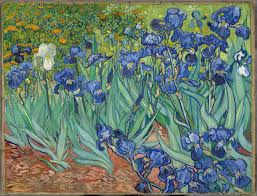
We can walk away. We can take breaks. We can sit for two hours after a long day and work on a 1000-piece puzzle depicting van Gogh’s “Irises”, or take a walk through the park plucking lilac sprigs, inhaling their beauty on a glorious spring day, or lose track of time choosing the latest fiction from the library shelves, or binge-watch “The Four Seasons” on Netflix, but then we’ve got to re-engage.

We’ve got to notice the actions that are being proposed — such as cuts to education, to PBS, to NPR!! — we’ve got to let our voices be heard — through letter writing, phone calling, boycotting or participating in peaceful protests. What we tolerate, what we look away from, what we allow — these are the things we accept.

And, overwhelmed though I might be, I cannot accept funding cuts to public education — not when I see the inequities that already exist. I cannot accept the devaluing of other humans — not immigrants, not members of the LGBTQ+ community, not minorities, not women, not anyone. I cannot accept that as the profits of billionaires increase their taxes are not commensurate, especially not at the expense of the poor. I cannot accept a disregard for the fragility of the environment — when we know better we have to do better.

Together we can weather a flood.

Beloved, let us love one another. 1 John 4:7

10 Years Later, #9 Transformation Ready

I wrote this post almost two years ago when I was preparing to go back to school. It’s good to remember the why behind the intentionality in our instructional model as I transition into the new role that I wrote about in my last post. As I begin to support teachers in their classrooms, I want to remember to articulate how important each strategy is and why.

Over the past week I’ve participated in quite a bit of professional development with the other members of my team. The main focus has been on the brain science behind trauma-informed instruction. We are using a book called Culturally Responsive Teaching and the Brain to learn the why behind some of the strategies we use in our school. A guiding principle in our community is that a large number of our students have experienced trauma or adverse childhood experiences (ACES). Our population is predominantly students of color who qualify for free or reduced breakfast and lunch and who live in the Detroit metropolitan area. Many have experienced racism, poverty, and various other traumas, but even if they hadn’t before 2020, they have certainly experienced trauma (loss of schooling, loss of family members, financial hardship, etc.) because of Covid. Because we know this about the students we serve, our network of schools uses a whole suite of practices that fall under the umbrella of trauma-informed instruction.

We understood from this week’s training that the brain’s ability to think and process information can be interrupted if it feels the body is in physical or emotional danger or if it doesn’t feel a sense of belonging in a community. Brain science teaches us that the brain stem is continuously searching for danger; if danger is perceived, all of its energy goes to reducing the threat through actions many of us know as fight, flight, freeze or appease. So, before we can hope to build community or engage our students in learning, we must first create a space that is safe, predictable, and consistent.

Slide from Champion Education Network, Summer Summit 2022

With that in mind, we have always emphasized common building norms and expectations such as teachers standing at our thresholds to greet students, having a strategically arranged classroom, and using consistent instructional practices such as Do Nows, Exit Tickets, and other practices of the No-Nonsense Nurturer model. We also use the first week of school to set culture and behavioral norms across all classrooms through common slide decks that the instructional coaches and I have prepared for use by ALL teachers. The first period that students are in the building, ALL teachers and students will review the same community guidelines which are focused on ensuring our students that they are safe in our school. The second period that students are in the building, ALL teachers and students will review a second slide deck that communicates school-wide behavioral expectations which focus on ensuring our students that they are partners in keeping our school threat-free for all. Throughout the first week, teachers will ALL play community-building games and review classroom systems that they will use throughout the school year so that students, who are hopefully beginning to feel safe, can begin to feel engaged within their classrooms.

That’s the second function of the brain, the limbic system’s focus on finding relationships and belonging, also a prerequisite for learning. Our network, with the understanding that the highest functions of cognition cannot happen until students’ safety and belongingness needs are met, has initiated the school-wide adoption of a social-emotional learning curriculum that was piloted last year. This program, Character Strong will be used in every classroom every Wednesday. Its content focuses on self-awareness, goal-setting, and community building. The hope is that the more safe, the more connected, the more self-aware our students feel, the better they will be able to engage with rigorous curriculum.

And they do need curriculum! Our standardized test data from last year is not great — I’m not sure that anyone’s is post-Covid! This makes sense! The whole world was collectively in survival mode — our brain stems were at high alert!! It’s no wonder we suffered socially and academically — we were all collectively fighting, flighting, freezing, and appeasing ourselves into a tizzy! This is evidenced by the ways that we treated each other — not as the collective that we are, not as members belonging to each other, but as freaked out individuals trying to scratch our ways to survival.

But guys, it’s time to return to our right minds, and the only we can do that that is by taking actions that remind ourselves (and our brain stems) that we are safe, held, loved, supported and part of a community.

In my classroom, that looks like order and predictability. It looks like standing at my door each morning, greeting each student by name, smiling, and tracking their language (verbal and non-verbal) so that I can attend to any signs of distress and minimize any further triggers. It also looks like an orderly room. I have desks facing one direction; seats will be assigned, but those assignments are flexible based on student feedback. Everyone has adequate space, all can see the screen where I project the goals and content for the day and the white board where I display my students’ learning data so that they can track their progress. We track this progress as a whole class — where are we together? what do we need to do so that all of us can succeed together? We set goals together; we work together; we celebrate together. We are a community.

In my personal life, it looks like continuing my practices of healthy eating, regular exercise, and plenty of physical and mental self care and adding community practices such as a ride-share with a colleague, which will ease the driving burden for both of us and provide time for building relationship in our 25-minute drive each day. We will both have heavy loads at work, so we are intentionally building in support because we are caring for ourselves while caring for each other.

As we move through the fall, using these safety and community-building practices, we will increasingly become available for academic challenge. After learning about brain science and viewing our student data, I identified a couple areas of focus for this year. I will, with everyone, focus in those first two weeks to build safety and community so that I can increase the rigor of instruction and the independence and agency of my learners. I met with my instructional coach (everyone in our building has a coach!) who agreed with my goals and to thought-partnering, challenging, and supporting me as I work toward them. I am very excited about this partnership.

Some teachers I know go back to their classrooms two days before school starts. They arrange their rooms, they make a seating chart, they pull out supplies, and that is enough for them to feel ready. That is not me.

I need every minute of the past week and the coming week to fully shift my mind from the relaxation and freedom of summer to the intentionality and rigor of the school year. I need to remember the traumas my students have endured; I need to be mindful of how my attitude can make or break the culture of my classroom; I need to remember the importance of every moment of instruction and the potential impact it might have on the futures of my students.

My principal says — and she’s dead serious — “We are saving lives here, team.” We are the potential last educational stop for many of our students. What we do and how we act can change or solidify the trajectory of our students’ futures. Our practices, our climate, our culture might just create the safe space in which our students can try to trust, begin to believe, and turn toward a life of transformation — one for themselves, but also one that impacts everyone they touch.

And isn’t that the most powerful thing we can give one another — the space, the safety, the confidence, the support, and the encouragement to be transformed?

I am looking forward to transforming right along with my students.

be transformed by the renewing of your mind.” Romans 12:2

**I have an ongoing wishlist. If you’d like to support my students check it out here.

10 Years Later, #8 Prepared for What’s Next

I wrote this post four years ago, in July 2020, just a few months into the pandemic. It’s the first in a series of five posts that chronicle my decision to return to the classroom after six years away. I’m posting it again now, to affirm that the passion I felt in that season remains strong today. I am getting ready for another, less dramatic, transition, and in the spirit of this 10th year of writing this blog, I’m looking back to remind myself how far I’ve come and to celebrate some wins in the hope that that energy will carry me forward.

*Warning, there’s a teaser at the end of this post to get you to keep reading, so I will put links to the following four posts at the end.

Six years ago this week, I said goodbye to my classroom in St. Louis. I was depleted and sick, and I was certain that I would never have a classroom again.

I’d been struggling with joint pain, systemic inflammation, and fatigue for a year and half — I had difficulty making it through a school day, let alone driving home at night. When I arrived home, I would plunk on the couch or in my bed and accomplish little else until I had to drag myself back to school the next day.

It was a difficult time. Our family had long been experiencing trauma that began with a drastic change in lifestyle caused by a geographical relocation during which my husband went to grad school and I began teaching full time. Our children entered a totally new culture with inadequate support from their parents who were doing their best to fill the demands of the new roles they had assumed. In the years after that major change, our family felt the first hand effects of bullying, social class disparity, eating disorder, depression, anxiety, and sexual assault. All the while, I just kept producing lesson plans, grading papers, and bringing my best to the classroom day after day after day.

Finally my body had had enough. If I wouldn’t sit down of my own free will and assess the damages, mourn the losses, and begin to soothe the hurts, my body would simply crash. And crash it did.

And when, in the midst of that crash, my husband took a new position in Michigan, my medical team suggested that rather than jump right into something else, I should take six months to rest.

Rest. Period.

So I did. I came here to his little house by the river near the end of a beautiful Michigan summer. I took long walks in the park, read books, watched too much TV, put together puzzles, organized and re-organized, and rested.

I didn’t prepare any lessons or grade any papers, but I did begin to write. It was during that period, six years ago, that I began this blog. In the beginning, I wrote every single day as though my life depended on it. In some ways, it did. I had to reacquaint myself with my internal life, had to start hearing my voice, had to start listening to what was happening in my innermost places.

I wrote about my illness, I wrote about coming back to Michigan, I wrote about loss. Many of my posts were a reflection of a renewed commitment to my faith journey, which had also been relegated to survival mode during what I’ve come to call the soldiering years.

It was my writing that started the healing, and through it I chronicled the other steps I began to take — exercise, dietary changes, building community, therapy, and myriad medical and peri-medical approaches like yoga, massage, and homeopathy. I wrote about the ups and the downs — the days when I felt strong and the days that I crashed. I’ve written about victories and grief, sorrows and joy.

And all the while I’ve been healing, and I’ve been preparing for what’s next.

I’ve often told my children and my students that all of life is preparing you for what’s next. Crawling prepares us for walking; school (at least in theory) prepares us for work. Warm-ups prepare you for exercise; practicing scales prepares you to make music. All of life’s experiences are preparing us for the experiences that are yet to come.

Before we moved to St. Louis, I completed my Master’s degree in English education which prepared me to take the position I held at Lutheran North for nine years. Before I met my husband, who had experienced divorce, I had had my own experience as a child of divorce which gave me empathy and prepared me for my role as a stepmother. God has a way of weaving our life experiences together, like a Master teacher, layering lesson upon lesson so that we are always equipped for what comes next.

It about killed me to wait six months to find a job, and I will confess that at about month four or five, I took a proofreading job for a guy working on his master’s in education. His research resonated with my heart for equity, and I loved speaking into his ideas. The feedback I got from that small job gave me the confidence to promote myself as a private tutor where I supported students who struggled with English — reading, writing, speaking.

Many of these students were English Language Learners or were raised in two-language homes, so they needed support with the nuances of English grammar. In order to meet their needs, I became much stronger in my ability to articulate the rules of sentence composition, the parts of speech, and the role of punctuation. This came in very handy when I found myself teaching a developmental composition course at Concordia University — a part-time gig — where I helped freshmen become more comfortable with writing paragraphs and essays.

After I’d been tutoring for a while, I randomly found a job posting on Craigslist to be a ‘tutor’ at Lindamood-Bell. That ‘tutoring’ position tutored me. It allowed me to start part-time while I continued to experiment with treatments for what was once called psoriatic arthritis but which I now refer to as ‘unspecified autoimmunity’. It gave me opportunities for advancement when I felt (and even when I didn’t feel) that I was ready. It challenged me, it stretched me, and it reminded me of the mettle within me that carried me through nine years of teaching high school juniors and seniors. By meeting with students one-on-one, by utilizing a variety of online materials and platforms, by writing instructional plans, by following instructional design, by mentoring other instructors, and by supporting my colleagues, I have been prepared for what’s next.

While I was tutoring, then teaching at the university, then working at Lindamood-Bell, my health slowly improved. As is chronicled in this blog, I have found the best health I’ve experienced in years through specific dietary choices, daily yoga and walking, weekly visits alternating between chiropractic care and physical therapy, monthly Hellerwork appointments, and twice yearly pain injections. I’m healthy, strong, and ready for what’s next.

This whole past six years has been preparing me for what’s next — first the pause, then the dabbling in tutoring and adjunct instruction, then a full-time job with ever-increasing responsibility.

So what’s next?

Could it be that God is planning to use everything I’ve been learning over this six year period of healing and growth in a position that is focused on educational equity — my long-time passion? Is God that good?

He’s that good; it’s almost as if He’d had it planned the whole time.

I’ll tell you more about that in my next blog post.

“For I know the plans I have for you,” declares the Lord, “plans to prosper you and not to harm you, plans to give you hope and a future.” Jeremiah 29:11

If you’d like to read “the rest of the story,” I’ve included links below.

Changing Course, pt. 2

Changing Course, pt. 3

Changing Course, pt. 4

Changing Course, pt. 5

10 Years Later #7: Reviewing Observations

This blog began when I left the classroom in 2014 because of the symptoms of an autoimmune disease. This post was written 1 year later (June 2015) when I was struggling to re-enter the work world. It’s interesting to look back now that I’ve completed 4 years in my classroom in Detroit. While I was often sidelined in those early days while I learned how to read the signals of fatigue and how to attend to my body’s need for care, I have now found some strategies that keep me going. Posts like this one serve as a reminder of how much healing I’ve experienced in this next chapter and how mindful I need to be as I move forward.

Last June I resigned my full-time teaching/school administrator position to relocate to Michigan from Missouri. I did this because a) I love my husband; and b) I have a life-style changing auto-immune disease. I took six months completely off and have been gradually introducing more and more work into my life since January. I’m almost a year into this grand experiment, and  I’m ready to review some of my observations.

After the initial dust settled from our cross-country move, I spent a significant amount of time on the couch watching Netflix, in my bed resting, at the gym exercising, and on my computer blogging. I really needed that time to recover after over 20 years of parenting, schooling, and working at or above my human capacity.  It was lovely — I had time to make friends, I began to listen to my body, I reconnected with my love for writing. It was healing physically, yes, and also emotionally.

For the first time in twenty-two years, my husband and I were living alone, enjoying a slower pace, and sucking up every minute of it. But, I couldn’t quite rest easily because I didn’t have any students in my life. I know, I know –over the past umpteen years I have fussed and fumed about the kids that have sat across the table from me — they are egocentric, they don’t meet deadlines, and, indeed, they smell bad. But, you know, I love them. I can’t seem to get enough of them.  

Something magical exists within each of us — an innate ability to learn, to process, to interact and be changed — that will never cease to take my breath away. I had to have students back in my life.

It started with just one guy — a graduate student who needed help on his dissertation. What a joy that was! I got to have a text-based conversation with him about educational practices and how they impact learning! That taste just whetted my appetite, so I moved onto a retired writing instructor who had written a novel and just wanted a final proof for grammar and punctuation errors. That led me to set up a profile on an online service connecting teachers with students for one-on-one assistance. In six months I have logged over 120 hours with almost twenty different students ranging from sixth graders to graduate students. I’ve worked on research papers, vocabulary lessons, dissertations, speeches, and test preparation.  

Each lesson is different, each student a challenge. So why didn’t I stop there? While tutoring independently, I could still maintain my exercise regimen, still build friendships, still find time to rest. Why did I have to push the limits and take on a job that will soon be at forty hours a week for the duration of the summer? Because I had to know. I had to know if I was imagining my limitations or if they were real. Maybe I was just burnt out from teaching and sorely in need of a vacation. Maybe I had imagined all my symptoms.

Surely I didn’t have that much pain, that much fatigue, that much stiffness. How could a regular job be too difficult for me? Because it is.  

This week I worked thirty-two hours at the agency and an additional seven hours tutoring. Not quite 40 hours in all, but it was a bit too much. Yesterday, at the end of an eight-hour shift, I met some friends for drinks and dinner. I called one of my friends by the wrong name — twice!  This is a friend I have known since the fall! I was mortified. I thoroughly enjoyed the evening, but I was home before nine and crawled straight into bed — no reading, no television, no nothing. I was entirely depleted. This morning I woke up crabbily.  I can feel the inflammation through my body like an electric current.  It is as if I am an electric blanket that has been turned up to ‘high’ —   I can feel all the wires as they heat up.  My lips are dry and tingling. My back and hips ache. My eyes are screaming, “If you think you are going to put those contacts in, think again!” Yup, it’s too much.  And, just to be sure, I am going to push it a little further.  

This week will be a little lighter because of a trip I am taking for the second half of the week, but then I am certain I will be working over forty hours a week for the duration of the summer. Why don’t I just walk away now? Because I know me. If I walk away right now, I will rest up for a few weeks then start thinking that perhaps I was imagining my fatigue, maybe I didn’t really have all that pain, maybe my symptoms weren’t real. Nope, I’m not going to walk away right now. I am going to finish the experiment all the way to the end to be sure I come to all the right conclusions. My hypothesis is that I am going to be utterly exhausted and ready to slow back down, but I’ve got to complete this experiment to be sure.

10 years later…

It feels like I’m still experimenting. Right now, as I lie in bed, I can feel that electric current in my hips — I sat a lot yesterday — and I know I need to do some yoga and that an epsom salt bath is in my near future. I do still get exhausted, but I know how to take rest and how to recover, so I’m gonna keep going, keep meeting new students, keep finding that innate ability within them (and me) to learn, to process, to interact, and to be changed.

That is my current — 10 years later — review of my observations.

10 Years Later #6: Trouble Drives the Narrative

Written in May 2018, this post remains a favorite of mine. Today I’m adding a voice recording.

Every story worth reading is built around a problem — forbidden love, mistaken identity, murder, theft, robbery, and the like. I doubt many of us would even bother to read a story in which everything goes smoothly or in which the main character never faced a challenge. What would be the point?

If when Mayella Ewell accused Tom Robinson of violating her, someone had stepped up and said, “Come on now, you just want to accuse an innocent black man because it’ll make you feel better about yourself,” and Mayella had said, “Oh, you’re right. Sorry about that,” To Kill a Mockingbird wouldn’t have been a story. Sure, we all would’ve preferred Tom to have gone free — he was innocent after all — but Harper Lee builds her story around this fictional trouble to reveal a real-life trouble of the time. And that trouble drives her narrative.

In the story, Atticus Finch wrestles with racial injustice. We see him take risks to stand up to prejudice, shoot the symbolic rabid dog, and try to explain the harsh realities of life to Jem and Scout — and those are the reasons we love this story! We don’t love the ugliness of racism, the trial of an innocent man, his conviction, or his death. No, we like the character who recognizes and stands up to injustice, who doesn’t lose his head, who is able to speak truth and maintain hope. We don’t love the conflict, we love what the character does in the face of the conflict.

Without conflict a story hardly exists.

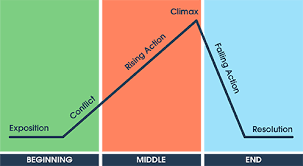
In fact, from early grades, we learn that stories have an arc — the exposition in which the writer provides context and sets the stage for the action, the rising action that introduces the conflict, the climax where the outcome of the conflict becomes evident, the falling action during which the loose ends get tied up, and the resolution that enables us to close the book and move on to the next story. The heart of every story is the conflict — the trouble drives the narrative.

The trouble, however, is not the story; the ways in which the character faces, weathers, endures, or learns from the trouble — that is the story.

Real life stories, too, consist of ups and downs, twists and turns, successes and failures, joys and disappointments. We expect these rhythms in the lives of fictional characters, but when we are living out our own life stories, we get can trapped in the mistaken belief that life is only good when it is free from trouble. When conflict is introduced — divorce, crime, illness, addiction — we can be tempted to believe that our story is over. Any writer knows that the introduction of conflict is the very beginning of the story.

The Wizard of Oz opens with a tornado that lifts Dorothy’s home off its very foundation, hurls it through the air, and lands it in a far away land with an impact that kills an evil witch. Talk about trouble! The story, however, is not about the tornado or the traumatic journey through the air or even about the witch, but it is about Dorothy’s ability to take step after step down the yellow brick road in a quest to find her way back to the people she loves.

The trouble is not the end of the story; it is the beginning.

Each of us has faced trouble. My close circle of friends could sit sipping coffee and share tales of betrayal, abuse, illness, financial ruin, scandal, and broken relationships. In fact, as we get to know one another, it is not typically our successes that we share but the troubles that have played out in our lives. Why? Because these times of trouble shape us. Just like Atticus’ defense of Tom Robinson revealed his integrity and his ability to keep his cool when an angry mob confronted him in the middle of the night, our experience with trouble exposes our inner grit — that strength that lies dormant inside of us until a moment of crisis requires it to surface. Dorothy would’ve never known that she was capable of standing up to the Wicked Witch of the West if she hadn’t been hurled through the air and found herself in completely foreign territory.

Trouble reveals what we are made of.

In the smooth sailing sections of my life, I have been tempted to think that I know all there is to know. I have lived with the mistaken belief that I have it all together — that I can handle life all by myself, thank you very much. I’ve even been prone to judge those whose lives are not sailing smoothly — certain that their trouble is the result of some fault of their own.

However, when crisis arrives in my life — and it surely does — I have to admit that I don’t know everything, that I can’t work things out by myself, and that trouble comes with or without my help.

One thing remains certain: times of trouble shape me.

That’s what conflict does. It allows the character in the story to be transformed — to be dynamic — to be reshaped. Dorothy arrives back home with a new gratefulness for the people in her life. Scout, having watched Atticus navigate the trial of Tom Robinson, gains a new compassion for those who have a different experience than she does. Me? I learn humility and reliance on God.

Trouble brings me to my knees and forces me to admit that I am poor and needy. From this position on the ground, heaving with sobs, I hear a still small voice: Be still. Know that I am God. I will never leave you or forsake you. My sobbing softens. I remember that I am but dust. I am not exempt from suffering. No crisis has afflicted me that is not common to man. And certainly this trouble is not the end of my story.

I whisper a thank you as I wipe my tears and push myself up to standing. I remember the words prayed over me many years ago, “Do not be afraid; do not be discouraged, for the Lord your God will be with you wherever you go.”  That is my grit. That is my inner strength that sometimes lies dormant but never fails to surface in times of trial. The strength of my character is not in my ability to have all the answers but in my realization that I have none of them. That realization keeps my pride at bay and allows me to turn for guidance and strength to the One who knew me before I was born and who has written every page of my story. He is not surprised by the trouble; He is using it to re-shape my character.

In this world you will have trouble. But take heart; I have overcome the world.”

John 16:33

Living in the Tension

It’s hard, isn’t it? Living in the tension?

The tension of things not yet finished, of things that are uncertain, of things we need to do, of things that will probably work out in time, and of just all the things.

But isn’t that just life? Aren’t we always living in the midst of tension?

I certainly can’t be the only one who has a list of things I’d like to work on around the house — things that need to be cleaned on repeat, things that need updating, things that need repair, and things that just need to be maintained. It’s never finished all at the same time, so we learn to live with the tension of wanting things done but always having something undone.

Right now, I’ve got seedlings sprouted on the back patio, drinking in sunlight, waiting for the garden to be prepared, which will require several [more] rounds of weeding, an infusion of compost, some tilling, and then several days of meticulously moving the seedlings from their current location into the ground.

Sounds pretty normal, right? And isn’t it also normal that we are struggling to find the time to schedule the steps required to make that process happen. When do we have time to go pick up compost, to weed [again], to rototill, and to plant? Don’t we all have day jobs and groceries to purchase and laundry to keep up with and meals to prepare and family to visit and friends to have dinner with?

We will certainly get to the garden — we manage every year — but until we do, I feel this hum of electricity. It’s the tension.

And it’s not just the garden, of course. My seniors have four weeks of class remaining, and in that time I have ensured them that they will submit two more discussion board posts, write one more five-paragraph essay, and take a grammar and vocabulary quiz. When I say it all in one sentence like that, I hear the protests from the classroom. How could I expect them to do all that when they also have prom to prepare for, a cap and gown to procure, jobs to go to, and parties to attend. They (and I) know it will all happen, but until it does, we live in the tension.

Right now, in this season, my husband and I [and possibly you, too] have some extra life circumstances that are adding to the volume of tension we are experiencing. With one parent on hospice for stage 4 liver cancer and another finishing chemo and awaiting surgery for stage 3 bladder cancer, the tension around the unknown is palpable — I can feel the vibrations in my body.

What will the next weeks look like? Where will we be needed? Will this difficulty be addressed? Will this problem find a solution? What is our role? Who else can help?

I was sitting in therapy this past week, verbally processing all of this when my therapist said, as she often does, “This is a lot.” Looking back into the screen of our zoom room, I replied, “Yeah, it really is.” Then, because she’s known me for going on four years, and because she knows about my chronic health condition, she added “all of this stress is of course impacting your body, so you need to make sure that you are doing the things that off load some of the stress. Prayer can help. Yoga can help. Massage or acupuncture….”

“Oh, yes,” I replied, “that is a good reminder. In fact, just this week I noticed the first stages of psoriasis showing up on my elbows.”

“That’s a signal,” she said.

“Yes, it is,.” I replied, and then added, “I am still walking every day and doing yoga, I do pray, and my writing is essential, but with such a busy schedule, I have let some of the body work go. However, I think I can fit in some acupuncture this week. That’s a good thought.”

And when I closed out our zoom room, I went online to schedule an appointment.

Friday after school, I made my way to the airy acupuncture practice. I signed myself in, sat down, took off my shoes and socks, and waited for the practitioner. Diane, to come over to me. When she arrived, she said, “Hi, Kristin, how are you doing today?”

“Actually, I feel pretty good, but I’m under a lot of stress, and my therapist recommended that I receive some care.”

We chatted for a minute, and she said she is recommending that all her teachers watch a show called Rita on Netflix. She said it’s a fun Danish show about a badass teacher that I had to promise to check out. Smiling, I said, “I’ll watch it tonight.”

“Good,” she said, and then she checked my pulses and the appearance of my tongue, and had me lie down on a bed. She started inserting needles, first in my left ear, then my forehead, then my wrists, and finally my ankles. My eyes were already closed before she started, and I felt my body grow heavy and shift into a deep relaxation almost immediately.

I was aware of ambient piano music and of Diane speaking to other patients nearby, but I was definitely semi-conscious and allowing my body to receive some restorative care, to offload some stress, to release some of the tension.

Before I knew it, Diane was standing next to me, removing the needles, and welcoming me back to reality. “I let you go an extra five minutes; I hope that’s ok.”

“Oh, yes, I think I actually slept a bit.”

“You did,” she affirmed. “I’ll see you back in a week.”

A little surprised, I said, “You think I should be seen in a week?”

“Yes, I do, until this stressful period is over.”

“Oh, that makes sense,” I thought out loud.

I sat up, put my socks and shoes back on, and wandered slowly to my car. My husband was out of town, so needing a little dinner, I drove to the nearby food co-op and purchased a pre-made chicken curry and lemon rice, went home, opened the windows to let some fresh air in, tidied the house just a little bit, and sat down to enjoy my meal.

The warmth of the spices felt like a balm, and I ate every last grain of rice. I could feel the healing goodness seeping into my body, and I could no longer hear the electric hum of the tension.

I had almost forgotten the promise I made to Diane, but then I remembered, went to Netflix, and searched for Rita. Oh my, I thought, it really is Danish. It has subtitles. Am I really up for this at the end of a long week? Let me give it a couple of minutes.

And I was drawn in to the life of this teacher who has all kinds of tension of her own — a very demanding student, the student’s indignant parents, a complicated involvement with an administrator, and her relationships with her three grown children. She navigates it all — the messiness, the richness, the unsettledness, the tension.

I laughed, I smiled, and I finished the episode.

Then, I climbed the stairs, tucked myself in bed, and slept.

It’s just a normal amount of self care for one person on a Friday night — acupuncture, a delicious meal, therapeutic Danish television, and a good night’s sleep.

Did the tension so away? Of course not. Nothing has changed — the garden is as it was, the house is merely momentarily tidier, my seniors still have four more weeks of class, and our parents are still battling cancer—in fact, one is in the hospital right now.

Life is full of persistent tension.

And, because my body does really need a significant amount of self-care to stay healthy, I kept it going throughout the weekend — I practiced yoga, ate several healing meals, took long walks, got lost in a novel, met with our small group, worshipped, watched another episode of Rita, and got a pedicure. Perhaps it seems like a lot, but as the tension amps up, apparently so must the self care.

For now, my body is relaxed, the electric hum is quiet, but I will need to continue to find spaces to rest and restore, because life [and its tensions] will continue, and I want to be able to show up for it. I want to be able to dig in the dirt, congratulate my students as they walk across the stage, and support our parents as they move through this season.

I just scheduled my next acupuncture appointment, and it won’t be long before I watch my next episode of Rita.

We can’t get rid of the tension, but we can find ways to live in it.

Of Running, Stumbling, and Staggering

I used to be a runner. I ran in my early twenties, up until I got pregnant for our first daughter, then shifted my focus to walking behind a stroller and chasing kids at the park. Then, in some of the very chaotic days of our family, I returned, probably out of desperation, to the consistency of running — trotting for three miles at the end of the teaching day. It was a way to decompress, to find some silence, to download the details of the day, and to transition from the classroom to the work of parenting.

Those three miles turned into more, and I eventually found myself training for and completing two half-marathons — 13.1 miles in (for me) just about two hours. Running was a space where I felt strong and confident, and it perhaps let me escape from the spaces where I didn’t — my marriage, my family, and even my classroom.

The fact that I was able, in my forties, to run 13.1 miles added to my soldier mindset, helping me believe that I was kicking butts and taking names, and helping me dissociate from the failures in my personal life that I was too terrified to face. Running helped me survive that difficult season, and then, when I became chronically ill and could no longer run, I had to face the things that I had been running from.

Since 2013, I have been stumbling my way through the realities that I did not face during that season, searching and longing for a newer healthier space.

And I keep thinking I have arrived to that space — that I have finally gotten to the bottom of the rucksack I’ve been lugging around, that I have unpacked, examined, and processed all the hurts from the past — and then I turn the rucksack over, give it a little shake, and something else falls out. How could I have missed that? How could I not have seen, known, heard, understood? And I find myself staggering again.

And that is what I have been doing. Staggering.

It was six weeks from the end of the semester when someone near me was sorting through their own rucksack full of unfinished business and inadvertently knocked mine off the shelf. I thought I was standing by supportively as they managed their pain, when a shard from my own bag was knocked free. As it fell, it grazed a tender spot and broke open an old wound.

The cut was deep, but I had seniors who needed to finish their semester, freshmen who still needed my attention, and a garden that needed to be planted. So, I packed that wound with gauze, wiped my eyes, and tried to stay in motion.

Different from my running days, though, my steps have been slow, and despite being off-balance, more intentional.

I have learned in these last ten years some ways of holding more than one thing at a time — how to keep one hand firmly over the wound, applying pressure, while slowly moving through the remaining days of the school year. In the mornings, I stayed in bed a smidge longer, distracting myself with Wordle, and Scrabble, and Spelling Bee before stumbling to my little spot in our home office to scratch out my thoughts and feelings (and to-do lists and calendar items) in my morning journal. I have religiously practiced yoga. I have walked, and thought, and cried, and seethed. I have seen my therapist. And a family therapist. I have continued with my chiropractor and physical therapist. And I have splurged on my nails every other week.

Life around me didn’t stop. We also fit in a visit from a daughter and her fiancee, a weekend away with dearest friends, and a weekend away with our granddaughters. And after each of those, I have needed time to decompress — extra time in the bath, in the bed, in front of Queer Eye. Time to examine the wound, re-dress it, and then get back into motion.

I have shown up to school every day with my wounds [mostly] concealed, but because of the persistent pain, I didn’t have the resiliency I would typically have, and I lost patience with my seniors, lost control of my freshmen, overreacted to a miscommunication, and just couldn’t listen when a colleague needed my time.

And Friday, on the last day of school, when only a couple dozen of our kiddos showed up, I was all alone in my room, organizing, packing up, and tossing things that had accumulated over the past several months, and I started to feel like I might be ready to slow down, unpack the wound, give it some air, and allow it to heal.

Our students had finished their finals on Tuesday, but Wednesday, Thursday, and Friday were still considered “official” school days. Many students announced early that they would not be attending, and I expected that to be true. Why would they come if their finals were complete?

But some did come. Each of those three days, a pretty similar group showed up. Most didn’t stay in their assigned classes — some found their way to the gym to shoot baskets; some relocated to a favorite teacher’s room to hang out; some did what they are known for — strolling the halls and getting into mischief.

They got free “breakfast” (if you can call a packaged bar and box of juice breakfast) and lunch (and I have to admit that the tacos on Thursday looked rather appetizing), and I thought maybe that is why some of them continued to come — for the food. But then, on Friday, about 15 minutes before dismissal, students were told to empty their lockers and get ready for the bus. We all moved to the hall. Teachers who would not be returning in the fall handed out notes and said their goodbyes. Students began hugging their friends and their teachers, and a few began to cry.

And that’s when I remembered — I am not the only one staggering. We are all stumbling along, doing our best, trying to make it through. We are all hurting; we are often just so focused on our own pain, that we can’t see the the limping of those in front of us. Many of my students find their strength and confidence in our building — this is where they feel safe, and seen, and loved. And for the next two months, they won’t have access to this space where they can ask a teacher for snacks, or feminine supplies, or a new deodorant, or more importantly, a place to sit in the quiet, to speak and be heard, or to get a hug.

I wonder what their next two months will look like? Perhaps, knowing what was ahead is what brought their tears.

My next two months provide me some space — to rest, to shake that rucksack a few more times, and to write, because that’s where I mind meaning, the meaning that is often buried under layers of bravado — my futile attempt to conceal the fact that I am hurting.

Brokenness is the human condition. In some seasons we survive it; in other seasons we grieve it; in others we process it and hope that in that processing we become able to see the brokenness in others and allow them the space and the grace to be in whatever season they are in.

For from his fullness we have all received grace upon grace.

John 1:16