Life These Days

The question of the moment around folks my age — and for the record, I’m just shy of 60– is “how much longer do you think you’re gonna work?”

My most frequent response is often something like, “I’m not in a hurry to be done. I love what I do. I hope I can stay at it a while!”

This is, of course, not how everyone feels. Many my age have put in a long, hard 40 or more years of work in jobs and careers that have taken a toll — physically, mentally, relationally, or in other ways that might make a person want to walk away.

Let’s be honest, if you’ve spent 30-40 years on an assembly line — you might be ready for a change of scenery. If you’ve led a corporation and had the weight of the bottom line, personnel challenges, and inventory management on your back, you might be ready to sit by a pool, sipping a cool drink. If you’ve been in a classroom for 40 years — attending to the needs of children, designing instruction, managing behavior, and adapting to continuously changing policies, cultural norms, and learning challenges, you might be ready to just have a day that doesn’t involve managing anything but yourself.

And while I have certainly had my challenges and seasons of disillusionment and burnout, none of those scenarios truly describe me. After working in many different settings over the years, I find myself in a role that feels like a culmination — the place I was intended to arrive at, so I don’t find myself asking how much longer I want to work, but rather: When I look back at all I have learned, what do I have to offer these days?

In the early years — the first 3-5 of my career — bravado carried me past insecurity so that I could survive in situations that were way outside my experience. A middle school special ed classroom in Detroit? No problem for this secondary English major from small town Michigan! A self-contained classroom inside a residential facility teaching not only ELA but also social studies, math, science — I got this! I faked my way through and while I can’t say that my students (or I) won any awards, everyone learned something — including me. I learned about being overwhelmed and about working with limited resources. I learned to lean into the uncomfortable and to try just about anything. Did I occasionally lose my shit and come undone in front of a classroom full of typically behaving students? Sure. Did I also take a van load of Detroit teenagers on a day-long adventure to Ann Arbor? Yes, I did! Did we overfill our day with activities? Absolutely! Did we arrive back to school late after dismissal? We sure did! Did those kids and I have a ball touring a college campus, going to a hands-on museum, and eating at Pizza Hut? Yes! Rookie me swung for the fences, folks.

The bravado only carried me so far into my years at home with my own children. In fact, I think it was day one home from the hospital when I called a friend emergency-style to come save me because nursing wasn’t working out according to plan. I wish I would’ve admitted right there and then that I was clueless about mothering, but faking it until I made it was my theme song, and I just kept singing. Before I knew it, I was sitting on the living room floor with three children of my own, reading stories, learning letters, and playing games. Those days were exhausting and precious to me! We had a lot of fun, but I was making it up as I went along, so I certainly made plenty of mistakes. I pushed myself and the kids way too hard, and I expected way too much, but in continuing to give it everything I had, I learned how to schedule out a day that included learning, adventure, rest, and play; how to turn a few hot dogs and some popcorn into a baseball watching party; and how to get through a puke-filled night with little to no sleep. I learned that I could manage much more than I imagined, that I had a lot of people who were willing to help, and that it wasn’t a weakness to ask them.

When I returned to the classroom the first time, it was to a position that was far bigger than my experience — the English Department Chair and Dual-Enrollment ELA teacher at a small private high school. Not only would I, once again, be faking it ‘til I made it, I would be doing so all day long in a new environment while I was also still —at home — learning how to parent my own children who were in the process of transitioning from childhood to adolescence in a new home in a new city in a new state.The lift in both arenas was immense, but I was gonna make it happen. I learned a curriculum, read dozens of books, short stories, poems, and essays and adapted to a modified block schedule and the world of Apple computers while I also navigated the needs and ever-changing emotions of a family that was struggling to find its footing. For nine years, it seems, I was in constant motion — either preparing to teach, teaching, or grading in one space or cooking, cleaning, driving, scheduling, or otherwise parenting in another. Those years seem like a blur as I look back, probably because I never stopped running.

And then, all the motion came to a halt. Readers of this blog know that those years ended in an autoimmune diagnosis and an exit from the classroom followed by convalescence and a [next chapter] of re-learning how to live which landed me where I am now.

I came into this season humbled by the knowledge that I did I have a limit, and that I did not indeed know everything. When I was offered the position to teach ELA at a small charter high school in Detroit, I was grateful to be in any classroom at all. The fact that it was familiar territory — teaching seniors about college and the skills they would need to be successful — meant that I would NOT have to fake it til I made it. I could just be the authentic me, sharing what I know and loving the students who were in front of me. Granted, I still had much to learn — our school has an instructional model that was new to me, and I would, for the the first time in my career, have a coach, but none of that was overwhelming. In fact, it was comforting to know that I had support and that I wouldn’t have to find all the answers on my own.

That was over five years ago, and now I’m no longer teaching but coaching other teachers who may be in their very first year or nearing their 10th or 20th year. Some of them are faking it until they make it, some are disillusioned, and some are managing a lot in other areas of their lives.

I have a front row seat to their experience and that’s why I’m asking myself this question: What have I learned and what do I have to offer these folks?

I’ve learned that showing up and doing your best goes a long way — even if your best isn’t amazing, it’s likely good enough.

I’ve learned that being brave can lead to remarkable opportunities that change you forever.

I’ve learned that others are willing to support you if you are willing to ask.

I’ve learned that family is much more important than work and that your health needs to take priority over any perceived deadline.

I’ve learned that who I authentically am is much more valuable to my students and the people I love than getting every decision right or accomplishing every task.

I learned these things the hard way over the last many years, and maybe these folks — the people I rub elbows with every day and those that I coach — will have to learn them the hard way, too.

I think what I have to offer right now is the empathy and compassion gained from my own journey. I have a rare opportunity to offer support and encouragement, and the wisdom that comes with each of these gray hairs.

I’ve got perspective — each day is important but no day is definitive.

I’ve got plenty of gas left in the tank to come alongside the members of my team, to see their passion, their frustration, their hope, and their fatigue. If they are willing to keep showing up, I will, too.

Maybe I’ll get a chance to share what I’ve learned. More likely, I, too, will learn something new.

Teach us to number our days, that we may gain a heart of wisdom. Psalm 90:12

Capacity

Did you ever wonder what your capacity is? How much you can truly hold, carry, manage, or deal with? Have you, like me, recently found yourself staring that limit right in the face?

Yesterday, I walked into my principal’s office for a meeting we had scheduled. She was wrapping up a conversation with a student who had lashed out at a classmate because she “just couldn’t do it today” — she couldn’t handle his joking, couldn’t deal with the annoyance.

“Every other day I can just ignore him, but today wasn’t that day.”

“You didn’t have the bandwidth?”

“Nope.”

“I get it. I’m glad you’re talking about it. We all have days when we have reached our limit.”

At the age of nearly 60, I’ve had loads of days where I have reached my limit. When I was a child, I might’ve reached my limit quite quickly — I might have fallen to pieces simply because it was time to leave my grandparents’ house. When I was in high school, like the student above, a classmate’s comments might have pushed me over the edge.

But here’s the thing about life, as you move through it, you build muscle — and capacity — and you are able to manage much more than you ever thought possible. Still, everyone of us can find our limit.

I mean, everyday life can be seemingly at the “this is working” phase — you’ve finally found something that resembles work/life balance. You can meet job demands and also attend to the laundry, meal prep, family needs, and even routine maintenance of the house and the car. In fact, you can also easily manage your role in meeting the ongoing life and healthcare needs of an aging family member. You’re feeling pretty good because you also managed to budget for and schedule your participation at a weekend family vacation/celebration in the first quarter of the school year and you’ve plotted out on the calendar how to keep all systems functioning while you are away.

But then.. just as you are packing your suitcase, a major household system (think HVAC, plumbing, or electrical) has a major issue.

“No problem,” you announce boldly. “We’ve prepared financially and we can deal with it fully when we return.” You’ve been through enough difficult situations in your life that you know this isn’t the end of the world. A frustration? Yes, but meltdown worthy? No.

You merrily leave for the event, and upon your return home just a couple days later, you realize that said major household issue could possibly still be an issue, but it’s late, and you’re tired, so you try to get some sleep.

You wake the next day, to “knock out” a deliverable on a pre-arranged work-from-home day, only to realize it’s not the kind of thing that can indeed be “knocked out” in a day, so you lift up your concern to a supervisor who directs you to “just A, B, and C”, so you spend a few hours doing A, B, and C, and then your supervisor’s supervisor drops into the group chat and says, “No, A, B, and C won’t work. So, I’m just going to complete this deliverable so that you can run with it,” and your face falls flat. You close your laptop and go for a walk.

Did you let your supervisor know that you were annoyed? that it bothered you to spend time on a project that was subsequently dismissed? Did you perhaps have a tone? Did you perhaps register your complaint a bit too strongly and too repeatedly?

Perhaps. But have you hit capacity? Not even close. You can’t even count how many frustrating days you’ve had at work, how many hours you’ve spent on projects, or how many times you’ve had to toss the product of hard work.

However, while you were elbowing your way through your work day, your husband was discovering that the major house issue has actually turned into a much more major house issue involving multiple contractors, several estimates, insurance adjustors, and scheduling.

“Ok,” you say, taking deep breaths, “we are still ok. We’ve gotta keep doing yoga, keep eating right, keep walking, keep writing, but we’re ok.”

Your husband, thankfully, continues to manage most of the house details, while also meeting his own professional responsibilities, and you pinch hit when needed while juggling the demands of yours.

The next weekend arrives and while he stays home to continue project management, you head north to support the aforementioned family member. The weekend is less than demanding, and you catch up on sleep, before returning home in time to eat, rest, and return to work on Monday morning.

The work week starts out typically, but on Tuesday, things start to pile on. The family member needs additional medical tests, you learn the work on the house isn’t scheduled to start until December, and as you leave work, you find yourself driving through a torrential downpour so that you can make an appointment for a routine oil change. After waiting for an hour and managing various pieces of correspondence, you learn from the technician that it’s time to replace the tires and she has prepared you with three separate quotes. You can feel your affect going flat just as you receive a notification on your phone that the storm has caused a power outage at your house.

And that was it.

You hit capacity. You couldn’t talk about it. You couldn’t process it. You had not one shred of bandwidth.

You drove the 20 minutes home in silence, made your way into the house, and plunked into a chair by the window overlooking your husband who was trying to start an uncooperative generator.

You needed food. And sleep. And something to shift.

Somehow, the two of you found your way to a vehicle, drove to a restaurant, ordered food, ate it, and returned home. You had cleaned up and crawled into bed just before the lights came back on and the furnace kicked in.

[Thank God.]

The next day the repair date was moved up to the first week in November.

[Exhale.]

The family member was seen by the doctor and a plan was put in place.

[OK.]

The tire replacement was scheduled.

[We have a plan.]

Just enough shift happened, and somehow, everything seems manageable again.

For now.

Take it from this old head, wherever you are in life, trying times are going to come and test your capacity — you may lose your mind when someone eats a bag of corn chips that were intended for the evening meal, but the experiences of today are building your capacity for the difficulties of tomorrow. And, be assured, tomorrow will certainly have difficulty — maybe just an irritating boy at school, possibly just a flat tire on the way to work, hopefully just a major house system repair that can be done and dusted in the space of a month. We need those light and momentary troubles so that we can manage it when the shit gets particularly real. And that will happen, too, I’m sorry to say. That will happen, too.

And at those times, you may find you have reached capacity — you may find you don’t have words, or reason, or the ability to make a meal. I pray you discover you are not alone or without hope. I pray that something shifts and you find that once again have some capacity.

[Indeed…] in this world you will have trouble, but take heart [I have endless capacity,] and I have overcome the world. John 16:33

Of (not politics, but) Bullying

Some people don’t like it when I talk about politics….I get it. If, as Wikipedia* states, politics is “the set of activities that are associated with making decisions in groups, or other forms of power relations among individuals, such as the distribution of status or resources,” I can see why the topic might make some people feel uncomfortable.

I mean, why would you want to examine the reality of which folks hold the power, which groups benefit from the decisions of those folks, and which groups are historically and perpetually disenfranchised by those decisions. That examination could lead to unsavory images, to be sure, and we wouldn’t want anyone to have to see that, so, let’s not talk about politics.

Instead, class, today let’s talk about bullies.

Every single school I have been a part of has had its bullies.

They don’t have to be the stereotypical intimidatingly oversized thugs that might be populating on your brain screen. In fact the bully of my first class was quite undersized. Physicality is not essential to the bully. Rather what characterizes the bully is the behavior that seeks to dehumanize, belittle, embarrass, or otherwise harm others and the presence of, at first, a yes man, then a crew, and ultimately the compliance of the larger group in allowing the bully to continue harming others.

It often starts with the bully targeting someone who is demonstrably “weak”. The bully might make fun of the disabled, denigrate immigrants, or even make jokes about someone’s weight. He (or she) looks around for a target then slings a grenade with the intent to do harm. But the harm is not where the power lies.

No. The power lies in the reaction to the harm. He gets a laugh at the expense of the disabled, a snicker at the expense of the immigrant, a guffaw at the expense of the overweight. And those responses are the fuel for the next attack.

Still high from the reaction of the yes men, the bully begins to scope out his next target — maybe someone with a little more clout — maybe a classmate or a peer. First he spreads rumors to harm his target’s reputation, he engages in name-calling to dehumanize his foe, he might even accuse others of wrong-doing, whether or not there is credence to his claims.

Throughout all of this, those around him, seeing the power he is building, have to make a choice — do they want to land in the bully’s sites or take a position at his side?

That’s a tough call, especially if you are in middle school or still have the insecurities that you had when you were in middle school. You might not think you can handle humiliation. You might not think you could weather the name-calling. You might not think you could bear up under the rumors. So, you chuckle at his antics, you move to his side of the room, you excuse his behavior as harmless, and you turn your eyes away from the victim.

And you continue to live with that decision because it still feels safer than having him turn the attention on you.

But then the assaults escalate. The blows become physical. And he’s going after someone who is or who used to be your friend. He might even attack a member of your family. Then you have to face a crisis of identity — who do you want to be? Do you want to stand behind this guy, smiling for the camera in your suit, waving your flag of allegiance, as he takes shots at not only the least of these but also at your neighbor, your brother, your friend, or your mom?

This moment happens in every bullying movie you’ve ever watched — The Karate Kid, when Danny LaRusso takes the blows of Johnny Lawrence almost to his peril in the final match, Mean Girls when Cady, who was once part of Regina George’s crew, finds herself a target when the burn book is circulated — the individual who had chosen to capitulate or even join a bully has to decide if they are going to stand up.

The rare ones who, despite their inner terror, find the courage to say “Not here, not today,” rise up from their devastation and face the bully. In the movies, this usually results in the bully walking away in shame or, in the most ideal of scenarios, having a change of heart and determining to be a different kind of person.

This sometimes happens in real life, too, although not inside the space of 90 minutes, and certainly not when the bully has been allowed to gain control beyond the schoolyard and into the community. No, in those cases, one person standing up will not be enough. To stop a bully who has, through all the text-book tactics of instilling fear through intimidation, established a culture of systemic compliance to the most ludicrous of actions, the community must come together and take a collective stand. They must, united, shout “Not here, not today!”

One person might not stop a bully, but a lot of single people, together, can do almost anything.

The bully can’t continue unless the community lets him.

Certainly the community will wake up and put a stop to it — it’s not politics, after all, it’s just refusing to let one person dehumanize another.

Defend the weak and fatherless; uphold the cause of the poor and the oppressed. Psalm 82:3

A couple of notes:

*If you were a student of mine in the early 2000s and cannot believe that I actually cited Wikipedia, see also lecture #497 entitled “Anybody Can Change”**.

**And when I say “anybody can change”, I do mean even bullies.

Also, if you listened to this post, you might be interested to know that the text version has several embedded links.

Finding a Footing

At the end of the last school year, as I waved goodbye to students and wished my colleagues a safe and restful summer, I was envisioning long days of reading broken up by an hour here or there with my hands in the dirt — weeding our garden, tending to our plants, and bringing in the fruits of our labor. I saw days on the beach of a great lake and others poolside with our granddaughters.

While I did manage to experience all of that, much of my summer was not what I was expecting. At all. Particularly not when, just a month ago, I was searching for an assisted living facility for my stepfather, helping my brothers move him in, being present for his rapid decline, then processing with my mom and siblings through his passing.

The flurry of activity was unanticipated and un-mooring. I’ve felt a little tossed about for several weeks, so the return to the rhythms of back-to-school prep of the past many days has been a welcome and anchoring exercise.

As I’ve been walking the hallways of our school buildings, I’ve been wondering if our students, too, have felt a little at sea. What has their summer been like — have they been working? helping out at home? have they had plenty to eat? time and space to rest? have they experienced loss? or trauma? joy? or celebration? Has their summer been what they were expecting? Are they, too, in need of the rhythms that will bring stability?

Because I’m not teaching this year, but rather supporting our teachers and students from a more global perspective, I’ve been managing tasks all summer like updating scope and sequence documents for various courses, familiarizing myself with the curricula taught in our building, creating Google classrooms for all of our teachers, updating our school’s testing plan, organizing and auditing the curriculum I created, and managing several other tasks. Over the last couple of weeks, I’ve also been preparing presentations and materials for the teacher orientation that begins this week.

As I’ve been checking all these boxes, I’ve needed some support (and grace) from my supervisors to reconnect with the world of school, to remind me what each of the pieces are exactly, to steady me as I find my way back to the vernacular of academics — to norms and standards, to unit plans and instructional strategies, to engagement and discourse.

I’m guessing that our teachers and students are going to need support (and grace), too. Certainly their summers have been far from the academic realm — less structured or predictable. Sure, some of them have punched a clock or had regular eating and sleeping habits, but many will have had no routine at all. Surely few, if any of them, will have sat in a desk, attended to a slide deck, navigated to a Google classroom, or submitted a document for review.

Transitioning away from my erratic summer to more routine work has not been easy nor has my body been quick to adapt. While I’m being quite diligent in getting back to eating three meals a day at the designated times and observing my normal bedtime, my body is still on high alert after weeks of urgent phone calls, last minute trips, and unexpected decisions. My digestive tract is suffering from role confusion, and my sleep patterns remain inconsistent.

Perhaps the bodies of my students and teachers, too, will be a bit out-of-kilter. Perhaps they will find it difficult to endure a seven hour school day, to sit upright for long stretches, to use the restroom at designated passing times, to make it from breakfast to lunch without a snack, to remember to get a drink between classes, or to stay awake for the entire day.

I’m finding a few things helpful in my regulation. First is seeing my people. As I’ve gone into our buildings over the last few weeks, I’ve reconnected with my colleagues, many of whom have offered hugs both of “I’ve missed you” and “I’m sorry for your loss.” We’ve shared stories and laughter as we’ve navigated our tasks.

I’ve found stability in the familiar — the drive, the building, and the faces.

I’ve found comfort in the physical — walking into my office, arranging my supplies, moving books, and touring classrooms.

I’ve found security in doing what I know how to do — creating a document, sending an email, meeting a deadline, planning a presentation.

I’m thinking about how I can use my experience of re-entry, my realization of what I’ve needed to re-acclimate, to support my teachers and students as they move from what also may have been erratic to what is more routine.

We already engineer the first week to be less about curriculum and more about connection. We are a trauma-informed organization, after all, and we know that Maslow comes before Bloom. We have a system of delivering school-wide norms and expectations, and we support teachers in integrating warm-ups, games, and getting-to-know-you activities. The first week is all about learning names and building community. It’s an opportunity for our students to get a literal or metaphorical hug– to reconnect with their teachers and classmates.It’s a time to situate themselves inside of the familiar — not only the building and its classrooms but the bell schedule, the movement patterns, the physicality of being in the space, and the kind of routine assignments that warm up muscles and build confidence.

How can I normalize the weirdness of it all — how our bodies and minds take time to adapt, how we may feel irritated, foggy-headed, tired, and out-of-sorts? The best way I know is to name it — call it out — talk about it.

Our teachers and our students may need the leaders in the building to acknowledge the heavy lift of transition — of moving from the summer-realm to the world of school. These worlds are not the same, and the move can be jarring. For me, back to school has always been a comfort — school is a place where I know how to be, what to do, and how to succeed — but it’s not like that for everyone. For some, school is an increase in stress, a place of conflict, a world of insecurity.

So, in my new role, I think one thing I can be is present — observing what is happening for teachers and for students, being willing to acknowledge that what they are experiencing is real. Of course you’re tired! Coming back to school takes a lot of effort! Yes, this is a lot of information to take it all at once, and our summer brains are not used to it.

I can also offer compassion. I get it! My body is still adjusting to the school day, too! I can cover your class while you run to the restroom. How can I support you in getting your documents completed on time? Would you like to tell me about what you are experiencing?

That’s the benefit of my role — I’ve got a head start on my teachers and my students. I have had a preview of what they might experience in the coming weeks. Now that I am feeling a little more stable, I can lend some of that to them as they transition. I can be a reminder that they will soon be settled in as well.

That, and I can make sure that my snack drawer is full, because I can bet that soon I will be hearing both teachers and students say, “Mrs. Rathje, you got anything to eat?”

I’ll be ready for them; I’m getting closer each day.

put on compassion, kindness, humility, gentleness, and patience. Colossians 3:12

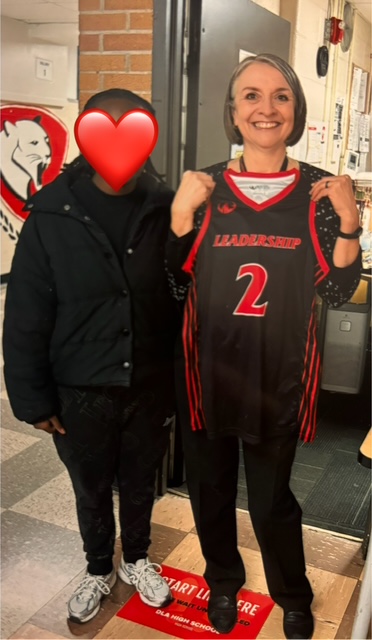
**If you’d like to support what we do at Detroit Leadership Academy, here is a current wish list

2024, How Extraordinary!

From day one, 2024 suggested it would be one for the books, but never could I have imagined just how extraordinary it would turn out to be (and yes, I do realize I am writing this with six whole weeks remaining in this storied year).

Now, when I use the word extraordinary, I am not trying to say it has been wonderful or fantastic. I am sticking with the dictionary definition of very unusual. So much about this year — in my personal life, but also in the public realm — has been extraordinary.

It might have seemed ordinary that my 61 year old husband took his pension after a thirty-seven year long career and began a private practice — lots of people do that. But it was rather extraordinary that within two weeks of his new reality his mother was diagnosed with stage 4 liver cancer and my stepfather was diagnosed with bladder cancer. We couldn’t have known when my husband decided to make this major life transition that we would be stepping into more supportive roles with our parents for the next many months and that he would need the flexibility that his private practice has allowed.

It is pretty ordinary for an organization to go through transitions when key people leave, but it is rather extraordinary that within two months of my husband leaving his university role, the board of directors of that institution announced that it would be all but closing within the next academic year. It’s rather ordinary for institutions to have a life cycle, of course, but it is rather extraordinary that this life cycle would be ended when the university was as strong — or stronger — as it had ever been.

I could continue…the whole year has been like this. I mean, it’s ordinary to have family drama, and we’ve had some of the ordinary kind, but since it’s 2024, we’ve had some extraordinary family drama. A friend, early in the year made the observation that when families are under distress or trauma, all the dysfunction shows up to an exponential degree, and I can attest that it is so. (In fact, I may have been a little exponential myself on a couple occasions, truth be told.)

We had some extraordinary moments with my mother-in-law — some of the very good kind of extraordinary moments — before she passed away on October 1. And it was extraordinary to see the friends and family roll in to say goodbye and to honor her life.

I had a couple pretty extraordinary moments with my stepfather during his chemo, during a couple hospitalizations, and during his recovery. And since his chances were 50/50 with the type of cancer he had, it might be considered extraordinary that he is now cancer free!

As we ordinarily do, my husband and I prepared our garden in the spring, sowed seeds for lettuce, radishes, carrots, and beets and planted tomato plants and potatoes. And, as usual, the radishes and lettuce thrived, the carrots and beets struggled, and the potatoes and tomatoes gave a respectable yield. But what was extraordinary was that despite the fact that we didn’t plant pumpkins, have never planted pumpkins, we harvested dozens — yes, dozens — of pie pumpkins, many of which are still in my pantry.

I don’t ask questions. It’s 2024. Anything can happen.

I can take a new role and expect to transition away from teaching, only to find two weeks before school that I will be doing the new role and teaching. I can expect this to be overwhelming only to find that I am thriving — loving the opportunity to do both roles.

It’s very ordinary to have a presidential election every four years, but how ordinary is it that both candidates are basically octogenarians? how ordinary that one of them — the actual president — drops out of the race months before the election? how ordinary that a Black and Asian female would take his place? how ordinary that her opponent is a convicted felon under investigation for myriad crimes? how ordinary that she breaks all fund-raising goals on record? how ordinary that her opponent has two attempts on his life while campaigning? how ordinary that his running mate creates a racist narrative and admits to creating it? how ordinary that a candidate campaigns from a garbage truck, spends thirty minutes of a rally playing random songs from his playlist, and still — still — still gets elected?

That’s extraordinary. And then it just gets even more unusual when he selects someone else under criminal investigation for sex-related crimes to be the United States Attorney General and someone accused of “traitorous parroting of Russian propaganda” to be the Head of U.S. Intelligence!

But it’s 2024 — anything can happen!

I can fly to Philadelphia, visit dear relatives, attend a wedding on the Jersey Shore, fly back home, and test positive for Covid all within the span of a week. That might be pretty ordinary in these post-pandemic times, but is it also ordinary to follow a Covid isolation with food poisoning? Probably not.

This year has been anything been ordinary, and it’s not over yet.

What will the next six weeks bring? I wouldn’t dare to guess.

But I am not afraid — a little obsessive about self-care, but not afraid.

After all, “What has been will be again, what has been done will be done again; there is nothing new under the sun.” (Ecclesiastes 1:9). Since the dawn of time there has been disease, death, corruption, immorality. Perhaps the brazenness of 2024 is what is catching me off-guard, but that, too, is not new.

It’s especially not new to a high school teacher. No, we live in the realm of brazenness, of bravado, of actual crying out loud — these are the hallmarks of adolescent behavior. They are intended to intimidate, to gain control, to encourage onlookers on to “pay no attention to what is behind the curtain,” but don’t make the mistake I made in my earlier days of interacting with teens. Any seasoned teacher of adolescents will tell you that behind the curtain is exactly where you need to look. Usually what you find there is insecurity, loneliness, and perhaps even desperation.

Let’s not let the extraordinary of 2024 keep us from recognizing what is truly ordinary in all of this. Each of us longs for connection, for the ability to trust those around us with our most vulnerable parts, but there is no way we can make connection when we are distracted by name-calling, blaming, bravado, the extraordinary.

One by one we have to refuse to be intimidated in the face of bluster. We have to be willing to risk, to get close, to look behind the curtain.

People are hard to hate close up. Move in. Speak truth to bullshit. Be civil. Hold hands. With strangers. Strong back. Soft front. Wild heart.” — Brene Brown, Braving the Wilderness

10 Years Later #7: Play Ball!

I wrote this post in May of 2015 when I was newly employed at Lindamood-Bell, six months after leaving the classroom. My confidence had taken some blows, and I needed to talk myself back into the game. I’m sharing it again here, as part of my 10th anniversary series because, as any teacher will tell you, May is when our spirits are flagging and we [and possibly you] need some encouragement to just keep swinging.

I am not too proud of myself at the moment. I’ve had a series of less-than-stellar performances, and I’m starting to feel like I’m going to get put on the bench.

Last week I had a dud of a session with one of my students. We were working on ACT prep and making very little progress. We kept getting stymied and bogged down in words. I was frustrated and so was he.

I left him to go to another student. She and I worked for an hour and a half on an outline for a research paper she is writing. We referred to the teacher’s model, we attended to his rubric, and we created a finished product. Her mom messaged me the next day — the outline earned a 60%.

This morning I worked with a student on reading comprehension. We were pouring over college-level text that involved math. I am not inept when it comes to math, but I am rusty. Very rusty. We each read the text silently creating notes at the same time. We compared our notes, then I asked her some higher order thinking questions about the content. Without getting into the gory details, let me just say that my student became acutely aware that I was out of my comfort zone. I could have left it there. I didn’t. I asked a colleague, in the student’s presence, to help me understand what I did wrong. And I didn’t just ask once, I blathered on and on, joking about my inability to set up a proportion correctly. That doesn’t sound like a horrible sin, but I had been told before working with this student that I should not reveal that I was a newbie — the student is very intelligent and needs to know that I am qualified to do this job. I  blew it.

The colleague pulled me aside and reminded me that this student’s success is contingent on the fact that she trusts our credibility. That’s when I remembered the explicit instructions.

It was time for me to go home, so I clocked out and walked to the car feeling a physical sensation I haven’t felt in years. A dull ache was settling in my throat and through my chest. I couldn’t take back what I had done. What if this student didn’t want to work with me any more? What hardship would that cause for the agency?  What would it take to rebuild her confidence in me.

Really, I was a mess.

I texted the colleague expressing my grief. When I got home and realized she hadn’t texted me back, I started to draft an email about how devastated I was at my failure, etc. That’s when I heard the ‘ping’.  My colleague texted me back: “Don’t worry about it! It’s all part of this crazy steep learning curve!”

We texted back and forth for a few minutes and I began to breathe more regularly, to release the tension in my muscles, and to prepare for the student that I had later this afternoon — the same ACT student that I tanked with last week.

I have had a lot of successes as a teacher.  I know I am capable, but lately I feel like I’ve been falling a little (or a lot) short. I don’t cut myself much slack. I expect to hit a home run every time I get up to bat, but even the best batter in the MLB isn’t getting a hit even half of the time. I don’t expect my students to get a hit every time they are at bat either, yet they, too, get discouraged when they strike out.

They often want to throw the bat, stomp to the dugout and sulk. That is how I felt today.  I was sure I would collapse on my bed when I got home and cry for a while — I know better! How could I make such a novice mistake!!

And I just made another one, didn’t I? My last post, Trajectory, was about how success is often related to how well we are able to adapt, bounce back, take another swing.

And so I’ve got to take a step back for a minute.

So I’ve had a few rough spots in the last week. Who hasn’t? I’ve said from the beginning that working with students is as much about lessons for me as it is about lessons for them. Why would I be surprised when my learning gets a little uglier than I am comfortable with. It happens for my students all the time. And yet they keep swinging.

I can learn a lot from these kids.

So, let me pick up this bat and head back to the plate. Before long, I’m bound to knock one out of the park.

…we count as blessed those who have persevered. (James 5:11)