Facing Change

I don’t want to brag or make it seem like I’m an expert on change, but here are the facts:

Before I graduated high school, I had lived in six homes (ok, I only remember four of them). During and after college, I lived in nine locations (counting separate dorms). Since we’ve been married, we’ve had eleven homes. You might call me a moving expert, because I was Marie Kondo-ing way before Marie Kondo was a thing.

I’ve gone to two elementary schools, one middle school, one high school, two colleges for undergrad (transferring after freshman year), and have taken graduate courses at three universities.

Not counting babysitting, I’ve held at least 25, yes twenty-five, jobs in my life, and I’m sure I’m overlooking some gig-work like that one summer that my stepfather got me an “opportunity” handing out samples in the deli of the grocery store that he managed.

I’ve walked into plenty of new situations, and I’ve learned a few things along the way.

First, I always come with the gusto: This is gonna be great! Imagine all the possibilities! Won’t it be fun? I am at that point a glass-hall-full-and-expecting-more kind of girl. I come on full speed and give it my all. (Exhibit A: I’ve already organized and alphabetized my newly-forming classroom library, and I’m not even in my classroom yet.)

Because I come in with so much enthusiasm, I have been known to overlook critical details, such as, I don’t know, the fact that the people in my life are also feeling the shift of change and they might not be as enthusiastic as I am. My daughter recently reminded me that when we uprooted our family and moved to St. Louis, my husband and I full of gusto and optimism, our children were reeling with grief, anger, and fear. They were not thrilled to be clinging tightly to the flying capes of their superhero parents. They just wanted us to stop and hold them, which I will graciously remind myself that we did from time to time, but we were, I’m afraid, quick to resume our flight — to conquer our mission and save the day.

Another thing I’ve noticed is that I quickly adapt to culture and expectations. In a new setting, I will likely watch quietly for a few days or weeks, until I see how “we do things around here,” but once I have the lay of the land, I bring myself to that situation in the truest way that I can. I remember the faculty retreat where I met my coworkers at Lutheran North. We were at a camp about an hour away from the school, all in shorts and tennis shoes. We gathered for the morning in a conference room to “talk business,” but after lunch we made our way to a challenge course complete with a zip line. Since it was my first day or two with this community, I was in that ‘quietly watching’ phase of entry, so when my team (people I’d never met before!) needed to lift me over a chest-high obstacle, I let them, and when they asked me if I would like to climb a rock wall and do the zip line, activities which I would under normal circumstances politely (or not so politely) decline, I said ok, I would do it. I was trying to go with the flow and figure out the culture, so I went out of my comfort zone and wouldn’t you know, I climbed that wall and zipped that line, and I felt great! These early successes, and others like them, gave me confidence to take some other chances with that group that would soon become family. I thrived at Lutheran North, where I became a leader, and my team embraced me in my truest form which is always honest (sometimes to a fault), often loud, and frequently emotional.

I came into my experience at Lindamood-Bell much more quietly. Illness had sucked the confidence out of me, and the intentionally positive and congratulatory environment of the company culture seemed, although very welcoming, quite foreign. The first two weeks I sat in a room with a coworker (who was my first on-the-job bonus kid) learning the programs, quietly taking notes, and reluctantly participating in role plays. The job was very scripted to start, and I was thankful! Because I was still visibly struggling with autoimmune disease, my gusto was suppressed; I was happy to have clear expectations and structure. I wouldn’t have to lead in this position, well, not at first…not until I was much stronger.

Yes, I come in with gusto, I quietly learn the culture, and then I am who I am.

At Lutheran North, my students called me Momma Ratch. Two of my own children were students at the school, and though while they were in my class, they were students first and treated as such, they were also my children, who rode in my vehicle, dropped by my classroom for a snack, needed to be driven home when they were ill or forgot their running shoes, and invited their classmates to our home. My students who were not my children, saw me in my role as teacher and my role as mother. They came to understand that I was imperfect in both roles, but that I continued to show up and try. They could come to my room with difficulty or to share celebration. They could borrow a few dollars or raid my stash of feminine supplies without asking. I had a stockpile of notebooks, folders, pens, and books in my room that I collected each year when students cleaned out their lockers. Anyone in the school knew they could come get what they needed no questions asked. I had firm and high academic and behavioral expectations, but I also learned what I could let go, what I could negotiate, and what really didn’t matter much at all.

At Lindamood-Bell, my coworkers called me Momma K. This probably started because I am the age of the mothers of all of my coworkers. They are almost all in their twenties (the age of my children), and though I didn’t always feel like it, particularly in the beginning, I think they have valued my experience, my perspective, my age. Often, it was me who was asking them for support, for encouragement, for understanding, as I navigated some of the most difficult years of my life. They were mostly oblivious to the grief that I was carrying, but it seeped out in moments of unprofessionalism. I would snap in a moment of frustration or glare at a coworker who told me something I didn’t want to hear. Yet, they, too, accepted me for who I am, and even celebrated me. In fact, the culture of Lindamood-Bell, the clapping, the parties, the dancing and balloons, reminded me of the importance of celebration, of noticing small victories and big ones even (and especially) in the midst of grief and transition. My coworkers dress up in wigs and hot dog costumes on a Wednesday just to make learning more fun. They hide pictures of Guy Fieri inside a closet to surprise you and make you laugh. They help kids set a trap of plastic spiders to scare you when you walk into a room. They cry because you are leaving, but send you off with books for your new classroom, a gluten-free cookie for the road, and a bottle of Malbec for your next celebration.

As I’m gathering my gusto to walk into Detroit Leadership Academy I want to be mindful of those around me who in the midst of Covid-19 and all its uncertainties might not be feeling as enthusiastic as I am; I want to be sure I stop and attend to the needs of others instead of just powering through. I know I’ll take the confidence and flexibility I found at Lutheran North and the kindness and celebration I learned at Lindamood-Bell. I’ll walk in quietly, even though I’ve already stocked my closet with teacher wear and powerful shoes. This is a brand new culture, and I want to see how “we do things around here” before I find the expression of myself that will work best for these kids, these coworkers, this school, this season.

As in every other change I’ve navigated over my fifty-plus years, I know I am going to learn at DLA — I don’t know what yet, but if the lessons I learn are even half as impactful as the lessons I’ve learned at Lutheran North and Lindamood-Bell, I know I’ll be changed forever.

Have I not commanded you? Be strong and courageous. Do not be frightened, and do not be dismayed, for the Lord your God is with you wherever you go.

Joshua 1:9

Note: If you are in or near Ann Arbor and have surplus school supplies: notebooks, pens, folders, index cards, feminine supplies, etc. I would be happy to take them off your hands and put them in my new classroom so that students can come and take what they need no questions asked.

The Choice: Changing Course, pt. 5

For the past two weeks, I’ve been chronicling my decision to leave the position I’ve held for the past two and a half years to go back to the classroom — a move I thought I wouldn’t be able to make again. For the back story, you can read the following posts: Prepared for What’s Next, But Wait There’s More, Ready, and Getting Here.

Let’s see, where did we leave off — oh yes, the decision.

How do you make a decision that will potentially alter the course of your life? When presented with one option that is familiar, safe, and consistent, and two others that, while being exactly what you’ve been asking for, represent the unknown.

First, you pray. And for me, that means writing. I’ve filled a spiral notebook during this process that started sometime after Memorial Day with that conversation with my husband in the kitchen, which prompted applications, which turned into phone calls, which turned into interviews, which turned into offers. As I page through my notebook, I see lists of questions for interviewers (would you describe the culture of the school? what curriculum do you use?), I see brainstorming for how education might be restructured post-Covid (what if we shifted the schedule entirely? more broadly utilized technology? forever adjusted class size?), I see feelings about diving into something new (it’ll be amazing, I’m terrified, what if I can’t manage? what if I thrive?), and I see my processing of everything else I was managing throughout that process — my current students and their needs, a temporary health issue that flared up (of course) in the midst of the added stress, and plans to connect with family and friends. Within all the lines I wrote is a groaning, a pleading: Lord, I lift it up to you. What would you have me do? Will you guide my steps? Will you keep me from taking on too much? Will you show me the right fit? Will you provide for my current students if/when I choose to leave? Will you show me how to balance my love for my family and friends with my love for teaching? Will you show me how to give my best without giving my all?

And as I wrote and prayed, I continued through the process.

The first phone call came quickly — perhaps a day or two after I submitted the first round of applications. I had plugged in my headphones and headed out on my lunchtime walk when my phone began to ring. I looked — it was a Detroit area code. My heart sped up. The questions came — did I know this was an inner city, low income school? Did I feel comfortable teaching in such an environment? What were my salary requirements? In other words, was I sure I wanted an interview? Yes, I was sure.

In the next day or two, I had a preliminary video chat with that school, let’s call it School #1, and an informational session with another agency, let’s call it Agency #1, that places teachers in low income schools in several locations across the country. This non-profit organization obtains grants to fund training on equity, inclusion, and classroom management strategies, which they provide to teachers who are then placed in these schools. I was interested in both School #1 and Agency #1 and signaled my desire to move forward with both.

Soon after, I had a second video interview with School #1, this time with the head of instruction, who was similar to me in age and experience, and who articulated the philosophy of the school and some of the initiatives they were working on. She didn’t mince words, and neither did I. That’s the beauty of being 50-something; I feel the freedom to clearly articulate who I am from the start, because I want to make sure I get a good fit. So when she told me that they are working on rebuilding school culture, I asked what does that look like? how are you setting school climate? do you utilize police or safety officers? what are your priorities in terms of curriculum? how do you view your role in racial justice work?

Maybe that same day, or the day after, I had a preliminary video interview with Agency #1. This was a little different. I was given five minutes to introduce myself, share my journey in education, and communicate why I was interested in this particular agency’s work.

As you can imagine, simply being in this process was clarifying and invigorating. Having to articulate my ideas about education and equity, often with interviewers who were themselves most often people of color, was challenging and affirming. I feel strongly about providing high quality education to all students, but most specifically students who have historically been denied access, and the more I talk about it, the more passionate I feel.

Within a week, School #1 offered me a position teaching freshman English. I was elated! I immediately drafted a list of questions I wanted answered before I accepted the offer and sent them off in an email.

That same day, I got an email from Agency #2, which was hiring for School #2; would I be available for a 15-20 minute interview in the next few days. Of course! The next day on my lunch hour, my phone rang. It was a typical call, “Let me tell you a bit about what we do,” followed by “tell me a little about your journey.” The more we talked, the more kinship I felt. This school follows a “do no harm” model and values “restorative justice”. Its current initiatives are to 1) increase academic achievement, 2) decrease suspensions, and 3) increase attendance. While, as with School #1, 99% of School #2’s students are Black and qualify for free and reduced lunch, and though only 25% of graduating seniors go on to college, this interview was upbeat and full of hope.

I hung up thinking, “I sure hope they hurry up and give me an offer before I have to respond to School #1,” and then my lunch hour was over, and I went back to work.

Over the next few days, I checked my email for responses to the questions I’d sent to School #1 but saw nothing. Then, I got a phone call from School #2, asking me if I could do an in-person interview at the school, socially distanced, of course.

Then, I got a call from School #3, asking if I could do a virtual interview. And, I had an follow-up video interview with Agency #1.

Yes, it was moving very quickly — and it was affirming. Imagine that — not only might I have an opportunity to go back to the classroom, I might even be able to be selective. This privilege was not lost on me.

I did all the interviews, including the in-person interview at School #2, where I met with the hiring agent I had spoken with on the phone and with the principal, who I immediately saw as a champion of kids. Within a week of that interview, at the end of a holiday weekend, I received an offer.

As it turns out, although both offers (from School #1 and School #2) were for freshman English and both offered the exact same salary, the communication I received from School #2, Detroit Leadership Academy (DLA), was far more timely and thorough than what I received from School #1. Not only that, when I toured both schools, I saw evidence at DLA of intentionality that I did not see at School #1. I saw a plan in place to support students in their ownership of their education and their future, and evidence of DLA’s commitment to not only the students but their community as well. In fact, DLA is the school I mentioned in an earlier post that has been providing food not only to their students but to any community member throughout this Covid-19 season.

In the end, the choice was not difficult, even though I interviewed with Agency #3 on the day I accepted DLA’s offer. That same day, I put in my notice at Lindamood-Bell, and the goodbyes began.

Although those goodbyes were tear-filled, I am very excited about this coming school year at DLA, even with all the questions that Covid brings. I’m taking some time right now to rest up, but I’m also gathering supplies and dreaming big dreams of how this choice will change my life in this next chapter.

I’m sure I’ll have more to say about that next time.

Now to him who is able to do far more abundantly than all that we ask or think, according to the power at work within us, to him be glory in the church and in Christ Jesus throughout all generations, forever and ever.

Ephesians 4:20-21

Getting Here: Changing Course, pt. 4

I started teaching in the fall of 1989 at Lutheran Special Education Ministries (LSEM) in Detroit. I had a degree in Secondary Education with a major in English and a minor in psychology, and I’d taken a couple courses on the exceptional child, but I had no special education certification. I had at one time explored special education as a career, and my first job out of college was working as direct care staff at a group home for teenaged girls with emotional impairments, but I wasn’t really prepared for a self-contained classroom of 10 seventh-graders with diagnosed learning disabilities. I learned a lot from those kiddos; I can only hope they learned a few things from me, too.

I took a few graduate courses at the University of Detroit that year and the next when I moved to a resource room position at Lutheran High School North and Lutheran High School Northwest. And then, though my husband was thriving in a 3rd and 4th grade classroom and I was beginning to gain some skills in special ed, we abruptly changed course when our son, who lived with his mother and stepfather, relocated right before the start of kindergarten. Because we wanted to continue our frequent visits, we relocated, too. I started teaching middle school and high school emotionally impaired and learning disabled students English Language Arts in a residential school, The Manor Foundation.

While there, I took more courses toward special ed certification, this time focusing on emotional impairments. I stayed at the Manor Foundation a year and a half — until our daughter was born — and then I began ten years focusing on one, then two, then three young children at home.

When the youngest started preschool, I started substitute teaching; then when she was preparing to start first grade, I began exploring graduate school.

I landed in Michigan State University’s Critical Studies in the Teaching of English program. Writing had long been my passion — in fact, the whole time I was home with my young children, I had been working on writing projects: submitting small pieces to parenting magazines, writing devotions, songs, and chancel dramas for our church, and even writing all the content for a monthly newsletter for teachers. I felt strongly that I wanted to further explore writing and literature, but I had no idea how this one choice would impact the course of my life.

Through this program, my gaze was turned to African American literature, Native American literature, and the power dynamics that exist in writing, academics, and society. In each of my courses, I began focusing my projects on the ways language is used to assert power and gain access. The reading and writing I did for those courses laid the groundwork for the ways I have continued to grow in my understanding of academic language, home language, and the ways we navigate different settings through our use of language. I began to see the language of the home — whether it be African American Vernacular English, Spanish, or Chinese, or a mixture of many languages — as a strength and the ability to shift from that home language to the language of work or the classroom as an asset — a tool to gain access.

So, when I left MSU and taught first in a community college in Michigan and another in Missouri and began to observe my students who were struggling to make that shift day in and day out, I sought ways to provide supports and encouragement while also validating the strength of the home language. What this looks like is that rather than being the English teacher who corrects students’ grammar, I have become the teacher who instead invites variation in grammar, even trying it out playfully myself, and then modeling for students the times and places where making the shift from one language to another becomes a way to gain access and even power.

Over the next nine and a half years, both at Roosevelt High School and Lutheran North, these ideas that began to form at Michigan State became integral to my classroom. Through my collaborations with other staff members, I began to develop a strength-based approach to teaching literature and composition. My students walked in the door with strengths — their personality, their resiliency, the language that they used to navigate their lives in whatever contexts they found themselves in, and the fact that they had access to education. My job was to help them identify and articulate those strengths which often looked liked reteaching.

Some of my Black students, and some of my White and Hispanic students, reported that they spoke ‘bad English’ and they ‘couldn’t write’. Those messages are debilitating — they don’t provide a place from which to grow. In my classroom, I began to use language such as, “you use different kinds of language in different settings — the language you use gives you access to your community. Do you imagine that the language I use would give me access to your community?” When students pictured me trying to come to their homes or their neighborhoods speaking the way that I do, they could see that I would be at a disadvantage. When I played with their language, using phrases such as “See, what had happened was…” or when I asked my students to teach me slang using the strategies I used to teach ACT vocabulary, they saw me struggle to learn in the same ways that they were struggling to learn Standard English. We were all language learners; we were in this together. Students who said they ‘couldn’t write’, were affirmed by my words, “you are learning how to write.”

I wrote every assignment with them — from prewriting and journaling through revisions and final drafts. When we needed to understand a grammatical rule, we looked it up together. We practiced identifying adjectives, prepositions, and clauses in our own writing, and then we experimented with breaking the rules intentionally — for effect, to make a point, or to show emotion.

This is what gives me life — playing with language, learning how it works, breaking the rules, and showing my students that they have the power to do the same.

I didn’t get it all right. I am sure that I made mistakes such as — in the early days, insisting that my students speak Standard English in my classroom, but why? Isn’t the classroom the place where we are learning the purposes and audiences for which we need to use Standard English? where we gain the tools we need for whatever comes next? As a teacher, do I want to be the keeper of correctness or an agent of access?

I think you already know the answer to that.

I’ve spent a lifetime getting here — building this philosophy by way of special education, writing, graduate school, and hours and days and weeks and months in the classroom with students — students who come to the classroom with inherent value, built-in strength, and learned skills. Each kid I meet matters.

But many many students in Detroit and areas like Detroit, many of whom are Black, many of whom don’t speak Standard English, have received the message loud and clear that the ways that they arrive, the manner in which they dress, or wear their hair, or speak, are inadequate. They don’t match the Standard — a Standard that was created and is maintained by white people in positions of power. They’ve got to learn to match that standard, they’ve been told, or they won’t succeed. No wonder they feel angry, or rebel, or fight like their lives depend on it to deny who they are and take on what they believe will get them out of the spaces they are in. And what does that cost them?

I’m just one middle-aged white woman from Michigan, but if someone is going to give me an opportunity to step into a classroom full of kids, to play with language, to learn, and to break some rules, how can I refuse?

I’ve been preparing for this my whole life.

So, yes, I took a position in Detroit.

Yes, I’m going to be teaching English.

This decision meant saying no to my current coworkers, families, and students, no to another group of kids, and yes to another.

I’m trying to get to that. Maybe next time.

And who knows whether you have not come to the kingdom for such a time as this?

Esther 4:14

Prepared for What’s Next, Changing Course, pt.1

Six years ago this week, I said goodbye to my classroom in St. Louis. I was depleted and sick, and I was certain that I would never have a classroom again.

I’d been struggling with joint pain, systemic inflammation, and fatigue for a year and half — I had difficulty making it through a school day, let alone driving home at night. When I arrived home, I would plunk on the couch or in my bed and accomplish little else until I had to drag myself back to school the next day.

It was a difficult time. Our family had long been experiencing trauma that began with a drastic change in lifestyle caused by a geographical relocation during which my husband went to grad school and I began teaching full time. Our children entered a totally new culture with inadequate support from their parents who were doing their best to fill the demands of the new roles they had assumed. In the years after that major change, our family felt the first hand effects of bullying, social class disparity, eating disorder, depression, anxiety, and sexual assault. All the while, I just kept producing lesson plans, grading papers, and bringing my best to the classroom day after day after day.

Finally my body had had enough. If I wouldn’t sit down of my own free will and assess the damages, mourn the losses, and begin to soothe the hurts, my body would simply crash. And crash it did.

And when, in the midst of that crash, my husband took a new position in Michigan, my medical team suggested that rather than jump right into something else, I should take six months to rest.

Rest. Period.

So I did. I came here to his little house by the river near the end of a beautiful Michigan summer. I took long walks in the park, read books, watched too much TV, put together puzzles, organized and re-organized, and rested.

I didn’t prepare any lessons or grade any papers, but I did begin to write. It was during that period, six years ago, that I began this blog. In the beginning, I wrote every single day as though my life depended on it. In some ways, it did. I had to reacquaint myself with my internal life, had to start hearing my voice, had to start listening to what was happening in my innermost places.

I wrote about my illness, I wrote about coming back to Michigan, I wrote about loss. Many of my posts were a reflection of a renewed commitment to my faith journey, which had also been relegated to survival mode during what I’ve come to call the soldiering years.

It was my writing that started the healing, and through it I chronicled the other steps I began to take — exercise, dietary changes, building community, therapy, and myriad medical and peri-medical approaches like yoga, massage, and homeopathy. I wrote about the ups and the downs — the days when I felt strong and the days that I crashed. I’ve written about victories and grief, sorrows and joy.

And all the while I’ve been healing, and I’ve been preparing for what’s next.

I’ve often told my children and my students that all of life is preparing you for what’s next. Crawling prepares us for walking; school (at least in theory) prepares us for work. Warm-ups prepare you for exercise; practicing scales prepares you to make music. All of life’s experiences are preparing us for the experiences that are yet to come.

Before we moved to St. Louis, I completed my Master’s degree in English education which prepared me to take the position I held at Lutheran North for nine years. Before I met my husband, who had experienced divorce, I had had my own experience as a child of divorce which gave me empathy and prepared me for my role as a stepmother. God has a way of weaving our life experiences together, like a Master teacher, layering lesson upon lesson so that we are always equipped for what comes next.

* * *

It about killed me to wait six months to find a job, and I will confess that at about month four or five, I took a proofreading job for a guy working on his master’s in education. His research resonated with my heart for equity, and I loved speaking into his ideas. The feedback I got from that small job gave me the confidence to promote myself as a private tutor where I supported students who struggled with English — reading, writing, speaking.

Many of these students were English Language Learners or were raised in two-language homes, so they needed support with the nuances of English grammar. In order to meet their needs, I became much stronger in my ability to articulate the rules of sentence composition, the parts of speech, and the role of punctuation. This came in very handy when I found myself teaching a developmental composition course at Concordia University — a part-time gig — where I helped freshmen become more comfortable with writing paragraphs and essays.

After I’d been tutoring for a while, I randomly found a job posting on Craigslist to be a ‘tutor’ at Lindamood-Bell. That ‘tutoring’ position tutored me. It allowed me to start part-time while I continued to experiment with treatments for what was once called psoriatic arthritis but which I now refer to as ‘unspecified autoimmunity’. It gave me opportunities for advancement when I felt (and even when I didn’t feel) that I was ready. It challenged me, it stretched me, and it reminded me of the mettle within me that carried me through nine years of teaching high school juniors and seniors. By meeting with students one-on-one, by utilizing a variety of online materials and platforms, by writing instructional plans, by following instructional design, by mentoring other instructors, and by supporting my colleagues, I have been prepared for what’s next.

While I was tutoring, then teaching at the university, then working at Lindamood-Bell, my health slowly improved. As is chronicled in this blog, I have found the best health I’ve experienced in years through specific dietary choices, daily yoga and walking, weekly visits alternating between chiropractic care and physical therapy, monthly Hellerwork appointments, and twice yearly pain injections. I’m healthy, strong, and ready for what’s next.

This whole past six years has been preparing me for what’s next — first the pause, then the dabbling in tutoring and adjunct instruction, then a full-time job with ever-increasing responsibility.

So what’s next?

Could it be that God is planning to use everything I’ve been learning over this six year period of healing and growth in a position that is focused on educational equity — my long-time passion? Is God that good?

He’s that good; it’s almost as if He’d had it planned the whole time.

I’ll tell you more about that in my next blog post.

“For I know the plans I have for you,” declares the Lord, “plans to prosper you and not to harm you, plans to give you hope and a future.”

Jeremiah 29:11

Coronavirus Diary #10: Demo and Rehab

How are we all doing? I feel like we need a check-in, because this has been some kind of year — we’ve got a pandemic going on (US fatalities have surpassed 110,000), unemployment continues at record highs (it’s improving, but at least 13% of Americans are still unemployed), the US economy is far from recovery, and protests continue across the country demanding a dismantling of systemic racism.

It’s a lot. So, how are we all doing?

Me? I feel hopeful, passionate, energized!

I told my mom that the other day. She asked if I’d see the news — what did I think of all the protests.

When I replied, “I’m excited!” I heard silence on the other end. I think her filter was firmly in place, or she might have said, “Have you lost your mind?”

So I said, “I know it sounds crazy, but this could be the moment that we’ve been waiting for — this could be the chance to tear it all down and rebuild.”

I’m not sure that comforted her.

I mean, tearing it all down does sound kind of scary…unless you’ve watched HGTV.

Every show starts the same — the hosts walk into some flea-ridden, dilapidated, mold-encrusted, falling down structure; they survey each room discussing what needs to be done and what it will cost; and then they get out their sledge hammers and start tearing out all the stuff that can’t or shouldn’t be salvaged.

Transformation always starts with demo.

It’s the only way. Putting new over old or propping up an existing structure is only a temporary fix. Duct tape can only hold for so long. If you want to see new life inhabit a space that has run its course, served its time, and is badly in need of rehabilitation, you have to do a total gut rehab.

And it’s time.

Our foundation, built on the backs of slaves and designed to perpetuate the wealth and success of the few, was faulty to begin with, and now the earth has shifted. What’s held in place for almost 250 years is showing signs of age and decay, and we are sorely in need of renovation.

The cost of this remodel is high — higher than any of us can imagine — and all the guys in suits are looking at the existing structure and the suggestions for change, shaking their heads, and saying, “it can’t be done!”

But here’s the thing, it can’t NOT be done. We can’t push these repairs off any longer, or the whole structure is going to crumble under our feet. The foundation is cracked, the supports are wobbling, and one strong wind is gonna topple the whole thing to the ground.

I can hear the storm rolling in. And it just might be a perfect storm.

We all had to slow down sometime in March when we got sent home from work. Forbidden from socializing, we all started watching the news a bit more because, um, our very lives were at stake. And it was at the moment when we all recognized our mortality that we tuned in and watched a white man kill a black man right in front of our eyes.

And, because their very lives were at stake, people of color and many, many allies, stood up, walked out of their doors, and said, “Enough is Enough!” A whole nation had already come together to battle Covid-19, so it was already positioned to come together against another enemy. The masses were connected on social media, meeting through Zoom calls, Facetime, and every other platform known to man, so it was a only small step from, “Hey, could you and your people sew up about 1,000 masks,” to “Hey, could you and your people make a bunch of signs and meet us at the steps of the capital, outside the White House, on Washtenaw Avenue, or on Forest Park Parkway?”

And didn’t they show up! Across the country and around the world, people are showing up, in the midst of a pandemic, despite instances of continuing brutal policing, spraying of tear gas, and countless arrests. People are showing up!

People are showing up on social media, in the streets, with their money, with their signs, on their feet, and on their knees. They are demanding a gut rehab, chanting, “Tear it down, tear it down, tear it down, tear it down!”

And doesn’t that energize you? Doesn’t it energize you to think they if we eradicate all the mold, tear out all the termite-eaten boards, and break up that cracked up foundation, we might see possibility?

The demo can be jarring, but what comes next is invigorating.

I always love the part of the rehab show where the designers walk into the newly configured blank space. They stand amid the bones, gesturing and pointing, deciding together, “what if we opened up this wall? how about a large window at the back overlooking the yard?” It’s at that moment that any possibility exists — the broken, the outdated, the filth has been removed — a fresh start lies ahead.

Visionaries are right now tossing their blueprints on the table — plans for changing the ways communities are policed, how we respond to crisis, how we elect our leaders, how we organize education. And, maybe because of the pandemic, our schedules, our pace, our regular work flow have been interrupted, and we all suddenly have the time, the space, the capacity to imagine a new way. I mean, since March, we’ve been literally living a new way, so it’s not a huge stretch to re-imagine all kinds of different ways of living our lives, organizing our days, and restructuring our communities.

This could be the perfect time — and it’s long overdue — for a gut rehab.

The cost may be high, but our combined wealth should be able to manage it. We have the ingenuity, the resources, the creativity, and the passion. Why wouldn’t we pool our resources, and invest in the future of our country? After all, the return on our investment might just be that more perfect union with liberty and justice for all.

Doesn’t that get you excited?

 If it is possible, as far as it depends on you, live at peace with everyone.

Romans 12:18

I’m reposting this today with a few resources tacked on — I know that I feel inspired and compelled to learn more, do more, and in some way contribute to the rehab of our country. If you, too, feel inspired, check out these resources:

Coronavirus Diary #8: Watching and Waiting

We’re gardening today — spreading dirt and manure on the ground, raking it back and forth, making holes and troughs with our hands, and pushing tiny little seeds into the earth in the hope that they will split open and produce new life.

We’re welcoming the chance to be outside — to do something besides Zoom calls, watching television, housekeeping, or cooking.

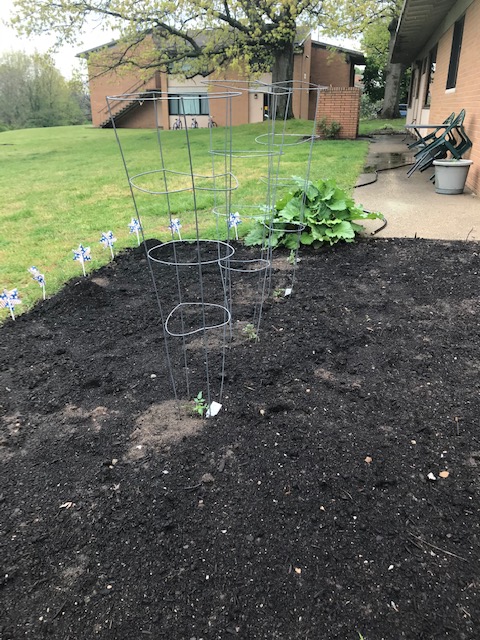
We’ve prepared the ground — loosened the soil, coaxed out all the weeds that had sprouted since the winter thaw, and lined our little garden plot with pinwheels that will hopefully spin in the wind and deter any critters from helping themselves to whatever pops up.

We’ve purchased seeds — carrots, beets, peas, lettuce, kale, radishes, and cantaloupe — and a few plants — tomatoes and peppers. We’ve halved a few seed potatoes, donned our gloves, and gathered our tools.

We do this each year, of course — put in a small garden — because we really love the taste of fresh tomatoes, and because I just can’t get over the wonder I feel when tiny seeds split beneath the soil and push fresh life toward the sun.

We’re on our knees in the dirt and manure — spreading the filth with our hands and dropping in tiny seeds of potential.

While we are at it — dirt beneath our fingers, and sweat glistening on our brows — we’re planting red and white petunias in the beds that face campus, small flags of welcome, in the hope that instructors, staff, and students return soon.

We’ve put chairs and a small table near the garden so that we can sit and watch — sipping tea, reading books, working crosswords — and wait for the first fingers of green to break through the earth, the first humans to walk onto campus.

We’re waiting and watching for new life, rebirth, resurrection.

And isn’t that what we are all hoping for right now? Aren’t we hoping that as new life springs from the earth we’ll find new life in our days? Aren’t we hoping that when we emerge from our homes, we’ll feel refreshed, renewed, restored?

Aren’t we hoping that the funk, the fatigue, and the frustration will fall away? that the sick will be healed, the hungry will be fed, the poor will be made rich? that we’ll gather with our people, embrace, and rejoice?

I mean — yes! That’s what we hope for!

And so we get on our knees in this rich soil of possibility. We plant seeds of hope — for recovery for the sick, for employment for the jobless, for reunions of distant loved ones, for reconciliation among those divided, for a new way, a new path, a new life.

I can’t stand next my garden and shout my seeds into growing. I can’t demand that my tomato plants produce fruit. In fact, my only role is to place the seeds in the ground, water them, and wait.

I can’t demand that this virus stop spreading, that demonstrators put down their weapons, or that leaders come together in a united approach for the good of our country. I mean, I can try, but for what? My power lies only in my willingness to go to my knees, to share what I have, to encourage the lonely, to watch, and to wait.

It can feel a little powerless unless you remember that every single year when I’ve pressed tiny seeds into the earth, new life has come forth — whether I’ve been sitting next to the garden watching or have abandoned it to go on vacation. The tiniest seeds of faith have yielded fruit.

Every. Single. Year.

More so, the prayers that I have whispered, cried, and shouted from my knees have born rich fruit — miraculous answers, incredible victories, astounding reconciliations.

Time after time after time.

So, I return to what I know. I get on my knees and plant my hopes — for my garden, for our world, for our future. Then, I watch, and I wait.

He who was seated on the throne said, “I am making everything new!” Then he said, “Write this down, for these words are trustworthy and true.”

Revelation 21:5

Coronavirus Diary #7: Finding our way

When I wrote my first “Coronavirus Diary” on March 30, I could not have guessed that I would be writing a weekly series that seems to have no end. Could any of us have predicted that we would be working from home, wearing masks to the store, and zooming with our family and friends for most of the Spring?

We’ve been quarantining at home for going on eight weeks now! You might think that the time has dragged on, but my husband and I keep looking at each other and saying, “Is it Friday again already?”

Our days look mostly the same — wake up, morning routine, work, cook, walk, eat, TV, sleep, repeat.

Sure, we have other engagements. We Zoom call our families. We grocery shop (which now includes an elaborate in-processing of purchased items that takes a chunk of each Saturday). We ‘gather’ with our small community group twice each week. We take care of our dog, clean the house, and try to remember to send cards and gifts to somehow mark birthdays, graduations, anniversaries, and the fact that we still care about our people even though we can’t see them.

We worry. We agonize. We pray.

Then we go to bed and get up the next day to do it again.

We don’t set long-term goals. We don’t make plans. We don’t go anywhere. Yet the time seems to be flying.

Even still, a lot can happen in the space of a week. A polar vortex can blow through. A friend can be hospitalized. A daughter can reach a milestone. A company can move from an almost expert response to a global pandemic to joining the ranks of those who have made sweeping layoffs and massive restructuring. A video of a shooting death of a man in broad daylight can circulate so widely and stir up so much outrage that a father and son who’ve been sitting freely at home for most of two months are arrested to the sounds of virtual cheering.

Thousands can protest nation-wide shutdowns. Thousands can been newly diagnosed. Thousands can recover. Thousands can die.

And we’re feeling it — all of it.

We’re edgy — quick to say a sharp word, snatch something from another, or walk away mad.

We’re raw — falling to tears and sobbing about the deaths, the uncertainty, the financial strain, the endless monotony of day after day, or the full sink of dishes. We cry because we’re tired, because we’re sick of being home, or simply because we ran out of Cheerios.

We’re angry — demanding that governments open up, complaining about the ‘idiots’ who keep congregating without wearing masks, and insisting that the person next to us would just stop chewing so loudly.

We’re doing our best to celebrate miracles — births and recoveries and job changes and college acceptances — and to mark graduations and birthdays, anniversaries and holidays.

Sometimes we can’t be bothered — we just don’t have the strength, the wherewithal, the awareness to reach out, to noice, to connect with each other, to wash our hair, or to change out of pajamas.

Yet somehow we’re figuring it out — doing our best — finding our way.

We’re finding our way by seeing the devastation and reeling from it, because that’s what you do when you are devastated — you reel. Try to brace if you like, try to harden yourself against the blow, but like it or not, when the impact hits, you’re gonna find yourself tumbling around trying to find your feet again. If you’ve been ordered home, lost your job, gotten sick, lost a loved one, or simply born witness to the losses of others, you might find yourself reeling. (If you don’t feel like like you’ve been smacked around a little bit, you might be fully in denial that almost 80,000 Americans have died, that millions have lost their jobs and are without money, food, and any sense of stability, and that none of us really knows what the next weeks or months look like.)

We’re finding our way by talking it through. When we talk on the phone, meet together on video chat, or sit next to each other in the evenings, we’re sharing the bits of news from the day, we’re asking hard questions, we telling each other that it’s hard to get out of bed, that we haven’t changed out of yoga pants since March, that we cancelled our vacation plans. We talk through the loss of a loved one, the test results, our latest cooking adventure, and the project that we’ve been working on.

We’re finding our way by reaching out. We call our parents who are weathering this ‘storm’. We touch base with our siblings more than we used to. We check in with friends and call our kids, listening to words, to tones, and to things left unsaid.

We’re finding our way by eating, sleeping, exercising, and deciding that we are going to do the next thing, even if it’s not the best thing, every. single. day.

And in the midst of all this finding our way, doing our best, and carrying on, we get tired and overwhelmed; we start to lose hope. We cry out.

Will it ever end? How long, O Lord, will you forget us forever?

Forget you? How could I? See, I have engraved you on the palms of my hands.

You did? You did!

I did! And I’ve given you a future and a hope.

You have? You have!

I have. I will never leave you nor forsake you.

You won’t? You won’t!

Behold, I am making all things new.

You are? You are!

I am. From before the world began, I am.

That’s right. I remember.

We’re engraved on the palm of Your hand. You’ll never leave us nor forsake us. You are making all things new, from before the world began. You are.

Ok. We hear you. We do.

We’ll keep listening for your voice as we find our way.

Coronavirus Diary #6: Touching

When the sun came out this weekend and warmed the earth, we stepped outside, donned brand new gardening gloves, pulled each weed from our garden plot, trimmed last year’s death away from our irises, washed grime off our outdoor chairs, and began to see signs of promise.

We began to look forward to the next phase where we’ll push seeds into the ground — carrots and peas and beets and radishes– and when we’ll spread fresh mulch on our flower beds. Maybe this year we’ll actually find some time to plant some annuals.

Signs of new life are all over campus. Tiny green leaves have sprouted on the wild blackberries at the edge of the woods behind our yard. Peonies and tulips have broken through the soil just as the daffodils have begun to take their final bow. The rose behind our house, pruned a few weeks ago, is thick with leaves and hinting at buds.

Do I dare to walk out to check the lilac? Could he be waking up, too?

Is it possible that we’ll soon be able to move some of our hours outside? to emerge from our four-walled isolation? To touch the earth? To smell the flowers? To feel the breeze on our skin?

Soon. The weatherman says it’ll be cool with scattered showers for the next week or two. This flash of 70s and sunny was a glimpse of what’s coming — a glimmer of hope.

So we leaned in. We played 80s jams — Doobie Brothers, America, Steely Dan — and sang along as we sat loosening the weeds from the soil. We smiled as we chatted, not rushing, just happy to have our hands in the dirt, to smell the earth, to feel the sun on our faces.

And as we were working there, on our knees in our garden, an unfamiliar Buick rolled right up next to us. An elderly man opened the passenger door and stepped out — no mask, no gloves, just a Laborers for Christ baseball cap. He told us his name and said, “Twenty-five years ago I stayed in these dorms for six weeks while we remodeled them.” My husband put down his tools, stood up, and stepped closer. He reached out his now ungloved hand, saying “Thank you so much! What a difference you made! Your work is still making a difference!” He shook the man’s gnarled hand, looked him in the eye, and smiled.

The man continued on, stringing memories together, a little confused, wondering if the dining hall was open or if he could go into a residence hall. Well no, my husband said, not with the pandemic. “Oh, right, right,…” the man said, as he got back in the car that his son was driving. They turned the car around and drove away.

I guess it was a sunny day and they just needed to get outside, to go for a drive, to remember a different time, and to make sure that the work of a long time ago still mattered.

It does. Even though the residence halls are all but empty. Even though some of them are due for another round of sprucing up. Even though he couldn’t peek inside. His work still matters.

I’m glad my husband instinctively knew what this man was looking for. After weeks shut in at home, with little outside interaction, knowing that he’ll likely not walk this earth too much longer, he wanted to see if the work of his life mattered.

My instinct when my husband reached out his hand, I have to admit, was fear. I almost said, “Stop! Wait! Don’t shake hands! We’re not shaking hands right now!” Wasn’t my husband the one who just yesterday took great pains at the park to walk off the path and to wait patiently for others to pass so that we could maintain our six feet of distance? Isn’t he the one, with me, who opens each piece of mail at the door, refusing to let the outer packaging come in the house, the one who washes each purchased item, each piece of produce, before it’s allowed to sit inside our fridge?

Did he suddenly forget all the precautions we are taking?

Maybe.

Maybe he forgot.

Or maybe his heart noticed a greater need. One that — ever so occasionally — trumps the precautions we’ve been taking for weeks.

For weeks we’ve touched no one except our spouses and possibly our children. For weeks we’ve seen no one in physical form other than those living inside our homes and the people we strategically avoid in public spaces, delicately shifting to the other side of the path, the street, the aisle to keep our distance. We’ve had all of our interactions over the phone, Zoom, and FaceTime. We’ve stayed within our private spaces in order to slow the spread of disease, flatten the curve, and protect ourselves and others.

But sometimes after you’ve seen no one in the flesh since sometime in March, an elderly gentleman steps into your garden, wondering if in his life he made an impact, and it suddenly becomes exactly the right thing to do to reach out, shake his hand, and say, “You made a difference.”

Touching can make a difference.

We won’t be making this a practice any time soon — touching friends, family, or complete strangers who step into our garden — but for this gentleman, who needed some reassurance on a day that offered the hope of Spring, touch seemed more than appropriate. It seemed like the human and loving thing to do.

This afternoon, my husband asked if I’d seen the lilac bush near our house. I told him I hadn’t, so we walked, plucked a small sprig of blossoms, and I held them to my nose and breathed in.

They smelled like Spring; they smell like hope.

Therefore encourage one another and build each other up, just as in fact you are doing.

I Thessalonians 5:11


Coronavirus Diary #5: Stating the Obvious (and the not so obvious)

Governor Gretchen Whitmer announced on Friday morning that we would continue our stay-at-home order until May 15. This makes sense to me. While our numbers in Michigan are leveling out and we haven’t had quite as many new cases every day, that seems to me to be the result of us all staying away from each other — slowing the spread, flattening the curve. Since the virus still exists, and many are still carrying it, it would seem foolish to all of a sudden drop restrictions and start interacting with one another face-to-face.

And no one is suggesting that we do that. Not for a while.

In fact, it seems that for a while we’ll be experimenting with tightening and loosening restrictions and seeing what happens. Some states are being criticized for ‘opening up’ too soon, putting financial stability ahead of public health. Other states are being criticized for keeping the restrictions too strict for too long.

I’m not in any position to have an opinion about the best way to proceed, so I’ll just keep doing what I’m told — sheltering in place, going out for necessity only and with an abundance of caution, washing my hands, and covering my face.

I can do these things with little difficulty because my husband and I can work from home, we have everything we need, and we have not been infected. We eat well, have access to all kinds of television shows, read good books, and sleep comfortably each night. Our loved ones are all safe and well, and we are able to communicate with them regularly.

Not everyone is so fortunate.

So, so many have lost their jobs and are suffering from the financial impact. Over 20% of our country is unemployed at the moment (26 million as of April 24, 2020). I can’t imagine the stress they must be feeling. While stimulus checks have been promised and unemployment payments have been subsidized, no one can really be sure when those dollars will arrive or if they will be enough. While more than half of qualifying Americans have received their stimulus checks, most of those who have filed for unemployment will be waiting a while to get financial assistance.

Many do not have what they need. Many families and individuals do not have enough food. Grocery stores are short on certain items due to shifting demands and the reorganizing of supply chains. Medical facilities continue to struggle to obtain necessary supplies and equipment.

Many, many are sick. As of this writing, over 2.8 million cases of Covid-19 have been confirmed around the world; over 200,000 have died. In the US, over 965,000 cases have been confirmed; over 54,000 have died. In Michigan alone, there are over 37,000 confirmed cases and over 3,300 deaths. And this is far from over.

Many have no time to rest. Parents of school-aged children are juggling their own work responsibilities while managing the educational, physical, social, and emotional needs of their children. Governmental leaders are doing their best to make decisions that impact all of us while facing criticism, protests, growing death tolls, and and a devastated economy. Essential workers have been burning the candle at both ends to provide medical care, necessary supplies, and food to the rest of us. They’ve been going steady for weeks on end, and they’ve got to be exhausted.

Some are unable to communicate with those that they love. We all have heard stories of people who have loved ones in the hospital who are sick or dying alone. Because of the danger of contagion, no one can visit. Often, it’s challenging to make contact of any kind — even a phone call. Some have been separated from loved ones who live in nursing homes — a generation that is unfamiliar with Smart phones, FaceTime and Zoom rooms.

So why am I writing all this? Am I just stating the obvious?

Probably.

But I think right now the obvious needs to be stated.

Because the obvious is heavy, and it’s a burden we can’t put down — now or anytime soon.

We’re lugging this load down a long dusty road, whipped by the wind, parched and tired, and we can’t see our destination — the place where we can set it all down.

We don’t know when it will be safe to hug our aging parents, when we’ll be able to play with our grandchildren, when we can sit across the table from our friends, or when we can simply get a haircut.

We don’t know when our finances will recover, when we’ll go back to work, when we’ll reschedule our vacations, or when we’ll worship together in church, gathering at the altar for the bread and the wine, joining our voices in song, hearing one another in prayer.

And what is not obvious is that walking around every day with this very heavy burden is exhausting. We’re tired, and tender, and emotional.

We feel weepy, then angry, then giddy, then hopeless, then resolute, then determined, then disappointed, then devastated, then weepy….

So, we think to ourselves, “let’s do something fun — go see some friends, have a party, go to the beach, have dinner out,” but then we realize the obvious:

we are under quarantine,

Covid 19 is a killer,

the only weapon we have to defend ourselves at the moment is social distancing,

supplies are tight,

people are suffering,

there’s not much we can do but to keep doing our part.

The obvious is heavy, so if you’re tired, it makes sense. Have a seat. Take a break. Call a friend. Laugh. Cry. Yell.

If you can, extend a hand. Connect with someone else.

Consider sharing — some time, some money, some food, some resources, some hope.

It’s a long dusty road, and the burden is heavy.

Let’s help one another along.

Carry each other’s burdens, and in this way you will fulfill the law of Christ.

Galatians 6:2

Coronavirus Diary #4, loss, grief, and encouragement

This past week as we faced snow-covered ground and chilling temps, I started to believe that life as we once knew it was over and we be quarantined forever. I started feeling anxious and a little bit desperate. What if this continues for months and we can’t see our parents or our children — our siblings or our friends?

I started considering scenarios in which my husband and I threw provisions in the car and drove the three hours to check in on his parents and then two more hours to check on mine. I saw us driving twelve hours straight east to see our daughters — to eat lunch with them at a picnic table out in the open — keeping space but close enough to touch only if we dared.

My emotions are heightening. I guess because this coming Saturday was supposed to be our son’s college graduation day — after four years serving in the Army and another four years going to classes, he was set to walk across the stage to roaring applause. We’d already envisioned ourselves there, yelling, clapping, whooping, and hollering. Last night, I checked his university’s website — again — and found next to the original details the word ‘canceled’ in red. Just canceled. Period.

Next week, our daughter was supposed to celebrate her college graduation, too. After six long years of studying and getting sober she was going to proudly don her cap and gown to celebrate her achievement and her recovery. We had the plane tickets, the days off, and the desire to cheer her on, but her university’s website says that the graduation will be held at a “time that is determined to be safe,” which right now feels like a long way off.

Because really, despite recent talk of Phase One, Phase Two, and Phase Three plans for coming out of quarantine, no one is bold enough to imagine a time when we’ll feel comfortable packing a stadium or an auditorium. No one is picturing a crowded courtyard where families kiss and hug and snap a million pictures. No one can say when those kinds of meetings will happen.

And so I’m trying to find ways right now to celebrate them. I’m trying to find ways to let them know that we care — that we are thinking of them — that we love them — that we are so, so proud of all that they’ve done and all that they are. Even when we can’t see them or be with them.

And nothing I can think of feels like enough.

I know I’m not alone in this. Surely countless individuals across the globe have cancelled parties, graduations, weddings, and even funerals. Worse, thousands now have lost their lives — over 166,000 as of this morning. Experts say that number would’ve been exponentially higher had we not all gone inside and closed our doors last month. We could be grieving much, much more.

And so we stay at home — we keep our distance — because we know it’s our job right now.

That, and grieving.

I’m grieving the loss of these celebrations — grieving them hard. I’m trying to remember that quarantining/social distancing is necessary action in order to save the lives of those we love so that we can celebrate another day, but today that’s just not helping me.

A few things are helping a bit.

Work is helping. I’m thankful — I am — that I have steady work. In fact, we are busy providing online instruction to kids who are trying to understand why they are suddenly not allowed to go to school, see their friends, go to church, or participate in sports. We are providing consistency by showing up every day and providing high quality instruction, and we’re trying to have a little fun — playing tic-tac-toe and battleship online, telling jokes, giving prizes, and being silly.

My friends are helping. I am part of a small group of women who have met for breakfast and prayer for the past several years. We’ve read several books together, we’ve retreated together, and we’ve stood with each other through significant life struggles, so it makes sense that we would continue to show up for each other now. The other morning we were meeting and one shared about how she is processing her grief.

She said she had read, “wailing women teach one another… in grieving we take time to experience and feel the emotions…it’s a way to bring everyone home…”

We all agreed to make ‘grief’ a focus of our prayers and our study right now…we might as well, because we had already begun grieving.

On Friday and Saturday, I ‘met’ with a broader group of women — 100 pastors’ wives who meet each Spring. Our in-person gathering was cancelled, but the leaders decided to offer an online gathering. We started on Friday night with a welcome video on Youtube which offered worship music and streaming photos from previous gatherings. Then, we met on Facebook to “play games”. A post would pose a question, “What is your favorite ice cream flavor?” or “What would you never purchase ‘used’?” Dozens of women replied and commented in the moment, and I found myself sitting in my home office smiling and laughing. I felt so connected. Saturday morning, 100 of us met in a Zoom room for Bible study and prayer. I was so happy to just click through the four screens of familiar faces that I found myself asking if we could do this again soon — let’s not wait a whole year to get together again.

My family is helping. Like many of you, I’m talking to family more — we Zoom, we FaceTime, we phone call, we text. We crave connection from within our walls. We long to see one another — to check in, to laugh, to talk about this experience. It’s so good to see the familiar — those who’ve known us and loved us through all the seasons, who’ve seen us at our best and worst. Connecting with family feels like an anchor holding me in place reminding me of what we’ve already survived and that we’ll get through this, too.

My husband is helping. I’ve spent more than thirty years with this man, and he continues to be the one who sees me, understands me, cares for me, and wants to hang out with me. Right now we’re walking, laughing, hand washing produce and wiping down surfaces, and exploring obscure British television. I am so thankful he’s the one I’m sheltering in place with.

My dog is helping. Pure and faithful companionship — that’s all.

Here he is after surviving his Saturday bath.

My church is helping. We love our church. We love the people in our small group who we meet with every Thursday for conversation and prayer and who we worship “with” every Sunday as we sit in our own homes — joining each other on Facebook Messenger video chat while we stream our service on YouTube. We love our pastors, Gabe and Marcus, who continue to provide quality leadership through thoughtful messages on Sunday and twice throughout the week and who are coordinating and overseeing numerous activities to serve our congregation and our community during this time.

So, I’m grieving, as many of you are grieving, but I’m also hopeful because I’m connected — to friends, to family, to my husband, to my dog, and to my church. I’m gonna be sad in the coming weeks as I grieve the loss of some celebrations — some markers of significant life events for the people that I love — but I’m going to be ok.

The time of mourning will pass; we will celebrate again.

Then young women will dance and be glad, young men and old as well. I will turn their mourning into gladness; I will give them comfort and joy instead of sorrow.

Jeremiah 31:13