What is Needed

Often in this space, I write about the students at my small charter high school in Detroit. From time to time, I share their needs and invite you to partner with me in meeting them. One time I mentioned the need for athletic shoes, and a handful of you helped me purchase about twenty (yes, 20!) pairs for our track athletes! Other times, I’ve asked for support at Christmas, and some of you have sent items from an Amazon wish list, purchased gift cards, or simply sent cash. It’s not always the same people — some of you are local to me, some are friends from way in the past, and some of you I’ve never even met — but when I ask, the needs of my students always get met.

This past week, not having the time or inspiration for a complete blog post, I just flung out a request via social media. I said we had 8-10 families with extraordinary hardship that we’d like to send on their holiday break with grocery and gas gift cards. I’ve been coordinating efforts like these for five years or more, and my school community has come to count on the fact that “I’ve got a lot of great friends.” However, every time I ask, I momentarily wonder if the magic will continue — will people see my request? will they want to contribute? Then I usually remind myself that “before I am asking, He is answering,” and trust that God will provide.

This week was no different. That Facebook ask was just a week ago and we have plenty of donated cash and gift cards to support ten families in ways that they are not expecting — what a fun day our principal will have later this week, handing fat envelopes over to families who have no idea they are coming! I can’t know the impact your gifts will have!

So, first, let me say thank you to those who stop by to read my posts about education, my health, politics (gasp), and the things I am learning, but also to those who choose to contribute to students they have never met. I am astounded by your generosity that keeps showing up at just the right time. Even sometimes when I haven’t asked, a need is just around the corner, and you have met it in advance. Thank you for your heart, for your thoughtfulness, for your care.

Now, let me tell what I learned this week about what kids really need.

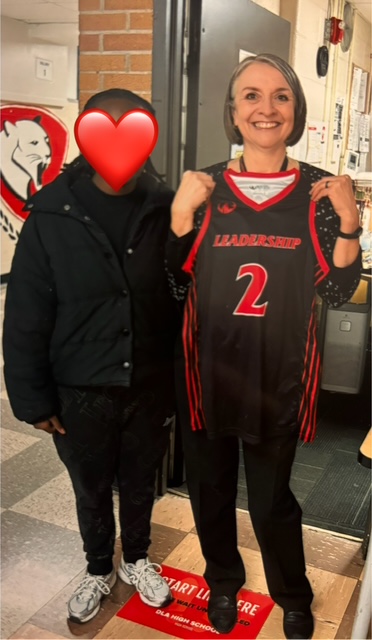
A few weeks ago, a teacher who is somewhat new to our district, a woman who just has a way of connecting with kids — the kind of teacher who kids show up to school for, the rare one who can get a whole room to lean in and listen as she walks step by step through a procedure, the kind who can glance up from a demonstration and silence a chatterbox without saying a word — this teacher mentioned to me that she’d like to put on a Christmas event for our students, did I think that would be ok?

I, thinking of our students’ physical needs, immediately (and wrongly) assumed that she wanted to coordinate the giving effort I have just described, and I directed her to speak with our principal. I thought it would be a great idea to pass the baton. LOL. It took me a couple of weeks to realize that what she was planning was very different than what I was assuming. She had a vision for a night of games and fun for a select group of students — a meal, prizes, and gaiety. No presents, nope. Instead, these students would “pay” the entry fee of a donated hat or mittens for someone less fortunate than themselves.

You heard me. She wanted our students — all of whom qualify for free breakfast and lunch — to make a sacrifice to be there. And not just anyone could attend. It was invitation only — kids who consistently come to school, kids who lean into learning, kids who lead, kids who volunteer, kids who do the right thing.

This was so far off my radar that I couldn’t picture the impact until I actually showed up.

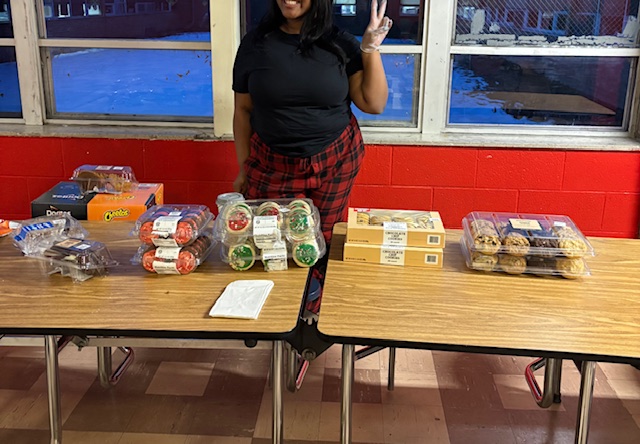
The teacher asked her church to donate a meal, and churches being what they are, they had a crew walking in with wings, fries, mac and cheese, and green beans in chafing dishes that they placed over sterno pots.

She asked our staff to donate water, cookies, and prizes for the games — each category filled a table.

“What can I bring,” I asked around Tuesday when most of the above had already been donated.

“I have hot chocolate. Would you bring toppings?”

“Toppings? Like whipped cream?” I asked.

“Yeah, and I like mini chocolate chips, and sprinkles, and marshmallows…you know, to make a self-serve hot chocolate bar.”

“Ok, I can do that.” I said.

Since I was headed to the grocery anyway to pick up gift cards with the cash that some of you had sent me, it was easy to throw a few more things into the cart.

“Oh,” she said, “one more thing. Would you go around to the classes on Friday and hand out tickets to the ones who can attend?”

“Sure. Whatever you need,” I said — before I realized that this would mean handing them out in front of kids who were not invited. This was a struggle for me — little miss equity this and access that — but, I did it. It was uncomfortable saying, “I’m sorry, you are not on the list. This is an invitation-only event,” but I had to trust my colleague’s vision.

School was dismissed at 3:30 and a crew of students moved to the gym to set up. They were in charge of decorating and setting up the space for the meal, the games, the celebration. While they were doing that, I retreated to my office to finish an administrative task. When I arrived shortly after 5:00, students clad in Christmas pajamas were personalizing their hot chocolate, greeting their friends, chatting at tables, and listening to Christmas music. You might expect this at any Christmas party, but in this community’s world of scarcity, it felt different.

Teens who are normally just trying to get through the day — to get a ride to school, to find something to eat, to stay warm, to manage all the expectations of all the people around them — were free just to be.

And then, the silly Christmas games began!

Asked to find a partner and line up in the gym, students who typically display reluctance to engage, jumped out of their seats, grabbed hands, and ran to the designated location. They tossed miniature Christmas ornaments into cups, they played a version of Head, Shoulders, Knees, and Toes, and they raced to steal Christmas bows that were stuck to each other’s shirts (the one who ends up with the most wins)!

They laughed. They played. For a few moments on a Friday evening, they were allowed to be kids.

Students who typically have to put up a hard exterior — who have to save face — in this small group of students felt safe enough to put their guard down and be silly.

And that my friends was exactly what our students needed. They needed a safe space, they needed to feel like contributors, they needed the extravagance of a meal prepared just for them, of a hot chocolate bar, of games with prizes, of a fun Friday night with their friends. I sat and took it in — smiling, laughing, snapping photos — and realizing that I need to broaden my view of what is essential.

Friends, I am likely going to keep asking for contributions, so thank you in advance for tolerating my boldness and joining when you choose, but I am also going to open my eyes to what else my students need. I’m going to look for more opportunities to acknowledge all of Maslow’s hierarchy (not just the the foundation) because the sense of connection, of respect, of fulfillment are just as essential to developing teens as food, as transportation, as shelter, as safety.

Hats off to my colleague for leveraging her community to meet these needs. In doing so, she also challenged me.

God will meet all your needs. Philippians 4:19

Life These Days

The question of the moment around folks my age — and for the record, I’m just shy of 60– is “how much longer do you think you’re gonna work?”

My most frequent response is often something like, “I’m not in a hurry to be done. I love what I do. I hope I can stay at it a while!”

This is, of course, not how everyone feels. Many my age have put in a long, hard 40 or more years of work in jobs and careers that have taken a toll — physically, mentally, relationally, or in other ways that might make a person want to walk away.

Let’s be honest, if you’ve spent 30-40 years on an assembly line — you might be ready for a change of scenery. If you’ve led a corporation and had the weight of the bottom line, personnel challenges, and inventory management on your back, you might be ready to sit by a pool, sipping a cool drink. If you’ve been in a classroom for 40 years — attending to the needs of children, designing instruction, managing behavior, and adapting to continuously changing policies, cultural norms, and learning challenges, you might be ready to just have a day that doesn’t involve managing anything but yourself.

And while I have certainly had my challenges and seasons of disillusionment and burnout, none of those scenarios truly describe me. After working in many different settings over the years, I find myself in a role that feels like a culmination — the place I was intended to arrive at, so I don’t find myself asking how much longer I want to work, but rather: When I look back at all I have learned, what do I have to offer these days?

In the early years — the first 3-5 of my career — bravado carried me past insecurity so that I could survive in situations that were way outside my experience. A middle school special ed classroom in Detroit? No problem for this secondary English major from small town Michigan! A self-contained classroom inside a residential facility teaching not only ELA but also social studies, math, science — I got this! I faked my way through and while I can’t say that my students (or I) won any awards, everyone learned something — including me. I learned about being overwhelmed and about working with limited resources. I learned to lean into the uncomfortable and to try just about anything. Did I occasionally lose my shit and come undone in front of a classroom full of typically behaving students? Sure. Did I also take a van load of Detroit teenagers on a day-long adventure to Ann Arbor? Yes, I did! Did we overfill our day with activities? Absolutely! Did we arrive back to school late after dismissal? We sure did! Did those kids and I have a ball touring a college campus, going to a hands-on museum, and eating at Pizza Hut? Yes! Rookie me swung for the fences, folks.

The bravado only carried me so far into my years at home with my own children. In fact, I think it was day one home from the hospital when I called a friend emergency-style to come save me because nursing wasn’t working out according to plan. I wish I would’ve admitted right there and then that I was clueless about mothering, but faking it until I made it was my theme song, and I just kept singing. Before I knew it, I was sitting on the living room floor with three children of my own, reading stories, learning letters, and playing games. Those days were exhausting and precious to me! We had a lot of fun, but I was making it up as I went along, so I certainly made plenty of mistakes. I pushed myself and the kids way too hard, and I expected way too much, but in continuing to give it everything I had, I learned how to schedule out a day that included learning, adventure, rest, and play; how to turn a few hot dogs and some popcorn into a baseball watching party; and how to get through a puke-filled night with little to no sleep. I learned that I could manage much more than I imagined, that I had a lot of people who were willing to help, and that it wasn’t a weakness to ask them.

When I returned to the classroom the first time, it was to a position that was far bigger than my experience — the English Department Chair and Dual-Enrollment ELA teacher at a small private high school. Not only would I, once again, be faking it ‘til I made it, I would be doing so all day long in a new environment while I was also still —at home — learning how to parent my own children who were in the process of transitioning from childhood to adolescence in a new home in a new city in a new state.The lift in both arenas was immense, but I was gonna make it happen. I learned a curriculum, read dozens of books, short stories, poems, and essays and adapted to a modified block schedule and the world of Apple computers while I also navigated the needs and ever-changing emotions of a family that was struggling to find its footing. For nine years, it seems, I was in constant motion — either preparing to teach, teaching, or grading in one space or cooking, cleaning, driving, scheduling, or otherwise parenting in another. Those years seem like a blur as I look back, probably because I never stopped running.

And then, all the motion came to a halt. Readers of this blog know that those years ended in an autoimmune diagnosis and an exit from the classroom followed by convalescence and a [next chapter] of re-learning how to live which landed me where I am now.

I came into this season humbled by the knowledge that I did I have a limit, and that I did not indeed know everything. When I was offered the position to teach ELA at a small charter high school in Detroit, I was grateful to be in any classroom at all. The fact that it was familiar territory — teaching seniors about college and the skills they would need to be successful — meant that I would NOT have to fake it til I made it. I could just be the authentic me, sharing what I know and loving the students who were in front of me. Granted, I still had much to learn — our school has an instructional model that was new to me, and I would, for the the first time in my career, have a coach, but none of that was overwhelming. In fact, it was comforting to know that I had support and that I wouldn’t have to find all the answers on my own.

That was over five years ago, and now I’m no longer teaching but coaching other teachers who may be in their very first year or nearing their 10th or 20th year. Some of them are faking it until they make it, some are disillusioned, and some are managing a lot in other areas of their lives.

I have a front row seat to their experience and that’s why I’m asking myself this question: What have I learned and what do I have to offer these folks?

I’ve learned that showing up and doing your best goes a long way — even if your best isn’t amazing, it’s likely good enough.

I’ve learned that being brave can lead to remarkable opportunities that change you forever.

I’ve learned that others are willing to support you if you are willing to ask.

I’ve learned that family is much more important than work and that your health needs to take priority over any perceived deadline.

I’ve learned that who I authentically am is much more valuable to my students and the people I love than getting every decision right or accomplishing every task.

I learned these things the hard way over the last many years, and maybe these folks — the people I rub elbows with every day and those that I coach — will have to learn them the hard way, too.

I think what I have to offer right now is the empathy and compassion gained from my own journey. I have a rare opportunity to offer support and encouragement, and the wisdom that comes with each of these gray hairs.

I’ve got perspective — each day is important but no day is definitive.

I’ve got plenty of gas left in the tank to come alongside the members of my team, to see their passion, their frustration, their hope, and their fatigue. If they are willing to keep showing up, I will, too.

Maybe I’ll get a chance to share what I’ve learned. More likely, I, too, will learn something new.

Teach us to number our days, that we may gain a heart of wisdom. Psalm 90:12

Capacity

Did you ever wonder what your capacity is? How much you can truly hold, carry, manage, or deal with? Have you, like me, recently found yourself staring that limit right in the face?

Yesterday, I walked into my principal’s office for a meeting we had scheduled. She was wrapping up a conversation with a student who had lashed out at a classmate because she “just couldn’t do it today” — she couldn’t handle his joking, couldn’t deal with the annoyance.

“Every other day I can just ignore him, but today wasn’t that day.”

“You didn’t have the bandwidth?”

“Nope.”

“I get it. I’m glad you’re talking about it. We all have days when we have reached our limit.”

At the age of nearly 60, I’ve had loads of days where I have reached my limit. When I was a child, I might’ve reached my limit quite quickly — I might have fallen to pieces simply because it was time to leave my grandparents’ house. When I was in high school, like the student above, a classmate’s comments might have pushed me over the edge.

But here’s the thing about life, as you move through it, you build muscle — and capacity — and you are able to manage much more than you ever thought possible. Still, everyone of us can find our limit.

I mean, everyday life can be seemingly at the “this is working” phase — you’ve finally found something that resembles work/life balance. You can meet job demands and also attend to the laundry, meal prep, family needs, and even routine maintenance of the house and the car. In fact, you can also easily manage your role in meeting the ongoing life and healthcare needs of an aging family member. You’re feeling pretty good because you also managed to budget for and schedule your participation at a weekend family vacation/celebration in the first quarter of the school year and you’ve plotted out on the calendar how to keep all systems functioning while you are away.

But then.. just as you are packing your suitcase, a major household system (think HVAC, plumbing, or electrical) has a major issue.

“No problem,” you announce boldly. “We’ve prepared financially and we can deal with it fully when we return.” You’ve been through enough difficult situations in your life that you know this isn’t the end of the world. A frustration? Yes, but meltdown worthy? No.

You merrily leave for the event, and upon your return home just a couple days later, you realize that said major household issue could possibly still be an issue, but it’s late, and you’re tired, so you try to get some sleep.

You wake the next day, to “knock out” a deliverable on a pre-arranged work-from-home day, only to realize it’s not the kind of thing that can indeed be “knocked out” in a day, so you lift up your concern to a supervisor who directs you to “just A, B, and C”, so you spend a few hours doing A, B, and C, and then your supervisor’s supervisor drops into the group chat and says, “No, A, B, and C won’t work. So, I’m just going to complete this deliverable so that you can run with it,” and your face falls flat. You close your laptop and go for a walk.

Did you let your supervisor know that you were annoyed? that it bothered you to spend time on a project that was subsequently dismissed? Did you perhaps have a tone? Did you perhaps register your complaint a bit too strongly and too repeatedly?

Perhaps. But have you hit capacity? Not even close. You can’t even count how many frustrating days you’ve had at work, how many hours you’ve spent on projects, or how many times you’ve had to toss the product of hard work.

However, while you were elbowing your way through your work day, your husband was discovering that the major house issue has actually turned into a much more major house issue involving multiple contractors, several estimates, insurance adjustors, and scheduling.

“Ok,” you say, taking deep breaths, “we are still ok. We’ve gotta keep doing yoga, keep eating right, keep walking, keep writing, but we’re ok.”

Your husband, thankfully, continues to manage most of the house details, while also meeting his own professional responsibilities, and you pinch hit when needed while juggling the demands of yours.

The next weekend arrives and while he stays home to continue project management, you head north to support the aforementioned family member. The weekend is less than demanding, and you catch up on sleep, before returning home in time to eat, rest, and return to work on Monday morning.

The work week starts out typically, but on Tuesday, things start to pile on. The family member needs additional medical tests, you learn the work on the house isn’t scheduled to start until December, and as you leave work, you find yourself driving through a torrential downpour so that you can make an appointment for a routine oil change. After waiting for an hour and managing various pieces of correspondence, you learn from the technician that it’s time to replace the tires and she has prepared you with three separate quotes. You can feel your affect going flat just as you receive a notification on your phone that the storm has caused a power outage at your house.

And that was it.

You hit capacity. You couldn’t talk about it. You couldn’t process it. You had not one shred of bandwidth.

You drove the 20 minutes home in silence, made your way into the house, and plunked into a chair by the window overlooking your husband who was trying to start an uncooperative generator.

You needed food. And sleep. And something to shift.

Somehow, the two of you found your way to a vehicle, drove to a restaurant, ordered food, ate it, and returned home. You had cleaned up and crawled into bed just before the lights came back on and the furnace kicked in.

[Thank God.]

The next day the repair date was moved up to the first week in November.

[Exhale.]

The family member was seen by the doctor and a plan was put in place.

[OK.]

The tire replacement was scheduled.

[We have a plan.]

Just enough shift happened, and somehow, everything seems manageable again.

For now.

Take it from this old head, wherever you are in life, trying times are going to come and test your capacity — you may lose your mind when someone eats a bag of corn chips that were intended for the evening meal, but the experiences of today are building your capacity for the difficulties of tomorrow. And, be assured, tomorrow will certainly have difficulty — maybe just an irritating boy at school, possibly just a flat tire on the way to work, hopefully just a major house system repair that can be done and dusted in the space of a month. We need those light and momentary troubles so that we can manage it when the shit gets particularly real. And that will happen, too, I’m sorry to say. That will happen, too.

And at those times, you may find you have reached capacity — you may find you don’t have words, or reason, or the ability to make a meal. I pray you discover you are not alone or without hope. I pray that something shifts and you find that once again have some capacity.

[Indeed…] in this world you will have trouble, but take heart [I have endless capacity,] and I have overcome the world. John 16:33

Of (not politics, but) Bullying

Some people don’t like it when I talk about politics….I get it. If, as Wikipedia* states, politics is “the set of activities that are associated with making decisions in groups, or other forms of power relations among individuals, such as the distribution of status or resources,” I can see why the topic might make some people feel uncomfortable.

I mean, why would you want to examine the reality of which folks hold the power, which groups benefit from the decisions of those folks, and which groups are historically and perpetually disenfranchised by those decisions. That examination could lead to unsavory images, to be sure, and we wouldn’t want anyone to have to see that, so, let’s not talk about politics.

Instead, class, today let’s talk about bullies.

Every single school I have been a part of has had its bullies.

They don’t have to be the stereotypical intimidatingly oversized thugs that might be populating on your brain screen. In fact the bully of my first class was quite undersized. Physicality is not essential to the bully. Rather what characterizes the bully is the behavior that seeks to dehumanize, belittle, embarrass, or otherwise harm others and the presence of, at first, a yes man, then a crew, and ultimately the compliance of the larger group in allowing the bully to continue harming others.

It often starts with the bully targeting someone who is demonstrably “weak”. The bully might make fun of the disabled, denigrate immigrants, or even make jokes about someone’s weight. He (or she) looks around for a target then slings a grenade with the intent to do harm. But the harm is not where the power lies.

No. The power lies in the reaction to the harm. He gets a laugh at the expense of the disabled, a snicker at the expense of the immigrant, a guffaw at the expense of the overweight. And those responses are the fuel for the next attack.

Still high from the reaction of the yes men, the bully begins to scope out his next target — maybe someone with a little more clout — maybe a classmate or a peer. First he spreads rumors to harm his target’s reputation, he engages in name-calling to dehumanize his foe, he might even accuse others of wrong-doing, whether or not there is credence to his claims.

Throughout all of this, those around him, seeing the power he is building, have to make a choice — do they want to land in the bully’s sites or take a position at his side?

That’s a tough call, especially if you are in middle school or still have the insecurities that you had when you were in middle school. You might not think you can handle humiliation. You might not think you could weather the name-calling. You might not think you could bear up under the rumors. So, you chuckle at his antics, you move to his side of the room, you excuse his behavior as harmless, and you turn your eyes away from the victim.

And you continue to live with that decision because it still feels safer than having him turn the attention on you.

But then the assaults escalate. The blows become physical. And he’s going after someone who is or who used to be your friend. He might even attack a member of your family. Then you have to face a crisis of identity — who do you want to be? Do you want to stand behind this guy, smiling for the camera in your suit, waving your flag of allegiance, as he takes shots at not only the least of these but also at your neighbor, your brother, your friend, or your mom?

This moment happens in every bullying movie you’ve ever watched — The Karate Kid, when Danny LaRusso takes the blows of Johnny Lawrence almost to his peril in the final match, Mean Girls when Cady, who was once part of Regina George’s crew, finds herself a target when the burn book is circulated — the individual who had chosen to capitulate or even join a bully has to decide if they are going to stand up.

The rare ones who, despite their inner terror, find the courage to say “Not here, not today,” rise up from their devastation and face the bully. In the movies, this usually results in the bully walking away in shame or, in the most ideal of scenarios, having a change of heart and determining to be a different kind of person.

This sometimes happens in real life, too, although not inside the space of 90 minutes, and certainly not when the bully has been allowed to gain control beyond the schoolyard and into the community. No, in those cases, one person standing up will not be enough. To stop a bully who has, through all the text-book tactics of instilling fear through intimidation, established a culture of systemic compliance to the most ludicrous of actions, the community must come together and take a collective stand. They must, united, shout “Not here, not today!”

One person might not stop a bully, but a lot of single people, together, can do almost anything.

The bully can’t continue unless the community lets him.

Certainly the community will wake up and put a stop to it — it’s not politics, after all, it’s just refusing to let one person dehumanize another.

Defend the weak and fatherless; uphold the cause of the poor and the oppressed. Psalm 82:3

A couple of notes:

*If you were a student of mine in the early 2000s and cannot believe that I actually cited Wikipedia, see also lecture #497 entitled “Anybody Can Change”**.

**And when I say “anybody can change”, I do mean even bullies.

Also, if you listened to this post, you might be interested to know that the text version has several embedded links.

Back to School: Before and After

I write a post like this almost every year — scroll back, you’ll see! Each fall, I can’t stop myself! I’m still filled with the child-like wonder and excitement of going back to school. I mean, yeah, I had outfits picked out, bought a new pair of school shoes (okay, two pair!) and kept them fresh for day one (and two!). I had my classic teacher terror nightmare — only this year it wasn’t me showing up naked, late, and unprepared, it was my teaching cohort! And I’m here to tell you that the stress was not less!

I get so excited about the return to school because it holds so much possibility — imagine the potential for transformation!! And in any story of transformation you need the “before” pic. Let me see if I can paint it for you.

The students first showed up on the Thursday before Labor Day. I can spot the freshman from a mile away. They shyly and awkwardly accompany their parents and older or younger siblings. They stand quietly as their people sign them in, looking around to see who else is there, who is looking at them, who is judging them, who can see their insecurity.

Sophomores roll up with slightly more confidence, sometimes with a parent tagging along ten paces behind. These students steal glances, seeing what looks familiar — teachers, friends, anything.

Juniors have just a hint of swagger — they know the drill — they know who’s who, what’s what, and where’s where. They quickly run through the requisite stops — schedule pick-up, bus sign up, sports physical — then find their friends to take laps inside the building, check out new students, get into a little harmless mischief, or do a little peacocking.

Seniors? You can’t tell them nothin’. They have their hair done, are wearing a dope ‘fit, and have texted their friends to arrive at the same time. They run this place — they are beaming and bouncing. This is their year and they know it.

And that’s all on the Thursday before school even starts — before the three-day weekend, before reality hits, before they have to arrive on time, sit in an assigned seat, do the coursework, take notes, stand in lines, or listen intently.

But all that has begun now, too. We have finished a week of students being in the building, running to get to class before the bell, asking permission to use the bathroom, looking for a snack, trying to hide their phones, getting caught with their phones, turning over their phones, and waiting to get their phones back at the end of the day.

They came in on Tuesday, and we were ready for them.

Our teachers had on shirts emblazoned with our Activate Excellence motto, arriving early to put finishing touches on their rooms and man their stations in the gym for arrival. We had some teachers collecting phones, some handing out schedules, and some stationed as greeters. There were hugs and fist bumps and hand shakes with our returning students, so it wasn’t difficult to pick out those who are new to our building — freshmen, of course, but also quite a few transfers.

In Detroit, a district with over 50,000 students, most high schools have enrollments of over 700, and some have over 1000. Our charter high school is small — under 300 students — so we often get students who found those larger contexts to be untenable. Maybe they were overwhelmed. Maybe they didn’t find a connection or friend group. Maybe they got into a fight and are now dealing with the aftermath. Whatever the reason, we often end up with a unique collection of students who for whatever reason couldn’t or didn’t want to make it happen somewhere else.

We’re a charter school — so students choose to come to us. Granted, sometimes that choice is because they have run out of other options, but I like to think they choose us because we are a small community. Everyone knows everyone else — no one goes unseen. If you came to school without a jacket, someone saw that. If you look particularly down or quiet on a given day, a person noticed. You’re hungry? You know who to ask for a snack. You don’t have a ride home? Chances are you have a connection with a staff member who will help you figure it out.

Changed your hair? We saw it.

Grew up over the summer? We know.

Your ability to manage conflict is improving? We give you kudos.

Let me give you a glimpse at an “after” pic.

For the past four years, we have had a student in the building who was classified as “homeless” and qualified for resources under the federal McKinney-Vento Act. Last June, this student graduated despite having transportation challenges, learning difficulties, and very little family support. Staff at the school made it possible for him to attend prom and participate in all senior activities, and the young man was repeatedly overwhelmed with gratitude. When he walked into our decision day celebration in early May, he hugged several of us and wiped away tears. When he arrived at prom, he approached staff members, tearfully repeating, “I can’t believe this is actually happening!” and when he showed up for graduation, he could barely find words. He savored every moment, and his classmates and teachers saw it for what it was — the realization of a dream.

On that day, he didn’t know what his summer or future would look like. Because of his situation, he was having difficulty getting access to the documents that would make him work eligible, but late in summer we received word that he had what he needed and had found employment in a hospital. This past week, he reached out to one of our staff members and said he was working a lot of overtime and was looking for an affordable apartment.

The staff member reported this in our group chat, and I must say that in the middle of a school day at the end of the first week of school, when everyone is getting tired and ready to go home for the weekend, that little notification reminded us all what a special place we work in.

Just four years ago, this young man was one of our awkward freshmen — he missed a lot of school days, and we noticed. He often came unprepared to learn, and we said something. He had the support of a friend who got him to the building every day, but he came late and left early. It was frustrating, to be sure, but we found ways to work with him. He had the support of the social worker, the principal, the resource room teacher, and literally every single adult in the building. It was not uncommon to see him checking in with one of our custodians who might as well be everyone’s momma.

And now he’s a high school graduate, he’s got a job, and he’s looking for an apartment. If that’s not a transformation, I don’t know what one is.

I guess that’s why I get excited every September — that’s why I can’t stop writing about it. Every day is a miracle waiting to happen. I can’t believe I get to do this. Just like my student, “I can’t believe this is actually happening.”

[We] will see the goodness of God in the land of the living. Psalm 27:13

Job Postings at DLA!

DLA Wishlist

Rested and Ready for a new Rhythm

I wrapped up school year 2024-2025 –watched another group of seniors cross the stage into adulthood, entered final grades, and cleaned up my classroom.

Next, I joined my husband in clearing the clutter in our home.

Then we left town for two short treks — one to play with our granddaughters in Ohio and another to lie on the beach of Lake Huron. We crossed the miles listening to podcasts and chatting about everything from family to politics to music to our future. With our grand girls we lazed in the pool, played Uno and Skip-Bo, and were entertained by intricately choreographed dances. Near the beach, we ate well, slept long, took leisurely walks, and lost track of time.

They were luxurious and welcome — these two little trips back to back — and now we are re-entering real life. Since we’ve returned home we’ve been in the business of unpacking, doing laundry, tending to yard work, and taking stock of the new rhythms we are noticing since a) my husband transitioned from an almost four-decade-long career in church work to a private counseling practice and as b) I am making the shift from classroom teacher to full-time instructional coordinator. Some of the work each of us does in our new roles is similar to what we have done in the past, however, the routines and workloads are quite different. While he has been adapting to his new rhythm for over eighteen months, my real shift begins this week as I embrace the responsibilities of my new role.

How will it be the same? How will it be different?

What won’t change is my morning commute — I will still drive 30 minutes east from Ypsilanti to the edge of Detroit. I will park my car in the same spot, work with many of the same colleagues and students, and follow the same daily bell schedule and school year calendar. I will also continue to serve on our school’s leadership team, meeting at least weekly to plan initiatives and events, troubleshoot current issues, and collaborate toward best practices for our building.

However, many things will change — I will no longer have my own classroom. I will no longer have my own students or a grade book or lesson plans or the responsibility for all that happens inside a teacher’s classroom through the course of the day — behavior management, attendance, organizing materials, and managing the constant flow of information.

I will have plenty of new responsibilities on my plate. In addition to coaching the instructional moves of a handful of teachers like I did last year, I will also be partnering with those teachers to unpack curriculum, analyze assessments, and plan instruction. Further, I will be our building’s testing coordinator, responsible for all things PSAT/SAT, ACT Workkeys, and MSTEP.

All of this, of course, is in the interest of our students. I came to this position because I recognize the systemic inequities in American education that have benefitted some students (mostly white and affluent) and have disadvantaged others (mostly low-income and/or students of color). I wanted to lend my years of experience and expertise in service of closing the gap that continues to widen; I wanted to provide a high level of instruction and rigor for students who have, through no fault of their own, fallen multiple grade levels behind their peers who live sometimes just a few miles away.Over the past five years, I feel I have had limited success. I have, within my classroom, provided glimpses of rigor, moments of engagement, and small gains for individual students.

However, individual teachers in isolation cannot overcome centuries — literal centuries! — of harm. They do make a difference, of course, but for the sweeping change that is needed, we need a broader — a more systemic — solution.

I joined the team at my school in August of 2020. Covid had sent all of our students home the previous March, and because of the disproportionate impact on low income communities of color, particularly Detroit, our district provided instruction virtually for the entire 2020-2021 school year. The administrative team was making it up as they went along, and I — a teacher returning to the high school classroom after a six year hiatus — was enthusiastic about giving it my best. I popped into Zoom rooms, chatting with any students who would talk to me, leading lessons, and providing office hours every afternoon. We didn’t close any systemic gaps that year; we merely did what we could to slow the ever-widening distance between our students’ academic progress and that of those in neighboring districts.

The following year (2021-2022) , fully masked, we returned to in-person learning, bouncing back to virtual instruction several times throughout the year. It actually took us that year and the next (2022-2023) to re-establish routines within the building. We were on pretty solid footing as we started school year 2023-2024, but some mid-year leadership changes kept us from moving too far forward.

The standardized test scores told the story — about a tenth of our students were proficient in English Language Arts and none — 0% — were proficient in math. Our staff took in those realities as our newly appointed principal delivered them before the return of students in the fall of 2024. She gave us the hard truth and then cast a vision for us — we, the staff and our students, would activate excellence. We could no longer allow this to be the reality for the students in our building — things were going to change.

And, over the year I did see evidence of shift — in attitude, in practice, in thinking. However in order to overcome systemic inequities of the proportions that I have witnessed, we need a reimagining of what school likes like in our context. The principal sets the tone, and she has. The leadership team has come alongside our principal, supporting her vision, agreeing with the need, and implementing strategies. Staff members have also caught the vision, to a degree, but the kind of transformation that is needed is going to take the whole team — every teacher, every paraprofessional, every custodian, every social worker — to activate excellence, consistently and continuously, day in and day out.

Certainly in my own classroom, I have strived to provide excellent instruction, to have high expectations, and to inspire my students toward greatness, but I will admit that my efforts have sometimes been inconsistent. I have grown tired, and I have from time to time been merely mediocre. However, as I step into this role, I have been given an opportunity to activate excellence beyond my classroom — taking care to do my very best with the responsibilities I have been given, and to bring other staff members along with me.

I will push my team of teachers — some of whom are experienced, some who are brand new — toward excellence. Together, we will grow this year, beginning by building relationships, but then quickly moving into strategies, into accountability, into doing whatever it takes to activate excellence for our students — to give them the tools they need to move forward into their futures.

It’s a big job, but I’m rested, I have the vision, and I’ve been equipped. May God grant me the strength to persevere, the compassion to both see and inspire my team, and the heart to sustain my insufferable belief in restoration.

He is faithful, and He will do it. I Thessalonians 5:24

Here’s the thing(s)…

*A quick note, sources and resources are linked in the text.

I’ve been kind of quiet in this space lately. It’s May, and I’ve only posted six times so far this year. For a girl who posted almost daily when this blog began, six times in four months is virtually silent.

But here’s the thing….

Just kidding…there isn’t one thing that is keeping me from putting words on the page (or rather the screen)…it’s more like a steady stream of things that seem to keep coming at me (at you?) in such a way that I can’t really focus. I can’t keep my eyes on one thing for long enough to form a thought, let alone an opinion.

At work, I’m down to just a few weeks with my seniors, and their excitement/ambivalence/annoyance would be a lot to process and respond to on its own, but we’ve also had Family Conferences and Decision Day. Each of these events takes a team effort to prepare for and execute. (You know the drill — communications, set up, station assignments, and the running of the actual event, and although neither is my responsibility, I am a member of the team.) I also have had the responsibility this year to recognize students of the month (one for each teacher in the building) and honor roll recipients. This entails identifying honorees, pulling them from class for a photo, and sending those photos to someone — preferably not myself — to have them loaded into a Canva document before they are printed out and posted in the hallways. In addition to all of this “normal” school activity, the authorizer of our school charter is visiting us this week for an educational program review that we learned about just several weeks ago. Such a visit, like school accreditation, requires the submission of countless artifacts such as lesson plans, IEPs, coaching trackers, professional development documents, etc. I was part of a team that pulled all those together and submitted them electronically. This past week leadership and staff met to prepare for the visit that will be spread over three days — all while school is in session, you know, the actual teaching and learning part. Spring is always busy at school, but this year is exceptionally so.

At home, things are a bit more relaxed –we have no major repairs pending, and we’re happily in the midst of installing our garden — but if home life includes extended family, then I have to disclose that my mother and stepfather have had some pretty difficult challenges for all of 2025 that just right now seem to be stabilizing if you don’t mention the fact that at least one of them is recently ready to start exploring assisted living facilities, which takes the coordination of six adult children to do lots of fact finding. I would also be remiss if I did not mention that my dear Aunt Margaret, after many years of relative health, has taken a sudden and recent decline.

All of this is, of course within the realm of “normal” adult life. You have also had busy seasons at work and at home — they come and they go — and although they are at times taxing to navigate, we somehow make it through to the other side in time for the next wave of whatever it is that is coming.

But these are not the things that are blurring my focus. No, they take time, of course, and energy, but they are manageable. I think what has me off balance may have many of us off balance — the continuous stream of government actions that may or may not impact us directly, but nevertheless are jarring to the brain and that lead us, at least me, to at times retreat, to dissociate, to not want to process or deal with any of it.

In 2018, presidential strategist Stephen K. Bannon bragged about that administration’s strategy to “flood the zone” with initiatives. The idea was to roll out a constant flow of orders and directives to throw “the opposition” (you know, other Americans) off balance so that they could not respond (Source). Since that administration regained the presidential office this past January, this strategy is being used again, only to the nth degree.

In the first 100 days of this administration (in just under four months) we have been overwhelmed by actions such as: the pardoning of those who invaded the US capitol on January 6, 2020; the freezing of funds for cancer research, Meals on Wheels, and disaster relief; the implementation of tariffs on every country in the world, the pause in tariffs, the subsequent roll-back of said tariffs, and currently, the exponentially high tariffs on China (which will certainly impact most of us); the firing of countless federal employees followed by the attempt to rehire some of them; the withholding of funds to public universities who refuse to comply with the administration’s agenda; the deportation of countless immigrants, some whom are legal residents, with some being sent to foreign prisons; the continuing and hard to follow involvement in the ongoing conflicts in Israel/Gaza and Russia/Ukraine; the president’s attendance at the funeral of the Pope followed by his posting of an image of himself dressed as the pope on social media; and this is just scratching the surface (Source). You might be shouting at me right now, “what about the…[fill in the blank].”

Frankly, I’ve got to look at what is happening on the national scene through a peep hole with one eye covered. I can’t look at it in full — and that’s exactly the idea. This administration is using the everything, everywhere, all at once strategy to keep us all in this state of slack-jawed disbelief.

And that is where I find myself, only I’ve moved from stunned to numb. I feel detached from reality, not wanting to engage because I can’t keep up. But that is what this administration has said it wants — to “flood the zone” so that we become overwhelmed.

But here’s the thing — the actual thing — we can’t do that.

We can walk away. We can take breaks. We can sit for two hours after a long day and work on a 1000-piece puzzle depicting van Gogh’s “Irises”, or take a walk through the park plucking lilac sprigs, inhaling their beauty on a glorious spring day, or lose track of time choosing the latest fiction from the library shelves, or binge-watch “The Four Seasons” on Netflix, but then we’ve got to re-engage.

We’ve got to notice the actions that are being proposed — such as cuts to education, to PBS, to NPR!! — we’ve got to let our voices be heard — through letter writing, phone calling, boycotting or participating in peaceful protests. What we tolerate, what we look away from, what we allow — these are the things we accept.

And, overwhelmed though I might be, I cannot accept funding cuts to public education — not when I see the inequities that already exist. I cannot accept the devaluing of other humans — not immigrants, not members of the LGBTQ+ community, not minorities, not women, not anyone. I cannot accept that as the profits of billionaires increase their taxes are not commensurate, especially not at the expense of the poor. I cannot accept a disregard for the fragility of the environment — when we know better we have to do better.

Together we can weather a flood.

Beloved, let us love one another. 1 John 4:7

Educational Break

On Thursday afternoon, I tidied my classroom, finalized some grades, and walked away from school and toward my Spring Break. The mere thought of not having to set an alarm for 10 days would’ve put a pep in my step if I’d had any pep left at all, but I did not.

All teachers are exhausted by this time in the year. Even though we had Christmas break, even though we might’ve had a long weekend or even a full week off in February, we’ve been, since September, coordinating learning for our students, planning multiple presentations each day, keeping records, reporting to our supervisors, and (and this is the most draining part) making countless in-the-moment decisions:

What is the first thing I need to do when I walk in the door?

Do I have an extra stapler, know where more chart paper is, and can I laminate another hall pass for Room 117?

No, you can’t go to my classroom unattended; yes, I can get you a bandaid; no I don’t know where Mr. Smith is,

You can’t go to the bathroom right now, but ask me again in 10 minutes.

Yes, you can take that pencil, borrow that book, eat that snack.

You sit over here; you stay there.

Yes, your topic sentence is solid, but no, that is not an adequate example.

You’ve used AI here, and you must re-do the assignment.

You’ve used AI here, and you cannot re-do the assignment.

Yes, you can turn it in late. No, the deadline has passed.

Yes, you can work with a partner. No, you can’t get the answers from a peer.

This is non-stop all day long, but teachers, while keeping this decision-making machine running, must also, intervene in interpersonal conflicts, address misbehavior, meet demands for mandatory documentation, and, oh yeah, provide high quality instruction.

And most of us are happy to do all of this. We see each piece as necessary for supporting human development, for preparing the next generation of humans for meaningful life in our society. We’re teaching our students to co-exist with one another, to manage themselves, to hold themselves accountable, to read, to write, to identify a career, and to begin to take steps toward attaining that career. We’re in this work because we like kids but also because we believe in the power of education to create possibility for students of all backgrounds and abilities and to create a better future for all of us.

In the school where I work — a small charter school on the edge of Detroit, where 99% of my students are Black, where 100% of the students qualify for free breakfast and lunch, where almost all of the students are below the national average in reading and math scores by no fault of their own but because of centuries-long inequity in education–the teachers, like me, believe in the transformative power of education. We see it as an opportunity to not only change lives but to save lives.

In addition to the exhausting work that teaching is in any context, teachers in buildings like mine have the added weight of wondering if our kids have enough to eat, if they have a home to sleep in, if their home is safe, if they will have what they need for the next 10 days, or if they will be alone, hungry, cold, or in danger. Our students have the same needs as any students in the country, but they have additional needs as a result of poverty that stems from systemic inequities that go back through the history of our nation — school segregation, red-lining in real estate, unconscious bias in hiring practices, and other elements of historical and current systemic racism.

So, you might imagine how I am feeling, heading into a much-needed break while simultaneously worrying about my students’ welfare, to learn that the president of this country has ordered the Director of the Department of Education to dismantle it.

You may say, “Settle down, Kristin, most funding for education comes from the state.”

That is true, most money for education comes from the state — but do you know what does come from the federal government? Funds that make a difference for students like mine. For example, Title I, which provides $18 million to low-income districts. It’s not enough to make up for the economic disparity between neighboring districts, but it’s a start. The Department of Education also provides IDEA (Individuals with Disabilities Education Act) funds to the tune of $15 billion to help districts provide additional resources to students with learning disabilities, cognitive impairments, and other diagnoses such as autism. Source.

Furthermore, the US Department of Education manages Federal Student Aid for post-secondary education, providing over $120 billion annually in grants, loans, and work study that allows students like mine to dream of a career. And not just students like mine — I myself relied on federal money to get my degrees, didn’t you? Source

Can you imagine what might happen in communities across the country if high school seniors no longer have access to the FAFSA? if they can no longer apply for federal dollars to fund their education through grants and/or loans? Tuition alone for Michigan State University is over $16,000 a year. Add in room and board and your talking about $35,000+. Most students need at least four years to get a basic degree. Who among us can fund $140k without the aid of at least a student loan?

Now, the State of Michigan is prepared to fund up to two years of community college and up to $5,500 per year at state universities, but states rely on the federal mechanism of the FAFSA to distribute those funds. If the DOE is dismantled, how long will it take for states to pivot to their own systems to ensure that students who need these funds get them? And, where will students borrow the balance that is not covered by state funds if they don’t have access to federal student loans?

How many students will take post-secondary education right off the table — including trade school programs that prepare our electricians, plumbers, welders, builders, and the like?

As I consider the potential outcomes of such action, the faces of my seniors are appearing in my mind — J. who wants to be a programmer, who has already completed several summers developing coding skills, L. who plans to be a nurse, K. who wants to be a truck driver, and S. who plans to become a police officer. None of these students can take one more step without the FAFSA and right this minute the Secretary of Education (who has zero experience with issues that impact schools) is busy laying off DOE employees under a directive from the president.

I am exhausted, and it’s my Spring Break, but I can’t just sit by and watch this happen.

So, I’m doing two things: First, I’m writing this post, and second I’m committing to use the app “Five Calls” to involve myself in the American process.

Here is how it works. Download the app, select the issue you are concerned about, and enter your zipcode. You will see a timeline of updates on that issue and a list of representatives from your district. One click later, you will see a page like this:

You click on the number, wait for an answer, read the script, and and click a blue button to register whether you left a voicemail or made contact, and the app sends you to the next number.

In just a few moments this morning I made three calls.

This may seem like something small — just like my boycotting may seem small and ineffectual to some –but if we truly believe that our government is of, by, and for the people, then we, the people, need to get involved. We need to do something when we see that our government is not representing all of the people — particularly when they are taking steps to further disenfranchise the most marginalized among us.

Look, you’re probably exhausted and overworked, too. You might feel like this is not worth your time, but perhaps you can take a journey back to your high school self, remember what it feels like to have a dream in front of you — of a career, a family, a whole adult life. Remember what that feels like? Don’t we want to make sure that every kid in America has an opportunity to pursue their dreams?

If you believe in the transformative power of education like I do, I urge you to make 5 calls — today, tomorrow, and until our voices are heard.

It’s a small decision you and I can make that could make a monumental difference for our kids, our country, our future.

Speak up … defend the rights of the poor and the needy. Proverbs 31:9

I told you so.

See? I told you so! Anything can happen in 2025!

You can have your whole week planned — your students will do a peer review on Friday, you’ll sleep in on Saturday, and then you’ll pack a bag and head south to your grand girls to play for the weekend.

But instead, since it’s 2025, your mother will fall down and break her leg on Thursday, you’ll put some sub plans together, pack a different kind of bag to head north. You’ll sit in a hospital room, watching the second hand click so that your mother’s turn for surgery will come at 5:00…no 6:30. Really, it’ll be at 7…we just got pushed to 8, but it’s still gonna happen…no sorry, an emergency brain surgery just bumped her place. We’re moved to 9am tomorrow.

You’re watching her writhe in pain even though they’ve given her NORCO and morphine, then you see her finally settle when they administer dilaudid.

You drive 45 minutes, picking up a chocolate shake on the way, then deliver it to your stepfather who has probably not left his recliner today. You tell him to take his meds, then put on your pajamas, crawl into bed, and set the alarm. You don’t ask if the cat has gone outside. You don’t remind him to put on his oxygen.

Meanwhile, your husband is following through on the initial plan, packing a bag and preparing to drive south.

The alarm blares and you jump up, do a little yoga, gather the items your mother asked for, tell your stepfather that no, you won’t be running to get a coffee, but he should take his meds, take his inhaler, and get himself some breakfast. The last you knew he was still driving, still running to get his own coffee, telling you he can manage on his own, but his wife of 48 years, his primary caregiver, just fell and broke her leg two days ago, he has memory issues, COPD, and a urostomy, and he is quite confused.

He takes his night meds instead of his morning meds. He doesn’t use his inhaler. He doesn’t go get coffee or something to eat. No.

So, while you are waiting through your mother’s surgery, chatting with your younger brother, reading a book, completing a crossword, your stepfather is home struggling.

You call to tell him that his wife is out of surgery, and he says great, but he’s having trouble breathing.

Part of you is worried, but part of you thinks he just wants some of the attention for himself. All of you just wants one moment that isn’t a crisis.

“Do you have your oxygen on?”

“I don’t think so.”

“Ok, put it on. Keith is headed your way soon.”

You and your brother grab a lunch then head to your mother’s room to see her post op. As she’s wheeled in, sound asleep, your brother’s phone rings. Your other brother is with your stepfather, trying to get his oxygen on him, administering an inhaler, making him something to eat.

You stay at the hospital. Your brother goes to the other crisis.

And it’s just Saturday afternoon.

Your husband will watch one grand girl play basketball. He’ll watch the other one play in a school hallway then throw up in the middle of the night. Then, he’ll watch their parents leave on vacation. He’ll go to procure gatorade, make toast, cuddle on the couch, and play games.

You’ll advocate for your mom over the next two days and slowly come to terms with the fact that your stepfather indeed cannot remember which meds to take, which inhaler to use when. He spends 23 hours a day in a recliner because that’s what he has the strength and capacity for, not simply because he’s a selfish asshole.

Although your fatigue is growing, so is your compassion. Your words get softer. You start putting the meds right in his hand. You refill his juice for the 17th time today, and you pick him up one more chocolate milkshake.

Although the experts point out the obvious — your parents need assisted living — and although you and your siblings are trying to make that happen, you also hear their desire to stay at home. Can’t they get chair lift for the stairs? Can’t they get in-home care?

So, you text in the group chat with your five siblings, each of whom are contributing in one way or another. You create a Google doc to keep track of everything that is happening and share it with the group. You assure your mom you won’t make decisions without their input. You’ll try to help them keep their cat. You know this is hard. You know it’s been hard.

Because she voted for the incoming president, you sit beside her and watch the inauguration. Because she’s frail you shut your mouth. You don’t react to the audacity, to the misrepresentations, to the falsehoods. Instead you watch her fall in and out of sleep while the crowd boos former presidents and then applauds the renaming of the Gulf of Mexico. You don’t so much as cuss under your breath or facepalm. You just quietly take it in.

And as you’re driving home, you don’t listen to news. No. You listen to the sermon you missed on Sunday. You sing along with worship music. You’re so exhausted you miss your exit and have to turn around. You pick up dinner, meet your husband — who has picked up groceries — at home, unpack, put on pajamas, eat dinner, and try to stay awake for a movie.

You’re not surprised when you wake up to see that a newly appointed government official used what looks like a Nazi salute. You’re not surprised by the immediate executive orders that have been made. No. We’ve seen this coming.

And, it’s 2025. Literally anything is possible.

A girl could grow compassion for her step-father. Six siblings who have spent little time as a group for the past 40 years could come together to care for their parents. An arctic blast could close school for a couple of days and give a girl a chance to do some laundry, to binge-watch a period drama, to put together a puzzle, to catch her breath.

…with God, all things are possible. Matthew 19:26

In 2025…anything is possible

The turn of a calendar page, particularly from December to January over the line of a year, can signal a fresh beginning. We can get our hopes up that this year life will be different — the bills will all get paid, the friends will all get together, our health will improve, and we’ll witness less violence. But we weren’t even to the dawn of the first day of 2025 when we were reminded that terror still exists; we weren’t two solid weeks into this new year before we had to admit that tragedy will still come. Grief will be part of 2025 just as it was part of 2024.

It’s not what we want — we who make resolutions, who join gyms, who buy dot planners, who clean out our closets. We don’t want to read that teenagers were killed as they celebrated, that houses of thousands have burnt straight to the ground. We don’t want our loved ones to be sick, our friends to be overwhelmed, or ourselves to have anxiety about the future.

But reality is what we have. Our parents are admitted to the hospital, a strained relationship marches right into the new year, an appliance breaks down, work stress increases over night, and you suddenly notice a crack in your windshield.

Turning the page on a calendar isn’t magic. No. It’s just a moment in time.

So, shall we throw our hands in the air? give up hope? trudge on knowing that there’s nothing we can do?

You already know that’s not what I’m about here. You know I’m the one with an insufferable belief in restoration. You know I believe the pain could go away, the relationships could be renewed, the bills will get paid. You never know — your savings might grow in 2025. Your appliance might start working again. You just might figure out that impossible issue at work.

But it won’t happen just because you turned the page on a calendar. No. You might have to take action. You might have to start exercising and do the PT they showed you how to do. You might have to forgive someone and change your own behavior. You might have to stop buying that bougie coffee you love so much and put that money in the bank. You might have to call a repairman. You might have to ask for help.

We don’t love asking for help — we who like to pull ourselves up by our own bootstraps, we who kick butts and take names, we who take pride in getting shit done. We like managing things on our own, thank you very much.

We don’t love interruptions to our routine — broken equipment, illness, accidents. We like things to go as planned.

But in 2025, just like in all the years before, interruptions will happen. The sink will get clogged, a copier will get jammed, and the traffic will back up. In those moments, you might find a solution on your own, but you might have to network as a team with a spouse, a sibling, a coworker, a qualified professional.

Or, you may just have to wait it out.

But friends, don’t lose heart. Things are not worse than they have ever been. Nope. Since the dawn of time, the struggle has been exceptionally real. And people just like us have found a way to come together, to find solutions, to face the unexpected, to overcome difficulty, to not lose hope.

I am not sure how they did it in days of yore — I’ve heard tales of women gathering over quilts, of dinner parties where folk discussed issues and devised strategies, of community organizing in dusty offices under glaring light. I’ve read of sweeping movements that have made dramatic change in the culture, in policy, in the everyday lives of people.

I don’t know if I have the steam for all that, but I do have what it takes to get out of bed every morning, to write a few words on the page, to practice yoga, and to put this hopeful hunk of flesh in my car, drive 30 minutes east, and show up for my students. And, I can also find the wherewithal, when the unexpected happens, to pivot. When a call comes early in the morning, I can point my vehicle in a different direction and show up for my family.

I think that’s what I am bringing to 2025 — the knowledge that things are going to be as they always have been and the willingness to keep showing up anyway.

My goal is to show up without judgment and full of hope.This is the challenge, isn’t it? to show up without an attitude, without preconceived notions of what others should or should not be doing, with a heart that says anything is possible. Already this year I have shown up once or twice annoyed, irritated, and wringing my hands — this would all be different if only they would …fill in the blank.

But it’s still January, and I can’t expect to be hitting my goal with 100% accuracy from the jump.

It wouldn’t be a goal if I could already do it.

So here’s to 2025 — may we keep showing up full of hope. After all, anything truly is possible.

May the God of hope fill you with all joy and peace as you trust in Him. Romans 15:13