Assignment 2024

It’s been 10 years since I wrote that first post, and since then I’ve written 652 more (653, if you count this one). In the beginning, I wrote almost every day. Having been instructed to be still after years of routine — first teaching, then parenting young children, then graduate school, then teaching and parenting combined — I needed something that would bring order to my day. So in those first months in the little house by the river, I woke every morning, made my tea, and wrote a post before I did anything else.

I think I began blogging because I needed a purpose, something that I could accomplish each day, something that I could produce — a physical representation that I could still do something. I didn’t really know what I was going to write each day, but an instinct — perhaps after years of journaling and teaching others the value of daily writing — pushed me to the keyboard every morning, and this writing became a lifeline.

Some of you began to read perhaps out of curiosity — why would someone daily post about their life? why would a teacher at the height of her career walk away? why were we moving to Michigan after years in Missouri? Some of you have told me that you resonated with the chronicling of my autoimmune disease. You, too, suffered with chronic health issues and my willingness to write about being stuck on the couch or lying on the bathroom floor writhing in pain let you know that you were not alone. Some of you read because you knew me as a child and wondered what I was up to. Some of you are my family and friends (or my husband) and you read out of care, concern, and solidarity.

Whatever the reason you read, the fact that someone — anyone — was reading gave me the encouragement I needed to keep going.

And when I kept going, kept writing, day after day after day, I dug deeper into my interior and discovered things about myself that had long been buried or that simply needed articulation — precious memories from my childhood that revolved around my grandparents and godparents, deep sadness over losses that had never been processed, my ongoing journey with autoimmune disease, my strong feelings about political issues, and probably more than anything my passion for educational equity.

I often tell my students (and my friends and anyone else who will listen) that I (and perhaps you) don’t know what I am thinking or feeling until I see what I have written on the page. Perhaps it is because I have spent a life in motion, constantly doing, producing, going, and moving, that I have pushed my thoughts and, even more so, my feelings deep down inside without taking the time to process them.

Having a health crisis and being forced to stop and be still provided the space in which I could — finally — pull up all those thoughts and feelings and begin to examine them, evaluate them, feel them, grieve them, and in some cases, move on from them.

So I’m sitting here, in my little home with the garden, ten years later, candle burning on my desk, still in my pajamas, reflecting on how far I (we) have come. In over 600 blog posts I’ve moved from debilitating pain and fatigue to manageable symptoms that remind me to move slowly and to routinely pause to take stock. I’ve transitioned from taking daily anti-inflammatory medication and monthly injectable biologics to mostly just daily vitamins and supplements with occasional Motrin added in. I’ve been growing in my ability to write and subsequently speak about my deepest hurts, greatest losses, daily struggles, and strongest passions. And, most tangibly, I’ve gone from my insecure 2014 self that felt like an invalid to my confident 2024 self, which my instructional coach recently described as “effortlessly dope”. (I think that’s the most treasured compliment I’ve ever been given.)

Do I owe it all to the writing? No, I wouldn’t say all, but I would say I wouldn’t be where I am today without the discipline of this blog. My commitment to write regularly and truthfully — sometimes painfully truthfully — has been not only the evidence of the miraculous growth and healing I have experienced in this next chapter, but also a primary instrument in that healing.

I don’t think I can unpack what I mean by that in one blog post, so the assignment I’m giving myself this year is to share a “vintage” post each Thursday and a new post most Mondays. The objective is to deeply reflect on the power of writing, of routine, of discipline, of transparency, of community, and of vulnerability. I can’t predict where this assignment will take me — I won’t know what happens until I see it on the page, but I invite you to come along with me.

If you dare, I challenge you to write along — you might just open a blank page and write for 5 minutes each morning to start. You might find that’s not enough. You might find it’s too much. But if you’ve read my blog for any amount of time, I hope you will see the possibility for transformation that might happen if you are willing to take a chance.

I’d love to hear from you — what you are finding out about yourself, what are you unearthing, what is happening for you as you write. It doesn’t have to be for the public eye as I am allowing here. Writing can be magical even if it is for your eyes only.

Whatever you choose — reading along on my journey, writing along with me, or doing something altogether different, I pray God’s blessing upon you — may 2024 be a year of growth, of healing, of transformation. May it be filled with love, with joy, and with a renewed sense of hope.

If you don’t believe that God can restore what is all but lost, let my blog be a testament that nothing is beyond His ability.

Behold, I am going to do something new,
Now it will spring up;
Will you not be aware of it?
I will even make a roadway in the wilderness,
Rivers in the desert.

Isaiah 43:19

Of Power and Vulnerability

We’re seven weeks into this school year, and I’m not sure who is learning more — me or my students.

This is always the case, of course, but I continue to be amazed. You would think that since I am fifty-seven years old, and my students are mere teenagers, that my maturity, at least, would exceed theirs. In some ways it does, for sure, but they are teaching me to receive feedback and to alter my approach.

Now, they don’t necessarily know they are doing this — they aren’t setting goals, writing lesson plans, or assessing my progress. No. They are just navigating their lives in the best ways that they know how, but when our paths cross, they are not afraid to give me the feedback that I need.

And I am not too stubborn to receive it. Not any more.

Recently, I was trying to get started with my fourth hour class — they come to me straight from lunch, and my expectation is that they would just walk in, grab their materials, sit down, and be ready to engage with learning. Yes, I do see, as I type those words that my expectations border on lunacy. For one, any teenager coming straight from lunch might be transitioning from a fun conversation with peers, from an attempt to engage with a person of romantic interest, or from a mild or moderate altercation with a staff member. To expect them to instantly shed those interactions and be fully engaged in English Language Arts is, although an appropriate academic posture, probably not entirely sensitive to adolescent development.

And I know that, and I prepare for it. Each period, I plan a “gathering” — some short activity to pull us all together. For example, I might display a slide showing that October 23 is National TV Talk Show Host Day and then ask my students, “if you could be interviewed by any TV Talk Show Host, who would it be, and what would you want to talk about?”

We might take a few minutes to discuss and laugh in an attempt to build a classroom culture and foster engagement before I try to deftly transition into the goals for the day.

On this recent day, the one I was starting to tell you about, I could tell that the majority of my students were not with me. I was having a hard time getting everyone to find their seats, to put their phones away, and to engage with our gathering. So, in the “kick butts and take names” fashion that I learned somewhere along the way, I started moving around the classroom in my ‘large and in charge’ type of way in an attempt to get them settled in.

I narrowed my proximity. I bantered with students, interjecting myself into their conversations, and trying to overpower them into submission. This strategy might have worked once upon a time, but my current students are not having it. The power play does not work with them. I know this, but on this particular day, I was frustrated enough with their lack of attention that I reverted to the muscle memory of raising my voice, getting an attitude, and using language that is not typically mine.

My students’ response? They kept doing what they were doing — they were unbothered — until the language that came out of my mouth elicited a “Whoa, Mrs. Rathje, you can’t say that,” and then the room went quiet. And I knew the student was right. My language had crossed a boundary. I had gotten their attention, for sure, but not in the way that I wanted.

I backpedaled.

“You’re right. That was inappropriate. I think I am feeling frustrated because we don’t seem ready to get started. But that is no excuse. I apologize. Can we start over?”

The room quieted, but some of the respect that I had spent weeks building inside of this space, had crumbled beneath my feet, and I instantly knew I would have to do some rebuilding. Nevertheless, my duty to instruction prevailed, and I began with our lesson. Just as we were finding our rhythm, one of my students jumped up and said, “Mrs. Rathje, I gotta take this call,” as she speedily went to the hallway.

Well, that irritated me, but I kept moving with the students whose minimal attention I was holding and then met her at the door when she returned.


“You can’t just walk out of class, ” I said, my attitude re-engaged, “You haven’t been here all week, and now that you’re back, you just jump up and take a phone call?”

I think I expected her to say, “You’re right. I’m sorry,” but instead, she looked me straight in the eye and said, “I am feeling a certain kind of way because of how you are talking to me. The reason I have been missing school is because I was at a party last weekend where my cousin was killed.”

I put my hands up in quiet surrender and took a step back.

“Wow. I didn’t know that. Thank you for telling me. You are right. I didn’t need to give you any attitude. I apologize. I am glad you are here. Will you let me know if there is anything I can do?”

“I will. Thank you.”

Sheesh! Twice inside of twenty minutes, I had had to apologize for defaulting to a power play and my students were the ones who gave me the feedback that allowed me to check myself and try a different way. I thought I was the one who was supposed to be doing that for them.

Each day, I have to remind myself that I am not the center of the universe; the behavior of my students is not directed at me. They are dealing with all kinds of things. For example, not one, not two, but three of my students reported “my aunt just died” this week! I have got students who are homeless, some who work over twenty hours a week, and some who are earning money to help their families pay the bills. I’ve got students who have family in jail or who are on probation themselves. I’ve got students whose families do not have a vehicle and can’t come to get them in the middle of the day if they are suddenly sick or injured or overwhelmed by the amount of loss in their lives.

And these are the things I know about. Many of the struggles my students face are too private to share.

So, instead of being annoyed when my students don’t walk in on time and enthusiastic for learning, I need to be curious.

What is going on that has everyone distracted today? I noticed you weren’t at school for several days, is everything ok? I can see that you are preoccupied with your phone — are you just caught up in scrolling? or is it deeper than that?

I don’t need to have an attitude. Asking a simple question can provide my students with the feedback that might allow them to a) provide me with information that explains what’s going on or b) check themselves and try a different way.

Life is complex and English Language Arts aren’t the top priority for a student who is reeling from crisis. However, it is my job to share the value of learning ELA for the purpose of having strong communication skills, succeeding in postsecondary learning, and for being prepared for future employment. I need to be compassionate in regard to my students’ reality while also engaging them in learning and holding them accountable to meet the learning standards that will give them access to spaces beyond my classroom.

It’s a big job. And sometimes I get tired, and I blow it.

However, I am noticing that the class of 2024 doesn’t have any trouble holding me accountable. They are not afraid to say, “Mrs. Rathje, you can’t say that.” or “I don’t like the way you are coming at me.” or “Mrs. Rathje, are you doing ok?” They are modeling for me the ways that might be appropriate to hold them accountable!

And, if I’m not too consumed with being in control, if I’m brave enough, I might just model for them the ways that they can respond to my feedback.

You’re right, that was harsh. Did that sound sarcastic? I apologize. Guys, can I be honest — I’m not feeling the best today. Can I just take a minute to gather myself? Can you all cut me some slack?

I love these kids so much, and I am so impressed by their ability to notice that something doesn’t feel right and, in that moment, to say something. In this way, they are worlds ahead of me. They are brave, and I want to honor their bravery in a way that seems counterintuitive — I want to be vulnerable.

Brene Brown in Atlas of the Heart says: ” In a world where perfectionism, pleasing, and proving are used as armor to protect our egos and our feelings, it takes a lot of courage to show up and be all in when we can’t control the outcome. It also takes discipline and self-awareness to understand what to share and with whom. Vulnerability is not oversharing, it’s sharing with people who have earned the right to hear our stories and our experiences” (14).

If what I’m trying to do is build transformative relationships with my students, what better way do I have than modeling vulnerability — welcoming feedback, admitting I was wrong, saying I’m sorry, and moving forward in a way that honors the humanity of the people in front of me.

Back in the early days of my teaching, the old pros used to advise us to “not smile before Thanksgiving.” Their philosophy was that teachers had to be hard asses for the first quarter if they wanted to maintain control of their classrooms. For many it worked.

But I’m not interested in control.

I’m in education because I have an insufferable belief in transformation, and in my experience, I have to let go of my need to control in order to create the space in which change is possible.

I can’t create that space through force. I need to be willing to step back — to be the one to create an opening.

If my students are brave enough to hold me accountable, I’m going to be brave enough to try a different way..

Do not conform to this world, but be transformed by the renewing of your mind.”

Romans 12:2

Post-Covid Learning: One Teacher’s Experience

In March of 2020, we sent all of the nation’s children home in the first weeks of the Covid Pandemic. How could we have anticipated the impact of this decision? While some students were home for several weeks, many students, especially students of color in our nation’s urban areas, were home for more than a year. How might this have impacted their social-emotional development, they mental health, or their learning?

We educators have been beginning to unpack the broad impacts of the pandemic on our students over the last two to three school years. Here’s what I’ve seen.

In the fall of 2021, when my students first returned to in-person learning at my Detroit charter school after 18 months of remote instruction — which for many in my community meant no instruction at all — I noticed extremely high anxiety and a limited ability to interact with peers without conflict. Our students needed support to merely exist in the classroom within six feet of their peers. Although everyone was masked, these students had learned that proximity meant danger. It took some time for them be comfortable around one another, particularly because with some regularity, whole groups were sent home to quarantine after one member of their classroom cluster tested positive. It wasn’t until late in that school year that the Covid protocols changed, masks became optional, and our whole community started to relax a little. The heightened anxiety surrounding that school year led some students to stay home intermittently, to switch to virtual learning for yet another year, or to do their best to muddle through day by day. For teachers, this meant that academics, while important, were not the priority. Since Maslow illustrated his hierarchy of needs we’ve recognized that a student needs to feel safe before he can be free to learn. Our focus was on building predictability through routine and on getting our students the social work supports that they needed.

Much of this carried into that second fall — 2022 — where our back to school professional development sessions centered on the brain science behind trauma. We learned about the amygdala’s response to danger — flight, fight, freeze, and appease — and how our routines and instructional strategies can minimize this response and the interruptions it causes to learning. This is relevant in our context not only because our students have experienced the extended communal trauma of the pandemic but because they have also endured the traumas associated with systemic racism such as food insecurity, housing insecurity, violence, and negative experiences with law enforcement. Our social workers and behavioral specialists worked overtime to anticipate difficult situations, to mitigate conflict, and to restore relationships. Again, although academics were moving up on the priority list, they were not at the top.

As we were moving through the virtual year and the return to in-person learning — I, fresh from working at Lindamood-Bell where our whole gig was reading intervention and remediation, noticed that very few, if any, of my of my students were reading and comprehending at grade level. I lifted my concern to our Director of Academics, “We’ve got to get a reading interventionist in here — these students need support.”

I said that during the 2021-2022 school year and found myself in August of 2022 at an intensive training week for the reading program called Adolescent Accelerated Reading Intervention (AARI). I would be piloting this program for one year — last school year. During that academic year, I worked with 18 freshmen over the course of two semesters. Each of them started AARI with an instructional reading level at or below third grade. Over the course of one semester, the students and I worked on decoding (sounding out words, breaking words into syllables, etc), which is not part of AARI, building a mental movie about what we were reading (also not AARI), and using the text to support our thinking and developing metacognitive skills (all AARI). After one semester of work, I only had one student who did not improve at all — and that was likely due to the fact that he was absent almost half of the days that we met. Two students grew one grade level during that semester, most grew two to three grade levels, and a few grew four or more grade levels in one semester. It’s quite a remarkable program.

As a result of this success, and the data I obtained testing students over two semesters, our school adopted a broad tier-two intervention called Read 180 for all of our freshmen for this school year. That means that rather than 18 freshmen getting the intensive remediation that I provided, ALL incoming freshmen would receive an intervention that, delivered via computer, in small groups, and with the aid of an instructor, yields two years of growth in one year. I was very excited to hear that we were getting help for all of our freshmen. I was even more excited when I learned that I would be providing AARI to a select group of sophomores and juniors.

I have spent the last two weeks working one-on-one to evaluate students who scored the lowest among their classmates on the Reading and Language section of the PSAT last Spring. (Perhaps one day I will write a whole post about my feelings regarding standardized testing in general and the SAT/ACT specifically, but not today.) I pulled each of these students to my room, had a conversation with them, administered the Qualitative Reading Inventory (QRI) and determined their need for AARI. I was gut punched when I realized that two sophomores and one junior in our building scored at the first grade level for reading comprehension. How in the world were they functioning in high school? How could they continue to show up if the content of their classes was that frustrating?

Most of the students I selected for the class tested at the second or third grade level when measuring reading comprehension. When we take into account that many of them did not read much from 2020-2021, and that many of them have been in a trauma response for the past two to three years or more, this is not terribly surprising. What is surprising is the half dozen students I met with who scored much higher. These few lit up when I told them that the PSAT is not an accurate measure of their intellect, that although Covid was devastating and their skills are possibly rusty, they have the capacity to be successful not only in high school but beyond. I looked them in the eyes and assured them that now that I know who they are and what they can do, I will be watching and expecting great things. These few, mostly black males, sat up straighter, looked me in the eyes, said, “Yes, Ma’am,” and “thank you.” One young woman who, despite severe anxiety, demonstrated a keen aptitude for academics said, “I am thankful for you and what you are doing..”

The ones who qualified for my class had an equally amazing response. To a person, they acknowledged that “reading is hard for me.” They said, “I need this class, ” and “thank you for doing this.”

Here’s what they didn’t do. They didn’t say, “I don’t need help with reading.” or “I’m not taking some dumb reading class.” They didn’t refuse to read lists of words or answer questions about the similarities and differences between whales and fish. They didn’t question why I was pulling them from class. They didn’t resist.

No, these students recognize what they have lost. They know they need help. They know support when they see it.

How do I know? Because for the past two weeks, as I have moved through the halls, I have heard these students, and the students I worked with last year. They call out, “Hi, Mrs. Rathje.” They don’t act like they don’t know me. They don’t avoid me. No. They stop by my room, they give me a fist bump as I pass, they throw their arms around me in a hug.

But they do these things not just to me. They love all the teachers in our building because they feel safe here. They see the hard work we have done to create a predictable environment. They notice us responding to their mental health needs. They understand that we see them, we know what they have been through, and we are here for them, cheering them on to success.

On Friday, I was calling all the parents of my new cohort. “Good afternoon, this is Mrs. Rathje from Detroit Leadership Academy.” I explained why I was calling, that we had noticed since Covid that many of our students are below grade level in reading comprehension, and that their student had been identified as one who could benefit from this class. Most parents said, “Ok, thank you,” or “Whatever he needs, I support,” but one mother took my breath away.

“Thank you so much for noticing this. I lost both of my parents during Covid and to be honest, I’ve been deep in grief and didn’t even realize that he was falling behind. Thank you so much for paying attention to him.”

These students are not behind in reading because they are dumb or poor or Black. They are behind in reading because they have been through a lot, their learning has been interrupted, and they need some support to get back on track.

I can’t wait to get started with them and to cheer them on as they learn and grow this year.

I’m a sucker for a story of restoration, especially when I have a front row seat.

I am confident of this: I will see the goodness of God in the land of the living.

Psalm 27:13

*For data surrounding the impact of Covid on learning, check out the documents linked below:

Harvard School of Education, May 2023

Center for School and Student Progress, July 2023

NWEA Study, Chalkbeat, July 2023

**If you know an educator in the Detroit area that cares about educational equity, please connect them with me. Because of the nature of our work, we are always looking for partners, teachers, coaches, and other encouragers.

Not So Disappointing, a Retrospective

I sat down this weekend to write about our daughter’s wedding — to describe the setting, the food, and the ceremony, but what I ended up writing about is a personal miracle — one that no one else could see, one that caught me by surprise.

Over the nine (yes, NINE!) years that I have been writing this blog, I have been healing. At first, the healing I was looking for was physical; I didn’t know nine years ago that I also needed emotional healing. It seems ridiculous to me now that my frayed emotional health wasn’t yet obvious to me and that I didn’t yet understand the connection between my emotional and physical wellness.

Both physical and emotional healing have come over time and sometimes in waves. I’ve changed so much about my daily life — what I eat, how I move, where I get support, and who is on my team — but it seems that one of the most critical elements in my healing has been this writing — particularly my commitment to being brutally honest and admitting that I am broken.

It has been a hard but fruitful work — over the last nine years, we have seen not only improvements in my physical and mental health but also, perhaps consequentially, restoration in many relationships.

You might think that in nine years I would’ve worked through everything — every childhood hurt, every adult regret –but then, a major life event brings some old business to the surface. This happened in the lead up to our daughter’s wedding — several old hurts surfaced and a few new blows almost brought me to my knees.

Just a couple months ago, I wondered if the blows, being so recent, would render me incapable of fully enjoying the celebration. I was doubled over emotionally, protecting my vital organs. How could I struggle to my feet and gather the strength to host family in our home? How would I be able to simultaneously attend to my wounds, attend to the countless details of hosting, and also enjoy time with the people I love? It seemed very unlikely that I would be able to be present and observe the little (and big) miracles of the occasion.

I wasn’t expecting what happened.

In those doubled-over months, through some intensive therapy and some encouragement toward bravery, I found a new way. At first, it was just speaking the disappointment, actually saying “That is disappointing,” to people I had never said that to before. Just uttering those words felt liberating, but it wasn’t enough. If I truly wanted to move forward in a different way, I also had to identify what I needed from a few of my key relationships (not as easy as it sounds) and then make my expectations and needs very clearly known.

This was entirely new territory.

It seems that with a few key people in my life, and maybe more than a few key people, I have been so focused on not upsetting or disappointing the others that I have routinely and habitually swallowed my own disappointments, hurts, and desires. Not only was this pattern potentially harmful for my emotional and physical health, I also had to admit that it had severely limited the connections in those relationships.

I know, I know. I’m speaking in vagaries again, and you need me to put some flesh on it. Let me give one example.

Imagine a seven year old girl getting tucked in by her dad at night. He sits on the edge of her twin bed, letting her know that he is going away for business. He says it won’t be long before he buys a home in that other state and moves her, her siblings, and her mom to be with him. She beams with excitement. She loves her dad, and when he has a plan, it always works out good.

But, as devastations go, this is a big one. The family falls apart. The dad moves to the other state, and the rest of the family stays put and begins a different kind of reality that isn’t always great. But that little girl, whenever she talks to her dad — on the phone or in person — stays frozen in that seven-year-old desire to be excited, to tell him the good news, to please him, to make him happy. Even when it’s clear that his focus has shifted to a new family, to a new reality that doesn’t include her, she still tries to elbow her way in, to find a space, to stay connected. But she does so on eggshells, not wanting to upset or disappoint in any way.

Here’s the thing though — when you walk on eggshells in relationships, other people never get to hear or recognize the sound of your footsteps. They can’t know the full you if they can’t hear your full voice, but when you are used to using the voice of a seven year old, it isn’t easy to start using the voice of a grown-ass adult, even when you are comfortable doing so in most other areas of your life.

In the weeks leading up to the wedding, this pattern revealed itself in a handful of relationships where I was too afraid of disappointing to use my full voice, to say how I was actually feeling. The only way forward was to step into my adulthood — to voice my disappointments, my desires, and my needs. I took a chance. And once I got started, the liberation was intoxicating. I started showing up as my full self in all of my relationships. This year. Last month. At FIFTY-SEVEN YEARS OLD.

I wasn’t hurtful, or spiteful, or accusatory. I was just honest. This is how I feel actually — how I’ve always felt. And [most of] the people who love me heard me.

“I can see why you would feel that way.”

“You’re right; that happened. I’m sorry.”

More importantly, I heard me. I sounded confident and strong in relationships where I had long been functioning in some ways as a scared little girl.

I wasn’t expecting my spine to straighten. I wasn’t expecting my heart to open wider. I wasn’t expecting my insecurities to start dropping to the floor. And I sure wasn’t expecting to fully enjoy three weeks of house guests lounging in our family room, sitting on our patio, laughing, working through logistical details, cooperating, supporting, and caring for one another.

I wasn’t expecting myself to be so free.

And I sure wasn’t expecting the freedom I felt on the actual wedding day — the freedom to greet dozens of family members, to do the chicken dance and a very pedestrian version of the bachata, to speak Spanish in one sentence and English in the next, to be fine with the ceremony starting over 30 minutes late (“we’re on island time after all!”), to be grateful that guests were willing to run out to buy more ice, to manage minor disappointments and to celebrate — fully celebrate– all the healing that has happened in our immediate and extended family over the last many years.

Because that is what I saw, friends, I saw once-invisible family members finally get a seat at the table. I saw those who had felt ashamed step into grace. I saw once-strangers embracing, dancing, laughing. Even for a girl with an insufferable belief in restoration, this day was breathtaking.

It wasn’t perfect, because life is not perfect, and I didn’t try to take ownership of the imperfections. I didn’t try to fix them. I observed them for what they are and then went back to embracing, dancing, and laughing.

I celebrated the fact that God had used the pain of the last several months to free me, to restore me, to allow me to see and enjoy all He has restored.

Guys, the wedding was great. It was beautiful. It was a stage to display the miraculous. And I am so, so thankful.

And He who sits on the throne said, ‘Behold I am making all things new’.”

Revelation 21:5

So Disappointing

People are disappointing. I am, and so are you.

It’s not like we get up in the morning and say, “Let us go forth and disappoint people.”

It’s not our intention; it’s just our way.

Let’s be honest — we even disappoint ourselves.

All summer, I have had the intention of using my iPhone less — to scroll less in the morning, to spend less time on my word games, and to check email and texts less. Three weeks into my official summer vacation, and I can assure you that I am disappointed with my progress.

When I disappoint myself, I might give myself a little scolding and reset my intention to “do better” but I don’t usually get hurt by the ways that I’ve disappointed myself. I don’t take it personally. I don’t see my failure to use my phone less as an indication of my value or as a reflection of how others feel about me.

But I do often make that leap when the actions of others disappoint me, or when my actions have been a disappointment to others, which happens with more frequency than I would like to admit.

And while none of us set about our day intending to disappoint the people we love, it is invariably those very people who suffer the collateral damage of our humanity.

And that’s all we are talking about here, really, just humanity — the imperfect experience of people on the planet. It’s so ubiquitous — so much the air that we breathe — that we forget to see human failure for what it is.

Let me put some skin on what I am talking about. Let’s say, hypothetically, that one was looking forward to the wedding of one’s offspring. I am not sure there is a bigger stage for the disappointment of humanity than dozens of friends and family members being invited to one space at one time for a significant life event.

First of all, there is so much unspoken expectation. The couple wants the day to be perfect, the parents of said couple want the day to be everything the couple is hoping for, and both the couple and the parents expect that everyone else feels the same — that they, too, want to celebrate this momentous occasion. Invitations start flying out to family and friends months before the actual event and the couple and the parents start to envision the actual wedding day and all those who will be in attendance.

And that expectation is a set up — when reality doesn’t match our ideal expectations, that is when we feel disappointment. Can you think of a day more likely to breed ideal expectations than a wedding? I cannot.

Now, one would think that the months leading up to a wedding would be a time of joy, but one might be surprised to find that while envisioning these ideal expectations, their own experiences with the family and friends who have been invited might begin to fuel a steady hum of anxiety around the reality of mixing said friends and family on a day that has so much emotional weight. How will this person interact with these people? Will racist family member A say something ignorant around BIPOC family member B? Will alcoholic-family-member-who-is-still-in-denial be appropriate in this setting? Will family member C who has beef with family member D say something out of pocket and get something started? Will everyone be on their best behavior and live up to the ideal expectations of the couple and the parents or will someone be disappointing?

The answer? Someone will definitely be disappointing.

In fact, they might even be disappointing months before the actual day. They may drag their feet on an RSVP. They may say racist shit before they even get to the venue. They may say they are going to come and be a team player to make it all happen and then in the eleventh hour back out for a number of acceptable reasons that are still — disappointing.

So, one might be surprised to find themselves in the weeks leading up to la boda feeling a little tender and even hyper-sensitive. And you’ll never guess what happens when someone feels tender and sensitive — they start doing things that are insensitive. They think they are being thoughtful, but they end up doing shit that is — well — disappointing.

One might, say, in an effort to prevent drama at pre-wedding event #1 decide not to invite family member E because family member F just might act inappropriately in their presence. The intention might actually be to protect family members E and F, but the impact ends up being — wait for it — disappointing. So, when family member E calls to say that such actions were hurtful and mean, one must admit that she has joined the mass of disappointing humanity that she’s been pointing her finger at. And that, my friends, is one hard pill to swallow, .

Until, one recognizes that humans (including oneself), by definition, are disappointing.

And that realization leads one to ask the question — what might happen if we went into situations expecting people (including ourselves) to be disappointing? Would we then be freer to celebrate when miracles happen?

Miracles like one friend (who is not even invited!) who offered months before the nuptials that her house would be available for out of town guests or the friend (also not invited!) who offered to do a major CostCo run before the wedding. Crazy generosity like the son who drove from Houston to Ypsilanti to help frame out a bathroom or the future son-in-law who coordinated a business trip so that he could be in town to help lay flooring. Remarkable support from a husband who attended a bridal shower and did much of the heavy lifting with the help of a brother who gave up a Sunday afternoon to do the same.

All kinds of people do amazingly thoughtful things every day when their default setting is to be disappointing. And that, my friends, should be celebrated!

I forget that. Instead of celebrating the miraculous, I get shocked when people are disappointing. I take it personally. I think they are inconsiderate of me because I am unlovable, but really, they are inconsiderate of me because they are human. I need to be able to extend them grace for that — the same kind of grace that I hope to be extended when I have been found to be disappointing.

So, my counsel to anyone who might be just three or so weeks shy of one of their offspring’s wedding day is to set realistic expectations for how people are going to show up to an event full of all kinds of personalities and backgrounds, and to choose to look for the moments to celebrate. One might glimpse strangers smiling at one another as they join in the Chicken Dance. One might witness second cousins who haven’t seen each other since before Covid joining in a game of tag on the playground next to the wedding venue. One might receive a hug from a parent, a child, a sibling, or a friend. One might feel proud, or happy, or relieved, or content. One might witness the miraculous.

And if those kinds of things happen, one should celebrate! However, when disappointment happens, and it likely will, one might consider extending grace — an understanding shrug of “it happens”, a reassuring pat on the back of “it’ll be ok”, or even a gentle knowing smile of “been there, done that” — and then an invitation to return to celebration on a day that is rare, full of humanity, and beautifully imperfect.

One might give that a try.

For of His fullness, we have all received grace upon grace.”

John 1:16

Stepping Away

For the past few months, I’ve been motoring through — plan, teach, grade then drive home, cook, laundry, sleep– on repeat day after day after day. I’ve been managing to fit in a few pages of scrawl every morning followed by a little bit of yoga and a walk (or two) with my work buddy each day. I’ve cleared the garden to get ready for spring planting, and I’m bracing myself for the onslaught of Spring events that have already positioned themselves on the calendar — senior this and faculty that.

It’s a regular type of busy but I find myself wiped out and a little bit irritable — especially with my students.

I prepare what I think is a home run lesson and my seniors wander into my room, as seniors often do — late, loud, and with little interest in the activity that I have planned. And, rather than doing what excellent teachers do to engage them — demonstrating the relevance of the work or connecting with something they are interested in — I get annoyed that they are being who they are — teenagers on the verge of graduation. And, I show them who I am — a teacher who is tired of the routine and just as ready as they are to be finished.

In the moment, I expect them to bend to my will — I fuss, I stomp, I sling demands, I utter my frustration. And, not shockingly, I am ineffective. Which just makes me more annoyed.

And because I’m motoring along, I don’t take the time to pause, to step away, to reflect. Instead, my frustration bubbles into tantrum, and I walk out of a classroom full of seniors, taking a lap of the building to calm myself down. Other staff step into my abandoned room and berate my students for doing whatever it was that set off “the most experienced teacher in the building”. My stunned students sit silently. I walk back in and do my best to salvage anything that is left of the hour.

Yikes.

It happens to the best of us. We lose our shit because we haven’t acknowledged the warning flags. We haven’t taken a step away. That is why we have to anticipate our need to step away — to schedule it in before our shit has been lost.

Every year for the past eight or nine years, I have met at a hotel with a hundred or so other women (pastors’ wives all) who carve out a few days from their also busy routines to step away, laugh, sing, and pray. Every year in January, when the registration materials come, I question why it’s so important for me to get away with this group of women that I see just once a year. Why do I want to spend the time and money to hole up in a hotel room, to sit at a table, to participate in corny mixer games, to disrupt my routine? I drag my feet, but typically sometime in late February, I remind myself (or one of my friends gives a nudge) that I always come away feeling refreshed, fed, and typically somehow shifted.

Last Friday, the day after I abandoned my classroom, I packed up my things at the end of the day and headed north. After two hours of driving, I dropped my things in my room, put a comb through my hair, and meandered down to our meeting room.

A cannabis dealer was set up outside our space (the display made complete by an 18 inch stuffed phallus). All of us — women aged early 20s to mid 80s — had to traverse the wares to find one another, and perhaps because of that, we met with laughter, disarmed, ready to embrace and lean into relaxation.

Almost immediately during the ice breaker game “two truths and a lie” I found myself blurting out a true confession to a table full of women (some of whom I barely know) that I had recently told a roomful of seniors that they were behaving like assholes. And not one of the pastors’ wives gasped in horror. Instead they laughed. Someone said, “well, they probably were behaving like assholes”. They normalized my frustration. They accepted me.

Throughout the weekend, I found friend after friend — some I have known for decades, others I’d met just once or twice before. In clusters of two or three or ten, we shared our lives with one another — affirming, listening, empathizing, smiling, laughing. We drank coffee and tea as we leaned into scripture. We sipped wine and noshed on cheese and crackers as we laughed late into the night.

I was so relaxed. I wasn’t really anticipating a major shift to happen during this weekend. I was mostly glad that I had the time to connect with friends instead of managing my regular responsibilities. I got myself busy on a project one of the women had brought to share — crocheting plastic grocery bags into sleeping mats to be given to people who are experiencing housing insecurity — and figured I would coast through the Bible study in typical fashion.

Why I thought that, I have no idea, because almost without fail the Bible study portion of this event, which is all of Saturday morning, a little of Saturday afternoon, with a finish on Sunday morning, is where much of what I have been experiencing in my personal life gets clarified.

Our leader, a veteran pastors’ wife, accomplished scholar, and down-to-earth friend, led us into a journey with Peter, disciple of Jesus, who though faithful and passionate, sometimes ignored the warning signs and occasionally lost his shit. We saw him walk on water, then sink. We saw him speaking with Jesus, and then, when the stakes were so high, denying him.

After we had journeyed with Peter, Jesus, and the Disciples all morning, and I had made substantial ground on my crocheting project, our leader asked us to turn to Psalm 51. She led us through lectio divina, a scripture reading practice wherein you read the passage, circle what stands out to you, reflect as you read it again, respond by writing freely about the words you had circled, and then rest in silence for several minutes. I set my crocheting aside and leaned in. I was stunned by what I found. As I moved through the process, and wrote out my thoughts, I remembered the story of my last several years — how God had restored me, upheld me, renewed me, and sustained me. I acknowledged that in spite of that story, I regularly try to return (especially with my students) to my soldiering ways. I try to plan perfection, to demand compliance, and to ensure my own success.

I sat in silence.

Next, our leader taught us a strategy called a “breath prayer”. She urged us to use some of the words from our earlier writing to craft a prayer that we could say in one breath when we are overwhelmed, or stressed, or perhaps, I thought, in moments when I am about to tell a classroom full of students that they are acting like assholes. The words fell immediately on the page: Father, you have restored me and upheld me, and I will praise you.

It seems we were soon packing our things, hugging goodbye, and climbing back in our cars.

And it wasn’t long before I found myself in front of the very group of students who I had grown frustrated with the week before. They weren’t miraculously changed. They were still seniors on the brink of graduation — falling asleep, scrolling on their phones, talking to one another, asking to use the bathroom while I was in the middle of presenting a perfectly prepared lesson.

But I had shifted — not perfectly, not permanently — but I was somehow standing differently in the front of my classroom. I breathed my prayer several times that first day: Father, you have restored me and upheld me, and I will praise you. I stood a little lighter. I spoke a little gentler. And perhaps, just perhaps, a few more students engaged in learning than had done so the week before.

However, later in the week, I was again feeling fatigued and frustrated. I started to hear myself say sarcastically, “You go ahead, stay on your phone while I’m presenting the lesson, just don’t come ask me for support when you’re doing your work.” Yeah, it was another warning flag. Time to get some rest over the weekend. Time to practice my breath prayer. Time to step away.

I think this is why I am insufferably obsessed with restoration — because I keep seeing it over and over again in my life. I lose my shit, God drowns me in his grace, and I am given an opportunity to shift — to find a different way.

And often, the opportunity to shift presents itself when I find the time to step away — to slow down, to gather with people who love me, to reflect on what has been happening, and to realize what really is true.

I did that again today — with the small group my husband and I meet with weekly. We shared the struggles and joys of our week, we acknowledged with amazement all that we have seen each other through, and we reminded one another of the relentless grace and mercy of God.

It’s the refreshing breath I needed so that I could head into this week with the prayer on my lips: I have been restored and upheld, and for that, I will praise Him.

Second Half Living

A couple of years ago, I turned 55.

I imagine when some people hit an age like 55, they begin to think about retirement and the end of their careers, but since I had already been in a long season where I thought my career was over and had recently returned to my profession, I was still energized about teaching, still excited about being in the classroom, and still looking forward to many more years.

That didn’t stop the reality of my age though — the fact that the number 55 is just ten years away from 65, the age when Americans qualify for Medicare.

Ten years sounds like a long time until you glance backward and realize that ten years ago was when I first visited a rheumatologist, when we first considered moving back to Michigan, and when we were starting to say goodbye to St. Louis, to our teenagers, and to the life we had come to know.

It wasn’t that long ago, and ten more years will surely pass quickly.

I think it was out of the recognition of that reality that I jokingly declared 55 to be my halfway point — I was going to live to be 110!

I was finally enjoying life again having learned to manage my chronic illness and having navigated a long season of grief. I was learning so much about myself — what makes me tick, what I like, what I don’t like, how I think, how I believe, what makes me wonder, and what I want to impact. Surely I needed another half a lifetime to further explore what I was learning and to put that learning to good use.

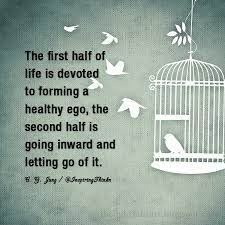
Now, who knows whether I will actually live to be 110 or 85, or 58, but regardless, I am certainly in the second half of life, what Carl Jung and Richard Rohr describe as the phase of “undoing much of what has been accomplished in the first half in order to get at a deeper heart of human life.”

Rohr (and Jung) say that the first half of life is “focussed on the development and enhancement of our Ego and its mind-set: ambitions, plans, competitiveness, judgments about others, looking after oneself, one’s career, one’s family” and mine certainly was! Didn’t you, like me, run from high school to college to marriage to children to parenting and career, making snap decisions to take care of yourself and those that you loved only to come to the screeching realization around 45 or so that many of those decisions, though well-intentioned and possibly even prayerful and consulted upon, were ill-founded, poorly motivated, and simply wrong?

Didn’t you, like me, stand in the wreckage, grieving, wondering how it passed so quickly and why we don’t get a chance at a do-over?

That, according to Rohr, is the kind of devastation that leads to the openness that allows for growth in the second half of life. He says, “The supposed achievements of the first half of life have to fall apart and show themselves to be wanting in some way, or we will not move further.’

Sheesh. Does that make me feel any better? I don’t know.

What it does help me lean into though, is my current reality.

I am, at now 57, learning more and changing more than I believe I have at any other time in my life. I have not only a therapist but also not one, but two, instructional coaches, and a small group that my husband and I meet with weekly. My therapist is helping me unlearn behaviors that are deeply rooted in my childhood — ways of coping that once allowed me to navigate my realities that became patterns that are no longer useful. My instructional coaches help me see how strategies that were effective in the classrooms I served in the 1990s and early 2000s can be modified to meet the needs of the students I have now. Our small group provides a judgment-free space in which to interrogate long-held beliefs, to sit in unanswered complexity, to admit our failures vulnerably, and to be loved unconditionally.

Thirty year old me wouldn’t have received so much input from others. She was busy kicking butts and taking names — doing what she needed to do to look after herself and her family. She “knew” she was right and she didn’t have time for the input of others.

But after all those “right” moves and the “supposed achievements” of that era have fallen apart, I’m in a new position.

I am, as they say, “coachable”.

I was getting ready for an uncomfortable encounter recently, and the anxiety was building as the date grew closer, so I kept bringing up the pending situation with my therapist. Because of my history in similar situations — of feeling unheard, undervalued, and “tolerated”, I had some real emotions, so I couldn’t see clearly. I could no longer define the purpose for the encounter — why was I going to meet with this person if the potential for hurt was so great? My therapist prompted me to think about what I needed from the interaction and reminded me to set my “past baggage at the door” so that it wouldn’t clutter the reality of the current situation. She helped me practice language to express my needs, and even though I had some anxiety throughout the interaction, I was able to manage my expectations and come away feeling content, even though the outcome might not have been exactly what I had pictured.

That’s something, isn’t it?

One of my instructional coaches and I are working on my ability to not let the way my students show up impact how I show up. You would think that after three decades in the classroom, I would have this down — that I would be steady Eddy in the face of student behavior, and for the most part I am. However, these past three years have put me to the test. The students I see today are in some ways very similar to the students I taught back in the fall of 1989. However, in some ways they are very different. They have been through a lot and they show up erratically — late, loud, hungry, irritable, disrespectful, and unconcerned about how their white middle-aged teacher might feel about it. Mostly, I greet them at the door smiling and hopeful and navigate through class with a no-nonsense approach, but guys, I am also a human being who gets tired, who loses her patience, and who falls back on muscle memory. I still have the default switch that flips over to kicking butts and taking names when the going gets tough, and while that might’ve worked in the past, today calls for a different strategy — a calm, sure response rather than a powerful reaction.

That was super easy to type, but much more complicated to execute.

Many of my students enter the classroom unable to leave their “past baggage at the door”.

(How could a teenager know how to do that, when I am still practicing at 57?)

They don’t leave it at the door, but they lug it right in, dripping debris in their path and dumping the entire mess all over my classroom. Picture all the shit of 20 or so teenagers heaped among the desks of my classroom. It’s a little crowded. And smelly. And uncomfortable.

One student shoves another student because she is crowding his space. Another puts her head down because she “just can’t deal” with the chaos. Others try to position themselves in such a way to ignore the heaping stench so that they can opt in to learning, complete their assignment, and move through their day.

My students don’t need me in those moments to shout or demand or ridicule. No, they need me to draw on the coaching that I am receiving and the years of experience I have gained from living my life dragging around a heaping pile of my own.

They need me to be unfazed by the stench. They need me to be prepared and engaging. They need me to have compassion when they “just can’t deal” and they need me to be nonjudgmental so that they can choose, at any moment, to join whatever it is we are doing.

I was having some difficulty with a particular student. We’ll call him Tyler. He comes to school almost every day, but he makes it to my class just once or twice a week. When he does come, he arrives late and loud, making comments that draw all the attention toward him, interrupting my class and disrupting any hope of learning.

I was complaining about this student to my coach and she said, “Make him feel like he is part of the classroom.”

I stared at her with jaw gaping,.

“Use what he has to say to direct him back to the class.”

As I sat staring at her, I realized that I had been falling back on old faithful — trying to get him in line by shaming him, telling him that the reason that he acts out is because he doesn’t know what we are doing, rather than doing everything I could to rope him in so that he would know what we are doing,

Damn.

And because I’m not still 30, not still sure that I have all the answers to everything, not still consumed with the advancement of my self and my family, I gulped and said, “Wow. You’re right.”

I went on to tell her that this very student had surprised me with his written work and that perhaps I could use it for a model in class. She said, “Don’t do that! He thrives on negative attention, and he will sabotage that attempt! Instead, tell him quietly, privately, that you were impressed with his work. Let him know that you see him, but do it quietly.”

And you know what? I did. And he received my compliment and turned in his assignment on time and lowered his volume just a little bit that day. It was a very little bit of movement in the right direction, but I will take it, because I know that he is still in the first half of life — he is still developing his ego, still looking after himself and his ambitions, and in his context, that is much more challenging than I think I could ever comprehend.

It’s quite a juxtaposition — me in my second half of life spending so much of my day surrounded by the unfiltered, confident bravado of teenagers, but I have to believe we were made for each other — they with their uncensored commentary on my wardrobe choices and teaching strategies followed by their genuine questions about what my prom was like and how I spend my money and me as a spectator in the room watching them navigate love, friendship, and loss as they plan for their future.

I know what’s coming for them — a season of challenge and discovery as they plan for and navigate their way into adulthood and the inevitable realization (at some point) that they’ve gotten a lot of things wrong. Maybe the best thing I can provide for them right now is a normalization of the fact that we make a lot of mistakes but that we can try again. We can learn, we can grow, and more importantly, we can give one another grace along the way. I think that’s what I wish I would’ve liked to have known in the first half of life. It’s what I’m thankful to know now.

for from His fullness, we have all received grace upon grace.”

John 1:16

The Art of the No

You know that time during the pandemic, when I was working full-time from home and I was outraged by the killing of George Floyd, and I felt called to go back to the classroom to return to fighting for educational equity? Do you remember how I’d been recovering from a major health crisis for almost six years and I felt I had finally arrived at a place of health that would support my return to this work?

Do you remember the first year — the fully virtual year where I sat in an empty classroom zooming with students I had never met in the flesh, students who may or may not have turned on their cameras to let me see their faces? Do you remember how giddy I was, how energized, how I found the work almost easy because I could get it all done within my scheduled work day and still have some space for self-care — for yoga, and walking, and therapy, and all the stuff I need to do to stay well?

And do you remember how even last year when we “returned” to in-person learning and I got to see my students face to face, I was thrilled? how I had enough steam to still maintain my physical and emotional health, probably because we regularly shifted to virtual learning and I could catch my breath and reset my rhythms from time to time? how it wasn’t until the very end of the year that the fatigue caught up with me and I lost my shit over a small unintentional slight on my students’ graduation day?

And do you remember how I committed last summer to being not only a master teacher, but also a reading interventionist, a cooperating teacher for a colleague who needed to student teach, and a fellow in the Michigan Teacher Leader Collaborative (MTLC)? How I wondered if saying yes to all of these responsibilities was was taking on too much or if I would finally find a limit to what I could do?

Yeah, guys, it appears that I have found that limit. I’m starting to see some warning flags.

However, I can’t always tell that I’m at my limit. Ninety-nine percent of the time, I am on my game. I am an experienced teacher, so I see results. My students are learning and the data reflects that fact. I’m open to coaching because I see its impact on my instructional practices. I’m building relationships both in and out of school — relationships that are mutually impactful.

And the need is there! Each year I get asked to do more, to take on more responsibility, as all effective teachers do. And because we see the need — the students who might benefit from our instruction and the gaps that we might fill — we agree to do it. We fit in one more class, sit on one more committee, and assist with one more project. In a school building, everyone is busy, and there is always more to be done, so we take turns adding more to our to-do list.

And in some ways, it’s affirming. We feel needed and valued and appreciated when our leadership approaches us and says, “You are doing such a great job with all the things you are doing, and we want you to do even more!”

We get celebrated for our accomplishments. We get a pay bump. All is good!

But, guys, humans have limitations, and eventually all that piling on of responsibility, all that added weight, begins to drag a person down and their effectiveness begins to flag. They begin to feel fatigue. They make a sharp comment to a student or a colleague. They begin to wonder if they can sustain the rhythms. They begin to look at other opportunities where they might not have to work quite so hard.

Yet the offers to work even harder keep showing up. Right now I have an opportunity to apply to be a senior fellow for the MTLC. I will likely be asked to add another section of students for the reading intervention I do. I’ve already been slated to work on a committee to discuss our school’s improvement plan. And to be honest, I’d love to do it all. I really would. I am sitting in the heart of the work that I have been called to my entire career. This is what I was created for — to see systemic inequities in education, to bring excellent instructional practices to students who have historically not been well-served but who are highly capable nonetheless, to speak into the policies that perpetuate educational inequities, and to work at the school level to make change a reality. This is it, guys. This is my lane.

And if I want to stay here, in this lane, and continue to impact individual students, I have to have a boundary that allows me to remain healthy. I have to practice the art of the no,

No, I won’t be applying to be a senior fellow in the MTLC.

No, I won’t be adding another section of the reading intervention.

No, I won’t be writing an article for your publication, volunteering at your fundraiser, or teaching during your summer program.

I have to say no sometimes so that I will be able to continue my yes.

Yes, I will still teach seniors at Detroit Leadership Academy.

Yes, I will stay on the Cougars to College/Post-Secondary Plans team.

Yes, I will continue to do one section each semester of the Adolescent Accelerated Reading Intervention.

Yes, I will continue to sit on the leadership team, support the overall success of this school, and participate in visioning and implementing practices that work to eliminate systemic inequities that disadvantage students of color.

The yesses are so important that I have to practice the art of the no. I have to guard my time, my space, my influence so that it has the most sustainable impact in the lane that is most important to me.

I have to practice the art of the no, so that I can say yes to myself, even though that is contrary to much of what I was taught. I need to oxygenate myself first — through yoga, and writing, and reading, and rest, and play — so that I have the health and the energy to say yes to the people that I love — my husband, my children, my grandchildren, my parents, and my friends — and to those that I serve — my students and my colleagues.

This is a learned practice, my friends. I have learned (and am still learning) how to say no because I once too often said yes, sure, of course, I can do that. And I piled on responsibility after responsibility while fully denying the needs of myself, my family, and my friends. I paid a high price with my health and my relationships. And I’m not willing to do that again.

We are not called to be all things to all people. We are called to use our gifts as part of the body, part of the system, part of a mechanism that utilizes the strengths of each individual to benefit the whole. We are called to support one another, and to encourage one another to take rest and to stay well, and to celebrate each of those individual strengths.

My strength, my husband playfully said last week, is “an insufferable belief in restoration”.

I believe in restoration because I am very noticeably being restored — physically, mentally, spiritually, emotionally. I don’t take that for granted, and I won’t throw it away. I will practice the art of the no, so that I can carry my “insufferable belief in restoration” into a few little spaces who need someone like me.

What more can a girl hope for?

‘My grace is sufficient for you, for My power is made perfect in weakness.”

2Cor 12:9

A String of Miracles

We purchased the gifts and wrapped them. We planned menus, purchased loads and loads of food, and baked ourselves silly. We cleaned the house and made all the beds, and then we waited.

As we sat on the coach, staring at Netflix, the texts started to come in.

“We’re checked in at the hotel! See you in the morning!”

“Our flight just landed!”

“We should be there in an hour!”

And then our family started rolling in — from Ohio, from Massachusetts, from Missouri.

We hugged, we laughed, and we ate.

We puzzled; we played games. We did crafts, watched movies, and traveled to celebrate with even more family.

It sounds like what most families do over the holidays, but I suppose many families, like ours, can get together like this only because of a string of miracles — only because of choosing forgiveness, of going to therapy, and of healing and time and the stubborn belief that things get better.

Didn’t you, too, have the holiday where everyone was yelling at each another?

And the one where no one spoke a word?

And the one where everyone walked out of church sobbing?

And the one where some decided they just. couldn’t. do it — not this year.

And then there was the covid year (or years — who remembers?) where we packed presents into flat rate boxes and stood in line for hours at the post office, hoping our parcels would get there before Easter. The year (or was it two?) where we sat in Zoom rooms with family members, some of us trying not to hog the air time, others trying to endure those who were hogging the air time.

It seems after all those difficult years we might have stopped believing that we could once again be all in one space, laughing, eating, agreeing on what to watch, moving upstairs to open the gifts, and leaning together over a puzzle, snacking on chips and rock candy and cookies.

But we didn’t stop believing — really — did we?

Didn’t we keep hoping for the day when all the therapy would pay off? Didn’t we long for the moment when we all laughed at the same joke, all smiled at the same memory, all managed to load ourselves and our gifts and bags full of food into cars only to discover most of the way there that we had left the main dish warming in the oven and no one lost their shit but we rebounded easily, picking up take out on the way?

Didn’t we imagine it could happen? Didn’t we dream it?

And so I’m sitting here pinching myself, trying to believe that it actually happened. And someone in the Christmas 2022 group chat sends a text checking on someone else who left the festivities feeling subpar. Another sends a pic of a present that broke upon opening, and everyone laughs. More pics are shared, more laughter, and then a commitment to what we will do next year.

They want to do it again next year.

I need a moment to just take that in.

Every family relationship doesn’t get this gift, does it? We don’t all get the moments we prayed for.

Don’t we all have at least one relationship where we do all the initiating? where tender topics are avoided? where our hearts ache with disappointment at the end of each phone call? where we can’t shake the feeling of being unwanted?

In fact, I was sitting in therapy the very day that the last of our family left, on the come down, for sure, and all I managed was, “our Christmas was amazing, but this one relationship over here still sucks and that’s all I can think about.”

And over the hour of belaboring the one less-than-stellar relationship I have spent most of my life bemoaning, my therapist offered suggestions, role-playing, expectation-setting, and the like, and near the end of the session, I began to realize that the beauty we experienced with our family at Christmas didn’t come without the hard work of many — of all of us, really.

I can’t expect this other relationship to magically transform on its own. If I want something different, I’ll need to return — to my knees, to forgiveness, to therapy, to the stubborn belief that things can get better.

It’s risky — even just the hoping for change — because happy endings or even happy moments are not guaranteed. I might experience disappointment — again.

But I might risk hoping, and a series of miracles might just happen. We might laugh at the same joke or smile at the same memory. We might play a game together or lean toward each other over a puzzle. We might agree on a movie. We might enjoy a meal.

And it might be amazing.

Witnessing the string of miracles that led to an amazing Christmas has me thinking that I just might risk hoping again.

[He] is able to do far more than we would ever dare to ask or even dream of”

Ephesians 3:20

Doing Fine

Click the arrow to listen.

Last spring, my supervisor asked me to take on the role of Reading Interventionist at our school. I’d been pointing out students’ low reading levels since the minute I walked into the building, so I knew there was a need.

She said I would continue with my main responsibility, teaching senior English — building literacy skills by way of career and college exploration. I would also continue to sit on the Leadership Team as the Master Teacher, offering support to other teachers, attending meetings, and managing a few additional responsibilities like once-a-week lunch room duty, hallway supervision between periods, and occasional projects like helping to plan career day.

My initial thought when she asked was an inaudible but nevertheless deep sigh — could I handle more responsibility? I was just finishing year two in the great experiment called, “Can Kristin really teach full time without triggering autoimmune distress and ending up back in bed?”

The first year, 2020-2021, I was alone in my classroom the entire year, meeting with students only in the zoom room. The tax on my body was minor. Yes, I had to drive 30 minutes each way, and yes, I had to plan for instruction and manage the grading stack for the first time in six years, but those things seemed fairly easy without the day to day drain that the management of student bodies, behaviors, and attitudes can be.

The second year was a bit more draining. To effectively manage a classroom full of kids, I had to relearn the strategies that I’d used in the past along with some new practices that are part of our culturally responsive model. The preparation and grading stayed mostly the same, but teaching in physical proximity with students, while much more effective and far more gratifying, is exceptionally more taxing. The fact that we moved in and out of virtual instruction provided me with intermittent periods of rest that probably allowed my second year back in the classroom to remain flare-free.

I’d made it two years with very little physical consequence, how much more responsibility could I add?

“We don’t have it in our budget to hire a full-time reading interventionist, but we know the need is there. You’ve got the background in reading from your time at Lindamood-Bell, so we’d like to eliminate your elective and give you that time for reading intervention with a select group of students who need the most support,” she said.

“Well,” I responded, “the need is definitely there, I do have some experience, so let’s talk more about what this would look like.”

A couple months later I started a continuous cycle of training in a program called the Accelerated Adolescent Reading Initiative (AARI), and we selected a group of freshmen. I rearranged my classroom to accommodate the design model of the program, obtained a whole bunch of materials, and prepared to meet my students.

They’re a lively little bunch — the eight I ended up with. They went into the Covid lockdown in March of their sixth grade year, and stayed there all the way through seventh. Last year, their school — the elementary building in our network — was virtual even more than we were. They were short several staff members all year long, and often didn’t have enough adults to safely open the building. Describing our freshmen as feral might be taking it a bit far, but all freshmen since the dawn of time have lacked maturity and self-control, and this group, having missed a great deal of school-provided socialization and having endured the societal trauma that was/is Covid-19, has even the most experienced of educators shaking their heads and digging deep into their training and experience to creatively manage their erratic, impulsive, and sometimes volatile behavior.

I only have eight of the them — the freshmen I affectionately call “my babies” — and even that small group has challenged me. It could be that 75% of them came into my classroom reading at a third to fourth grade level, and the other two came in reading at a first grade level.

What would you do in high school, if you were unable to read the materials that teachers were putting in front of you? Would you be quiet and compliant? Or would you find a way to entertain yourself?

Yeah, me, too.

Anyway, when I tested each of them individually in September, each acknowledged that reading had been “hard” and admitted that learning to read better is something that they’d like to do.

I have to remind them of that — when they won’t stay off their phones, when they are talking during instructional time, or when they are distracted by someone walking by in the hallway. I have to say, “Guys, why are we in this class? What is our goal?”

They respond almost in unison, “to be better readers.”

“What do we hope to find on our retest in January?”

“Higher reading levels.”

“Exactly. And if we want that, we’ve got to be together. We’ve got to do this hard work.”

And hard work it is. I tell them we are “dusting off the cobwebs” and remembering information they likely learned long ago — the sounds that letters make, how to break words into syllables, how to sound out words in chunks, and how to recognize sight words — and that part isn’t even AARI! That’s all Lindamood-Bell!

The core of every day is reading informational text and discovering the author’s purpose, the text structures, the evidence, and the organization. I document our process on giant sticky notes as we read each book and then, together, we map out the text. Finally, each student writes a summary and we take a text-based assessment.

For emerging readers this is very difficult work, but this week we got a pay off.

After a two-day effort to reset expectations after I’d been out of the building two days the week prior, we were back on track when the principal popped in for a visit. I say these students are my babies, but our principal has actually known most of them since they were in kindergarten. She is their strongest advocate. She fought for our school to offer this class; she’s actually still fighting to hire a full-time reading interventionist. She loves these kids with her whole life. Let me show you what I mean.

When she came in quietly, my students took note, and sat up a little straighter.

I asked them, “You guys wanna show off for Ms. Few?”

“”Yeah,” they said trying not to seem excited.

I took out a stack of cards to show her how quickly they can decode multi-syllable words like intersectional, combative, and defensively. Some are quick, but when they are not, we demonstrate how we identify the vowels, how we break the word into syllables, and how we sound out the chunks. One of my students — one of the two who tested at first grade level — demonstrates how he has learned to sound out a word like ‘drawn’ when even a word like “hat” was difficult not long ago.

She watches. She says, “Wow!” and “I don’t even know that word!” when one of my students decodes a nonsense word like prediptionally. Then she puts her hand to her forehead, covering her eyes, and says, “You’re gonna make me cry.”

My feral little freshmen beamed.

“But wait,” I said, “that’s not even the program! Do you have five more minutes?”

“Yes, I do.”

And she watched while we read the last page of the book we’ve been working on for three weeks. I ask, “What is the author doing here?” and one young man — a 6’3″, 120 pound baby — looks at his book and says, “He’s taking us right back to the first page of the book.”

“What do you mean?” I ask.

“The words on the last page are almost the same as the ones on the first page,” he answers.

“Yes, they are,” I say. “Why is he doing that?”

The student struggles for a moment. The other kids look at the first and the last page. They think. They struggle. And then they have it.

“He’s going back to the introduction.”

“He’s repeating the claim.”

“He’s making his conclusion.”

And the principal applauds. She says, “I can’t tell you how proud I am. I want to offer this class to the whole school, because when kids struggle with reading, they begin to get into all kinds of trouble. I can see how hard you are working. Do you feel like you are learning?”

And almost in unison, they say “yes!”

It’s been a hard nine-week journey to get to this point, my friends.

Is it a drain on my body? It is.

Does it energize my spirit? Unquestionably.

Am I beaming as brightly as my students? Obviously.

Do I think I can continue to manage this load? I think I’m gonna be fine.

For you make me glad by your deeds, Lord;
    I sing for joy at what your hands have done.

Psalm 92:4

**Freshmen are the most famished humans I have ever met. If you know a teacher of freshmen, offer to provide her with some snacks to have on hand. If you’d like to feed my freshmen, email me at krathje66@gmail.com and I’ll send you my wishlist.