
Staggering

The human capacity for emotion is staggering. How do I know this? I’m staggering.

In the last seventy-two hours I have felt contentment, fatigue, joy, satisfaction, frustration, annoyance, responsibility, discontent, dissatisfaction, love, pride, calm, irritability, anger, happiness, anticipation, gratitude, betrayal, shame, hurt, connectedness, emptiness, gratitude, concern, apathy, hopelessness, and deep sadness. And those are just the ones that come to mind right now.

How did I feel so much in just three days time? Did I go to a wedding? a funeral? a spiritual retreat? Nope. I went to work, came home, went to a graduation party, and came home again.

We can have all kinds of feelings in the midst of our everyday life.

I have known this my whole life. I was, if you remember, labelled “moodiest” in my high school yearbook. That label had all kinds of judgment and shame attached to it, and I felt it. The people who labelled me didn’t know my experience and why I had so much emotion. And I didn’t know yet that my bandwidth for emotional expression was my superpower.

It doesn’t always feel like a superpower, though. It sure didn’t on Friday when I went from the pleasure of watching three LGBTQ+ students participate in an online conference — sitting in my room with one of their advisors, listening to presenters, coloring, and finding a small pocket of safety away from their usual volatile surroundings — to the stress of navigating a chaotic high school hallway back to the quiet contentment of sitting at my desk, planning the details for next week’s instruction, to the frustration of failing to capture the combined attention of nine erratic and impulsive freshmen.

Then, I was faced with the challenge of metabolizing the adrenaline from feeling disrespected in my own space so that I could traverse the once-again chaotic hallways and become an “effective” supervisor of a hundred or so young adolescents on the Friday of a full moon as they remained “contained” in the unimpressive space of an out-of-date gym eating a subpar lunch. I made my way there, as I always do, continuously processing the inequities of my students’ realities — the very ones that contribute to their impulsivity and disrespectful behavior. A coworker and I stood together, quietly venting while intermittently addressing the most egregious behaviors such as vaping — which is prohibited — and running — which the students really need, but which is not tenable in such a small space.

From there, annoyed, I walked — again — through the chaotic hallway, calling out, “head to class, everyone!” I grabbed some supplies from my room and gathered two ninth graders (have I mentioned it was a full moon) from their assigned classes so that we could do a reading intervention where I fluctuated between pride (“nice job!”) and irritability (“put your phone down and look at this page”). I then had to shake off that tension and shift my mind and emotions to the impartial business of grading and then make “non-emotional” phone calls to the parents of the feral freshmen who had disrespected me earlier, saying “please remind your students that we have just six weeks to finish strong.”

I packed up my things for the weekend, and felt less irritated than I imagined as I made an additional phone call to book five hotel rooms for family members who are attending my daughter’s wedding this summer. In fact, I felt a little pleased with myself for finally checking it off my list, and I chatted playfully with my colleague as we shared our ride home. Then I got a little miffed when I discovered that my husband and father-in-law were sitting in our living room, simultaneously wanting me to sit and chat and expecting that at some point we would eat dinner, which I had yet to prepare.

The visit was expected, and I had a plan, but I am always tired on Fridays, and I really wanted to pour a glass of wine, curl up in a blanket, and watch something ridiculously pointless on TV, but I conjured up a meal, did my best to chat for a bit, and then retreated to my puzzle table in the basement where I sat non-communicatively listening to the men chat upstairs.

Of course I couldn’t sleep because I was still mentally processing my ineffectiveness during the one class I had to teach, so I got back up and watched mindless television until I could barely keep myself conscious.

The next morning, I manufactured cheer for my father-in-law as I presented him and my husband with breakfast before running to the store for a few groceries, a gift, and a fistful of Mother’s Day cards then returning home to shower and dress in preparation for my friend’s graduation party. I was feeling satisfied in managing all of these details until I was suddenly and unexpectedly blindsided by a revelation of broken trust and personal betrayal that spiraled me into a dark anger (shielding hurt) that had to somehow be processed or parked so that I could show up for the friend who had overcome multiple obstacles to earn a master’s degree while working full time.

As I drove to her place, I mentally chose to set the new information on the shelf so that I could show up in a room where I knew no one and lend my hands to decorate tables, set out food, and mingle [even more chatting] with strangers. I posed for a photo, ate [and raved] over excellent food, and then [two hours later] repeated my congratulations and headed back home.

Alone, at last, I changed into work clothes, went to my garden, and kneeled in the dirt, determinedly pressing dried seeds from last year’s harvest into the soil, hoping against all probability that God can once again bring life from death, healing from brokenness, trust from betrayal.

How many times can He perform a resurrection?

How many times can the broken be made whole?

I have an insufferable belief in restoration, but I am staggering, friends, and I am very, very tired.

I made my way back to the puzzle, and sat, feeling my hurt and fatigue, and then, one of ours who has been through so much devastation of her own sent a photo — her left hand with a diamond on the ring finger. And I had to admit that God never grows weary of making all things new.

May it ever be so.

[Inhale] I have been restored and upheld, and I will praise you.
Stepping Away

For the past few months, I’ve been motoring through — plan, teach, grade then drive home, cook, laundry, sleep– on repeat day after day after day. I’ve been managing to fit in a few pages of scrawl every morning followed by a little bit of yoga and a walk (or two) with my work buddy each day. I’ve cleared the garden to get ready for spring planting, and I’m bracing myself for the onslaught of Spring events that have already positioned themselves on the calendar — senior this and faculty that.

It’s a regular type of busy but I find myself wiped out and a little bit irritable — especially with my students.

I prepare what I think is a home run lesson and my seniors wander into my room, as seniors often do — late, loud, and with little interest in the activity that I have planned. And, rather than doing what excellent teachers do to engage them — demonstrating the relevance of the work or connecting with something they are interested in — I get annoyed that they are being who they are — teenagers on the verge of graduation. And, I show them who I am — a teacher who is tired of the routine and just as ready as they are to be finished.

In the moment, I expect them to bend to my will — I fuss, I stomp, I sling demands, I utter my frustration. And, not shockingly, I am ineffective. Which just makes me more annoyed.

And because I’m motoring along, I don’t take the time to pause, to step away, to reflect. Instead, my frustration bubbles into tantrum, and I walk out of a classroom full of seniors, taking a lap of the building to calm myself down. Other staff step into my abandoned room and berate my students for doing whatever it was that set off “the most experienced teacher in the building”. My stunned students sit silently. I walk back in and do my best to salvage anything that is left of the hour.

Yikes.

It happens to the best of us. We lose our shit because we haven’t acknowledged the warning flags. We haven’t taken a step away. That is why we have to anticipate our need to step away — to schedule it in before our shit has been lost.

Every year for the past eight or nine years, I have met at a hotel with a hundred or so other women (pastors’ wives all) who carve out a few days from their also busy routines to step away, laugh, sing, and pray. Every year in January, when the registration materials come, I question why it’s so important for me to get away with this group of women that I see just once a year. Why do I want to spend the time and money to hole up in a hotel room, to sit at a table, to participate in corny mixer games, to disrupt my routine? I drag my feet, but typically sometime in late February, I remind myself (or one of my friends gives a nudge) that I always come away feeling refreshed, fed, and typically somehow shifted.

Last Friday, the day after I abandoned my classroom, I packed up my things at the end of the day and headed north. After two hours of driving, I dropped my things in my room, put a comb through my hair, and meandered down to our meeting room.

A cannabis dealer was set up outside our space (the display made complete by an 18 inch stuffed phallus). All of us — women aged early 20s to mid 80s — had to traverse the wares to find one another, and perhaps because of that, we met with laughter, disarmed, ready to embrace and lean into relaxation.

Almost immediately during the ice breaker game “two truths and a lie” I found myself blurting out a true confession to a table full of women (some of whom I barely know) that I had recently told a roomful of seniors that they were behaving like assholes. And not one of the pastors’ wives gasped in horror. Instead they laughed. Someone said, “well, they probably were behaving like assholes”. They normalized my frustration. They accepted me.

Throughout the weekend, I found friend after friend — some I have known for decades, others I’d met just once or twice before. In clusters of two or three or ten, we shared our lives with one another — affirming, listening, empathizing, smiling, laughing. We drank coffee and tea as we leaned into scripture. We sipped wine and noshed on cheese and crackers as we laughed late into the night.

I was so relaxed. I wasn’t really anticipating a major shift to happen during this weekend. I was mostly glad that I had the time to connect with friends instead of managing my regular responsibilities. I got myself busy on a project one of the women had brought to share — crocheting plastic grocery bags into sleeping mats to be given to people who are experiencing housing insecurity — and figured I would coast through the Bible study in typical fashion.

Why I thought that, I have no idea, because almost without fail the Bible study portion of this event, which is all of Saturday morning, a little of Saturday afternoon, with a finish on Sunday morning, is where much of what I have been experiencing in my personal life gets clarified.

Our leader, a veteran pastors’ wife, accomplished scholar, and down-to-earth friend, led us into a journey with Peter, disciple of Jesus, who though faithful and passionate, sometimes ignored the warning signs and occasionally lost his shit. We saw him walk on water, then sink. We saw him speaking with Jesus, and then, when the stakes were so high, denying him.

After we had journeyed with Peter, Jesus, and the Disciples all morning, and I had made substantial ground on my crocheting project, our leader asked us to turn to Psalm 51. She led us through lectio divina, a scripture reading practice wherein you read the passage, circle what stands out to you, reflect as you read it again, respond by writing freely about the words you had circled, and then rest in silence for several minutes. I set my crocheting aside and leaned in. I was stunned by what I found. As I moved through the process, and wrote out my thoughts, I remembered the story of my last several years — how God had restored me, upheld me, renewed me, and sustained me. I acknowledged that in spite of that story, I regularly try to return (especially with my students) to my soldiering ways. I try to plan perfection, to demand compliance, and to ensure my own success.

I sat in silence.

Next, our leader taught us a strategy called a “breath prayer”. She urged us to use some of the words from our earlier writing to craft a prayer that we could say in one breath when we are overwhelmed, or stressed, or perhaps, I thought, in moments when I am about to tell a classroom full of students that they are acting like assholes. The words fell immediately on the page: Father, you have restored me and upheld me, and I will praise you.

It seems we were soon packing our things, hugging goodbye, and climbing back in our cars.

And it wasn’t long before I found myself in front of the very group of students who I had grown frustrated with the week before. They weren’t miraculously changed. They were still seniors on the brink of graduation — falling asleep, scrolling on their phones, talking to one another, asking to use the bathroom while I was in the middle of presenting a perfectly prepared lesson.

But I had shifted — not perfectly, not permanently — but I was somehow standing differently in the front of my classroom. I breathed my prayer several times that first day: Father, you have restored me and upheld me, and I will praise you. I stood a little lighter. I spoke a little gentler. And perhaps, just perhaps, a few more students engaged in learning than had done so the week before.

However, later in the week, I was again feeling fatigued and frustrated. I started to hear myself say sarcastically, “You go ahead, stay on your phone while I’m presenting the lesson, just don’t come ask me for support when you’re doing your work.” Yeah, it was another warning flag. Time to get some rest over the weekend. Time to practice my breath prayer. Time to step away.

I think this is why I am insufferably obsessed with restoration — because I keep seeing it over and over again in my life. I lose my shit, God drowns me in his grace, and I am given an opportunity to shift — to find a different way.

And often, the opportunity to shift presents itself when I find the time to step away — to slow down, to gather with people who love me, to reflect on what has been happening, and to realize what really is true.

I did that again today — with the small group my husband and I meet with weekly. We shared the struggles and joys of our week, we acknowledged with amazement all that we have seen each other through, and we reminded one another of the relentless grace and mercy of God.

It’s the refreshing breath I needed so that I could head into this week with the prayer on my lips: I have been restored and upheld, and for that, I will praise Him.

Second Half Living

A couple of years ago, I turned 55.

I imagine when some people hit an age like 55, they begin to think about retirement and the end of their careers, but since I had already been in a long season where I thought my career was over and had recently returned to my profession, I was still energized about teaching, still excited about being in the classroom, and still looking forward to many more years.

That didn’t stop the reality of my age though — the fact that the number 55 is just ten years away from 65, the age when Americans qualify for Medicare.

Ten years sounds like a long time until you glance backward and realize that ten years ago was when I first visited a rheumatologist, when we first considered moving back to Michigan, and when we were starting to say goodbye to St. Louis, to our teenagers, and to the life we had come to know.

It wasn’t that long ago, and ten more years will surely pass quickly.

I think it was out of the recognition of that reality that I jokingly declared 55 to be my halfway point — I was going to live to be 110!

I was finally enjoying life again having learned to manage my chronic illness and having navigated a long season of grief. I was learning so much about myself — what makes me tick, what I like, what I don’t like, how I think, how I believe, what makes me wonder, and what I want to impact. Surely I needed another half a lifetime to further explore what I was learning and to put that learning to good use.

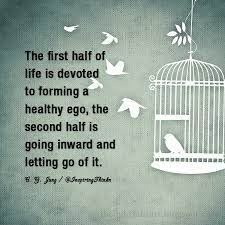
Now, who knows whether I will actually live to be 110 or 85, or 58, but regardless, I am certainly in the second half of life, what Carl Jung and Richard Rohr describe as the phase of “undoing much of what has been accomplished in the first half in order to get at a deeper heart of human life.”

Rohr (and Jung) say that the first half of life is “focussed on the development and enhancement of our Ego and its mind-set: ambitions, plans, competitiveness, judgments about others, looking after oneself, one’s career, one’s family” and mine certainly was! Didn’t you, like me, run from high school to college to marriage to children to parenting and career, making snap decisions to take care of yourself and those that you loved only to come to the screeching realization around 45 or so that many of those decisions, though well-intentioned and possibly even prayerful and consulted upon, were ill-founded, poorly motivated, and simply wrong?

Didn’t you, like me, stand in the wreckage, grieving, wondering how it passed so quickly and why we don’t get a chance at a do-over?

That, according to Rohr, is the kind of devastation that leads to the openness that allows for growth in the second half of life. He says, “The supposed achievements of the first half of life have to fall apart and show themselves to be wanting in some way, or we will not move further.’

Sheesh. Does that make me feel any better? I don’t know.

What it does help me lean into though, is my current reality.

I am, at now 57, learning more and changing more than I believe I have at any other time in my life. I have not only a therapist but also not one, but two, instructional coaches, and a small group that my husband and I meet with weekly. My therapist is helping me unlearn behaviors that are deeply rooted in my childhood — ways of coping that once allowed me to navigate my realities that became patterns that are no longer useful. My instructional coaches help me see how strategies that were effective in the classrooms I served in the 1990s and early 2000s can be modified to meet the needs of the students I have now. Our small group provides a judgment-free space in which to interrogate long-held beliefs, to sit in unanswered complexity, to admit our failures vulnerably, and to be loved unconditionally.

Thirty year old me wouldn’t have received so much input from others. She was busy kicking butts and taking names — doing what she needed to do to look after herself and her family. She “knew” she was right and she didn’t have time for the input of others.

But after all those “right” moves and the “supposed achievements” of that era have fallen apart, I’m in a new position.

I am, as they say, “coachable”.

I was getting ready for an uncomfortable encounter recently, and the anxiety was building as the date grew closer, so I kept bringing up the pending situation with my therapist. Because of my history in similar situations — of feeling unheard, undervalued, and “tolerated”, I had some real emotions, so I couldn’t see clearly. I could no longer define the purpose for the encounter — why was I going to meet with this person if the potential for hurt was so great? My therapist prompted me to think about what I needed from the interaction and reminded me to set my “past baggage at the door” so that it wouldn’t clutter the reality of the current situation. She helped me practice language to express my needs, and even though I had some anxiety throughout the interaction, I was able to manage my expectations and come away feeling content, even though the outcome might not have been exactly what I had pictured.

That’s something, isn’t it?

One of my instructional coaches and I are working on my ability to not let the way my students show up impact how I show up. You would think that after three decades in the classroom, I would have this down — that I would be steady Eddy in the face of student behavior, and for the most part I am. However, these past three years have put me to the test. The students I see today are in some ways very similar to the students I taught back in the fall of 1989. However, in some ways they are very different. They have been through a lot and they show up erratically — late, loud, hungry, irritable, disrespectful, and unconcerned about how their white middle-aged teacher might feel about it. Mostly, I greet them at the door smiling and hopeful and navigate through class with a no-nonsense approach, but guys, I am also a human being who gets tired, who loses her patience, and who falls back on muscle memory. I still have the default switch that flips over to kicking butts and taking names when the going gets tough, and while that might’ve worked in the past, today calls for a different strategy — a calm, sure response rather than a powerful reaction.

That was super easy to type, but much more complicated to execute.

Many of my students enter the classroom unable to leave their “past baggage at the door”.

(How could a teenager know how to do that, when I am still practicing at 57?)

They don’t leave it at the door, but they lug it right in, dripping debris in their path and dumping the entire mess all over my classroom. Picture all the shit of 20 or so teenagers heaped among the desks of my classroom. It’s a little crowded. And smelly. And uncomfortable.

One student shoves another student because she is crowding his space. Another puts her head down because she “just can’t deal” with the chaos. Others try to position themselves in such a way to ignore the heaping stench so that they can opt in to learning, complete their assignment, and move through their day.

My students don’t need me in those moments to shout or demand or ridicule. No, they need me to draw on the coaching that I am receiving and the years of experience I have gained from living my life dragging around a heaping pile of my own.

They need me to be unfazed by the stench. They need me to be prepared and engaging. They need me to have compassion when they “just can’t deal” and they need me to be nonjudgmental so that they can choose, at any moment, to join whatever it is we are doing.

I was having some difficulty with a particular student. We’ll call him Tyler. He comes to school almost every day, but he makes it to my class just once or twice a week. When he does come, he arrives late and loud, making comments that draw all the attention toward him, interrupting my class and disrupting any hope of learning.

I was complaining about this student to my coach and she said, “Make him feel like he is part of the classroom.”

I stared at her with jaw gaping,.

“Use what he has to say to direct him back to the class.”

As I sat staring at her, I realized that I had been falling back on old faithful — trying to get him in line by shaming him, telling him that the reason that he acts out is because he doesn’t know what we are doing, rather than doing everything I could to rope him in so that he would know what we are doing,

Damn.

And because I’m not still 30, not still sure that I have all the answers to everything, not still consumed with the advancement of my self and my family, I gulped and said, “Wow. You’re right.”

I went on to tell her that this very student had surprised me with his written work and that perhaps I could use it for a model in class. She said, “Don’t do that! He thrives on negative attention, and he will sabotage that attempt! Instead, tell him quietly, privately, that you were impressed with his work. Let him know that you see him, but do it quietly.”

And you know what? I did. And he received my compliment and turned in his assignment on time and lowered his volume just a little bit that day. It was a very little bit of movement in the right direction, but I will take it, because I know that he is still in the first half of life — he is still developing his ego, still looking after himself and his ambitions, and in his context, that is much more challenging than I think I could ever comprehend.

It’s quite a juxtaposition — me in my second half of life spending so much of my day surrounded by the unfiltered, confident bravado of teenagers, but I have to believe we were made for each other — they with their uncensored commentary on my wardrobe choices and teaching strategies followed by their genuine questions about what my prom was like and how I spend my money and me as a spectator in the room watching them navigate love, friendship, and loss as they plan for their future.

I know what’s coming for them — a season of challenge and discovery as they plan for and navigate their way into adulthood and the inevitable realization (at some point) that they’ve gotten a lot of things wrong. Maybe the best thing I can provide for them right now is a normalization of the fact that we make a lot of mistakes but that we can try again. We can learn, we can grow, and more importantly, we can give one another grace along the way. I think that’s what I wish I would’ve liked to have known in the first half of life. It’s what I’m thankful to know now.

for from His fullness, we have all received grace upon grace.”

John 1:16

Gem of the Week: Kia*

This is the second in a sporadic series.

I met Kia last September. She had done poorly on last year’s NWEA MAP testing and had been identified, along with seven others from among our incoming freshman class, as being most in need of the Adolescent Accelerated Reading Intervention, the program I had been trained in last summer. (I described what our classroom’s version of AARI looks like in this post.)

I started pulling these eight into my classroom, one by one, to evaluate them by way of the QRI — The Qualitative Reading Inventory. This assessment requires students to first read lists of words sorted by grade level to determine their basic skills of decoding and identifying sight words — the ability to get words off the page. Some of my students read these lists fairly independently up to 6th, 7th, and 8th grade level; a few could barely make it through a second grade list. Once I got a glimpse at their ability to read, I had them read grade-level passages and answer comprehension questions — some that were easy to identify from the text, others that required inference. The majority of the eight freshmen I tested demonstrated the ability to read and comprehend at levels between the third and fifth grade; three were frustrated at first grade level or below.

How do students get to their freshmen year reading only at the first through fifth grade level? I suspect two reasons.

First, my students have grown up in Detroit Public Schools (and the charter schools, like mine, within that district) where they have received inconsistent instruction for a variety of reasons such as low attendance of both students and staff, insufficient funding and resources, and multiple out-of-school factors that impact learning such as housing and food insecurity, domestic disruption, trauma, and other realities that have grown out of centuries of systemic racism.

Second, even in the best of schools in the wealthiest of communities, the data shows COVID’s impact on learning over the last two years. Even students who had mostly face-to-face instruction over the two years of the pandemic have scored lower on standardized tests than expected. Students like mine, who had little to no schooling in the Spring of 2020 due to lack of technology and Internet connectivity, followed by one year of virtual instruction where they had to attempt to log in and focus despite many barriers including poor Internet, other siblings in the home (maybe even in the same room), family responsibilities, and the like, followed by another year of continuous transition between in-person and virtual instruction due to insufficient staffing, high COVID rates, and building issues, have been impacted much more dramatically. And, in addition to not being in school, most of my students report that they read very little or not at all between March 2020 and September 2022. That’s thirty months away from reading

It’s no wonder that when it was Kia’s turn to come into my room, she was a little nervous. She giggled a lot and apologized for missing words but did her best. I found her to be comfortable reading at the third grade level; the fourth grade passage was frustrating.

She has been in my room since September. I should say, she has sometimes been in my room since September. She’s been absent thirty-three times. And, on about a half-dozen occasions when she’s been in my class, she has fallen asleep to the degree that I have been unable to wake her. When she is present and awake, she is either fully engaged and a star participant or is having an emotional meltdown in response to a teasing comment from one of the boys in the class. She has demonstrated very little consistency, staying power, or resiliency.

So, when I pulled her out of class to retest her this past Tuesday, the first day back in the building after a two-week break, I did not have high expectations. I had already tested most of the others who had improved their reading scores by 1-3 grade levels in just one semester! I was hopeful, despite her poor attendance, that she would demonstrate the same growth.

We found a quiet corner of the building, and I asked, “Are you ready for this?”

“I’m nervous,” she replied.

“You’re going to do fine,” I said. “In fact, you’ve been telling me all semester that you don’t need this class. Here is your chance to prove it to me!”

I started her with a fifth grade passage, assuming two years’ worth of growth, and she aced it. We moved to the sixth grade passage. She missed a couple comprehension questions, but still fell in the ‘instructional’ range, so we moved on to the next passage which is labelled “upper middle school”. Again, she missed only a couple questions on a dense passage about the life cycle of stars, so we moved to a high school level passage. The text was two single-spaced pages with illustrations describing the functions of DNA and RNA. It took her a while to respond to the questions, as she had permission, according to QRI instructions, to go back to the text and find the answers, but she found them — enough to fall in the “instructional” range once again.

As I watched her read and then search for answers — her determination to prove that she could do this — I was getting choked up. The others had tried hard, too, but she was clearly on a different level.

When she finished, I said, “Kia, how do you feel?”

“I feel good!”

“Do you know what level you started at in September?”

“No.”

“You were comfortable at third grade level. Fourth grade level was frustrating.”

“Oh my God!” she said, covering her face in embarrassment.

“Be kind to yourself!” I explained. “We were just coming back after COVID! It was a very difficult time! How much did you read during COVID?”

“Nothing,” she said with a sheepish grin on her face.

“Right! Do you know you just read a complex biology text at the high school level?” I could barely get the words out because my throat was tightening.

“I did?”

“You understood all that stuff about cells and DNA and replication! Everybody can’t do that!”

She looked at me, locking eyes.

“Kia, you could be a nurse!”

“That’s what I want to be!” she smiled broadly.

“You can! You are very bright!”

She started crying, too. We hugged. I passed her a tissue, then I pulled myself together.

“Listen, Kia, I’m gonna be real with you. You have the stuff it takes to be a nurse, but you aren’t going to get there unless something changes. Do you know what I’m talking about?”

“I gotta come to school.”

“Yes, you’ve got to come to school. If you want to get into a nursing program, you need As and Bs from now on, and you have the ability to do that.”

We talked a little bit longer about how I was going to be after her, checking in on her, even after she has left my class when the semester ends in two weeks. Then we walked through the halls telling administrators and teachers about what she had accomplished — we needed to celebrate.

Everyone applauded her, hugged her, congratulated her — she was beaming.

The next day Kia showed up in my room before school asking to borrow a laptop. She’d lost her charger and hers was dead — had been dead for weeks. I loaned her my laptop, and said, “Here’s a charger. You can keep it.”

“Thank you! Now I can get caught up at home!”

She came to my class later that day, sat up straight, answered questions, and smiled broadly.

She dropped by my room the next day to say, “I’m making up all my missing work, Mrs. Rathje, and I’m staying awake in all my classes.”

“Amazing, Kia! Keep going!”

Do I think that Kia’s ability to read improved nine — 9! — grade levels in one semester? No. However, I think that some basic skills that had gone dormant during COVID were re-engaged. I believe Kia’s brain, like many others I see every day, had learned to “sleep” during the trauma and disruption of COVID, and needed to be woken up.

AARI for an hour a day five days a week, despite her absences, was enough to wake her up, and realizing her potential was the cup of coffee that put her in motion.

I tested Kia on Tuesday, and she was still going strong on Friday. I suspect her momentum will fluctuate. She’ll have hard days, she’ll get discouraged, and she’ll be tempted to go back to sleep, if just to get some relief.

She’s gonna need all kinds of encouragement to build the stamina she’ll need to make it all the way to a nursing degree, because all of the obstacles didn’t magically go away. She’s still going to have to get herself up every morning. She’s still going to have to show up. She’s going to have to learn to tune out the voices of adolescent boys who like to get a reaction out of her. She’s going to have to overcome a lot more than what I see on the surface — whatever is going on at home that allowed her to miss thirty-three days of school, whatever reason there is for the fact that she needs glasses and hasn’t had then for the entire first semester, whatever has happened in her life that makes her so tender to break down so easily from everyday jabs of a few adolescent boys.

She’ll leave my class at the end of this semester, but our school is small, and I will make an effort to see her most days — to engage with her and to wave the cup of coffee under her nose, to remind her of the future that is possible for her.

But mostly it’s going to be up to her to do the next hard thing day after day after day. It’s gonna get tiring. And lonely. And the odds are against her.

But with some determination and a few miracles, she just might make it.

May God make her path straight and may He raise up a great cloud of witnesses to cheer her on her way.

I’m happy to be one among the crowd shouting “Keep going! You’re almost there!”

*Name changed for confidentiality.

A String of Miracles

We purchased the gifts and wrapped them. We planned menus, purchased loads and loads of food, and baked ourselves silly. We cleaned the house and made all the beds, and then we waited.

As we sat on the coach, staring at Netflix, the texts started to come in.

“We’re checked in at the hotel! See you in the morning!”

“Our flight just landed!”

“We should be there in an hour!”

And then our family started rolling in — from Ohio, from Massachusetts, from Missouri.

We hugged, we laughed, and we ate.

We puzzled; we played games. We did crafts, watched movies, and traveled to celebrate with even more family.

It sounds like what most families do over the holidays, but I suppose many families, like ours, can get together like this only because of a string of miracles — only because of choosing forgiveness, of going to therapy, and of healing and time and the stubborn belief that things get better.

Didn’t you, too, have the holiday where everyone was yelling at each another?

And the one where no one spoke a word?

And the one where everyone walked out of church sobbing?

And the one where some decided they just. couldn’t. do it — not this year.

And then there was the covid year (or years — who remembers?) where we packed presents into flat rate boxes and stood in line for hours at the post office, hoping our parcels would get there before Easter. The year (or was it two?) where we sat in Zoom rooms with family members, some of us trying not to hog the air time, others trying to endure those who were hogging the air time.

It seems after all those difficult years we might have stopped believing that we could once again be all in one space, laughing, eating, agreeing on what to watch, moving upstairs to open the gifts, and leaning together over a puzzle, snacking on chips and rock candy and cookies.

But we didn’t stop believing — really — did we?

Didn’t we keep hoping for the day when all the therapy would pay off? Didn’t we long for the moment when we all laughed at the same joke, all smiled at the same memory, all managed to load ourselves and our gifts and bags full of food into cars only to discover most of the way there that we had left the main dish warming in the oven and no one lost their shit but we rebounded easily, picking up take out on the way?

Didn’t we imagine it could happen? Didn’t we dream it?

And so I’m sitting here pinching myself, trying to believe that it actually happened. And someone in the Christmas 2022 group chat sends a text checking on someone else who left the festivities feeling subpar. Another sends a pic of a present that broke upon opening, and everyone laughs. More pics are shared, more laughter, and then a commitment to what we will do next year.

They want to do it again next year.

I need a moment to just take that in.

Every family relationship doesn’t get this gift, does it? We don’t all get the moments we prayed for.

Don’t we all have at least one relationship where we do all the initiating? where tender topics are avoided? where our hearts ache with disappointment at the end of each phone call? where we can’t shake the feeling of being unwanted?

In fact, I was sitting in therapy the very day that the last of our family left, on the come down, for sure, and all I managed was, “our Christmas was amazing, but this one relationship over here still sucks and that’s all I can think about.”

And over the hour of belaboring the one less-than-stellar relationship I have spent most of my life bemoaning, my therapist offered suggestions, role-playing, expectation-setting, and the like, and near the end of the session, I began to realize that the beauty we experienced with our family at Christmas didn’t come without the hard work of many — of all of us, really.

I can’t expect this other relationship to magically transform on its own. If I want something different, I’ll need to return — to my knees, to forgiveness, to therapy, to the stubborn belief that things can get better.

It’s risky — even just the hoping for change — because happy endings or even happy moments are not guaranteed. I might experience disappointment — again.

But I might risk hoping, and a series of miracles might just happen. We might laugh at the same joke or smile at the same memory. We might play a game together or lean toward each other over a puzzle. We might agree on a movie. We might enjoy a meal.

And it might be amazing.

Witnessing the string of miracles that led to an amazing Christmas has me thinking that I just might risk hoping again.

[He] is able to do far more than we would ever dare to ask or even dream of”

Ephesians 3:20

Humming Along

When I woke up this morning, my cells were vibrating. I don’t know how else to describe it other than to say it feels like my body is humming. I’m not a doctor, but when this happens, I imagine I’m having an inflammatory response. To what? To living my life.

This is the fullest fall I have had since probably 2011 or 2012. By 2013, I was collapsing on the couch immediately after arriving at home, wondering if we had something edible in the fridge or if I had enough energy to drive to Chipotle to pick up “dinner”.

After a years-long journey back to wellness, I am in the third year of the great experiment called, “Can Mrs. Rathje really return to the classroom?” and this year I’m pretty close to matching the load I had prior to being diagnosed with autoimmune disease. Granted, I don’t have teenagers living at home or even a pet to take care of. I am “simply” returning to the “regular” demands faced by teachers across the country, and two weeks shy of Christmas break my body is humming.

A typical work week for me includes 5 hours of commuting, 16+ hours of instruction, 14+ hours of grading and planning, a handful of meetings, some lunchtime and hallway supervision, and all kinds of miscellaneous “duties” such as separating teenagers who are verbally escalating toward a fight, texting with a student who doesn’t have transportation to get to school, doling out snacks to students who are “starving, Mrs. Rathje”, or listening to a student tell me why she got into an altercation with someone she thought was her friend and why that altercation resulted in her one-day suspension.

I am fully invested in my work and the lives of my students, but school and my students are not the totality of my life.

My husband and I have also been blessed to invest quite of bit of time with family this fall. Since October, we’ve travelled to Ohio, Missouri, and the Dominican Republic. Not only that, we have traveled within Michigan to see our parents and siblings and have enjoyed an extended visit from our son.

We’ve also connected with several friends — through our weekly small group community, coffee dates, and other social functions.

And, we’ve participated in some personal and professional enrichment including presenting at a couple of conferences, both separately and together.

We are living a pretty typical professional life, but my body is not wired for ‘typical’.

I will note that this old girl has been hanging in there. Yes, Covid knocked me down in October, but I got right back up (and was temporarily knocked down again and again got back up). Other than that, the bod has been getting it done.

But over the last few weeks she’s been clearing her throat (Ahem!) and raising her hand (Excuse me?) and asking for a little attention.

It started when we were in the Dominican Republic over Thanksgiving. We were totally relaxing — our hosts wouldn’t let us lift a finger! And while we were sitting on the lovely patio surrounded by luscious plants and later lounging on the sofa, listening to Adrea Bocelli on surround sound, my body began to quietly whimper.

There, there, I said. Relax. You’re on vacation. Try to enjoy it. We’ll be home before you know it.

But she continued to whine, so I loaded up on Motrin, did some yoga, took some deep breaths, and soaked up the surroundings and the lovely company we shared.

And, when I got home, I hobbled directly to the chiropractor.

“It’s the travel,” he said, “it always has an impact.”

Then, I met with my therapist who said, “Don’t underestimate the impact of your work stress and the emotion of family interactions on your body.”

And then I went to my physical therapist who said, “You might want to consider getting a pain injection.”

[Dammit.]

I’d been hoping I could do it all and manage my pain without an injection. I had been believing that my discipline — my yoga, my diet, my writing, my therapy — would be enough.

I’d been hoping I could teach at full capacity and travel and present at conferences and still enjoy my improved health.

And, really, for the most part, I think I can, if I also get periodic pain injections and continue being disciplined, and that includes taking significant rest at intervals. I’ve known this, but it seems I’ve always got to test my limits.

And, my body has told me that we are at our limit. Period.

So, this morning, as my humming body and I crawled out of bed, we said goodbye to my husband who is making a whirlwind trip — involving eight hours of driving inside of the next 24 hours — so that he can attend our granddaughter’s birthday party.

I am sad to be missing the festivities. I miss stuff sometimes — that is my reality.

And, at 10am on Saturday, I am still in pajamas. I have done 20 minutes of yoga, eaten a noninflammatory breakfast, drank a lovely cup of green tea with ginseng, am finishing my first of many tumblers of water, and am writing this all down because I need to admit that it is true.

I love my life. I really do.

I have a supportive and loving husband, a remarkable family, a cute little house with an extraordinary garden, a career designed especially for me, and countless high-caliber friends.

And, I sometimes spend quiet weekends at home alone, reading, soaking in the tub, putting together a puzzle, or working on a sewing project.

It’s the miraculous rhythm I get to live in this next chapter.

[He] is able to do immeasurably more than we can ask or imagine.”

Ephesians 3:20

of Death and Resurrection

Nadia* came to my desk the other day. The other students were working on an assignment, and she had a question about something she had missed a few days prior.

“I wasn’t here the day we did this,” she said.

“Yes, I remember. You missed a few days. Is everything OK?” I asked.

“Yeah,” she answered, “first my grandma died and we had all the arrangements for that, then my uncle died.”

“Oh my goodness! I am so sorry! That is a lot of loss all at once. I am impressed that you are working to get caught up. How can I support you?”

It’s not uncommon for us to hear about these kinds of losses. I myself lost a much-loved uncle last month, and many of us lost loved ones during Covid. However, it always shocks me when I learn of the amount of death my students have faced in their young lives.

Bianca* was sitting near my desk this week working on a college application. She was hoping it wouldn’t require a social security number because her mother had been reluctant to share hers with her when we had been getting FSA IDs, the first step in completing the Free Application for Federal Student Aid (FAFSA) .

“If it’s required, I’m just gonna call my mom and tell her I have to have it,” she said.

.”Does your mom want you to go to college?” I asked.

She shook her head no.

“Hmm. What would she like you to do?”

“She wants me to keep doing hair.”

“That’s right, you do hair. Is that what she does, too?”

“No, she doesn’t work, because my dad was a firefighter who died, so she is taken care of.”

“Oh my!” I said. “When did that happen?”

She held up three fingers and said, “Three years ago.”

“I am so sorry! I had no idea.”

And while we were chatting, her mom texted her the number, and Bianca completed her application.

Working with high school seniors, I see that kind of subtle movement all the time. One week a parent refuses to let their child have her SSN, then suddenly, nonchalantly, she sends it in a text two weeks later. Parents are ready to release when they are ready to release and not a moment sooner.

And it makes sense when you know that the mother and the daughter have already experienced devastating loss.

I’ve been listening to Anderson Cooper’s new podcast, All There Is, which is his examination of his own grief through conversations with others who have also experienced loss. Cooper lost his father to heart disease at age 10, his brother to suicide when he was 21, and his mother, Gloria Vanderbilt, just a few years ago. As he navigates the packing up of his mother’s things, he is struck by all the unprocessed grief from the previous losses and how raw the hurt still is.

As I’m listening, I hear his voice crack as he recalls a detail, and my throat tightens, My eyes well up and my chest feels heavy. I have not experienced much physical death among my immediate family and friends, but I have definitely experienced loss — the loss of my parents’ marriage when I was seven, the loss of some dreams for our family that were taken away, some by circumstance, some by error, and some by violence, and the loss of my health and career before I was even 50.

We all experience loss. We all experience death.

Cooper posits, and I agree, that we don’t make enough space for discussions of our losses and the hurts that we carry with us. Instead, we try to pack them up, put them away, and function in a way that seems “normal” when we will never feel “normal” again.

In one of his interviews, Cooper speaks with Stephen Colbert, who lost his father and two brothers in an airplane crash when he was 10. Colbert says it was the worst thing that happened in his life, but he has grown to be grateful for it — not the deaths, of course, but the opening it created in him that has allowed him to see the devastations in the lives of others and the ability to have compassion for them.

I resonate with that. For many years I have said that while my parents’ divorce was — for a long time — the biggest blow to my life, it grew in me an understanding of brokenness that prepared me to marry a man who had been divorced. Having stepparents prepared me to be a stepparent. Having experienced trauma and devastation in our own family has opened a chasm in my heart that has space for the brokenness I see in my students and my friends.

Because I have written about loss, and because my husband and I have explored our losses in depth with our therapists, with each other, and most extensively with a small group of friends who we meet with every week, we were prepared last spring and again this fall, to share our story with a small group of others like us who are in the midst of devastation and who are looking for shreds of hope. We believe, like Anderson Cooper, that we don’t talk about our losses — especially not in polite company, and even less in the church. Especially if those losses involve estrangement, divorce, sexual assault, alcoholism, drug abuse, gambling, or crime.

So when we stand in front of a group of church folk (last spring) or church workers (this fall) and tell our story, we do it as educators. We model — this is how you can be vulnerable and tell your story. We provide safety — you are in a room full of others who also have a story. We give space — take a chance, and share a piece of your story with someone next to you.

And they do.

And the tears flow.

Strangers touch hands and are no longer strangers.

It looks like resurrection.

Theologian and writer Jeff Chu asked in his opening talk at the 2022 Evolving Faith Conference** last weekend, “What does resurrection matter except to those have tasted death?”

What does new life matter, until you thought that life was gone forever?

When you have sobbed on your pillow knowing your family will never be whole again and then you see a connection, you receive an invitation, you embrace someone who has felt the rending of the flesh as deeply as you have and somehow what was dead seems to breathe new life,

Resurrection isn’t witnessed in isolation, is it? I find I see it most in community — in the sharing of stories, of tears, of understanding. I see it in friendships that walk through the valley of the shadow of death together long enough to get to the other side.

This fall I’ve had a student in my class, Monique*. Her attendance has been intermittent — she’s pregnant. When she comes, I greet her without judgment because I don’t know her story.; I only know that she has one. For the past week or more her seat has been empty. She didn’t appear to be full-term, so I didn’t expect that she had had the baby. I expected her to walk back in any morning, just as she had been doing all fall. But yesterday, I was standing in the office when her sister, a recent graduate, walked in. We chatted, and she mentioned that Monique had had the baby, but that the baby “didn’t make it”.

What happens to a seventeen year old heart when it has carried a life, moved through labor, and then experienced such a devastating loss?

I have no idea, but I am hoping to hear Monique’s story, and I am longing for her to experience resurrection.

[He] comforts us in all our trouble so that we will be able to comfort those who are in any trouble with the comfort we ourselves have received from God.”

2 Corinthians 1:4

*All student names have been changed, of course.

**Although the Evolving Faith conference is over, you can still register and watch the entire event, which was virtual and recorded.

Not Quite Ready

Click the arrow to listen.

I walked into my school this past week. I had some supplies to drop off, and I was in the area, so I popped in.

The place was almost empty, but our custodial crew was there, greeting me with smiles and hugs, the work they’d done all summer evident all around us. The floors gleamed; the walls were freshly painted; and every desk was neatly in place.

As I rolled a supply-laden cart into my classroom, I remained somewhat detached. Although this is where I’ll spend over 40 hours a week starting just a couple weeks from now, the reality of the work — the students and their futures — is still just a little out of view. My heart is not quite ready for the responsibility. It’s not quite ready to hold kids accountable, to inspire, to motivate, to redirect, to teach.

Not yet.

I mean, I’ve written my syllabus. My big-picture plans for the first few weeks are charted out. I have slide decks. I’ve purchased motivators, and I’ve loaded up my Google calendar with deadlines and commitments. I like to be organized well ahead of time, but I’m just not quite ready to stand and deliver content, motherly advice, snacks, admonitions, answers to distracting questions, and continuous positive narration to inspire appropriate student behavior.

I’m just not ready.

Fact is, this big-talking, butt-kicking, name-taking master teacher has just a little more than a teensy bit of anxiety. It’s not suffocating, but it’s humming a little chorus in my mind, especially in the quiet of the night, what if, how about, can you really, have you considered, and the like. I swat it away. I read a book about organized crime in Harlem in the 1940s, 50s, and 60s. I play a little Words with Friends, and I try to pretend that I don’t hear. But the chorus is catchy, and I find myself humming along mindlessly throughout the day.

I am not special. I think most teachers have a little anxiety before going back to school. I’m usually able to mask it with bravado — it’s a long-honed skill. Some of us also manage it through busy-ness, like organizing a classroom or preparing detailed plans, but probably, the best thing to do is to name it, as I did — again — yesterday with my therapist. Saying it out loud normalizes it, I guess. My therapist says, “You’re in a very demanding giving profession, and in the past, the demands have caused damage. It makes sense that you would be anxious.”

Oh. Yeah. That’s true, isn’t it? I have incurred some personal damages from this profession, haven’t it? Bravado and busy-ness were band-aids for my anxiety, not balms. They concealed it; they didn’t heal it.

What has been my balm? Quiet, rest, writing, and talking through my emotions. So, I return. I lean in. I announce that I am not quite ready.

I need a few more days of mindlessly weeding a garden while listening to a podcast. I need a few more mornings lazily journaling while sitting in the sun. I need a few more uninterrupted strong cups of tea, maybe one more jigsaw puzzle, a trip or two to see my mom, and just one more mani/pedi without looking at my watch.

And then, maybe then, I’ll be ready for the 5 am alarm, the 30 minute drive in rush hour traffic, the mass of students moving down the hallway, and the continuous grumble of adolescent complaint. I’ll be ready to stand over-enthusiastically (but genuinely) at my doorway, greeting my new seniors (and a few unsuspecting freshmen — God love them.)

They (and I ) have no idea what this school year holds — whether we’ll be able to be in person the whole year, whether Covid or a building issue will send us home, whether we’ll like each other, whether we’ll learn anything at all. And they (like me) might be experiencing a little anxiety. They might not have the 56 years of experience that I have that have taught me how to name it, how to care for myself, and how to create space, so they may need some extra compassion, understanding, and patience from me if they act out, check out, or lash out.

And I’ll have it. I almost always do, now that I have learned to have compassion, understanding, and patience for myself. I will be able to assure them that they belong, that they are safe, that they are loved, and that we have much that we can learn together.

Because here’s the thing — I have yet to meet a group of students I didn’t eventually fall in love with. I have yet to see a school year (and I think this might be the 23rd? — correction 20th in the classroom) where I didn’t learn right along with my students — about the curriculum, sure, but also about myself, about education, about the human experience.

And, part of what I’ve learned about the human experience is that I am not alone — none of us are! While I have been less than ready to look toward the school year, several of you have reached out in the last few weeks with offers of school supplies, snacks, prizes, and cash to support my classroom. I can’t tell you what an encouragement it has been to have you answering before I’ve even gotten around to asking. It has reminded me and my anxiety that we’ll be ok. When I am finally ready to head back to my classroom this year, I will carry your encouragement with me.

It won’t be long.

In just a few days, my adrenaline will kick in — I’ll be zooming around my classroom, arranging desks, making signs, double-checking supplies, and detailing lessons — but not yet. Right now I’m going to lean into another cup of tea, pop one more bowl of popcorn, and binge one more show on Netflix. The school year will be here soon enough.

…in quietness and trust is your strength…”

Isaiah 30:15

If you are able, reach out to a teacher (or school administrator) you know and ask how you can be an encouragement. You’ll be amazed at the impact such an offer might have.

Rest and Return

Click the arrow to listen to this post.

The summer is winding down and I (along with teachers across the country) am starting to move toward the classroom.

Feeling truly depleted at the end of last school year, I spent the first two weeks of summer break at home. I gardened, slept late, wrote a teeny little bit, read, walked, and cooked.

And then, when I was somewhat revived, my husband and I boarded a jet and headed west. We alit in the land of palms and headed to wide expanses of beach, spread out matching beach towels. and spent hours reading, sleeping, chatting, and staring in awe at the waves and the sky. We wandered inland and wondered at the mountains and the forests then returned to the beaches — some tame and populated, some rugged and bare.

We ate well, slept long, and walked for miles and miles.

We breathed deeply. We laughed. We restored.

When our vacation was over, he reported back to his responsibilities, and I returned to rest.

This past week, I found my way back to my desk and started to consider and prepare for the roles I will carry this fall. It will be my third year at my current school after a long season of physical and mental recovery, and it will be the most challenging yet.

Earlier in this blog, I have elaborated on the fact that many years of pushing too hard and failing to take care of myself or process any emotion had sidelined me from the classroom for several years. In 2020, I felt called back, and because we were in the midst of a pandemic, I had the privilege of easing back in through a year of teaching virtually followed by a year of some in-person and some virtual learning. I was able to get my feet under me with mostly no physical or emotional consequences until the very end of last year when my body started waving warning flags.

Those flags reminded me to fully lean into my summer, and I have. I have put puzzles together, crocheted, and binge-watched. I have rested fully, and now as reminders of all I have committed to start pinging on my phone, I am both exhilarated and anxious. I have added some new roles, and I am wondering if I will truly be able to manage it all.

I know for sure that I can manage the first responsibility, which is the one I have had from my first day at Detroit Leadership Academy. I am the senior ELA teacher, focusing on building skills that will enable my students to experience success after graduation. Our research projects focus on career and college. Our writing includes college essays and resumes. We practice academic reading, writing, discussion, and presenting. The goal is that our students will have the opportunity to choose — college, career, military, or trade school. I love this role — in many ways it is an extension of what I did in my previous classroom position, and I am thankful that I am able to carry those skills forward to support another community of students.

I also know that I can handle the second responsibility which I have had for a year now. I am our school’s Master Teacher. We have instructional coaches in our building who work directly with teachers to improve instructional practices; that is not my role. My role is more to be an exemplar and an encourager. Teachers can pop in my room and ask a question, check out my white board or room arrangement, complain about a policy, vent about a student, or ask for a snack. I love this role, too. Because I’ve been a teacher and a mom across four decades, I have seen some stuff, and not much surprises me. I can typically remain calm and objective, which is what less-experienced teachers often need.

The above two roles are familiar and natural to me, but like many teachers throughout their career, I have been offered some additional responsibilities that will absolutely stretch me in the coming year.

The first of these is one I volunteered for. I will be participating in a year-long educational fellowship wherein I will work with teachers across the state to examine educational policies and practices, do research, and work with lawmakers and constituents to enact change. I am very excited about this opportunity, which will give voice to my passion for educational equity, the key focus of this fellowship.

The second new role is to be our school’s reading interventionist and to bring a new reading program to the building. I will have one period a day with 10 freshmen who have demonstrated reading skills 2-3 years (or more) below grade level. I am being trained this week in strategies that have been demonstrated to decrease/eliminate that gap in 20 weeks of daily instruction. I am fully behind this initiative. In fact, I asked for a reading interventionist after seeing evidence of weak reading among my students. Because of my Lindamood-Bell experience, I am a solid choice (at least initially) for this role, and I know I will love watching my students develop their reading skills.

Even though I am passionate about each of these roles, they are adding up! And I haven’t even told you the last one.

After I had already accepted all of the above positions, and had begun to wrap my mind around what they would each entail, I was approached by our director of human resources and asked if I would take on an uncertified colleague as a student teacher.

Let me pause for effect, because that is what I literally did when I got the call. I sat with the phone to my ear, breathing silently.

I’ve mentioned before that 2/3 of the teachers in our building are uncertified — most, like this friend, are working toward certification. Many, like this friend, will eventually need to do student teaching. If she can’t do the student teaching in our building, she will find a different school to accommodate her, and then we would be down one more teacher.

I know it is not my responsibility, but I am the teacher in the building with the appropriate certification to supervise her, and I have had student teachers before. I believe we will work well together and that the experience will be successful, but it is a large responsibility on top of an already full load.

This is not uncommon for teachers. In fact, I am not unique at all. Teachers manage their classrooms, provide excellent instruction, sit on committees, volunteer for study groups, and support their colleagues. They coach, they work second (or third) jobs, and they also have lives away from school that include myriad challenges and responsibilities.

It’s not uncommon, yet although I am excited to get started in each of these roles, I do have some anxiety. This is the most I have committed to since the 2013-2014 school year — the year that I requested a reduced load because I was suffering with pain, extreme fatigue, and myriad other health issues, the year before I left my classroom for what I thought was the last time.

I’m not the same person I was then. I have learned how to care for my body. I am learning strategies for managing my emotions. I don’t have teenagers at home. I no longer have pets to care for. And still, it’s going to be a lot.

So here I am recommitting to my best practices — I will continue to write, to do yoga, to walk, to rest, to puzzle, to crochet, to read, and to meet with our small group. I will go to my physical therapy, chiropractic, and (now) acupuncture appointments. I will eat the foods that make me feel well and avoid those that don’t. I will limit other commitments.

More importantly, I will pray, and I will trust that God has provided me this next chapter and all the opportunities in it and that He will carry me through it all so that I can be present and fully engaged with those who are counting on me, because they truly are counting on me.

And really they are counting on the One who lives in me — the One who sees each student, each teacher, each parent, the One who knows each of our names, the One who is faithful, the One who is answering before we even use our breath to ask, the only One who can really be counted on

I may continue to feel anxious, but when I do, I will try to remember that He’s got me and all of my responsibilities in the palm of His hand.

The One who calls you is faithful, and he will do it.

I Thessalonians 5:24

A few 18 year olds

Click the arrow to listen.

On May 14, 2022, an 18 year old male drove three hours to a grocery store in a Black community with the intention of killing Black people. He killed 10 in the attack that he had been planning for months.

On May 24, an 18 year old male shot his grandmother in the head then drove to an elementary school where he fired shots in the parking lot and inside a fourth grade classroom. Nineteen students and two teachers died in the premeditated massacre.

On May 25 at 8:30 am, three 18 year old males walked into my classroom. With under two weeks remaining of their senior year, the biggest event on their horizon is graduation.

I don’t know why these were the three that showed up on the morning after a deadly school shooting — the kind that makes teachers across the country catch their breath and wonder how can this keep happening?

Why, of the eighteen students on my roster, were these the only three that showed?

When I had woken up that morning, I had been thinking, what can I do today to create a space for my students to speak about these shootings? I had tried to create a space on May 15, but I had rushed it — tried to cram it in to an already full day — and it had not gone the way I might have hoped.

But this particular morning, May 25, was a Wednesday, a day that my first hour is always dedicated to social-emotional learning (SEL), a time when my students and I typically use a curriculum called “Character Strong” to build relationships and explore emotions. We’d been doing so since January, and my students had been demonstrating varying degrees of engagement. They participated in activities like group discussions, watching videos, and journaling, and I felt we were making progress, growing a bit closer.

So as I sat at my desk early that morning, I thought, this is the second-to-last time that we will be together. What if, instead of using the curriculum, I pass out their journals and give them an opportunity to write. Maybe that would create enough space for them to share .

I imagined I would have 4-6 students to start, the same 4-6 that showed up on time most days, and that others would trickle in. I did not imagine that I would have just three 18 year old Black males.

I didn’t imagine that these three would show me that they were on the verge of being men.

I gathered us together. We did a little warm up activity, and then I said, “Ok, guys, it looks like it’s just us today. You may have heard there was a school shooting yesterday.” They confirmed they all had. “And, you are probably aware of the shooting that happened a couple weeks ago in Buffalo, NY.” They were. “It’s a lot guys, and I just wanted to provide some space today for you to process either these shootings or our time together this semester. I am going to put a few prompts on the board. You can choose the one you like, and we’ll all spend about five or so minutes quietly writing.”

I put this on the board:

I sat at my desk with my notebook. They sat at their desks with theirs. We all started to write.

Can you picture the scene? One middle-aged white woman in jeans and a pink “Detroit Kids Matter” t-shirt and three young black men in jeans and hoodies all bent over their desks writing silently in 5 x 7 notebooks.

I paused and watched them — these three 18 year olds — and I felt my throat tighten. These three [out of the 18 that could have been there] were engaging in this activity that I had tossed together at the last minute.

After about 5 minutes, we paused, and I said, “Anyone want to share?”

The first raised his hand and shared that he’d written that 18 year olds need to stay focused on their goals and to surround themselves with people who had their backs.

The second said that 18 year olds need to stay busy — get a job, earn some money, and stay out of trouble.

The third said he’d learned about his emotions during this dedicated class time.

And their teacher got choked up. She saw the poignancy of the moment and she said, “This is why we have created this space guys. We want to provide an opportunity for you to reflect, to think about your goals, and to imagine ways that you can get there. We want you to know that you are loved and seen, that you have a future, and that we have your back.”

They saw their teacher getting emotional, and all three looked her in the eyes and smiled tenderly.

They knew. No matter how messed up the last couple of years have been, no matter that they don’t have a yearbook, or a decent gym, or air conditioning, they know that we love them. They have received the message.

And yet, next week they will walk out of this school into a world where people will drive three hours just to point a gun at their bodies, a world where the senate cannot be bothered to bring gun reform laws to a vote, a world where Detroit Kids have not seen the evidence that they do indeed matter. They will walk into that world less-equipped than they ought to be, with not enough resources or knowledge or scaffolding because systemic racism has perpetuated educational inequity.

They all plan to go to college or trade school — all three of these young Black men — they know it is the way to a better life, but even though we have tried to prepare them, they have no idea what it will really take — the dedication, the perseverance, the kind of digging deep that they have never experienced before.

Nevertheless, they’ll line up in their caps and gowns, their families filling the seats, and I will be the one calling their names, lovingly looking them in the eyes, as our whole team cheers them on their way.

We pray that as they leave they will carry with them the knowledge that they are loved, that they are not alone, and that their lives do indeed matter.

May God protect them, and may we be emboldened to make the kinds of changes that ensure that these 18 year olds and all those that come after them will have a chance at the kind of future we envision for them.

Let us therefore make every effort to do what leads to peace.

Romans 14:19