
A String of Miracles

We purchased the gifts and wrapped them. We planned menus, purchased loads and loads of food, and baked ourselves silly. We cleaned the house and made all the beds, and then we waited.

As we sat on the coach, staring at Netflix, the texts started to come in.

“We’re checked in at the hotel! See you in the morning!”

“Our flight just landed!”

“We should be there in an hour!”

And then our family started rolling in — from Ohio, from Massachusetts, from Missouri.

We hugged, we laughed, and we ate.

We puzzled; we played games. We did crafts, watched movies, and traveled to celebrate with even more family.

It sounds like what most families do over the holidays, but I suppose many families, like ours, can get together like this only because of a string of miracles — only because of choosing forgiveness, of going to therapy, and of healing and time and the stubborn belief that things get better.

Didn’t you, too, have the holiday where everyone was yelling at each another?

And the one where no one spoke a word?

And the one where everyone walked out of church sobbing?

And the one where some decided they just. couldn’t. do it — not this year.

And then there was the covid year (or years — who remembers?) where we packed presents into flat rate boxes and stood in line for hours at the post office, hoping our parcels would get there before Easter. The year (or was it two?) where we sat in Zoom rooms with family members, some of us trying not to hog the air time, others trying to endure those who were hogging the air time.

It seems after all those difficult years we might have stopped believing that we could once again be all in one space, laughing, eating, agreeing on what to watch, moving upstairs to open the gifts, and leaning together over a puzzle, snacking on chips and rock candy and cookies.

But we didn’t stop believing — really — did we?

Didn’t we keep hoping for the day when all the therapy would pay off? Didn’t we long for the moment when we all laughed at the same joke, all smiled at the same memory, all managed to load ourselves and our gifts and bags full of food into cars only to discover most of the way there that we had left the main dish warming in the oven and no one lost their shit but we rebounded easily, picking up take out on the way?

Didn’t we imagine it could happen? Didn’t we dream it?

And so I’m sitting here pinching myself, trying to believe that it actually happened. And someone in the Christmas 2022 group chat sends a text checking on someone else who left the festivities feeling subpar. Another sends a pic of a present that broke upon opening, and everyone laughs. More pics are shared, more laughter, and then a commitment to what we will do next year.

They want to do it again next year.

I need a moment to just take that in.

Every family relationship doesn’t get this gift, does it? We don’t all get the moments we prayed for.

Don’t we all have at least one relationship where we do all the initiating? where tender topics are avoided? where our hearts ache with disappointment at the end of each phone call? where we can’t shake the feeling of being unwanted?

In fact, I was sitting in therapy the very day that the last of our family left, on the come down, for sure, and all I managed was, “our Christmas was amazing, but this one relationship over here still sucks and that’s all I can think about.”

And over the hour of belaboring the one less-than-stellar relationship I have spent most of my life bemoaning, my therapist offered suggestions, role-playing, expectation-setting, and the like, and near the end of the session, I began to realize that the beauty we experienced with our family at Christmas didn’t come without the hard work of many — of all of us, really.

I can’t expect this other relationship to magically transform on its own. If I want something different, I’ll need to return — to my knees, to forgiveness, to therapy, to the stubborn belief that things can get better.

It’s risky — even just the hoping for change — because happy endings or even happy moments are not guaranteed. I might experience disappointment — again.

But I might risk hoping, and a series of miracles might just happen. We might laugh at the same joke or smile at the same memory. We might play a game together or lean toward each other over a puzzle. We might agree on a movie. We might enjoy a meal.

And it might be amazing.

Witnessing the string of miracles that led to an amazing Christmas has me thinking that I just might risk hoping again.

[He] is able to do far more than we would ever dare to ask or even dream of”

Ephesians 3:20
Christmas Cheer

Like many of you, I’ve been checking off items on my to-do list as I prepare for Christmas. In fact, I’ve got multiple lists! We’ve still got a few gifts to purchase, some homemade gifts to finish, and some food to prepare before holiday gatherings. Each day, I complete a task or two and then revise my list, recalculating to make sure everything will be done “on time”.

And while I’m doing that, I’m insisting that my students attend to their own lists.Yes, we are still in school. Our last day is Thursday, December 22. Between now and then, my seniors will complete an essay, which many of them have not yet started. They’ll write a rough draft, participate in peer review, attend to revisions, and carefully proofread before submitting their final drafts. We’re on a tight schedule, but if we stick to our lists, they [and I] will complete everything right on time.

Sounds like no problem, but we’re all kind of over it, if I’m going to be honest — the getting up in the dark, traveling to school in the cold, filing into the building, taking our places, and trudging through the motions, day after day after day.

And, as though she had her finger on the ho-hum pulse of the collective arm of our community, our instructional coach created a spirit week for this of all weeks — the week that I’ve scheduled down to the minute with very little room for getting off task.

The announcement came on Friday at around 1:30. “Get excited, everyone! Next week is spirit week!”

Sigh.

Monday we’ll have a door decorating competition. Tuesday everyone will enjoy hot chocolate and cookies at lunch. Wednesday will be ugly sweater day, and Thursday, our last day at school before break, will be Holiday Cheer Day, where everyone is encouraged to wear Santa hats, jingle bells, or other holiday items.

My first response on Friday afternoon at 1:30pm, as I was wrapping up the week’s work and preparing for the final push, was a very Scrooge-y “Seriously? One more thing to cram into next week?” and “You really want me to take time out of class on Monday to decorate my classroom door? My students are writing a paper!?!?!”

Then I progressed to, “I don’t even have an ugly Christmas sweater!” and “I need to bring supplies to decorate my door?”

Didn’t she know about my lists and my strategy for getting each item ticked off before Christmas? How was I going to fit MORE to-dos onto my lists?

But this morning, my eyes are turned to our students.

This past week, as we have been preparing to write our personal essays, my students have been sharing scenes from their lives, letting me in just a bit, sharing a peek at the things that have shaped them.

Calvin’s* mother died in 2017, when he was just 13. He said it “messed me up”. He found comfort in eating and ballooned to over 300 pounds. But, last summer, an area gym offered free memberships to teens, so he joined. He and his sister, who he now lives with, stopped eating fast food and started cooking at home, and he has lost over 70 pounds. He wants to keep going; his goal is to look sharp for prom — one of the biggest days in the lives of our students.

Monette*, who started this school year pregnant but gave birth and then lost her young son a few days later, says she wants to write about this experience. She says holding her son was a moment she was proud, and losing him was the biggest hurt of her life.

Hope* engaged in an argument with someone on Twitter who claimed that Breonnna Taylor’s boyfriend was a drug dealer. She searched for evidence to disprove his theory and stayed at it until the original post was deleted.

Kevin’s* enlisting in the Army. He spent last summer training with his recruiters, cutting the weight he gained during Covid. He’s our valedictorian, and his ASVAB score qualifies him for just about any military training he chooses. He’s going through the steps now to ensure that he’ll start boot camp just a couple weeks after graduation.

These seniors of mine stand at the edge of adulthood, where the choices they are making have long-lasting impact. They are showing up each day, working hard, and looking forward to a not-too-distant future where they will be responsible for every aspect of their lives. It’s heavy, and I need to take a moment to acknowledge that.

The weight they are carrying goes beyond checking off items on their Christmas to-do list, beyond choosing which salad they will make for Christmas Eve, beyond what gift to purchase for a colleague. They are engaging with real adult stuff — health, loss, political engagement, and military service — when they have a few fleeting moments left to enjoy being kids.

What will it cost me to allow them a little bit of fun this week? a little bit of encouragement? A little reward for continuing to show up even when they are over it?

And won’t I enjoy it, too? Won’t it be fun seeing my seniors scrambling within the 10 minutes they have been allotted to decorate my classroom door, glancing over their shoulders at the classes across the hall to see what they are doing?

Won’t it be great to see our students sipping cocoa and dunking Christmas cookies?

Won’t it bring some laughs and joy to compare our ugly Christmas sweaters?

And won’t it lighten the mood to hear some jingle bells in the hallway?

Yes, of course, yes.

So, I dragged myself out today, found an ugly sweater that I will try to make uglier before Wednesday. I picked up some supplies for our door decorating contest, and while I was out I bought a chai latte to sip on as my attitude finished adjusting.

I checked some other items off my to-do list, too, and then reminded myself to relax. What gets done, gets done. Christmas is about more than my to-do list. It’s about seeing the people in front me, enjoying the time I have with them, and sharing the joy of a love that offers hope, restoration, and a future.

Once again, my instructional coach gave me just what I needed.

for unto [us] is born this day, a Savior”

Luke 2:11

*All names changed, of course.

A Week’s Journey

Click the arrow to listen

I clicked ‘publish’ on last week’s blog, jumped in my vehicle, and drove to school. By the time I got there I had a text message, “I want to feed your students!”

At the end of last week’s post about my developing freshman readers, I had mentioned that they eat a ton and had invited my readers to a) support any teachers they know with gifts of snacks, or to b) help me feed mine. A close friend and fellow educator was the first to raise her hand and say, “pick me, pick me!” It’s such an encouragement to me when any of you reach out — you read my blog, you ask me about my students, you send cash for feminine supplies, or you buy snacks, and I feel encouraged to keep going.

Within a couple of hours, two retired teachers (who taught some of my children!) reached out with a very generous gift of support and another educator who got connected to my blog through a mutual friend, emailed to say “snacks are on the way!”

Monday night the Amazon trucks started arriving. By Tuesday morning, I had a large tote to carry in to school full of protein bars, fruit snacks, and candy,

Why do I need so many snacks? Because I have 80 students of my own who come into my class most days and many more who have become aware that “Mrs. Rathje probably has something.” Students come to me to borrow chargers, to get a bandaid, or to ask for feminine supplies, deodorant, or something to eat. Our school provides breakfast and lunch to all of our students, but breakfast often looks like a juice box, a granola bar, and an apple — hardly enough to hold a teenager until lunch time. Lunch might be pizza, “walking tacos” (taco fixings piled inside a snack-sized bag of Doritos), or more standard school lunch fare like chicken with mashed potatoes, all of which sound decent, but each of these arrives in large insulated boxes which cafeteria workers open up before distributing the food through a window in the gym where the teeming masses fight for a place in line. It’s loud and chaotic. You get one choice, and if you don’t like that, you are, as they say, out of luck. Many kids do eat what is provided, but some check out in a “quiet” corner, where they mind their own business and scroll on their phones.

Whether they’ve eaten or not, teenagers are always persistently hungry.

I don’t give snacks every day, but students know that if they missed breakfast, if they are going straight to work after school, or if they are just plain hungry, they can ask, and I will have something.

So, I hauled snacks into school Tuesday morning, and Tuesday afternoon, instead of going back home, I drove north for a two-day conference. The Michigan College Access Network (MCAN) was having its annual conference at a casino in Mt. Pleasant, MI, and I had received a scholarship to attend on behalf of my school and the Michigan Teacher Leader Collaborative (MTLC), of which I am currently a fellow.

When the conference started Tuesday morning, I learned about state funding for students like mine that has been made available in the wake of Covid and a disengagement in postsecondary enrollment. We’re talking millions of dollars! As the director of MCAN said, we have right now “unprecedented funding for unprecedented impact.”

Over lunch, I learned about LA Room and Board an organization that provides housing for the 1 out of 5 community college students in Los Angeles who are homeless.

The next day, I learned about the Digital Equity Act, a bi-partisan $2.75 billion initiative that provides funding for building out Internet infrastructure, providing devices, and increasing digital literacy so that “everyone – no matter where they live – can fully participate in our society, democracy, and economy,” and that means college access, job preparation, and, ultimately, increased financial freedom.

I was surrounded, for two days, by individuals who were aware of and leveraging resources that have the potential to transform the lives of my students and others like them. In the midst of this, I found myself at a table with three complete strangers. I was catching up on notes and eating my meal, when one of the others introduced himself. I told him I was a high school teacher in Detroit and then asked him what he did. He said said he was a gifts manager at a major agency in Detroit; his main project is funding the post-secondary pursuits of Detroit students.

I perked up. “Do you have a card?”

He handed me one.

I made it my job for the next few minutes to invite him to speak at our career day and to “sell” him on the mission of our school. Whenever I shared a fact or detail about the lived experiences of my students, he replied, shaking his head, “I already know. I already know.”

We parted ways to go to separate sectionals, but I found him again at lunch, and continued our conversation, sharing specific stories like the one about the brother (a freshman) and his sister (a senior) at my school who have dealt with homelessness and are now trying to navigate into more permanent living situations. I shared that one obstacle they’ve had is finding transportation to school since their new address is no longer on our bus line. I shared, “I do a little grass roots philanthropy, enlisting a small group of friends who help me out from time to time. One set of friends right now is financing Lyft and Uber rides for these two while we figure out a longer term solution. Their gifts are small compared to what you are looking at….”

He interrupted me and said, “but they add up to big wins.”

They do! I cant tell you the impact it has had on my relationship with these two students and the senior’s boyfriend, who is currently arranging all the rides because the siblings do not currently have a cell phone. The boyfriend, who had previously not wanted to engage in my class — who would barely speak to me — is now greeting me in the hallway, texting me on the weekend, and leaning in a little harder to academics. The freshman is trying to be just a little less squirrel-y (bless his heart), and his sister is growing up before my eyes, advocating for herself, navigating difficult waters, and trying to emancipate herself so that she can provide a space for her and her brother until he, too, is of an age to do for himself.

I was sharing this with my new friend, when he said, “Can you imagine what it would look like if my organization set up a fund to cover expenses like these?”

“I can!” I said, and I promised to email him the next day.

I returned home Thursday night to find an enormous pile of Amazon deliveries waiting for me — trail mix, more candy, beef jerky, cheese and cracker packs, an enormous box of potato chips, feminine supplies, deodorant, and on, and on, and on.

Big wins for my students, for sure.

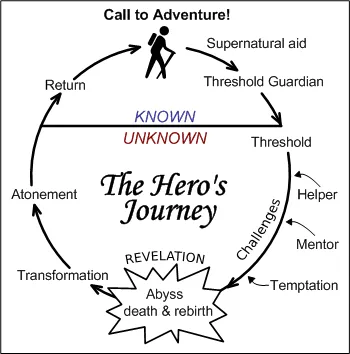
Saturday, I participated in a small virtual conference put on by the MTLC. One of the speakers, Silver Moore, said she likes to picture each of her students as a hero on the hero’s journey, traversing through challenges, receiving supernatural aid and assistance from mortal helpers, on their way to transformation. She said, that “if indeed they are heroes on their journeys, they need us to tell them they are amazing.”

And I thought, “they really do!” They need my little group of friends to spoil them with snacks and Uber rides for their journey. They need the state of Michigan to provide “unprecedented funds” to overcome their challenges. They need the federal government to fund access to the technology that will help them navigate their paths, and they need philanthropic agencies to commit their resources in a way that signifies that they are truly heroes.

This is a message that is unfamiliar for students like mine. They don’t often hear that they are amazing. Instead they hear through both words and actions that they are simultaneously too much and not enough, that they are loud, wrong, and unworthy of a hero’s life.

So this week, I’m gonna haul a bunch of snacks into my room to celebrate my amazing students who are on various points of their hero’s journey. I’m going to tell them they are amazing, and I’m going to let them know that you are cheering them on.

We are the ‘great cloud of witnesses’ that might enable them to ‘run with perseverance the race that is set before [them]’.

of Death and Resurrection

Nadia* came to my desk the other day. The other students were working on an assignment, and she had a question about something she had missed a few days prior.

“I wasn’t here the day we did this,” she said.

“Yes, I remember. You missed a few days. Is everything OK?” I asked.

“Yeah,” she answered, “first my grandma died and we had all the arrangements for that, then my uncle died.”

“Oh my goodness! I am so sorry! That is a lot of loss all at once. I am impressed that you are working to get caught up. How can I support you?”

It’s not uncommon for us to hear about these kinds of losses. I myself lost a much-loved uncle last month, and many of us lost loved ones during Covid. However, it always shocks me when I learn of the amount of death my students have faced in their young lives.

Bianca* was sitting near my desk this week working on a college application. She was hoping it wouldn’t require a social security number because her mother had been reluctant to share hers with her when we had been getting FSA IDs, the first step in completing the Free Application for Federal Student Aid (FAFSA) .

“If it’s required, I’m just gonna call my mom and tell her I have to have it,” she said.

.”Does your mom want you to go to college?” I asked.

She shook her head no.

“Hmm. What would she like you to do?”

“She wants me to keep doing hair.”

“That’s right, you do hair. Is that what she does, too?”

“No, she doesn’t work, because my dad was a firefighter who died, so she is taken care of.”

“Oh my!” I said. “When did that happen?”

She held up three fingers and said, “Three years ago.”

“I am so sorry! I had no idea.”

And while we were chatting, her mom texted her the number, and Bianca completed her application.

Working with high school seniors, I see that kind of subtle movement all the time. One week a parent refuses to let their child have her SSN, then suddenly, nonchalantly, she sends it in a text two weeks later. Parents are ready to release when they are ready to release and not a moment sooner.

And it makes sense when you know that the mother and the daughter have already experienced devastating loss.

I’ve been listening to Anderson Cooper’s new podcast, All There Is, which is his examination of his own grief through conversations with others who have also experienced loss. Cooper lost his father to heart disease at age 10, his brother to suicide when he was 21, and his mother, Gloria Vanderbilt, just a few years ago. As he navigates the packing up of his mother’s things, he is struck by all the unprocessed grief from the previous losses and how raw the hurt still is.

As I’m listening, I hear his voice crack as he recalls a detail, and my throat tightens, My eyes well up and my chest feels heavy. I have not experienced much physical death among my immediate family and friends, but I have definitely experienced loss — the loss of my parents’ marriage when I was seven, the loss of some dreams for our family that were taken away, some by circumstance, some by error, and some by violence, and the loss of my health and career before I was even 50.

We all experience loss. We all experience death.

Cooper posits, and I agree, that we don’t make enough space for discussions of our losses and the hurts that we carry with us. Instead, we try to pack them up, put them away, and function in a way that seems “normal” when we will never feel “normal” again.

In one of his interviews, Cooper speaks with Stephen Colbert, who lost his father and two brothers in an airplane crash when he was 10. Colbert says it was the worst thing that happened in his life, but he has grown to be grateful for it — not the deaths, of course, but the opening it created in him that has allowed him to see the devastations in the lives of others and the ability to have compassion for them.

I resonate with that. For many years I have said that while my parents’ divorce was — for a long time — the biggest blow to my life, it grew in me an understanding of brokenness that prepared me to marry a man who had been divorced. Having stepparents prepared me to be a stepparent. Having experienced trauma and devastation in our own family has opened a chasm in my heart that has space for the brokenness I see in my students and my friends.

Because I have written about loss, and because my husband and I have explored our losses in depth with our therapists, with each other, and most extensively with a small group of friends who we meet with every week, we were prepared last spring and again this fall, to share our story with a small group of others like us who are in the midst of devastation and who are looking for shreds of hope. We believe, like Anderson Cooper, that we don’t talk about our losses — especially not in polite company, and even less in the church. Especially if those losses involve estrangement, divorce, sexual assault, alcoholism, drug abuse, gambling, or crime.

So when we stand in front of a group of church folk (last spring) or church workers (this fall) and tell our story, we do it as educators. We model — this is how you can be vulnerable and tell your story. We provide safety — you are in a room full of others who also have a story. We give space — take a chance, and share a piece of your story with someone next to you.

And they do.

And the tears flow.

Strangers touch hands and are no longer strangers.

It looks like resurrection.

Theologian and writer Jeff Chu asked in his opening talk at the 2022 Evolving Faith Conference** last weekend, “What does resurrection matter except to those have tasted death?”

What does new life matter, until you thought that life was gone forever?

When you have sobbed on your pillow knowing your family will never be whole again and then you see a connection, you receive an invitation, you embrace someone who has felt the rending of the flesh as deeply as you have and somehow what was dead seems to breathe new life,

Resurrection isn’t witnessed in isolation, is it? I find I see it most in community — in the sharing of stories, of tears, of understanding. I see it in friendships that walk through the valley of the shadow of death together long enough to get to the other side.

This fall I’ve had a student in my class, Monique*. Her attendance has been intermittent — she’s pregnant. When she comes, I greet her without judgment because I don’t know her story.; I only know that she has one. For the past week or more her seat has been empty. She didn’t appear to be full-term, so I didn’t expect that she had had the baby. I expected her to walk back in any morning, just as she had been doing all fall. But yesterday, I was standing in the office when her sister, a recent graduate, walked in. We chatted, and she mentioned that Monique had had the baby, but that the baby “didn’t make it”.

What happens to a seventeen year old heart when it has carried a life, moved through labor, and then experienced such a devastating loss?

I have no idea, but I am hoping to hear Monique’s story, and I am longing for her to experience resurrection.

[He] comforts us in all our trouble so that we will be able to comfort those who are in any trouble with the comfort we ourselves have received from God.”

2 Corinthians 1:4

*All student names have been changed, of course.

**Although the Evolving Faith conference is over, you can still register and watch the entire event, which was virtual and recorded.

And, we’re off!

We just finished the second week of school and let me just say: All. Cylinders. Are. Firing.

From Monday morning at 8am to Friday afternoon at 4, the weeks are gonna be full, full, full.

Let me give you a glimpse. Mondays and Thursdays I spend three blocks — that’s 300 minutes –with seniors and one half block (50 minutes) with a small group of freshmen. From first thing in the morning until the very end of the day, all systems are go.

This past week, my seniors learned how we will respect one another in the classroom, explored my syllabus, and took the semester pre-test to show me what they already know. We also reviewed their SAT scores and had what I call “Real Talk” about where we are and where we are trying to be by the end of the school year. My students (and most students of color in urban areas across the country) have been broadly underserved educationally and their SAT scores show it. They’ve been underserved, and then they’ve spent their whole high school experience dealing with a pandemic. That’s right, my seniors went into lock-down as freshmen, spent their entire sophomore year “learning” remotely, came back for a repeatedly disrupted junior year, and are now trying to fully re-engage and prepare for college.

I need them to know from day one that we’ve got work to do. I don’t mince words. I say, “Look, we’ve got to look reality straight in the face if we want to accomplish our goals this year.”

“Sheesh, Mrs. Rathje, I feel like giving up right now.”

“Oh, we’re not giving up. Let’s pause for five minutes to catch our breath, but then we are right back to it.”

They took a 5 minute break, I called them back, and we were rolling — no time to waste here.

My freshmen — sweet babies — were hand selected because although most every freshmen in our building is trailing behind Common Core benchmarks, this little group of mine is the furthest behind of everyone. I spent the past couple weeks getting to know them, assessing their reading skills, and beginning to engage them in the arduous task of finding and filling in gaps in their literacy learning, getting their buy-in, establishing norms for how we behave in Mrs. Rathje’s class, and holding them to my expectations.

This little class, which meets every day from noon to 12:50 (pray for me!), has been 1 part “real talk”, 2 parts “you can do this!’, 1 parts “this is what we are doing”, and 1 part “this is what we are definitely NOT doing”. They are immature and a bit squirrely, but for whatever reason, they respect me and they know I am not playing. They lean in — they want to learn. And guys, the work we are doing is not easy or fun — I’m making them learn/remember very basic phonetic rules — we’re counting vowels, breaking words into syllables, clapping them out, and even playing games with flashcards.

Yesterday, at the end of our class, when the white board was covered with our notes — the words we broke up and the outline of the book we are reading, one of my students asked, “Mrs. Rathje, do you leave this on your board for your other students to see?”

“No, I do not. I will cover it all up. They won’t even know it’s here. I’ve got you.”

And the whole group collectively sighed.

They couldn’t have a bunch of seniors knowing that they are reading about what animals do in the winter, that they were discovering what the author’s claim was, that they had to break the word hi-ber-nate into chunks, or that we’re all learning the word adapTAtion.

And that’s just Monday and Thursday.

On Tuesday and Friday I meet with my freshmen, of course, but I also have about 300 minutes on each of those days for other tasks. Last week I filled those minutes by writing lesson plans, completing a reading assessment with a freshman, meeting with my instructional coach, returning emails, calling parents, supporting my student teacher, creating materials, grading assignments, and recording grades. The time fills up fast, and I often find myself scrambling to finish “one last thing” before I walk to my car at the end of the day.

I haven’t mentioned Wednesday yet. Wednesdays are typically what we call a “sprint” schedule. We see all seven of our classes in one day on a shortened schedule –typically less than 40 minutes per period with one additional period for social-emotional learning. This past Wednesday was an exception. All of our ninth through eleventh graders had to take the Academic Approach assessment which is a pre-test for the PSAT and SAT. It is computer-based and takes 3-4 hours. Because the seniors didn’t have to take this test, we decided to a) get them out of the building to limit distractions for the underclassmen, and b) get them on their first college visit.

Students filling out applications at EMU

Wednesday morning I found myself on a bus with 50 seniors and four other chaperones riding to Eastern Michigan University. Our students spent a few hours learning about EMU’s programs and touring the campus. Then, we boarded the bus and headed back to Detroit where we dismissed the students and I returned to preparing for the long day of instruction I would have on Thursday.

And before I new it, I was gathering my things on Friday afternoon, loading them into my car, and making the trek home. The week had flown by.

Not only were my days full, I had commitments at night, too.

On Monday, I left work to drive almost an hour to Chelsea where I have physical therapy about once a month. (I do still have to practice self-care if I want to keep pushing on the gas so steadily with my students.)

Tuesday was my first virtual meeting for the educational policy fellowship I am participating in this year where I learned that my working group will focus on policies that impact students’ post-secondary plans.

By Wednesday, I was out of gas. My husband was out of town, so I showered, crawled into jammies, and ate popcorn and garden vegetables while watching Arrested Development. Sometimes a girl’s just got to shut down.

Thursday night was for mental health therapy, and Friday night was for eating curry, watching Netflix, and nodding off to The Great British Baking Show — good old faithful wholesomeness to end the week.

And now? Now I continue to rest and refuel for the weekend because by the time you are reading this, we’ll be back in motion.

Teaching is hard work, but it’s good work. Teachers watch transformation happen right before their eyes — we set the climate and expectations, and because our experience tells us it’s going to happen, we wait and watch in expectation. It won’t be long before my little baby freshmen are reading like professionals telling me the author’s claim and supporting themselves with evidence or before my seniors are texting me from college saying, “Mrs. Rathje, I’m here! I’m setting up my dorm right now!”

We won’t get there by idling or pulling into the garage. No. The only way we’ll get there is by the everyday progress that happens by continually firing on all cylinders.

He who began a good work will complete it.

Philippians 1:6

Getting Ready

Click the arrow to listen

This morning at church, a friend, smiling, asked if I was ready to go back to school yet.

I’m getting closer.

Since last week’s post, I have taken one trip to my school to drop off more supplies including 100 composition books and a variety of incentive prizes I gathered over the summer. While I was there, I picked up a new laptop and logged in for the first time, made sure all my stuff loaded, and turned on my projector to see if it’s going to cooperate this year.

I took two short trips for fun — one to see my mom and help her sort through some closets and memories and another to share a meal with long time friends.

I’ve been working on three deadlines– three deliverables that are all due by or before today — one for my policy fellowship, one for my role as master teacher, and one for my role as reading interventionist.

I’ve attended four zoom meetings — one with a large group of district leaders to discuss changes for the coming year, one with our building’s leadership team to sort out deadlines and responsibilities for the next two weeks of professional development and back to school activities, one with a colleague to get into the specifics of those responsibilities, and one with two administrators to sort out the details for the student teaching supervision that I have agreed to.

I’ve ordered five items online — contact paper for attaching labels to student desks, stickers for students to decorate their composition books, two pairs of shoes, and three tubes of lipstick.

I’ve crocheted six headbands to put in my prize boxes.

I’ve received generous donations from seven friends — snacks, prizes, feminine supplies, gift cards, and the like.

Each day holds a detail or responsibility that reminds me I’m getting closer, but I am still not picturing student faces. I got close last week when I was pushing desks around in my classroom. I could almost see them as I slid tables and chairs, reconfiguring the space to meet this year’s needs.

The bells were already ringing on schedule, and more staff bodies were moving through the building, but no teens yet.

I read the freshman roster this morning and attempted to select those who would participate in my reading class — glancing at names, but relying on data points to make my selections. I thought soon these names will represent bodies, faces, lives that might be impacted by this intervention, but not yet.

In a few hours, I’ll compose a letter to their parents, informing them that their child has been selected for a special program, that their attendance is crucial, that the potential impact is great.

Then, I will construct a Google slide show explaining the grading system and the policies regarding plagiarism and technology use at my school. In a couple of weeks, the teachers in my building will use this slide deck with all of our students to help get everyone acclimated back to academic life and the expectations that come with it.

Tomorrow, I’ll be back in the building, pushing around more tables, trying to envision bodies in seats. I won’t be alone. I suspect other teachers will be preparing their rooms, too.

On Wednesday, we will meet en masse to discuss culturally responsive teaching, to meet with our instructional coaches, and to look at the scope and sequence for the year. We’ll continue for six more days, preparing lessons, practicing for emergencies, meeting with coaches, putting last touches on our rooms.

Finally, we’ll have a three-day weekend.

And then — then — I’ll be standing at my threshold, grinning and welcoming. By then I should be ready.

And, if I’m not, no worries — the minute I lock eyes with the first student, my teacher heart will engage and I will be all-in for nine months. Just like I was transformed during my pregnancies, limiting caffeine, getting extra sleep, transforming my wardrobe, taking prenatal vitamins, and seeing the doctor monthly to ensure the healthy development of the children we had hoped for, I will be transformed. I will arise at 5am each day, caffeinate myself, and arrive at school wearing sensible shoes and comfortable clothing, toting a compact lunch of almonds, fruit, and some kind of bar. I will move throughout my day with my students on my mind, continuously adapting to their needs. I will shorten (or lengthen) a lessen, add (or remove) a funny anecdote, phone parents to brag (or show concern), and walk through the lunch room to track down some kid to give him the item he forgot, a good talking to, or a fist-bump depending on what he needs the most.

I will have my lunch interrupted by students who need something to eat and my prep time disturbed to respond to “Mrs. Rathje, you got a charger?” And by some miracle, I won’t be irritated. I’m not in this next chapter. I’ll look up and ask “What’s your name? Where are you supposed to be? Everything going ok for you today?” I might get an “I’m good” or a “Thank you” or an “I’ll bring it back,” but over time, I’ll likely get someone at my door who asks “Can I talk to you?” and I will push aside my laptop, roll my chair from behind my desk, and take whatever time we need because I’ll be ready.

By then, my students won’t be just on my mind all day, they will have inched their way into my heart. It happens year after year. I sometimes wonder if I’ll be able to fit any more kids in there, but I always can. My own children take up the largest rooms, of course, but my students live right among them.

Yesterday, we walked into a restaurant with some members of our family. We were waiting to be seated when I noticed standing at the host’s stand, a former student who was working there. “Jamie, is that you?” He looked up at me, questioningly.

“It’s me, Kristin.”

Instantly, we were hugging. He grabbed on tight — the way family does. While we were in the restaurant, he and I checked in with each other a couple of times — sharing updates, smiling, laughing. We’ve got a life-long bond with one another. That’s what happens when you spend time learning together.

And that’s why I know I’ll be ready — I’m getting closer and closer each day.

Act justly…love mercy…walk humbly

Micah 6:8

Not Quite Ready

Click the arrow to listen.

I walked into my school this past week. I had some supplies to drop off, and I was in the area, so I popped in.

The place was almost empty, but our custodial crew was there, greeting me with smiles and hugs, the work they’d done all summer evident all around us. The floors gleamed; the walls were freshly painted; and every desk was neatly in place.

As I rolled a supply-laden cart into my classroom, I remained somewhat detached. Although this is where I’ll spend over 40 hours a week starting just a couple weeks from now, the reality of the work — the students and their futures — is still just a little out of view. My heart is not quite ready for the responsibility. It’s not quite ready to hold kids accountable, to inspire, to motivate, to redirect, to teach.

Not yet.

I mean, I’ve written my syllabus. My big-picture plans for the first few weeks are charted out. I have slide decks. I’ve purchased motivators, and I’ve loaded up my Google calendar with deadlines and commitments. I like to be organized well ahead of time, but I’m just not quite ready to stand and deliver content, motherly advice, snacks, admonitions, answers to distracting questions, and continuous positive narration to inspire appropriate student behavior.

I’m just not ready.

Fact is, this big-talking, butt-kicking, name-taking master teacher has just a little more than a teensy bit of anxiety. It’s not suffocating, but it’s humming a little chorus in my mind, especially in the quiet of the night, what if, how about, can you really, have you considered, and the like. I swat it away. I read a book about organized crime in Harlem in the 1940s, 50s, and 60s. I play a little Words with Friends, and I try to pretend that I don’t hear. But the chorus is catchy, and I find myself humming along mindlessly throughout the day.

I am not special. I think most teachers have a little anxiety before going back to school. I’m usually able to mask it with bravado — it’s a long-honed skill. Some of us also manage it through busy-ness, like organizing a classroom or preparing detailed plans, but probably, the best thing to do is to name it, as I did — again — yesterday with my therapist. Saying it out loud normalizes it, I guess. My therapist says, “You’re in a very demanding giving profession, and in the past, the demands have caused damage. It makes sense that you would be anxious.”

Oh. Yeah. That’s true, isn’t it? I have incurred some personal damages from this profession, haven’t it? Bravado and busy-ness were band-aids for my anxiety, not balms. They concealed it; they didn’t heal it.

What has been my balm? Quiet, rest, writing, and talking through my emotions. So, I return. I lean in. I announce that I am not quite ready.

I need a few more days of mindlessly weeding a garden while listening to a podcast. I need a few more mornings lazily journaling while sitting in the sun. I need a few more uninterrupted strong cups of tea, maybe one more jigsaw puzzle, a trip or two to see my mom, and just one more mani/pedi without looking at my watch.

And then, maybe then, I’ll be ready for the 5 am alarm, the 30 minute drive in rush hour traffic, the mass of students moving down the hallway, and the continuous grumble of adolescent complaint. I’ll be ready to stand over-enthusiastically (but genuinely) at my doorway, greeting my new seniors (and a few unsuspecting freshmen — God love them.)

They (and I ) have no idea what this school year holds — whether we’ll be able to be in person the whole year, whether Covid or a building issue will send us home, whether we’ll like each other, whether we’ll learn anything at all. And they (like me) might be experiencing a little anxiety. They might not have the 56 years of experience that I have that have taught me how to name it, how to care for myself, and how to create space, so they may need some extra compassion, understanding, and patience from me if they act out, check out, or lash out.

And I’ll have it. I almost always do, now that I have learned to have compassion, understanding, and patience for myself. I will be able to assure them that they belong, that they are safe, that they are loved, and that we have much that we can learn together.

Because here’s the thing — I have yet to meet a group of students I didn’t eventually fall in love with. I have yet to see a school year (and I think this might be the 23rd? — correction 20th in the classroom) where I didn’t learn right along with my students — about the curriculum, sure, but also about myself, about education, about the human experience.

And, part of what I’ve learned about the human experience is that I am not alone — none of us are! While I have been less than ready to look toward the school year, several of you have reached out in the last few weeks with offers of school supplies, snacks, prizes, and cash to support my classroom. I can’t tell you what an encouragement it has been to have you answering before I’ve even gotten around to asking. It has reminded me and my anxiety that we’ll be ok. When I am finally ready to head back to my classroom this year, I will carry your encouragement with me.

It won’t be long.

In just a few days, my adrenaline will kick in — I’ll be zooming around my classroom, arranging desks, making signs, double-checking supplies, and detailing lessons — but not yet. Right now I’m going to lean into another cup of tea, pop one more bowl of popcorn, and binge one more show on Netflix. The school year will be here soon enough.

…in quietness and trust is your strength…”

Isaiah 30:15

If you are able, reach out to a teacher (or school administrator) you know and ask how you can be an encouragement. You’ll be amazed at the impact such an offer might have.

Rest and Return

Click the arrow to listen to this post.

The summer is winding down and I (along with teachers across the country) am starting to move toward the classroom.

Feeling truly depleted at the end of last school year, I spent the first two weeks of summer break at home. I gardened, slept late, wrote a teeny little bit, read, walked, and cooked.

And then, when I was somewhat revived, my husband and I boarded a jet and headed west. We alit in the land of palms and headed to wide expanses of beach, spread out matching beach towels. and spent hours reading, sleeping, chatting, and staring in awe at the waves and the sky. We wandered inland and wondered at the mountains and the forests then returned to the beaches — some tame and populated, some rugged and bare.

We ate well, slept long, and walked for miles and miles.

We breathed deeply. We laughed. We restored.

When our vacation was over, he reported back to his responsibilities, and I returned to rest.

This past week, I found my way back to my desk and started to consider and prepare for the roles I will carry this fall. It will be my third year at my current school after a long season of physical and mental recovery, and it will be the most challenging yet.

Earlier in this blog, I have elaborated on the fact that many years of pushing too hard and failing to take care of myself or process any emotion had sidelined me from the classroom for several years. In 2020, I felt called back, and because we were in the midst of a pandemic, I had the privilege of easing back in through a year of teaching virtually followed by a year of some in-person and some virtual learning. I was able to get my feet under me with mostly no physical or emotional consequences until the very end of last year when my body started waving warning flags.

Those flags reminded me to fully lean into my summer, and I have. I have put puzzles together, crocheted, and binge-watched. I have rested fully, and now as reminders of all I have committed to start pinging on my phone, I am both exhilarated and anxious. I have added some new roles, and I am wondering if I will truly be able to manage it all.

I know for sure that I can manage the first responsibility, which is the one I have had from my first day at Detroit Leadership Academy. I am the senior ELA teacher, focusing on building skills that will enable my students to experience success after graduation. Our research projects focus on career and college. Our writing includes college essays and resumes. We practice academic reading, writing, discussion, and presenting. The goal is that our students will have the opportunity to choose — college, career, military, or trade school. I love this role — in many ways it is an extension of what I did in my previous classroom position, and I am thankful that I am able to carry those skills forward to support another community of students.

I also know that I can handle the second responsibility which I have had for a year now. I am our school’s Master Teacher. We have instructional coaches in our building who work directly with teachers to improve instructional practices; that is not my role. My role is more to be an exemplar and an encourager. Teachers can pop in my room and ask a question, check out my white board or room arrangement, complain about a policy, vent about a student, or ask for a snack. I love this role, too. Because I’ve been a teacher and a mom across four decades, I have seen some stuff, and not much surprises me. I can typically remain calm and objective, which is what less-experienced teachers often need.

The above two roles are familiar and natural to me, but like many teachers throughout their career, I have been offered some additional responsibilities that will absolutely stretch me in the coming year.

The first of these is one I volunteered for. I will be participating in a year-long educational fellowship wherein I will work with teachers across the state to examine educational policies and practices, do research, and work with lawmakers and constituents to enact change. I am very excited about this opportunity, which will give voice to my passion for educational equity, the key focus of this fellowship.

The second new role is to be our school’s reading interventionist and to bring a new reading program to the building. I will have one period a day with 10 freshmen who have demonstrated reading skills 2-3 years (or more) below grade level. I am being trained this week in strategies that have been demonstrated to decrease/eliminate that gap in 20 weeks of daily instruction. I am fully behind this initiative. In fact, I asked for a reading interventionist after seeing evidence of weak reading among my students. Because of my Lindamood-Bell experience, I am a solid choice (at least initially) for this role, and I know I will love watching my students develop their reading skills.

Even though I am passionate about each of these roles, they are adding up! And I haven’t even told you the last one.

After I had already accepted all of the above positions, and had begun to wrap my mind around what they would each entail, I was approached by our director of human resources and asked if I would take on an uncertified colleague as a student teacher.

Let me pause for effect, because that is what I literally did when I got the call. I sat with the phone to my ear, breathing silently.

I’ve mentioned before that 2/3 of the teachers in our building are uncertified — most, like this friend, are working toward certification. Many, like this friend, will eventually need to do student teaching. If she can’t do the student teaching in our building, she will find a different school to accommodate her, and then we would be down one more teacher.

I know it is not my responsibility, but I am the teacher in the building with the appropriate certification to supervise her, and I have had student teachers before. I believe we will work well together and that the experience will be successful, but it is a large responsibility on top of an already full load.

This is not uncommon for teachers. In fact, I am not unique at all. Teachers manage their classrooms, provide excellent instruction, sit on committees, volunteer for study groups, and support their colleagues. They coach, they work second (or third) jobs, and they also have lives away from school that include myriad challenges and responsibilities.

It’s not uncommon, yet although I am excited to get started in each of these roles, I do have some anxiety. This is the most I have committed to since the 2013-2014 school year — the year that I requested a reduced load because I was suffering with pain, extreme fatigue, and myriad other health issues, the year before I left my classroom for what I thought was the last time.

I’m not the same person I was then. I have learned how to care for my body. I am learning strategies for managing my emotions. I don’t have teenagers at home. I no longer have pets to care for. And still, it’s going to be a lot.

So here I am recommitting to my best practices — I will continue to write, to do yoga, to walk, to rest, to puzzle, to crochet, to read, and to meet with our small group. I will go to my physical therapy, chiropractic, and (now) acupuncture appointments. I will eat the foods that make me feel well and avoid those that don’t. I will limit other commitments.

More importantly, I will pray, and I will trust that God has provided me this next chapter and all the opportunities in it and that He will carry me through it all so that I can be present and fully engaged with those who are counting on me, because they truly are counting on me.

And really they are counting on the One who lives in me — the One who sees each student, each teacher, each parent, the One who knows each of our names, the One who is faithful, the One who is answering before we even use our breath to ask, the only One who can really be counted on

I may continue to feel anxious, but when I do, I will try to remember that He’s got me and all of my responsibilities in the palm of His hand.

The One who calls you is faithful, and he will do it.

I Thessalonians 5:24

A More Pro-Life Vision

Click the arrow to listen

One week ago, the Supreme Court overturned the 1973 Roe v. Wade decision, thereby taking away the right to abortion.

So now what? Will the number of abortions performed in this country go down?

History tells us no. However, I can envision a world where it might possibly happen, but much more would be required of Americans than merely one overturned decision.

I can see it now, a woman takes a pregnancy test, which she obtained at no charge from her local pharmacy, and discovers she’s pregnant. She rushes home to tell her family, and they immediately throw a party. They are thrilled! They’ve won the lottery — a new life is coming into the world. The woman doesn’t experience embarrassment or shame. She was fully aware that she might become pregnant since sex was regularly discussed in her home, in her church, and in her school — and not as something to be avoided, but as a natural function of the body, intended for mutual enjoyment, mutual expression of love, and for procreation. She had access to free contraception until she was ready to build a family.

And now that she is ready, everyone celebrates — a baby is coming!

The next move is to make an appointment with an OB/GYN to get the kind of prenatal care only found in the wealthiest country in the world. Regardless of her income, her care costs her nothing — not the immediate supply of prenatal vitamins, not the prenatal testing including bloodwork and imaging, not the monthly wellness checks by her doctor. In fact, even the labor and delivery would come at no cost to this expectant mother. This is very different than in days before the overturn of Roe in June of 2022 when the cost of a typical birth averaged $6,940 — that’s with medical insurance, it would’ve been $13,024 without.

Throughout the pregnancy, the parents participate in free parenting courses in which they learn the developmental stages, a wide variety of safety guidelines, proper nutrition, and other useful information. When they finally arrive in labor and delivery, despite their age, race, or socio-economic status, they are greeted with smiles of congratulation and a room full of taxpayer-sponsored supplies — a year’s worth of diapers, a top-of-the-line car seat, a steady supply of formula (if they so choose), and baby’s first sleeper and blanket. All babies are offered a solid start. All babies are well-fed, protected, and provided for.

Gone are the days when young families took home, along with their newborn, a huge burden of hospital debt and a long shopping list of expensive supplies. Since the country determined to be fully pro-life, it has put its money toward this priority. No family here will scramble to provide necessities that ensure the healthy development of their child.

In fact, the country is so pro-life, that it has established a practice of paid parental leave for both the mother and the father — just twelve weeks each, not as much as Sweden (68 weeks combined) or Japan (52 weeks each), but still a chance to bond as a family and adapt to a new way of life that includes providing for and loving this new child. So, the new mother and father take the first two weeks together with their baby, the mother takes the next ten weeks, then the father takes the following ten weeks. In this way, their newborn receives at-home loving care from its parents for the first twenty-two weeks of life, and his parents continue receiving their pay the whole time. It makes sense in a country that is pro-life to guarantee this strong start for each new life.

Gone are the days, before the overturn of Roe in June of 2022, when parents had to choose between getting their paychecks and staying at home with their newborns. Gone are the tearful goodbyes of new parents leaving their babies before they were ready. These first months are essential for bonding and emotional health, so it has been prioritized.

Since the health and well-being of children is paramount, in fact, child care is one of the most esteemed professions. Charged with the privilege of caring for these precious lives, child care providers are well-paid, highly-trained professionals who receive the new parents’ child with honor. They greet the parents at the door, celebrate the new life, hear the parents’ concerns, and dutifully and lovingly care for that child when the parents finally do return to work. This child care, of course, is fully funded by the same government that supports all pregnancies to reach full term and result in healthy births. Gone are the days when parents forked over 20% of their income (an average of $14, 117 post pandemic) or resorted to less than ideal childcare situations. In this truly pro-life society, all children get the best quality care. In fact, if the parents decide that one of them will stay home with their children, they can receive a tax credit in the amount of what they would have spent on child care. Each family has the opportunity to decide what is best for their child.

School teachers, too, are elevated. They, after all, spend the most time with children of anyone, providing high quality instruction, individualized, of course, to each child’s needs, strengths, and interests, Schools are universally outfitted with the best technology, state-of-the art facilities, up-to-date resources, nutritional and delicious foods for both breakfast and lunch, and unlimited opportunities to explore sports, the arts, science, math, and technology. Children, regardless of their background, race, or economic status, receive the best education available — they are, of course, the future of this great nation and worthy of our best investments.

Gone are the days of stigma associated with people who receive public assistance since everyone receives public assistance. Gone are the days of stigma associated with pregnancy — the days where unwed women who become pregnant were deemed promiscuous for having been “knocked up” and should be ashamed of themselves, especially if they were young, or Black, or poor. Gone are the days when these women were pushed into hiding, believing they had to “get rid of” the pregnancy before people found out — particularly if they were Christian and had been pressured to “stay pure”.

Gone would be sexual assault, wouldn’t it? Wouldn’t a pro-life society put every resource imaginable into ensuring the safety of all women and children rather than turning a blind eye to the blatant and subliminal messaging that has historically taught women that they are objects of desire rather than partners in pleasure? In this post-Roe world, where we value all life, would we not dramatically put a stop to any behaviors that devalued or objectified any life?

Gone would be racism, too, would it not? Wouldn’t Black mothers and white mothers receive the same resources? Wouldn’t Latinx and Asian families receive the same medical care? Wouldn’t all children be highly valued, provided for, well-educated, and protected in their communities?

Limiting access to abortions does not, on its own, make a society pro-life. The number of abortions in this country is a symptom, not the cause, of widespread malignancy. The core of the problem is a society that pretends to be good, right, just, even “Christian” while quietly (and sometimes loudly) allowing — even perpetuating — harmful behaviors that are in no way pro-life.

Our society, at its core, is pro-power, pro-money, pro-dominance. If we truly want to be pro-life, we’re going to have to re-assess our priorities and reallocate our funds to match those newly clarified values.

It is possible to reduce the number of abortions performed in this country, but I don’t see it happening simply through the overturn of Roe. I suspect that criminalizing abortion will merely push it into hiding.

True change will not be born out of legislation alone but out of the shifting of paradigms, behaviors, and systems. Are we ready for that kind of transformation?

Search me, God, and know my heart;

    test me and know my anxious thoughts.

See if there is any offensive way in me,

    and lead me in the way everlasting.

Psalm 139: 23-24

Learning Cycle

Click the arrow to listen.

It seems like just a few minutes ago that I was polishing up my ELA IV syllabus, organizing my classroom, and preparing for the class of 2022 to walk in.

But it wasn’t yesterday.

It was nine months ago.

They had walked in mask-clad and sheepish, unsure of the safety of the setting and the expectations of this middle aged white woman who greeted them too enthusiastically at the door.

For nine months we shared space in room 106 — some only showing up a handful of times before transitioning to our virtual digital-content option; others attending in person at various levels of engagement throughout the year.

We weathered multiple transitions from in-person to virtual instruction, completed two in-person college visits along with several virtual visits, and navigated the college application process. Some re-took the SAT. Some met with an Army recruiter. Some filled out the FAFSA.

In January one finished her credits and moved on to community college, one switched to our online curriculum and started a full-time position with Amazon, and three others transferred to other high schools.

Through the course of the year, one lost a brother, another learned her mother is dying, and one had a baby.

Many held down jobs at WalMart, McDonald’s, Tim Horton’s, Subway, and Wendy’s. One grew the clothing business he started during the pandemic; another got paid to do hair.

Almost everyone applied to at least one college, and many are enrolled for the fall — at Ferris State, Central Michigan, Michigan State, Oakland University, Henry Ford College, and a number of other colleges and trade schools. Some will take a semester or year to work before college, some will jump right into the workforce, and a few will join the military.

They are excited. They are relieved. They are terrified.

On Thursday morning, we greeted our seniors in the cafeteria, provided them with a chicken (wings) and waffles breakfast, and gave them the space they have had on just a few occasions in this building to just hang out and talk. They had submitted the songs for the play list that was bumping out of the speakers, and they intermittently joined in with the words or moved with the music as they hung out in clusters — standing or sitting around tables covered in red.

The principal addressed them — told them how proud she was and urged them to keep going. The class president, the valedictorian, and other students and staff stood up and took their moment at the mic. We watched a video compilation of photos gathered throughout the year and remembered some key moments — Homecoming, Decision Day, Senior Pinning.

And then, the students lined up for one last lap of the halls — the senior clap out. Underclassmen and teachers lined the halls and the seniors celebrated their way down all four halls to the sounds of cheers and the music blaring from the speaker one of them carried.

And then they were gone.

Sure, a few remained finishing finals, turning in missing work, and paying senior dues, but most walked right out the door — free at last.

The following night, at a venue 20 minutes from school, they gathered again, cleaned, polished, styled, and decked out for their senior prom. It was my job to stand at the door and direct them, so I was first to spot them as they rolled up to the door like A-listers dripping in swag, tottering on heels, and striking poses as we all clicked away.

They had a lightness about them — they had made it. They had finished high school despite adversity, despite a pandemic, despite the broken systems that they’d had to navigate, despite poverty, despite educational disparity. They were one short week away from crossing the stage, grabbing their diplomas, and tossing their caps, and it showed.

They filled the dance floor shouting lyrics in unison, applauding the reveal of their prom king and queen, and reveling in this once-in-a-lifetime moment.

They weren’t thinking about the challenges that lie ahead or the disappointments that they had already experienced.

No. For one night they were magic — gleaming, invincible magic.

This week I will sit in my empty classroom in front of my laptop, examining my syllabus and scope and sequence. I’ll be asking myself, how much further can I push this next class, how much more can I give them, in what other ways can I prepare them? What experiences can I provide that will better prepare this next group to step into their future?

I’ll rearrange the desks, re-think my incentives, and ponder my classroom expectations.

I’ll walk away and take some much-needed rest — tending to my garden, my body, my spirit.

Then, in three short months I’ll be standing at my classroom door, too enthusiastic, welcoming in the class of 2023, who might be a little less sheepish, a little less uncertain, but just as deserving of the best that I can give them, just as worthy of feeling for a few brief moments like magic.

Whatever you do, work at it with all your heart, as working for the Lord

Colossians 3:23