
Note: If you are listening to this blog post, several links are embedded in the print if you are interested in reading further.
Many years ago, not long after I met my husband, we began discussing a topic I’d never really considered before — boycotting. As I’ve mentioned here before, I grew up in a family that rarely, if ever, discussed politics. I remember when the Watergate hearings were on TV, but I have no shred of memory of how my parents felt about Nixon or the scandal. I have no idea, even, how they voted..
So when I met my husband, it was a little surprising to hear open political discussions — in the back yard, over dinner, on a car ride — about elections, of course, but much more specific issues such as unions, public assistance, and even (gasp!) abortion.
When I learned that in my husband’s family everyone drove American made cars or were required to park across the street when visiting, it made sense to me. My father-in-law was a retiree of General Motors and brand loyalty mattered. However, when my husband said he didn’t want to shop at Walmart, I had to ask why. He explained that Walmart was anti-union, and as a child of an autoworker, he had learned the power of the union to protect and support workers. He preferred not to support a company that wouldn’t allow its employees to organize. I didn’t feel passionately about it at the time, but I could get behind it.
As the years have passed, I’ve learned more about how Walmart underpays its employees while the owners become billionaires, I’ve grown my own distaste for the company and have shopped elsewhere. (This Time article chronicles some of Walmart’s journey including attempts they have made — under pressure from boycotting! — to improve.)
Of course, Amazon is similar in its practices. While it has made moves to reform, well-documented accounts cite drivers not being able to stop on their routes to use the bathroom and how they adapt to this expectation by carrying urine receptacles in their vehicles or by wearing disposable undergarments. Other accounts cite unpaid overtime, unsafe working conditions, and low wages, all while corporate profits rose to $88 Billion in the first quarter of 2025.
Amazon, Walmart, and other large companies are known for using employees — many of whom are low income and/or people of color — working them just up to the number of hours that don’t require them to pay benefits like insurance and sick leave and hiring for “provisional” employment and firing before the employee qualifies for permanent status. As a result, many employees of these companies remain on state and federal assistance while their CEOs pay a lower tax rate than the average American.
I have seen many of my students lured into jobs at Walmart, Amazon, and McDonald’s, promised pay raises, promotions, and an actual future, only to realize just weeks or months later that they had been misled.
So, what’s a middle-aged, middle-income woman like me supposed to do? How can I show that I don’t stand for this kind of corruption, that I don’t agree with these unfair practices? I vote with my purse. I’ve been doing this for years — avoiding companies that I don’t want to support and purchasing from those that I do. For many years this has been an isolated act that helps me feel like I have integrity. I doubt that I’ve made much impact, but I’ve slept better at night.
But this year, in 2025, anything can happen! All kinds of everyday people, using the engine of social media, can rise up and say, “You’re not getting our money!” If you take away your DEI programs, “you’re not getting our money.” If you won’t pay your employees a fair wage, “you’re not getting our money.” If you stand behind causes that harm our fellow Americans, “you are not getting our money.”
In 2025, I am not standing alone! People across the country are cancelling their Prime memberships and refusing to shop at Target, Amazon, Walmart, and other retailers. Last weekend, many refused to spend any money at all for 24 hours. This week, thousands are abstaining from Amazon purchases, and this is just the beginning!
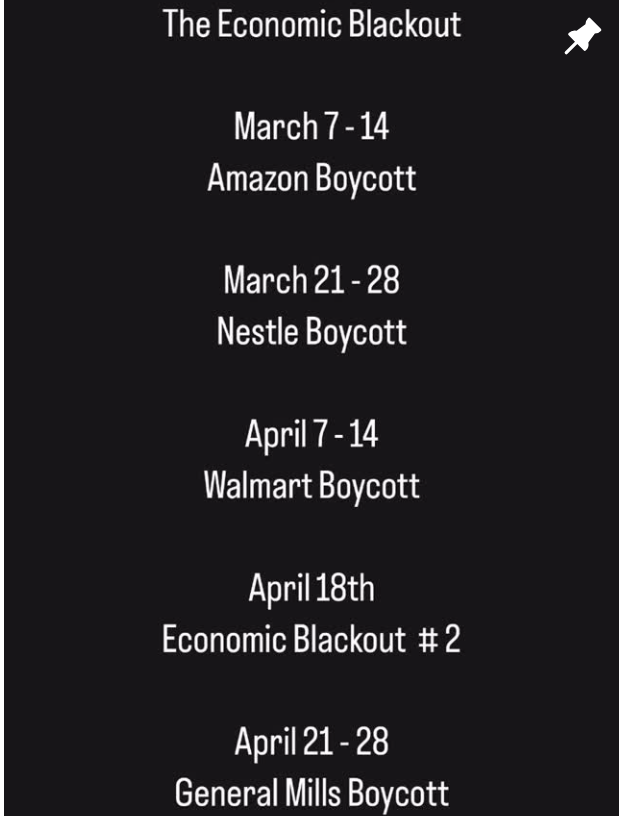
Organizations like the People’s Union have coordinated efforts to systematically send a message to corporations that will hurt their bottom line without jeopardizing the jobs of those who currently work for these entities.
And the beauty of this protest is that it doesn’t cost anything, you don’t have to go anywhere, no one gets hurt, and if you don’t like it, you get to make your own choices. That’s what is great about living in the United States — we still have the freedom to say what we want, to spend what we want, and to support what we want.
For me, that means speaking up about inequity wherever I see it — in education, in health care, in commerce.
Now, I’m sure I still spend money, unwittingly, at businesses that have practices that don’t jive with my guiding principles, and if I learn about them, I will shift. It’s as easy as that.
What do I hope to accomplish? I truly hope the combined efforts of all those who are shifting their buying habits (some sources say 24% of Americans so far in 2025) will get the attention of these corporate giants and they will begin to change some of their policies. I think this could happen, because although the pen is mightier than the sword, money is what really talks.
If this movement can sustain itself long enough for these large corporations to notice changes in their quarterly earnings, we just might get their attention. And if we get their attention, they may hear our message — you can’t abuse people and still get our business.
It’s a small action of many that stands up for those whose voices are not being listened to; it’s an expectation that in a country that professes that all are created equal, that all would be given equal opportunity. Period
That’s reason enough for me to boycott.
uphold the cause of the poor and the oppressed; rescue the weak and the needy;
deliver them from the hand of the wicked. Psalm 82:3-4
 Next Chapter