Ten Years Later #11: A String of Miracles

This is the last of the “Ten Years Later” series that I had intended to be a weekly feature in 2024. The year, as most are, was more than I had anticipated — more struggle, more loss, more healing, more restoration, more hope. This post, written and recorded in January 2023, sums up the vibe I want to carry into 2025 — the continuing hope that all things can be made new.

We purchased the gifts and wrapped them. We planned menus, purchased loads and loads of food, and baked ourselves silly. We cleaned the house and made all the beds, and then we waited.

As we sat on the coach, staring at Netflix, the texts started to come in.

“We’re checked in at the hotel! See you in the morning!”

“Our flight just landed!”

“We should be there in an hour!”

And then our family started rolling in — from Ohio, from Massachusetts, from Missouri.

We hugged, we laughed, and we ate.

We puzzled; we played games. We did crafts, watched movies, and traveled to celebrate with even more family.

It sounds like what most families do over the holidays, but I suppose many families, like ours, can get together like this only because of a string of miracles — only because of choosing forgiveness, of going to therapy, and of healing and time and the stubborn belief that things get better.

Didn’t you, too, have the holiday where everyone was yelling at each another?

And the one where no one spoke a word?

And the one where everyone walked out of church sobbing?

And the one where some decided they just. couldn’t. do it — not this year.

And then there was the covid year (or years — who remembers?) where we packed presents into flat rate boxes and stood in line for hours at the post office, hoping our parcels would get there before Easter. The year (or was it two?) where we sat in Zoom rooms with family members, some of us trying not to hog the air time, others trying to endure those who were hogging the air time.

It seems after all those difficult years we might have stopped believing that we could once again be all in one space, laughing, eating, agreeing on what to watch, moving upstairs to open the gifts, and leaning together over a puzzle, snacking on chips and rock candy and cookies.

But we didn’t stop believing — really — did we?

Didn’t we keep hoping for the day when all the therapy would pay off? Didn’t we long for the moment when we all laughed at the same joke, all smiled at the same memory, all managed to load ourselves and our gifts and bags full of food into cars only to discover most of the way there that we had left the main dish warming in the oven and no one lost their shit but we rebounded easily, picking up take out on the way?

Didn’t we imagine it could happen? Didn’t we dream it?

And so I’m sitting here pinching myself, trying to believe that it actually happened. And someone in the Christmas 2022 group chat sends a text checking on someone else who left the festivities feeling subpar. Another sends a pic of a present that broke upon opening, and everyone laughs. More pics are shared, more laughter, and then a commitment to what we will do next year.

They want to do it again next year.

I need a moment to just take that in.

Every family relationship doesn’t get this gift, does it? We don’t all get the moments we prayed for.

Don’t we all have at least one relationship where we do all the initiating? where tender topics are avoided? where our hearts ache with disappointment at the end of each phone call? where we can’t shake the feeling of being unwanted?

In fact, I was sitting in therapy the very day that the last of our family left, on the come down, for sure, and all I managed was, “our Christmas was amazing, but this one relationship over here still sucks and that’s all I can think about.”

And over the hour of belaboring the one less-than-stellar relationship I have spent most of my life bemoaning, my therapist offered suggestions, role-playing, expectation-setting, and the like, and near the end of the session, I began to realize that the beauty we experienced with our family at Christmas didn’t come without the hard work of many — of all of us, really.

I can’t expect this other relationship to magically transform on its own. If I want something different, I’ll need to return — to my knees, to forgiveness, to therapy, to the stubborn belief that things can get better.

It’s risky — even just the hoping for change — because happy endings or even happy moments are not guaranteed. I might experience disappointment — again.

But I might risk hoping, and a series of miracles might just happen. We might laugh at the same joke or smile at the same memory. We might play a game together or lean toward each other over a puzzle. We might agree on a movie. We might enjoy a meal.

And it might be amazing.

Witnessing the string of miracles that led to an amazing Christmas has me thinking that I just might risk hoping again.

[He] is able to do far more than we would ever dare to ask or even dream of”

Ephesians 3:20
2024, How Extraordinary!

From day one, 2024 suggested it would be one for the books, but never could I have imagined just how extraordinary it would turn out to be (and yes, I do realize I am writing this with six whole weeks remaining in this storied year).

Now, when I use the word extraordinary, I am not trying to say it has been wonderful or fantastic. I am sticking with the dictionary definition of very unusual. So much about this year — in my personal life, but also in the public realm — has been extraordinary.

It might have seemed ordinary that my 61 year old husband took his pension after a thirty-seven year long career and began a private practice — lots of people do that. But it was rather extraordinary that within two weeks of his new reality his mother was diagnosed with stage 4 liver cancer and my stepfather was diagnosed with bladder cancer. We couldn’t have known when my husband decided to make this major life transition that we would be stepping into more supportive roles with our parents for the next many months and that he would need the flexibility that his private practice has allowed.

It is pretty ordinary for an organization to go through transitions when key people leave, but it is rather extraordinary that within two months of my husband leaving his university role, the board of directors of that institution announced that it would be all but closing within the next academic year. It’s rather ordinary for institutions to have a life cycle, of course, but it is rather extraordinary that this life cycle would be ended when the university was as strong — or stronger — as it had ever been.

I could continue…the whole year has been like this. I mean, it’s ordinary to have family drama, and we’ve had some of the ordinary kind, but since it’s 2024, we’ve had some extraordinary family drama. A friend, early in the year made the observation that when families are under distress or trauma, all the dysfunction shows up to an exponential degree, and I can attest that it is so. (In fact, I may have been a little exponential myself on a couple occasions, truth be told.)

We had some extraordinary moments with my mother-in-law — some of the very good kind of extraordinary moments — before she passed away on October 1. And it was extraordinary to see the friends and family roll in to say goodbye and to honor her life.

I had a couple pretty extraordinary moments with my stepfather during his chemo, during a couple hospitalizations, and during his recovery. And since his chances were 50/50 with the type of cancer he had, it might be considered extraordinary that he is now cancer free!

As we ordinarily do, my husband and I prepared our garden in the spring, sowed seeds for lettuce, radishes, carrots, and beets and planted tomato plants and potatoes. And, as usual, the radishes and lettuce thrived, the carrots and beets struggled, and the potatoes and tomatoes gave a respectable yield. But what was extraordinary was that despite the fact that we didn’t plant pumpkins, have never planted pumpkins, we harvested dozens — yes, dozens — of pie pumpkins, many of which are still in my pantry.

I don’t ask questions. It’s 2024. Anything can happen.

I can take a new role and expect to transition away from teaching, only to find two weeks before school that I will be doing the new role and teaching. I can expect this to be overwhelming only to find that I am thriving — loving the opportunity to do both roles.

It’s very ordinary to have a presidential election every four years, but how ordinary is it that both candidates are basically octogenarians? how ordinary that one of them — the actual president — drops out of the race months before the election? how ordinary that a Black and Asian female would take his place? how ordinary that her opponent is a convicted felon under investigation for myriad crimes? how ordinary that she breaks all fund-raising goals on record? how ordinary that her opponent has two attempts on his life while campaigning? how ordinary that his running mate creates a racist narrative and admits to creating it? how ordinary that a candidate campaigns from a garbage truck, spends thirty minutes of a rally playing random songs from his playlist, and still — still — still gets elected?

That’s extraordinary. And then it just gets even more unusual when he selects someone else under criminal investigation for sex-related crimes to be the United States Attorney General and someone accused of “traitorous parroting of Russian propaganda” to be the Head of U.S. Intelligence!

But it’s 2024 — anything can happen!

I can fly to Philadelphia, visit dear relatives, attend a wedding on the Jersey Shore, fly back home, and test positive for Covid all within the span of a week. That might be pretty ordinary in these post-pandemic times, but is it also ordinary to follow a Covid isolation with food poisoning? Probably not.

This year has been anything been ordinary, and it’s not over yet.

What will the next six weeks bring? I wouldn’t dare to guess.

But I am not afraid — a little obsessive about self-care, but not afraid.

After all, “What has been will be again, what has been done will be done again; there is nothing new under the sun.” (Ecclesiastes 1:9). Since the dawn of time there has been disease, death, corruption, immorality. Perhaps the brazenness of 2024 is what is catching me off-guard, but that, too, is not new.

It’s especially not new to a high school teacher. No, we live in the realm of brazenness, of bravado, of actual crying out loud — these are the hallmarks of adolescent behavior. They are intended to intimidate, to gain control, to encourage onlookers on to “pay no attention to what is behind the curtain,” but don’t make the mistake I made in my earlier days of interacting with teens. Any seasoned teacher of adolescents will tell you that behind the curtain is exactly where you need to look. Usually what you find there is insecurity, loneliness, and perhaps even desperation.

Let’s not let the extraordinary of 2024 keep us from recognizing what is truly ordinary in all of this. Each of us longs for connection, for the ability to trust those around us with our most vulnerable parts, but there is no way we can make connection when we are distracted by name-calling, blaming, bravado, the extraordinary.

One by one we have to refuse to be intimidated in the face of bluster. We have to be willing to risk, to get close, to look behind the curtain.

People are hard to hate close up. Move in. Speak truth to bullshit. Be civil. Hold hands. With strangers. Strong back. Soft front. Wild heart.” — Brene Brown, Braving the Wilderness

Process-ing

I had been trying to get back into the swing of writing consistently, plopping down 300 words a day in front of all of you, following Anne Lamott’s suggestion to just get them on the page. Every day I was stumbling along obediently, in true teacher fashion, modeling what I hoped my students would do — dump out the story; clean it up later.

I wasn’t liking any of what I was writing, but I believed that if I kept at it, I would eventually get some gold.

About that time, the group of ladies that I meet with for breakfast suggested that we begin reading Julia Cameron’s The Artist’s Way.  I wasn’t with them when they made the decision, but I got a text with the title that the others had chosen. We’ve read many books together already: Ann Voskamp’s The Broken Way, Barbara Brown Taylor’s Learning to Walk in the Dark, and Brene’ Brown’s Braving the Wilderness among them. We often make our selection based on a hunch one of us has that a book going to be good. Without fail, each of the books has served almost as a guide to the narratives of our individual lives — just the thing we needed to hear at a particular time.

For example, when we read The Broken Way, one of us was walking her mother through her last days, another was hearing for the first time the brutal details of a horrible event in a family member’s history, and another was learning that her husband’s cancer had returned.  We were collectively broken, and Ann Voskamp helped us not run from it, but sit in it.

We read Braving the Wilderness against the backdrop of a highly divided nation and discussed how we could be open to conversations with people who don’t agree with us and how we must be brave enough to do this crucial work.

We’ve come to expect that when one of us suggests a book, we should all just jump on board because each of the books we’ve read have guided our conversations and shaped our hearts. Over and over, in the space of a morning-dark living room, we have together been changed.

So why, when I got the text about The Artist’s Way did I turn up my nose?  Well, besides being stubborn by nature, I hadn’t heard the reason for this choice.  And, to be honest, the word ‘artist’ in the title came with a whole bunch of associations that I didn’t feel connected to. Finally, my work schedule had been such that I figured, “Yeah, maybe my season with this group is done. This one probably isn’t for me.”

And so I didn’t buy the book.  I just kept tossing out three hundred words a day like magical seeds that might one day sprout into something.

Then a few weeks later, one Sunday morning at church, one of my breakfast club friends said, “Aren’t you loving this book?  I can’t believe how much I love all the writing!”

Wait. What?

“The writing?” I said.  “I’ve gotta admit, I haven’t bought the book yet, what kind of writing are you talking about?”

“Oh, my gosh, you’ll love it! You have to commit to writing three pages every morning. I keep getting up in the middle of the night, and I can’t believe all the things I’m putting on the page.”

As she’s talking, I’m opening the Amazon app on my phone, searching for the title, and clicking “purchase”.

“Really? I didn’t know it involved writing. I guess I thought it was going to be about art.”

“No!  It’s about the artist inside of all of us. Oh, Kristin, you’ve got to read this book. I’m telling you, you’re going to love it.”

“Well, I just purchased it. So, I’ll start this week.”

And then the book arrived.  I opened to the introduction, because I’m one of those people who reads introductions, and I just didn’t like the tone of the author. She sounded very know-it-ally, and I just couldn’t. So I set the book on the table next to where I usually write and walked away.

For a week I didn’t write anything. Granted, we were busy at work and I didn’t have a lot of steam left when I got home, and getting up extra early in the morning seemed out of the question.

Until I found myself writing this around 2am:

Technically it’s morning. It’s the middle of the night. Up with pain and brain again. I grumbled about this book today — didn’t want to get it in the first place — dumb title.  Irrelevant. Then the self-important tone of the intro made me want my money back. But I’m not even through the first chapter and I know that Julie Cameron is right. If I write — actually write — three pages every morning, I will create an opening.  

And I started getting up every day at 5:45 — yes, 5:45 — to use a pen and a notebook to write at least three pages. And, like my friend, I’ve been amazed at what has shown up on the page. I’m not censoring, because I’m not writing for an audience. Instead, I am letting whatever is in me come out. Some days I’m writing about things long past. Other days I’m scratching out my current to-do list. I’m writing anger and anxiety and regret and sadness and hope and prayer.  I’m filling my second spiral notebook with no intention of accomplishing anything other than creating an opening.

I met with the breakfast club girls this week. Four of the five of us are writing these pages each morning (or sometimes in the middle of the night).  The one who isn’t said, “So, you’re writing?”  And the rest of us practically pushed each other out of the way to share how profound the experience has been. Then, I sheepishly admitted, “I’m only on chapter two of the actual reading.”  Surely by now, I thought, two months later, everyone else would be almost finished with the book.

“Me, too!” one said.

“I’m only on chapter four,” said another.

And it dawned on me — getting through the book is not the point. This book is not about finishing, it’s about being open to the process. And that is the message of relevance this time around. Just like every other book we’ve read, this one is speaking into our individual narratives. One of us is learning how to be a widow. Another is walking into retirement in a new home in a new community. One is about to become a grandmother for the first time. Another is navigating the comings and goings of young adult children. Me? I’m discovering after thinking that my professional career was over, that I might just have another round in me.

We’re all in phases that aren’t really about arriving or finishing; they are more about being, practicing, living, and breathing through the process.

So, it’s 6:32 am, and I’m spending this morning’s time to reflect, because, writing three pages every morning isn’t so magical that I can’t take a break to put my fingers on keys. I’ve created enough space to see that I can allow myself space.  And that is some kind of gold.

Psalm 5:3

In the morning, Lord, you hear my voice; in the morning I lay my requests before you and wait expectantly.

Routine, revisit

I come back to this piece I wrote almost exactly a year ago, on August 8, 2018, because once again, I’ve gotten out of my routine, and I’m trying to get back away from the grumpiness and back to the rhythms that sustain my physical, emotional, and spiritual health.

I’m such a creature of habit.  Once I find a groove, I like to stay there. I like to wake at the same time, eat the same foods, listen to the same podcasts, drive the same roads, and watch the same shows. 

Lately, I’ve been getting up at 6am, doing a little yoga, showering, fixing some kind of breakfast egg scramble, listening to my daily Bible reading followed by a favorite podcast, and driving to work. At lunchtime, I take a walk and finish my podcast. Then, on the drive home, I listen to music, make a phone call, or simply drive in silence. Once home, I typically spend some time in the kitchen  — cooking or prepping food for the week’s lunches. My husband joins me for dinner, then we might take a walk or watch some TV.  We read, then we sleep. 

Now, of course, weekends are a little different, and sometimes I have an appointment or some other detour, but typically, the routine is pretty consistent.  

However, the last week has been a bit out of the ordinary. We had a couple of our kids over for visits. We accepted an offer on our Missouri home. We voted in the primary election. I attended a day-long training. We took a day trip to see my parents, and a few more out-of-the-ordinaries popped up. Most of these were welcome interruptions; nevertheless, my routine has been tampered with, and although I managed well for the first few days, the cumulative effect is grouchiness and irritability. 

I’m sitting on the couch in my pajamas right now, tapping at keys, though I am thoroughly exhausted, because I really need to process and shake off this funk before I ooze grumpiness on any more innocent bystanders. I “put myself to bed” around eight tonight because I was just that tired, but I’m still awake after 10 because the grumble just won’t be put down.  

I crave my rhythms that much!  I really need each moment of every shower, each breath of every yoga pose, each bite of every breakfast, and each step of every noontime walk. I can’t skimp — not for more than a couple days in a row.  

I’ve become high-maintenance; I admit it. I’d feel guilty if these rhythms didn’t contribute to my overall health, but they do! 

Life in this chapter has taught me that if I want to be kind and attentive to the people in my path, if I want to do my job well, if I want to reduce my pain and increase my stamina, I must oxygenate myself first every day. And, for me, oxygen is obtained in the purposeful rhythm of routines. 

One of the routines that sustains me is writing. It seems that my preferred rhythm is to write anywhere from 700 to 1400 words at a time. I think it takes me that long to dump out what’s building up, find out where it’s headed, then write myself back off the page. Perhaps that is what I am doing now. 

It took me the first several paragraphs (the blue text) to dump out my frustration. Only when I had fully expressed those initial emotions could I move on. The next few paragraphs (the green text) allowed me to analyze those feelings. And now (in gray) I’m working my way off the page.

I think I use this same model every time I write — I come to the page with some logjam of ideas and words that is just begging to be put down. I write and write until I see that I’ve shifted from expression to contemplation — figuring out why the logjam existed in the first place. I then keep on writing until I can find a way to end, because by the time I’ve gotten to this place, I feel better, I think I might be able to sleep, and I’ve remembered why this part of my routine is one of the most important of all. 

I need all of my routines — the sleeping, the eating, the exercising, and the relaxing — but perhaps the routine that holds all those other routines together, the one that allows me to understand all the others, is the writing.

Now let me go get some sleep.

In peace I will lie down and sleep, for you alone, Lord make me dwell in safety.”

Psalm 4:8


One mediocre blog post

I had three goals for today: 1) blogging, 2) planting my garden, and 3) cleaning up paperwork on my desk. My husband was leaving early in the morning, and I would be home alone all day; certainly I could accomplish these three tasks.

We fell asleep early last night, watching an episode of The Great British Bake-Off, so both of us were awake by six this morning.  My husband suggested we take the dog on a short walk before he headed out.  I agreed; certainly morning exercise would set me up for success. We stripped the bed, tossed the sheets into the washer, and headed out the door.

When we returned from our walk, I picked some rhubarb and then tidied the kitchen while he packed his bag. Since I was in the kitchen, I figured I might as well wash the tea cups and saucers that my mother-in-law had sent home with me yesterday, and since my husband had a drive ahead of him, I decided to make us a hearty but simple breakfast — sautéed summer squash, onions, and potatoes with a couple of fried eggs.

We ate our breakfast and then he loaded the car while I cleared the table and moved the laundry into the dryer. He kissed me goodbye, and I headed to my desk. I sent a few emails, moved a few papers around, and attempted to write a blog post.  I sat at the keys for a few minutes with not one thought in my mind except, “actually, it’s going to get hot today; maybe I should start with the garden.”

Before I knew it, I was pulling weeds, turning dirt, and discovering volunteer tomato plants sprouting from the remains of last year’s crop. I worked on the garden for about an hour before the heat became so oppressive that my thoughts turned to the watermelon in the fridge.  Maybe, I thought, if I eat some watermelon while reading Learning to Walk in the Dark, I’ll be inspired to write something.

As I read a chapter and enjoyed the cool melon, Barbara Brown Taylor’s words definitely inspired me to write something, so when I got to the end of the chapter, I moved again to my desk. I pushed a few more papers around and opened a fresh document on my laptop.  Again, I sat staring at the blank screen.  Nothing.

Maybe music would help.  I turned on Pandora and listened to David Crowder while I dusted my bedroom. I grabbed the vacuum and was midway through cleaning the entire house when I decided to go back outside and push a little more dirt around. I still hadn’t planted any seeds, but the garden, which had been overrun with weeds this morning was starting to look a little more intentional.  I got hot again — it passed 90 degrees in Michigan today — so I brought the dog outside and gave him a bath.

I talked to my dad on the phone while I did food prep for the week, then I talked to my daughter while I folded laundry.  By this point, I had pretty much concluded that I wasn’t going to be able to write today. That’s been happening a lot lately.  I’ve been having difficulty reading, too.  I can’t quite keep my focus. So, instead of going back to my desk, I ate a late lunch/early dinner then popped in my earbuds to listen to a podcast as I headed back out for a third go at the garden.

My podcast, On Being, was an interview with Elizabeth Gilbert, author of Eat, Pray, Love, who among myriad other topics, talked about writing — how it can be magical, like a meeting with the Divine. Sometimes a writer sits down and words fall on the page as though directly dictated from the mouth of God. Those times are sweet. However, she reminded me, “90% of almost everything interesting is pretty boring.”  Most of the time, writing is discipline, committing to sit down and put words on the page. Good words, mediocre words, and as Anne Lamott says, a lot of “shitty first drafts.”  I let the thoughts sink in as I built dirt mounds and poked holes for cantaloupe seeds. Then, I sprinkled grass seed on a dirt square that was a trial garden a few years ago. She’s right, I thought.  I tell students all the time that magic isn’t guaranteed. If you can’t think of something amazing to say, say anything.

Determined for the umpteenth time today to write,  I came inside, took a shower, and finally began to put some words on the page.

Here they are.  They are nothing to write home about, but they are part of what I set out to do today.  I began my garden, I cleared some paper from my desk, and I blogged. None of it was magical; it was all just mediocre.

A lot of life is like that, to be honest. It’s setting a goal, getting distracted, finding your way back, and doing the best that you can.  I’m ok with that. All of life isn’t meant to be fireworks and celebration.

In fact, I think I’ll go find something ok to watch on television, and then I’ll lie down for an average night’s rest. I’ll just stay with the current theme.

That each of them may eat and drink, and find satisfaction in all their toil—

this is the gift of God

Ecclesiastes 3:13

Narrative threads, re-visit

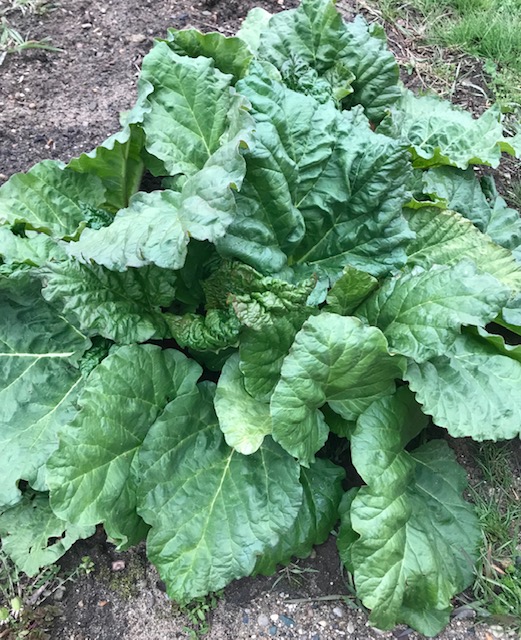
This post, written almost exactly two years ago, speaks to my heart today. Though winter seems to keep blasting on, though we’re still quarantined inside our homes for almost a month now, all is not lost. My rhubarb has once again dared to break through the frozen ground to remind me that this plot has yet to fully unfold.

In Michigan this year, winter had stamina. It seemed to begin way back in October and continue halfway through April. The temperatures were low, the snow banks were high, the skies were gray, and all felt bleak.

My daughter once informed me, after I had been an English teacher for well over a decade, that when nature imitates the mood of the story, literary critics refer to the phenomenon as pathetic fallacy.  

We see it all the time in literature and movies: rain falls during funerals, the sun shines on parades, lightning flashes and thunder claps as the evil villain hatches his plan.  Writers use the setting of a story to create mood and to signal for readers how they might feel about the action of the narrative.

Sometimes it seems to happen in real life, too.

As the winter wore on this year in all its bleakness, and as circumstances in the narrative of my life unfolded, I took my signal from nature and wrapped myself in gray. I didn’t see any buds on trees, any new growth in my garden, or any other signals from nature that I should hope. I saw the earth hunkering down under the weighty blanket of snow, and I hunkered, too. I wrapped myself in crocheted afghans, drank cup after cup of tea, and waited for the earth’s axis to tilt once again toward the sun.

Some moments, I didn’t believe it would. I felt we were stuck in winter forever. Storm after storm raged. Winds blew. Temperatures dropped. The world outside was harsh and unforgiving.  I had no reason to believe that we would ever again see tulips sprout from the earth.

I didn’t, of course, spend the whole winter under covers. I did what everyone who lives in the north does in the winter. I slathered my body in moisturizers, layered on clothing, pulled on boots, hat, gloves, and coat, and trudged into the elements. Day after day after long, cold, dismal day, I drove over slushy roads, stepped in salty puddles, and scraped icy windshields. The cold gray weather was both real and symbolic.

The problem with pathetic fallacy — with letting the setting signal the mood — is that you can lose your frame of reference. All winter I was shrouded in gray, so all of the action in my narrative seemed to take on that hue. Now, to be honest, my life narrative is cluttered at the moment with conflict and unresolved tension. Villains too numerous to list are executing evil plans and threatening to harm those that I love. However, in the midst of the gray of winter, I failed to see that simultaneously, a parallel plot was unfolding — one in which battles are fought and won, victory parades are held, and loved ones are reunited.

All. is. not. gray.

It’s been hard to see that — what with winter lasting so long. It’s been easy to fall for the fallacy — the mistaken belief — that all of life is cold, dark, dormant. In fact, I have over the last several months been pathetic — filled with all kinds of emotion. I have leaned in and felt things that I have not allowed myself to feel for a very long time. I have cried and yelled and moaned because I have looked fully at one strand of the narrative. I’m not sorry; I needed to see it. But guys, winter is gone.

I have a rhubarb plant outside my back door that peeked through the soil on my birthday at the end of March. Since then, it’s been slammed with winter weather — snow, sleet, wind, and rain — and still it is thriving. My garden is a bed of weeds, my yard is a mole metropolis that is sorely in need of raking and mowing, but the sun is shining, and all I can look at is that rhubarb.

The villains haven’t dropped their weapons, the conflicts have not all been resolved, but one stubborn plant that pushed its way through frozen ground way before winter had subsided reminds me that there is more than one thread in my narrative.  I have reason to bake pie, to plant seeds, and to fold up my afghans.

Earlier this week when I arrived home from work, my husband said, “Before you sit down, go look at the patio.” I knew before I looked what I would find — the Adirondack chairs that my father-in-law made for us years ago had been put out after their long winter inside.

He had seen it, too: the sunshine, the rhubarb, the reason to hope. So hope we will, as we sit on our patio, faces tilted toward the sun, and we will let this season have a chance to direct our feelings about our narrative.

Psalm 27:13

I am confident in this: I will see the goodness of the Lord in the land of the living.

Pacing

Last semester I was teaching three classes — three different classes. I loved it.  I interacted with students almost every day.  I was teaching writing, literature, and even a methods class — a class of future writing teachers.   I was steeped in theory and practice and I was loving every minute of it.

I had agreed to teach the methods class first.  I considered it a great honor to work with students who would one day be teaching others how to write.  I had high expectations of myself for what I wanted to expose these future educators to — instructional strategies, cultural considerations, and personal practices that I feel are important to instruction.  From the moment I agreed to teach the class I was fully committed to creating a high quality experience.

I had cleared the month of August to prepare for this class when I received a request to also teach one section each of composition and literature.  I opened the envelope and instinctively said, “You’ve got to be kidding me! Three preps?! That’s too much!”  But, instead of saying, “Thank you so much, but I think it would be best if I just taught one or the other,” I signed on the dotted line saying to myself, “It’ll be fine!  I’ve taught these two classes before; they shouldn’t require too much preparation.”   I was then informed that the English department had adopted a new textbook for the literature class which would necessitate a new syllabus and a new plan.  And, once I wrapped my head around the fact that I was going to be essentially creating two courses from scratch, I went totally rogue and decided to re-craft the composition class, too.

It just snowballed from there.  As I read composition theory to prepare for the methods class, I discovered strategies that I wanted to try with my own writing students.  As I tried new strategies with my writing students, I convinced myself to alter instruction in my literature class, too.  That’s kind of how I am as a teacher; left to my own devices, I keep tweaking and re-tweaking.  I don’t ever really find a groove to settle into.

So, as you might expect, the whole semester I was reading, thinking, planning, reworking, teaching, scoring, and conferencing.  I think it’s as close as I’ve come to being fully in the classroom again.  I loved the relationships I was building with students, I loved speaking into their writing, I loved leading classes, but guys, I gotta admit, it was too much.

I don’t think I even acknowledged it was too much until November, when I was asked if I would take a couple of classes for this semester and I reflexively answered, “Nah, I don’t really like that schedule.” I was only being asked to teach two classes three days a week, but I was sitting in the midst a mountain of work of my own making, and I instinctively grabbed the white flag and started waving with all my might.

Of course, three weeks later, when the semester ended, I second-guessed that decision  and heard myself asking the same old question,  “Well, then, what will I do?”

[Stop laughing at me!]

A weird series of events involving a car ride to Detroit, phone conversations with both of my daughters, and a few emails with a friend landed me back at Lindamood-Bell where I worked in the summer of 2015.  Lindamood-Bell is a private agency where students get one-on-one intensive instruction.  The incredibly rewarding work is based on brain research.  It’s quite remarkable — I have watched students improve their reading and/or comprehension by several grade levels in a matter of weeks!  On any given day, I might work with four to six different students, for an hour each,  performing tasks that are prescribed by a learning consultant based on the Lindamood-Bell model of instruction.

You read that correctly — I implement the plan; I do not actually write the plans.  Further, I do not do any grading or scoring.  I punch in at the beginning of my shift, work with one student each hour, then I punch out and go home.  Once home, I work on puzzles, I read books, and I find time to write.

All last semester, I found it very difficult to get to my blog.  I wrote with my students, as I always do, but that is a different kind of writing. When I write with my students, I model the process and produce whatever type of writing that I am asking them to produce — a narrative, a research paper, an argument.  That kind of writing builds my skill, of course, but it isn’t the kind of writing that I produce for my blog.

The kind of writing I produce for my blog is very personal and very restorative.  It’s the kind of writing that grows from deep reading, purposeful thinking, and sitting. (I discuss this in an early blog post you can read here.) I can’t produce this type of writing when I am overcommitted.  It’s just not possible.

When I started back at Lindamood-Bell in early January, I  committed to working no more than 20-30 hours a week.  Almost immediately, I found that I had space in my days, so I returned to my blog.  As I began to write again, I saw, almost immediately, how God continues to work in my life.

He gave me the option last semester to commit to one, two, or three classes. I chose three.  He let me see, again, what it is like to fully commit to the classroom for a season.  He allowed me to run on all cylinders as I tend to do so that I could see what I exchange for that kind of pace.  And then, he allowed me to have a moment of clarity last fall to say “no” to more adjunct teaching so that I could stumble back into the pace that He has been offering me since I moved into this next chapter. Finally, He nudged me toward the keys.

God works through my writing.  He speaks to me.  He says, when you slow yourself down long enough to put your words on a page, you finally hear what I’m trying to tell you. And what is He telling me today?  I think He’s saying, settle in.  Enjoy this pace. And, you know, I think I’m gonna listen.

Psalm 46: 10

Be still, and know that I am God.


Tell Me Your Story, re-visit

This post, written in January 2018, further examines the assumptions we make about one another — assumptions that can prevent connection. I repost it here in the wake of this week’s post, Of Reality and Social Media.

I am a hypocrite.

Although I have stood on my soapbox pointing out injustices and crying out for equity, I am a prejudiced person. I’m racist. I’m classist. I’m sexist. I’ll judge a person based on one Facebook status or incriminate a whole group of people for their stance on whether they think athletes should stand for the National Anthem or not. I’ll sort you into a category so fast, it’ll make your head spin.

It’s embarrassing, actually.

I’ve lived my professional life encouraging students to write narratives – to tell their stories of defining life moments — their parents’ divorce, the death of a sibling, a betrayal of friendship, a proclamation of love. These stories cross all lines of race, class, gender, political affiliation, musical preference, and lifestyle choice.

Our stories reveal our humanity; they connect us to one another.

In my classroom I have made space for students to laugh with one another, cry with one another, challenge one another, and embrace one another. I, too, have laughed, cried, challenged, and embraced. I have revealed my humanity to an audience of twenty or so students at a time. I have met and loved kids who are rich, poor, black, white, Asian, Hispanic, Arabic, Christian, atheist, Jewish, male, female, gay, straight, fat, thin, extroverted, introverted, funny, serious,…

It’s not hard to love someone – anyone – once you have heard his or her story. But in order to hear that story, you’ve got to risk getting close. That’s the challenge for me, because I’m prejudiced. I look at your hair, your clothing, your skin color, and your car. I see who you hang out with, what you share on Facebook, and what you retweet on Twitter. I know who you are, I think to myself.You are ‘that kind’ of person. I sort you into a clump and make assumptions about you before I even hear you speak.

I recently returned to a job after two and a half years away. Since I left, my former supervisor, who I loved, had resigned for health reasons. I had had a couple interactions with the woman who took her place, but before I had even worked with her one day, I had decided that she would be not as amazing, not as on top of things as my previous boss. I pre-judged her. Then, during the last hour of a two-day-long training, the new supervisor partnered with me for some role-playing activities, and I got my first up-close glance at her personality and heard the first few lines of her story. My prejudices were confirmed, but they were also dashed. She isn’t, actually, exactly like my previous supervisor; rather, she has her own unique personality and gifts. (Shocking, I know.) I wasn’t anticipating laughing with my new supervisor as she pretended to be a precocious nine-year old to my role of reading instructor, but there we were – giggling like close friends lost in make-believe.

People are hard to hate close up. Move in.”

Brene Brown, Braving the Wilderness

From a distance, even the length of my arm, I can keep you handily sorted into a category – liberal, conservative, educated, ignorant, friend, or foe. However, if I ask to hear your story, everything can change. My beliefs can be challenged, my assumptions destroyed, my heart opened.

Years ago I picked up my first Jodi Picoult book, My Sister’s Keeper. It’s the story of a girl who was conceived by her parents in the hope that she would be a donor match for her critically ill older sibling. Gasp!  One glance at that premise and I formed an opinion. How could they?  What kind of parents….? However, Picoult, I soon learned, is a master at using narrative to bring her readers in close to see issues in their complexity – issues that most of us find ourselves firmly positioned on – euthanasia, gun violence, infidelity, and abortion. She weaves her narratives, often from multiple points of view, to expose these issues as more than dichotomies. She can move me from my Gasp! How could they? to a Wow! I can’t even imagine that kind of love! in 400 pages or less!

Real-life stories are no different from fictional narratives – they are full of complexity and factors that don’t appear on the surface. If I judge someone based on her skin color, clothing, language choices, or friends, I am missing out! I am missing her story – all the characters and plot twists that have led her to today. Not only that, I am diminishing her humanity – I am relegating her to a category rather than appreciating her individuality. Most importantly, I am denying the connectedness that she and I share as members of humanity – children of the Creator.

Our pastor, Gabe Kasper, spoke recently about the necessity for genuine relationships in the church (read or listen to the full-text here). He said that genuine relationships are characterized by vulnerability, empathy, love, and the willing of good for the other person. We don’t often enter into such relationships because 1) we are afraid of getting close to people, and 2) we don’t want to take the time. However, if we are willing to risk getting just a little closer, of asking others to tell us just a little piece of their story, everything — EVERYTHING – can change. Story has the power to transform us – our understandings, our experience of life, and our relationships. Imagine the impact of a couple hundred people who have chosen to be vulnerable, empathetic, loving, and supportive of one another — intentionally and consistently. What ripple effect might that have?

Are we willing to, knowing better, do better. Are we willing to call out our prejudices and stereotypes? Are we willing to set those aside, step in close, and hear the stories of people who may not be just like us?

Consider this: Because I am a 50-something white woman who has been a teacher and a pastor’s wife, you may draw some assumptions about me – that I’m Christian, heterosexual, pro-life, Republican, and financially secure. You might believe that my family is immune from tragedies such as chronic illness, sexual assault, alcoholism, eating disorders, family conflict, depression, or anxiety.  Some of your assumptions may be right; most would certainly be wrong. How will you know which is which? You will have to lean in and listen to my story.

Some of the things you learn about me might be confusing. They might challenge you. You might not agree with me. You might choose to walk beside me anyway. And, in that walking, I might learn some things about you that confuse and challenge me. I see us taking lots of long walks together, learning about one another and growing together.

I imagine that if we are willing to take the chance to move in close and learn the stories of those who we might have previously sorted into categories, our assumptions will be destroyed, and we will never be the same again.

Are you willing to take that risk? Are you willing to tell me your story?

Romans 12:10

Be devoted to one another in love. Honor one another above yourselves.

The Sum of the Lesson

In education, when teachers have identified a learning objective, they design instruction in such a way that the student encounters the content in multiple settings using multiple modalities so that the student’s likelihood of achieving mastery is increased. For example, when a child is learning the alphabet, he might see the letters, say the letters, and sing the letters.  He might write the letters with his finger on his desk or in the air before practicing with a pencil on paper.  In life, I have found that the lessons I most need to learn are presented to me across various contexts through various means until I finally throw my hands up and declare, “Ok, Ok, I see what’s happening here!”  At that point, I typically sit down and write about these observations so that 1) I can fully process them,  and 2) I can create a public record of my learning in an attempt to hold myself accountable.

Today’s Lesson: Time, Tension, and Technology

Sometime last fall, I discovered that I often felt anxious around bedtime.  I would lie down and begin to have restless thoughts about stuff that hadn’t crossed my mind during the day or even during the past several months or years.  I’d begin to wonder if I had been a good enough mother — if I had made enough home-cooked meals, had enough candid conversations, or provided my kids with the lessons and assurances that breed confidence and independence.  Then I’d move on to wondering whether I’d been a good enough wife, friend, sister, daughter, teacher, etc.  I would fuss and stew over conversations and decisions that had taken place years ago, coming to no peace, of course, but rather escalating my anxiety further.  I wouldn’t say I ever had a full-fledged anxiety attack, but these anxious thoughts were keeping me awake at night.

About this same time, I started seeing studies and reports about the increase in anxiety among teens, children, and young adults and some researchers’ theories that such anxiety was tied to the amount of time that kids spend on social media now that practically everyone always has a Smartphone in his or her hand. I got to thinking — I have a Smartphone in my hand most of the time, too.  In fact, I often play Words With Friends, scroll through Facebook, read my Twitter feed, and check emails right up until bedtime.  What if I took a break from that habit to see what impact it has on my bedtime anxiety?

To answer that question,  I began to conduct some rather informal research of my own — a private and inconsistent case study.  It didn’t take long for me to come to the conclusion that I feel less anxious when I don’t use my phone right up until bedtime.  I know, I know, this is a mind-blowing discovery.

In the midst of my ‘study’, I kept finding myself encountering content reinforcing my conclusion.  I heard a podcast that, among other topics, talked about the need for boundaries in the use of technology.  I had a conversation with my therapist about technology addiction. A friend shared a YouTube video about the impact of devices on our sense of peace. I read articles.  I examined my life. I was convicted.

However, although I realized the benefit of using my phone less, I routinely fell back into old habits. And I’ve continued to have anxious thoughts.

One thread of anxiety I have been experiencing is related to growing older. At 51 I am hardly old, but I’ve begun to have thoughts (late at night when most unsettling thoughts plague me) that I’ve already lived more than half of my life, that my body will never again be as fit and agile as it once was, that other people must look at me, seeing my gray hair and aging body, and think thoughts about me that I probably thought about people older than me when I was much younger.  I’ve begun to think about what I want to do with “the rest of my career” and to discuss retirement options with my husband.  For some reason the thought that time is running out and the realization that life actually comes to an end sometimes pop up even when it is not my bedtime.

Ironically enough, one thing I do sometimes to ‘quiet’ the anxious thoughts is to get out my phone, play a game, check social media sites, and respond to emails.  It’s a Catch-22.

For Christmas, one of my children got me a book, Sum: Forty Tales from the Afterlives by David Eagleman.  The other night before bed, I lay down and opened to the first tale. Reading stories has always been  a calming way for me to end the day.  Much of what I read at bedtime is what I call “candy bar fiction” —  stuff I can consume and forget about.  The goal of such reading is not to get deep; it’s to fall asleep.  To that end, I opened the book and began to read the two-page tale “Sum”.  The tale suggests that when we die we relive all of our life experiences but that they are re-arranged so that similar events are clumped together.  “You spend two months driving the street in front of your house,” it says, and “six days clipping your nails. Fifteen months looking for lost items. Eighteen months waiting in line.”  As I read, I started thinking, If this really happened, how much time would I spend scrolling through Facebook, playing Words With Friends, having a cup of tea with my husband, reading good books, appreciating the sunshine?  

It wasn’t a particularly good story to read for falling asleep, but it was an excellent concluding activity to nail home this learning objective, which is not that all technology is evil or that I (we) should shun all forms of social media but rather that if my (our) days and minutes are numbered, I want to consider my choices wisely.  I am still going to check social media and play Words With Friends, but I am also going to be intentional about turning off my phone at day’s end, I’m going to engage with the people in the room, I’m going to have a cup of tea with my husband, I’m going to read good books, and I’m going to appreciate the sunshine.


Teach us to number our days, that we may gain a heart of wisdom.

Psalm 90:12 NIV*


*I finished writing this blog and went to find the address for this very verse on Biblegateway.  To my surprise, it is the verse of the day.  Perhaps this lesson, too, will be ongoing.


Fallow [fal-oh] adj.

I remember as a little girl trying to wrap my mind around the concept of letting a field go fallow — the practice of letting a field rest for a season or more so that its fertility — its ability to be productive — could be restored.

The idea that we would let a field — a piece of dirt — “rest” seemed weird to me.  I mean, why wouldn’t a farmer want to keep planting that field every opportunity he had so that he could reap the highest yield?

It’s a concept I have a hard time applying to farming and to my own life.  I struggle to give myself a break from productivity — just imagine what I could be accomplishing in the time that I might be resting!

For the past three months or so I’ve allowed this blog to sit fallow.  I taught three classes this past semester — three different classes which means three different preparations. It took a lot of my mental energy and my time to process and package all the content that my students consumed (or didn’t consume as the case may be). I thought about my blog from time to time, but I reasoned, this just isn’t the time.  You’ll get back to it.  I wouldn’t say it was an intentional choice to let my blog go fallow, but I am reaping the benefits just the same. Over the past week or so while I was finalizing grades, finishing my Christmas shopping, and tying up other loose ends, I kept thinking, pretty soon, pretty soon you are going to be able to blog! 

In my excitement to begin my personal writing again, I’ve been considering some unusual ideas for what to write about and how to write about it. Maybe I could change the blog’s layout.  Maybe I’d like to play around with a series — a participatory series in which I use another platform to allow readers to dabble with my topics and try their own hands at blogging. Where were these ideas coming from? Why hadn’t I considered them before? Perhaps taking a break from production had allowed my mind a chance to restore.

The practice of letting fields go fallow is not too different from giving ourselves a rest through the practice of sabbath.  Sabbath, by design, is a scheduled break from our labor.  A pause in productivity.  An opportunity for our lives to have a chance at restoration.

[I’m not very good at observing a sabbath.]

Historically, sabbath has been observed one day a week — maybe Saturday, maybe Sunday.  Perhaps it originates from creation wherein God rested on the sabbath day.  It is echoed in the story of the Israelites who gathered manna six days a week, but not on the seventh.  The Ten Commandments also mention the sabbath with the admonition to “Remember the sabbath day to keep it holy.”  It’s a model and a mandate intended for our benefit.  It’s a reminder, “Guys, take a break. Remember that it’s God who created you, who provides for your needs, and who will sustain you. Sit down.  Take a break.  Let your body have a chance for restoration.”

And here I am folding a load of laundry, running to get my groceries, wrapping my Christmas presents, and even disinfecting the bathroom floor.  Why wouldn’t I want to keep busy so that I can reap the highest yield?

I’m missing the point.

Again.

On Sunday afternoon, after a morning of (gosh, I hate to admit this) grocery shopping and worship, I came home and entered my students’ final grades into the online portal.  Then, I crocheted while I got caught up on old episodes of Call the Midwife.  That’s my idea of a sabbath, guys.  I’m often willing to give myself a pause, but a whole day?  Come on.

And two weeks ago, when my husband and I were discussing the fact that I did not have a teaching contract for this semester, we agreed that perhaps I should keep my semester open so that I can catch my breath and allow some space for restoration.  I posted my grades on Sunday, and today — Tuesday — I went on an interview.  Sigh.

I am telling you: I push back against this concept of letting myself “go fallow” — of letting myself practice the sabbath.  Why? Perhaps I’m afraid.  Perhaps I don’t fully trust that God created me, sustains me, and will provide for every eventuality.  Perhaps I think of myself more highly than I ought — that I’m the only one who can meet that student’s need or answer that email or edit that paper.  Or perhaps I don’t want to be confronted with the thoughts and feelings that might surface if I take some time to be still.

Perhaps all of those possibilities are true.

Over the years, I have found one way to embrace the stillness — writing.  So, after this season of letting my blog go fallow, I am re-engaging.  I am going to turn over some soil, plant some seeds, and see what grows.  I might explore some of my fears and some of my feelings.  I might also invite you to have some fun.

Join me?


Leviticus 25:3-4

For six years sow your fields, and for six years prune your vineyards and gather their crops. But in the seventh year the land is to have a year of sabbath rest, a sabbath to the Lord. Do not sow your fields or prune your vineyards.