Here’s the thing(s)…

*A quick note, sources and resources are linked in the text.

I’ve been kind of quiet in this space lately. It’s May, and I’ve only posted six times so far this year. For a girl who posted almost daily when this blog began, six times in four months is virtually silent.

But here’s the thing….

Just kidding…there isn’t one thing that is keeping me from putting words on the page (or rather the screen)…it’s more like a steady stream of things that seem to keep coming at me (at you?) in such a way that I can’t really focus. I can’t keep my eyes on one thing for long enough to form a thought, let alone an opinion.

At work, I’m down to just a few weeks with my seniors, and their excitement/ambivalence/annoyance would be a lot to process and respond to on its own, but we’ve also had Family Conferences and Decision Day. Each of these events takes a team effort to prepare for and execute. (You know the drill — communications, set up, station assignments, and the running of the actual event, and although neither is my responsibility, I am a member of the team.) I also have had the responsibility this year to recognize students of the month (one for each teacher in the building) and honor roll recipients. This entails identifying honorees, pulling them from class for a photo, and sending those photos to someone — preferably not myself — to have them loaded into a Canva document before they are printed out and posted in the hallways. In addition to all of this “normal” school activity, the authorizer of our school charter is visiting us this week for an educational program review that we learned about just several weeks ago. Such a visit, like school accreditation, requires the submission of countless artifacts such as lesson plans, IEPs, coaching trackers, professional development documents, etc. I was part of a team that pulled all those together and submitted them electronically. This past week leadership and staff met to prepare for the visit that will be spread over three days — all while school is in session, you know, the actual teaching and learning part. Spring is always busy at school, but this year is exceptionally so.

At home, things are a bit more relaxed –we have no major repairs pending, and we’re happily in the midst of installing our garden — but if home life includes extended family, then I have to disclose that my mother and stepfather have had some pretty difficult challenges for all of 2025 that just right now seem to be stabilizing if you don’t mention the fact that at least one of them is recently ready to start exploring assisted living facilities, which takes the coordination of six adult children to do lots of fact finding. I would also be remiss if I did not mention that my dear Aunt Margaret, after many years of relative health, has taken a sudden and recent decline.

All of this is, of course within the realm of “normal” adult life. You have also had busy seasons at work and at home — they come and they go — and although they are at times taxing to navigate, we somehow make it through to the other side in time for the next wave of whatever it is that is coming.

But these are not the things that are blurring my focus. No, they take time, of course, and energy, but they are manageable. I think what has me off balance may have many of us off balance — the continuous stream of government actions that may or may not impact us directly, but nevertheless are jarring to the brain and that lead us, at least me, to at times retreat, to dissociate, to not want to process or deal with any of it.

In 2018, presidential strategist Stephen K. Bannon bragged about that administration’s strategy to “flood the zone” with initiatives. The idea was to roll out a constant flow of orders and directives to throw “the opposition” (you know, other Americans) off balance so that they could not respond (Source). Since that administration regained the presidential office this past January, this strategy is being used again, only to the nth degree.

In the first 100 days of this administration (in just under four months) we have been overwhelmed by actions such as: the pardoning of those who invaded the US capitol on January 6, 2020; the freezing of funds for cancer research, Meals on Wheels, and disaster relief; the implementation of tariffs on every country in the world, the pause in tariffs, the subsequent roll-back of said tariffs, and currently, the exponentially high tariffs on China (which will certainly impact most of us); the firing of countless federal employees followed by the attempt to rehire some of them; the withholding of funds to public universities who refuse to comply with the administration’s agenda; the deportation of countless immigrants, some whom are legal residents, with some being sent to foreign prisons; the continuing and hard to follow involvement in the ongoing conflicts in Israel/Gaza and Russia/Ukraine; the president’s attendance at the funeral of the Pope followed by his posting of an image of himself dressed as the pope on social media; and this is just scratching the surface (Source). You might be shouting at me right now, “what about the…[fill in the blank].”

Frankly, I’ve got to look at what is happening on the national scene through a peep hole with one eye covered. I can’t look at it in full — and that’s exactly the idea. This administration is using the everything, everywhere, all at once strategy to keep us all in this state of slack-jawed disbelief.

And that is where I find myself, only I’ve moved from stunned to numb. I feel detached from reality, not wanting to engage because I can’t keep up. But that is what this administration has said it wants — to “flood the zone” so that we become overwhelmed.

But here’s the thing — the actual thing — we can’t do that.

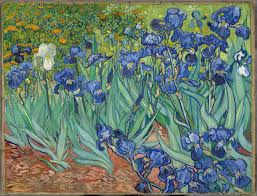
We can walk away. We can take breaks. We can sit for two hours after a long day and work on a 1000-piece puzzle depicting van Gogh’s “Irises”, or take a walk through the park plucking lilac sprigs, inhaling their beauty on a glorious spring day, or lose track of time choosing the latest fiction from the library shelves, or binge-watch “The Four Seasons” on Netflix, but then we’ve got to re-engage.
We’ve got to notice the actions that are being proposed — such as cuts to education, to PBS, to NPR!! — we’ve got to let our voices be heard — through letter writing, phone calling, boycotting or participating in peaceful protests. What we tolerate, what we look away from, what we allow — these are the things we accept.

And, overwhelmed though I might be, I cannot accept funding cuts to public education — not when I see the inequities that already exist. I cannot accept the devaluing of other humans — not immigrants, not members of the LGBTQ+ community, not minorities, not women, not anyone. I cannot accept that as the profits of billionaires increase their taxes are not commensurate, especially not at the expense of the poor. I cannot accept a disregard for the fragility of the environment — when we know better we have to do better.

Together we can weather a flood.

Beloved, let us love one another. 1 John 4:7

In 2025…anything is possible

The turn of a calendar page, particularly from December to January over the line of a year, can signal a fresh beginning. We can get our hopes up that this year life will be different — the bills will all get paid, the friends will all get together, our health will improve, and we’ll witness less violence. But we weren’t even to the dawn of the first day of 2025 when we were reminded that terror still exists; we weren’t two solid weeks into this new year before we had to admit that tragedy will still come. Grief will be part of 2025 just as it was part of 2024.

It’s not what we want — we who make resolutions, who join gyms, who buy dot planners, who clean out our closets. We don’t want to read that teenagers were killed as they celebrated, that houses of thousands have burnt straight to the ground. We don’t want our loved ones to be sick, our friends to be overwhelmed, or ourselves to have anxiety about the future.

But reality is what we have. Our parents are admitted to the hospital, a strained relationship marches right into the new year, an appliance breaks down, work stress increases over night, and you suddenly notice a crack in your windshield.

Turning the page on a calendar isn’t magic. No. It’s just a moment in time.

So, shall we throw our hands in the air? give up hope? trudge on knowing that there’s nothing we can do?

You already know that’s not what I’m about here. You know I’m the one with an insufferable belief in restoration. You know I believe the pain could go away, the relationships could be renewed, the bills will get paid. You never know — your savings might grow in 2025. Your appliance might start working again. You just might figure out that impossible issue at work.

But it won’t happen just because you turned the page on a calendar. No. You might have to take action. You might have to start exercising and do the PT they showed you how to do. You might have to forgive someone and change your own behavior. You might have to stop buying that bougie coffee you love so much and put that money in the bank. You might have to call a repairman. You might have to ask for help.

We don’t love asking for help — we who like to pull ourselves up by our own bootstraps, we who kick butts and take names, we who take pride in getting shit done. We like managing things on our own, thank you very much.

We don’t love interruptions to our routine — broken equipment, illness, accidents. We like things to go as planned.

But in 2025, just like in all the years before, interruptions will happen. The sink will get clogged, a copier will get jammed, and the traffic will back up. In those moments, you might find a solution on your own, but you might have to network as a team with a spouse, a sibling, a coworker, a qualified professional.

Or, you may just have to wait it out.

But friends, don’t lose heart. Things are not worse than they have ever been. Nope. Since the dawn of time, the struggle has been exceptionally real. And people just like us have found a way to come together, to find solutions, to face the unexpected, to overcome difficulty, to not lose hope.

I am not sure how they did it in days of yore — I’ve heard tales of women gathering over quilts, of dinner parties where folk discussed issues and devised strategies, of community organizing in dusty offices under glaring light. I’ve read of sweeping movements that have made dramatic change in the culture, in policy, in the everyday lives of people.

I don’t know if I have the steam for all that, but I do have what it takes to get out of bed every morning, to write a few words on the page, to practice yoga, and to put this hopeful hunk of flesh in my car, drive 30 minutes east, and show up for my students. And, I can also find the wherewithal, when the unexpected happens, to pivot. When a call comes early in the morning, I can point my vehicle in a different direction and show up for my family.

I think that’s what I am bringing to 2025 — the knowledge that things are going to be as they always have been and the willingness to keep showing up anyway.

My goal is to show up without judgment and full of hope.This is the challenge, isn’t it? to show up without an attitude, without preconceived notions of what others should or should not be doing, with a heart that says anything is possible. Already this year I have shown up once or twice annoyed, irritated, and wringing my hands — this would all be different if only they would …fill in the blank.

But it’s still January, and I can’t expect to be hitting my goal with 100% accuracy from the jump.

It wouldn’t be a goal if I could already do it.

So here’s to 2025 — may we keep showing up full of hope. After all, anything truly is possible.

May the God of hope fill you with all joy and peace as you trust in Him. Romans 15:13

2024, How Extraordinary!

From day one, 2024 suggested it would be one for the books, but never could I have imagined just how extraordinary it would turn out to be (and yes, I do realize I am writing this with six whole weeks remaining in this storied year).

Now, when I use the word extraordinary, I am not trying to say it has been wonderful or fantastic. I am sticking with the dictionary definition of very unusual. So much about this year — in my personal life, but also in the public realm — has been extraordinary.

It might have seemed ordinary that my 61 year old husband took his pension after a thirty-seven year long career and began a private practice — lots of people do that. But it was rather extraordinary that within two weeks of his new reality his mother was diagnosed with stage 4 liver cancer and my stepfather was diagnosed with bladder cancer. We couldn’t have known when my husband decided to make this major life transition that we would be stepping into more supportive roles with our parents for the next many months and that he would need the flexibility that his private practice has allowed.

It is pretty ordinary for an organization to go through transitions when key people leave, but it is rather extraordinary that within two months of my husband leaving his university role, the board of directors of that institution announced that it would be all but closing within the next academic year. It’s rather ordinary for institutions to have a life cycle, of course, but it is rather extraordinary that this life cycle would be ended when the university was as strong — or stronger — as it had ever been.

I could continue…the whole year has been like this. I mean, it’s ordinary to have family drama, and we’ve had some of the ordinary kind, but since it’s 2024, we’ve had some extraordinary family drama. A friend, early in the year made the observation that when families are under distress or trauma, all the dysfunction shows up to an exponential degree, and I can attest that it is so. (In fact, I may have been a little exponential myself on a couple occasions, truth be told.)

We had some extraordinary moments with my mother-in-law — some of the very good kind of extraordinary moments — before she passed away on October 1. And it was extraordinary to see the friends and family roll in to say goodbye and to honor her life.

I had a couple pretty extraordinary moments with my stepfather during his chemo, during a couple hospitalizations, and during his recovery. And since his chances were 50/50 with the type of cancer he had, it might be considered extraordinary that he is now cancer free!

As we ordinarily do, my husband and I prepared our garden in the spring, sowed seeds for lettuce, radishes, carrots, and beets and planted tomato plants and potatoes. And, as usual, the radishes and lettuce thrived, the carrots and beets struggled, and the potatoes and tomatoes gave a respectable yield. But what was extraordinary was that despite the fact that we didn’t plant pumpkins, have never planted pumpkins, we harvested dozens — yes, dozens — of pie pumpkins, many of which are still in my pantry.

I don’t ask questions. It’s 2024. Anything can happen.

I can take a new role and expect to transition away from teaching, only to find two weeks before school that I will be doing the new role and teaching. I can expect this to be overwhelming only to find that I am thriving — loving the opportunity to do both roles.

It’s very ordinary to have a presidential election every four years, but how ordinary is it that both candidates are basically octogenarians? how ordinary that one of them — the actual president — drops out of the race months before the election? how ordinary that a Black and Asian female would take his place? how ordinary that her opponent is a convicted felon under investigation for myriad crimes? how ordinary that she breaks all fund-raising goals on record? how ordinary that her opponent has two attempts on his life while campaigning? how ordinary that his running mate creates a racist narrative and admits to creating it? how ordinary that a candidate campaigns from a garbage truck, spends thirty minutes of a rally playing random songs from his playlist, and still — still — still gets elected?

That’s extraordinary. And then it just gets even more unusual when he selects someone else under criminal investigation for sex-related crimes to be the United States Attorney General and someone accused of “traitorous parroting of Russian propaganda” to be the Head of U.S. Intelligence!

But it’s 2024 — anything can happen!

I can fly to Philadelphia, visit dear relatives, attend a wedding on the Jersey Shore, fly back home, and test positive for Covid all within the span of a week. That might be pretty ordinary in these post-pandemic times, but is it also ordinary to follow a Covid isolation with food poisoning? Probably not.

This year has been anything been ordinary, and it’s not over yet.

What will the next six weeks bring? I wouldn’t dare to guess.

But I am not afraid — a little obsessive about self-care, but not afraid.

After all, “What has been will be again, what has been done will be done again; there is nothing new under the sun.” (Ecclesiastes 1:9). Since the dawn of time there has been disease, death, corruption, immorality. Perhaps the brazenness of 2024 is what is catching me off-guard, but that, too, is not new.

It’s especially not new to a high school teacher. No, we live in the realm of brazenness, of bravado, of actual crying out loud — these are the hallmarks of adolescent behavior. They are intended to intimidate, to gain control, to encourage onlookers on to “pay no attention to what is behind the curtain,” but don’t make the mistake I made in my earlier days of interacting with teens. Any seasoned teacher of adolescents will tell you that behind the curtain is exactly where you need to look. Usually what you find there is insecurity, loneliness, and perhaps even desperation.

Let’s not let the extraordinary of 2024 keep us from recognizing what is truly ordinary in all of this. Each of us longs for connection, for the ability to trust those around us with our most vulnerable parts, but there is no way we can make connection when we are distracted by name-calling, blaming, bravado, the extraordinary.

One by one we have to refuse to be intimidated in the face of bluster. We have to be willing to risk, to get close, to look behind the curtain.

People are hard to hate close up. Move in. Speak truth to bullshit. Be civil. Hold hands. With strangers. Strong back. Soft front. Wild heart.” — Brene Brown, Braving the Wilderness

Narrative threads, re-visit

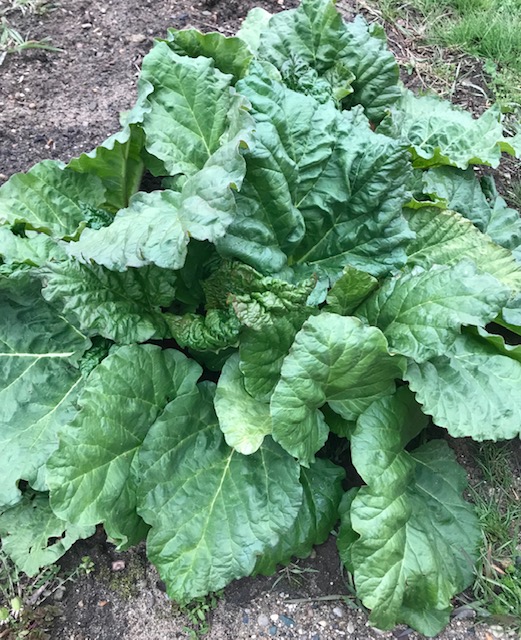
This post, written almost exactly two years ago, speaks to my heart today. Though winter seems to keep blasting on, though we’re still quarantined inside our homes for almost a month now, all is not lost. My rhubarb has once again dared to break through the frozen ground to remind me that this plot has yet to fully unfold.

In Michigan this year, winter had stamina. It seemed to begin way back in October and continue halfway through April. The temperatures were low, the snow banks were high, the skies were gray, and all felt bleak.

My daughter once informed me, after I had been an English teacher for well over a decade, that when nature imitates the mood of the story, literary critics refer to the phenomenon as pathetic fallacy.  

We see it all the time in literature and movies: rain falls during funerals, the sun shines on parades, lightning flashes and thunder claps as the evil villain hatches his plan.  Writers use the setting of a story to create mood and to signal for readers how they might feel about the action of the narrative.

Sometimes it seems to happen in real life, too.

As the winter wore on this year in all its bleakness, and as circumstances in the narrative of my life unfolded, I took my signal from nature and wrapped myself in gray. I didn’t see any buds on trees, any new growth in my garden, or any other signals from nature that I should hope. I saw the earth hunkering down under the weighty blanket of snow, and I hunkered, too. I wrapped myself in crocheted afghans, drank cup after cup of tea, and waited for the earth’s axis to tilt once again toward the sun.

Some moments, I didn’t believe it would. I felt we were stuck in winter forever. Storm after storm raged. Winds blew. Temperatures dropped. The world outside was harsh and unforgiving.  I had no reason to believe that we would ever again see tulips sprout from the earth.

I didn’t, of course, spend the whole winter under covers. I did what everyone who lives in the north does in the winter. I slathered my body in moisturizers, layered on clothing, pulled on boots, hat, gloves, and coat, and trudged into the elements. Day after day after long, cold, dismal day, I drove over slushy roads, stepped in salty puddles, and scraped icy windshields. The cold gray weather was both real and symbolic.

The problem with pathetic fallacy — with letting the setting signal the mood — is that you can lose your frame of reference. All winter I was shrouded in gray, so all of the action in my narrative seemed to take on that hue. Now, to be honest, my life narrative is cluttered at the moment with conflict and unresolved tension. Villains too numerous to list are executing evil plans and threatening to harm those that I love. However, in the midst of the gray of winter, I failed to see that simultaneously, a parallel plot was unfolding — one in which battles are fought and won, victory parades are held, and loved ones are reunited.

All. is. not. gray.

It’s been hard to see that — what with winter lasting so long. It’s been easy to fall for the fallacy — the mistaken belief — that all of life is cold, dark, dormant. In fact, I have over the last several months been pathetic — filled with all kinds of emotion. I have leaned in and felt things that I have not allowed myself to feel for a very long time. I have cried and yelled and moaned because I have looked fully at one strand of the narrative. I’m not sorry; I needed to see it. But guys, winter is gone.

I have a rhubarb plant outside my back door that peeked through the soil on my birthday at the end of March. Since then, it’s been slammed with winter weather — snow, sleet, wind, and rain — and still it is thriving. My garden is a bed of weeds, my yard is a mole metropolis that is sorely in need of raking and mowing, but the sun is shining, and all I can look at is that rhubarb.

The villains haven’t dropped their weapons, the conflicts have not all been resolved, but one stubborn plant that pushed its way through frozen ground way before winter had subsided reminds me that there is more than one thread in my narrative.  I have reason to bake pie, to plant seeds, and to fold up my afghans.

Earlier this week when I arrived home from work, my husband said, “Before you sit down, go look at the patio.” I knew before I looked what I would find — the Adirondack chairs that my father-in-law made for us years ago had been put out after their long winter inside.

He had seen it, too: the sunshine, the rhubarb, the reason to hope. So hope we will, as we sit on our patio, faces tilted toward the sun, and we will let this season have a chance to direct our feelings about our narrative.

Psalm 27:13

I am confident in this: I will see the goodness of the Lord in the land of the living.

Corn chips, anyone?

Scrolling through Facebook this morning, I ran across a meme that said,

“Is anyone else just going through life like ‘I just gotta get past this last difficult week and then it’s smooth sailing from there!’ but like…every week?”

I chuckled.

I had just been reminiscing about how when we were first married every need we had seemed to cost $5.  We needed $5 for a last minute item from the grocery store to finish dinner for guests who would arrive in half an hour, $5 for the hardware to fix the door that wouldn’t latch quite right, $5 to contribute to the group gift at work.  Each item was just $5, but when we added them all up, the total pressed us.

Later, when our children were small, it shifted to $10.  A package of diapers was about $10, so was the team t-shirt, or enough burgers and fries at McDonald’s to feed three kids and justify their time in the Playland. It seemed we never had enough $10 bills to cover all the items on our list.

Before long, the price of ‘everything’ grew to $20.  Then it was $50, then $100. Each time we had an unexpected expense, we shifted, braced, ponied up, and prayed that if we just “got past this last difficult week” then it would be “smooth sailing.”

Back then ‘crises’ looked different than they look now, too. I remember the time, for instance, when my husband and I returned from a long day at our respective teaching positions, looking forward to the chicken dinner that had been roasting in the crockpot all day, only to find that I hadn’t turned the crockpot ‘on’ and that the chicken was still raw.  I thought the world had ended.  I had wasted “all that food”; certainly I was a failure as a wife.

Or the time when I had planned the menus for a three-day visit from out-of-town guests, budgeted carefully, brought all the groceries home, prepared the first meal, and discovered one of our guests snacking on the corn chips that had been purchased for the next day’s nachos. I dragged my husband into the bedroom and said, “What are we going to do? Now I don’t have everything I need for tomorrow’s meal!”  I was seriously distressed.

Over the years we have certainly weathered much worse that prematurely noshed nacho chips.  We have managed through many ruined meals, illnesses, broken hearts, car accidents, disappointments, and surprises.  And still, I keep hoping that this will be “the last difficult week” before we hit the period of “smooth sailing”.

We have had seasons of smooth sailing. Many. However, I haven’t seemed to grasp that “smooth sailing” isn’t what is promised.  In fact, it is far more likely that we will face “troubles of many kinds”.  The troubles are the given.  The reprieves are the unexpected blessings.  So why do I set myself up to believe the opposite?

I guess I want to believe the best. I am inherently a glass-half-full girl.  Yes, our finances are going to work out.  Of course, our children are going to be healthy.  Surely, we will be successful and well-liked.  Naturally, everyone will agree with us. I choose the path of hopefulness to a fault.

The problem with believing the best will happen in every situation is that I don’t always prepare for any alternative.  I don’t guard myself for the ‘given’ of disappointment.  I don’t store up for the days of famine. I believe that everything is going to run just how I planned. I don’t buy extra ingredients just in case; I buy exactly what I need. So, I’m often found standing, mouth agape, in shock that someone is standing there eating my corn chips.

But here’s the thing — people are going to eat the corn chips.

Now, I do realize that corn chips are not a big deal.  They are hardly even a $5 item. But the $5 items teach us what to do when we are one day faced with a $100 or a $1000 item (or even several of them all in the same week).  I can get pissed that someone ate my corn chips, I can ask them to run to the store and pick up another bag,  or I can simply say, “Oh, I’m glad you felt at home enough to help yourself!”

In trying out different responses to these $5 items, I am building resiliency–muscle–that will sustain me when I am hit with a more substantial crisis — someone I love is hospitalized, or we discover we owe Uncle Sam a lot. Again. Or we lose a loved one, or get a life-altering diagnosis.

We face troubles of many kinds. All of us do. All the time. My troubles seem huge to me right now. So do yours. Our hearts are broken in a million places and we are devastated. We’ve been lied to, cheated on, forgotten, abandoned, mistreated, and deceived.

The corn chips pale in comparison, don’t they?

But the $5 problem and the corn chip crisis have a lot to teach us.  I wish when I came home to the cold chicken in the crock pot my first response would have been, “Ok, God, what’s for dinner now? And what do you want me to learn from this?” Instead, if I remember correctly, I spouted lots of self-deprecating phrases, stormed around the house, probably cried, and ultimately got a pizza. It’s ok. I had a human response. However, I think that ultimately God wants more for me than self-blame, shame, and anger. I believe that in my $5 problems and my $100,000 problems, God longs for me to look to Him.

What if, in every decision, instead of mustering my resolve and believing that I myself will be able to manage every situation, I instead turned, raising my eyes and my hands to God, and admitted that all of it is too much for me?  What if I acknowledged that my pennies and my corn chips all come from God?  How would I experience life differently?  How would I weather crisis and even trauma?

I’m not too old to learn a different way.  Honestly, I’m given opportunities every day.

If you are in the habit, as I am, of kicking butts and taking names, of putting out fires on the fly, of keeping multiple plates spinning, of trying to handle everything on your own, this type of change will be a challenge.  The impulse in every difficult situation is to be a first-responder — to stop the gushing blood, provide oxygen, perform compressions, and avert any casualties.  Fighting that impulse is hard, especially if ultimately you are truly the only one who can help.  But here’s the thing: God has every situation in the palm of His hand. He’s got it. He can handle everything for the few moments it takes you to pause, look Him in the eyes, and ask, “Is there something you’d like me to do here?”

That’s all. Just pause and ask Him.  He may say, “Stand by. Help is on the way.”  He may say, “Yes, I really need you to stabilize this situation until help arrives.”  He may say, “Stand down.”

Mm.  This soldier certainly does not like to be told to “Stand down.”

But. If I trust that God has everything in the palm of His hand and that He alone knows the best course of action, don’t I want to check with Him before I act? Before I pay the $5? or before I lose my mind about a stinking bag of corn chips?

It sounds pretty simple when I put it like that, but I’m telling you, this is the lesson of my life. It’s about time I learned it.

John 16:33

I have told you these things, so that in me you may have peace. In this world you will have trouble. But take heart! I have overcome the world.”

How hard can it be? Re-visit

First written in February 2018, this post further examines the topic from Righting the Course. I’ve cleaned it up for you here in May 2019.

It sounds pretty easy. I mean, it’s really just one independent clause. I’ve read it, or heard it read, certainly dozens of times in my life.  In my mind, I see Jesus peacefully walking along a dirt path, probably next to the Sea of Galilee, wind blowing through his hair, gazing lovingly toward his hearers. His voice is gentle, as though he’s giving the simplest of invitations, “repent and believe the gospel.”

How hard can it be to 1) repent, and 2) believe the gospel?

Pretty darn hard it turns out.

I have spent a fair amount of time writing about repentance. It’s such an archaic sounding word, isn’t it? Kind of King James-ish, if you ask me. Why in the world would I use a word like repent in 2018 when it conjures another image, one of a wild-eyed, locust-eating John the Baptist, shouting at the top of his lungs, “Repent and be baptized!”

Can’t we all just hold hands and sing Kumbaya?

We could. We could gather together, hold hands, and sing Kumbaya. It might be soothing for a moment, but it wouldn’t provide the healing and restoration that true repentance gives.

Perhaps way back in confirmation class was the first time I heard repentance described as “a turning”. I have imagined myself walking down a street of my own making headed toward a future that only seems bright, and then, realizing that the path is actually headed toward harm, I turn on a dime to head in the opposite direction toward a future hand-crafted for me — one that I don’t have to manipulate myself into.

Doesn’t that sound so “one and done”-ish? Yeah, true repentance isn’t like that. True repentance is realizing that I keep ending up on that same darn street and that I have to keep turning around and heading in the other direction. I am bent on turning. I keep ‘figuring out’ a better plan, a more exciting path, a way that seems right to me.

The road I typically end up on is one that promises to make me happy. In my younger years, it promised make me thinner. Over the years, it has offered financial security, family peace, work satisfaction, physical healing, or some other sort of relief from some other sort of stress. It promises an escape from the troubles of this world. But guess what — it has not once delivered.  Oh, sure, I walked a path for a while that certainly made me thinner, but it also left me empty. I have patched together short-term fixes for all kinds of messes, but none have lasted. All of my efforts lead me to the same conclusion — I do not have the answers.

So, I turn. I walk away from my own path, and I promise myself, and God, that I’ve learned my lesson. I’m done trying to soldier through. I’m done coming up with my own solutions.

But before long, whether I realize it or not, I’m back on my own path.

Why?  Because I forget the second half of the clause — “believe in the gospel”.  I know, I know, more John the Baptist, but guys, the dude was running around shouting because he understood the good news! He knew what has taken me a lifetime to learn — all my answers are crap. They set up me to be my own rescuer and they inevitably fail. John the Baptist understood that Jesus was the answer, and not just in the Sunday school answer kind of way.  He was the solution. The remedy. The Way.

But you know, even though I believe that, I don’t always believe that. Instead I believe that I need to solve my own problems, pay for my own mistakes, and forge my own path. I get confused and think that repentance means guilt and punishment.

It doesn’t.

Let’s picture the scene a little differently. Let’s have Jesus walk right up beside us wherever we are today. Let’s have him walk with us on our path for a little while; let’s hear his voice and begin to trust him. I see him walking as quickly or as slowly as we want to go. I imagine him making a lot of eye contact, so much so that I stop looking at whatever it is that I’ve been chasing at the end of the path of my own making. Before long I  want to go wherever He is going, just so that I can continue to see those eyes and hear that voice. I imagine hearing him say things like “Follow me. I love you, and I forgive you. Don’t worry; I’m preparing a place for you.”

Turning isn’t so hard when you know that you are turning toward love, when you recognize where you belong, and when you understand, finally, that he’s had you all the time in the palm of his hand.

In repentance and rest is your salvation; in quietness and trust is your strength.

Isaiah 30:15a

Fallow [fal-oh] adj.

I remember as a little girl trying to wrap my mind around the concept of letting a field go fallow — the practice of letting a field rest for a season or more so that its fertility — its ability to be productive — could be restored.

The idea that we would let a field — a piece of dirt — “rest” seemed weird to me.  I mean, why wouldn’t a farmer want to keep planting that field every opportunity he had so that he could reap the highest yield?

It’s a concept I have a hard time applying to farming and to my own life.  I struggle to give myself a break from productivity — just imagine what I could be accomplishing in the time that I might be resting!

For the past three months or so I’ve allowed this blog to sit fallow.  I taught three classes this past semester — three different classes which means three different preparations. It took a lot of my mental energy and my time to process and package all the content that my students consumed (or didn’t consume as the case may be). I thought about my blog from time to time, but I reasoned, this just isn’t the time.  You’ll get back to it.  I wouldn’t say it was an intentional choice to let my blog go fallow, but I am reaping the benefits just the same. Over the past week or so while I was finalizing grades, finishing my Christmas shopping, and tying up other loose ends, I kept thinking, pretty soon, pretty soon you are going to be able to blog! 

In my excitement to begin my personal writing again, I’ve been considering some unusual ideas for what to write about and how to write about it. Maybe I could change the blog’s layout.  Maybe I’d like to play around with a series — a participatory series in which I use another platform to allow readers to dabble with my topics and try their own hands at blogging. Where were these ideas coming from? Why hadn’t I considered them before? Perhaps taking a break from production had allowed my mind a chance to restore.

The practice of letting fields go fallow is not too different from giving ourselves a rest through the practice of sabbath.  Sabbath, by design, is a scheduled break from our labor.  A pause in productivity.  An opportunity for our lives to have a chance at restoration.

[I’m not very good at observing a sabbath.]

Historically, sabbath has been observed one day a week — maybe Saturday, maybe Sunday.  Perhaps it originates from creation wherein God rested on the sabbath day.  It is echoed in the story of the Israelites who gathered manna six days a week, but not on the seventh.  The Ten Commandments also mention the sabbath with the admonition to “Remember the sabbath day to keep it holy.”  It’s a model and a mandate intended for our benefit.  It’s a reminder, “Guys, take a break. Remember that it’s God who created you, who provides for your needs, and who will sustain you. Sit down.  Take a break.  Let your body have a chance for restoration.”

And here I am folding a load of laundry, running to get my groceries, wrapping my Christmas presents, and even disinfecting the bathroom floor.  Why wouldn’t I want to keep busy so that I can reap the highest yield?

I’m missing the point.

Again.

On Sunday afternoon, after a morning of (gosh, I hate to admit this) grocery shopping and worship, I came home and entered my students’ final grades into the online portal.  Then, I crocheted while I got caught up on old episodes of Call the Midwife.  That’s my idea of a sabbath, guys.  I’m often willing to give myself a pause, but a whole day?  Come on.

And two weeks ago, when my husband and I were discussing the fact that I did not have a teaching contract for this semester, we agreed that perhaps I should keep my semester open so that I can catch my breath and allow some space for restoration.  I posted my grades on Sunday, and today — Tuesday — I went on an interview.  Sigh.

I am telling you: I push back against this concept of letting myself “go fallow” — of letting myself practice the sabbath.  Why? Perhaps I’m afraid.  Perhaps I don’t fully trust that God created me, sustains me, and will provide for every eventuality.  Perhaps I think of myself more highly than I ought — that I’m the only one who can meet that student’s need or answer that email or edit that paper.  Or perhaps I don’t want to be confronted with the thoughts and feelings that might surface if I take some time to be still.

Perhaps all of those possibilities are true.

Over the years, I have found one way to embrace the stillness — writing.  So, after this season of letting my blog go fallow, I am re-engaging.  I am going to turn over some soil, plant some seeds, and see what grows.  I might explore some of my fears and some of my feelings.  I might also invite you to have some fun.

Join me?


Leviticus 25:3-4

For six years sow your fields, and for six years prune your vineyards and gather their crops. But in the seventh year the land is to have a year of sabbath rest, a sabbath to the Lord. Do not sow your fields or prune your vineyards.


Controlling and Carrying, revisit

This post, first written in June of 2017 and polished a bit in March 2019, reminds me of one of the most powerful life lessons I continue to learn.

I began trying to control my life at a very early age. At the risk of making this a confessional, let me just say that I routinely lied, falsely (and sometimes accurately) implicated my brothers, and physically overpowered my friends to get what I wanted. And that was all by the time I was in elementary school! As I grew older and learned what was socially acceptable, I found other methods such as emotional outbursts, dramatic power plays, and sly slips of the hand to orchestrate my life. My college years brought more maturity.  I learned that I could not control my environment, my peers, or my family, so I controlled my body through anorexia.

You would think that therapy and recovery would’ve exposed the truth that I am not in charge of my own life either, but I am either a slow learner or a control savant. I have devised many ways to create an illusion of control.  In fact, once I had children of my own, I was sure to create a rigid daily schedule to ensure that their lives were under control. I was going to make sure that they were safe and secure. No harm would come to them under my watch. We prayed together. We memorized scripture verses. I only let them watch PBS.  We ate dinner together every evening. They went to church every Sunday and often several times during the week. I was going to do this parenting thing right. My kids would be perfect, you know?

I couldn’t control everything, though, as I’m sure you can imagine. They didn’t stay safe and secure. Harm did come to them. Heart-breaking harm.

Many sleepless nights I have cried over my failed attempts at controlling my life; many more I have cried over my realization that I could not prevent my children from being hurt. And where has it led me?  Literally to my knees.

For many years now, when I have found myself facing the stark realization of my own powerlessness in the lives of my children, I call to mind an image that gives me great peace. I picture a cupped hand with my child nestled safely inside. I imagine that cupped hand held close to an all-powerful chest much like I might hold a newborn chick or kitten. The hand is strong and able to lift my child out of harm’s way, and sometimes, when harm determinedly finds its way inside of that hand, two compassionate eyes are bearing witness — they are seeing and knowing and caring in ways that I am unable to see, to know, to care.  This image of the One who does have control gives me peace in those moments when I am able to acknowledge that I have none

Photo of original artwork by Mike Lorenz, St. Louis, MO.

But there are many moments when I am not able to acknowledge that. Most of the moments, actually. Most of my moments I am filling with doing. Doing gives me an illusion of control. It calms my anxiety. It makes me feel like everything is going to be ok if I just get my house clean, if I just meet one more student, if I complete one more task.

But that is a lie. Everything is not going to be ok. 

Last night, when I finally admitted that I had done enough for the day and I finally lay down in my bed, I picked up Ann Voskamp’s The Broken Way.  This is what I read:

Suffering asks us to bear under that which is ultimately not under our control, which proves to us we have no control.  And maybe that’s too much for us in our autonomous, do-it-yourself culture to bear.  Maybe more than we can’t stand physical suffering, we can’t stand not feeling in control (171). 

It’s silly when she puts it like that, isn’t it? And if I admit that trying to be in control is silly, then I have to admit that much of my life has been one big futile exercise. That’s embarrassing. And humiliating. And heartbreaking.

But it’s true.

However, it is also true that regardless of my foolish attempts, I, too, have been sitting in that all-powerful hand. I have been kept out of harm’s way many, many times. And, when harm has found me, One has born witness with compassion, forgiveness, and love. I am His child, after all. He has ordered my world.  He has hemmed me in on all sides. And He will continue to carry me.

You hem me in behind and before, and you lay your hand upon me.

Psalm 139:5

Sorbet before Lunch, revisit

This post, written in June of 2017, is being edited in June 2019, on the heels of a week away with my husband, as I sit in a hotel room I’m sharing with the roomie I met two years ago. This is a pattern I’ve enjoyed repeating.

So much is jangling around inside my head this morning. Over three weeks ago my husband and I left on a two-week vacation — we slipped away to an undisclosed location where no one recognizes us so we could begin to recognize one another again. We spent hours together, just the two of us. It was quiet; it was restful; it was lovely. At the end of the two weeks, I jetted off, instead of coming straight home, to a week of AP English Literature Exam scoring with hundreds of strangers. Inside of those three weeks, I read a couple of books and several articles, I listened to podcasts, I watched meaningless television, I had long, and short, conversations in person and over the phone, and I read thousands of words written by high school students.

Now I’m home.

I’m back at my desk in my little house by the river.  My dog is under my desk at my feet. I’m halfway through the first cup of tea, and I am trying to get the jangling to coalesce into some kind of meaning.

What do you learn from three weeks outside of your routine? If you sort all the pieces into piles, what do you have?

First, I have the realization that the things that I planned — the ones that we just had to do — weren’t the ones that I valued the most. In fact, the sandwich that I just had to eat from that particular restaurant did taste delicious, but its gluten- and dairy-rich delicious-ness left me feeling miserable for the next twenty-four hours. The things that I thought would make the experience ‘perfect’ weren’t really the highlights. No, the unexpecteds, the ad libs, were the nuggets I will cherish — a last minute detour, a lunch time phone call, impromptu sorbet right before lunch.

This plan-happy girl needs to be reminded from time to time that her plans aren’t always the best and that she can’t plan for everything. In fact, often the best parts of life are the ones I didn’t, or couldn’t anticipate.

In the weeks leading up to the AP Reading, I was feeling a bit apprehensive because I had been assigned a random hotel roommate. Although, you might not expect it, I tend a little to introversion. While my career has involved standing up in front of students, cracking jokes and calling out bad behavior, I truly love my end-of-day quiet alone time. What if my roommate loved to chat until all hours of the night? What if she was a slob? What if her personality got on my nerves. It’s not like we would just have to get through a weekend. We would be co-existing for eight days!! I had a plan, though — if she was super creepy, I told myself, I would request a single room and just pay the difference. Phew! Glad I solved that dilemma.

I arrived at the hotel before she did and quelled my anxiety by staying busy. I situated my stuff, got myself registered, went for a swim, showered, and then waited. She arrived on a different schedule, so we didn’t actually meet until almost 8pm on the first day! After so much fretting, all worry evaporated when she arrived, Southern twanging her greeting —  a virtual “Hi honey, I ho-ome!” — and putting me at ease.

Not for one minute did I feel that awkward let-me-ask-questions-to-get-to-know-you feeling. From the start we chatted like old friends, laughing over ridiculousness and tearfully sharing our hearts. We were ok being quiet together, too. I didn’t feel like I was imposing when I felt poorly and had to cash-in early. I didn’t feel like I had to explain myself or justify my actions. I felt like I was living with a sister. Probably my favorite moment of the week was the last night when our conversation went something like this:

“Hey, thanks for not being a creepy roommate.”

“Hey, thanks for not snoring.”

“And thanks for not being a slob or watching tv until 4 in the morning.”

“And thanks for not judging me for going to bed before 9.”

I couldn’t have hand-picked a better roommate.

So what’s the take-away here? Do I suddenly turn from my planner-ly ways and go forth in a life of abandon? (She says as she glances over at the to-do list she made for today and the one she made for this week.) Every teacher-fiber of my being loves to plan. In fact, two items on my to-do list involve planning — for the summer class that starts next week and for the new course I’m teaching in the fall.

Writing lists and anticipating alternatives is in my DNA. I won’t ever not be a planner, but is there a way for me to plan for spontaneity? for margin that allows for ad lib? Of course!

Something about filling my days with plans reduces my anxiety.  If I fill in all the spaces, I leave no room for the big scary unknown, but, also, if I fill in all the spaces, I leave no room for surprise, for serendipity, for spontaneity.

Leaving space is taking a risk.

Do I dare? Do I dare let myself sit quietly in the chair on my patio, watching nothing, anticipating nothing, expecting nothing? Do I dare have a day that’s not planned wall-to-wall with activity? What could happen?

I might take a last-minute detour.  I might make a new friend. I might eat sorbet before lunch.

I wait for the Lord, my whole being waits, and in his word I put my hope.”

Psalm 130:5

Still my Soul

Time change.  Spring Forward. I did not want to wake up this morning.  I stayed up to watch the end of a basketball game last night. You know, March Madness.  It’s the first weekend of our Spring Break and I guess I was feeling a little like celebrating.  I made popcorn and baked muffins.  I wanted to snack, sip wine, and watch collegiate basketball. It wasn’t terribly late, mind you, but when my husband gently woke me this morning at 7, I grumbled.  Ugh.  “Five more minutes.”

I’m not great at morning.  It seems I used to be.  I think I used to bound out of bed ready to face my day, but this has changed.  I’m a morning grumbler.  My husband is good in the mornings.  He is cheerful, kind, thoughtful, and ready to face his day.  Poor guy.  He unsuspectingly tries to engage with me, and I snarkily reply.  Before he knows it, my snark has inspired a response from him.  That’s when I notice that I’ve been less than kind.

So, yes, this all happened this morning.  By the time we were in the car making our way to church, the banter was a little testy.  I feel bad because he’s on his way to church to preach, and I am going to sit in our church’s coffee house for about two hours doing whatever I choose to do.  I can read, grade papers, blog. I have time to shed the snark before I go to the second service; he is going to walk right into serving.  He has to quickly use whatever skills he has acquired from twenty-six years of living with me to shed the snark and return to his normal cheerful self. I know he is able to do it, but still feel badly.

While he’s doing whatever he does to prepare to greet people and deliver the message that he’s been working with all week, I shuffle down the stairs to my corner seat, unpack my bag, open my computer, and begin to review an essay that I’ve been helping one of my students with.  I’m reading through her claims, her analysis, and her evidence when I find myself singing with the coffee house’s piped in music,

Be still my soul, Lord make me whole

Lord make me whole*

I pause.  Hm. Yes, that’s why I am snarky this morning.  My soul is restless. I’m tossing around complaints and worries. I’m holding them in my hands and examining them over and over.  Perhaps you know what I’m talking about.  I’ve gathered items all week — the health issues of family and friends, the knowledge that people in my life make choices that I don’t agree with or approve of, the constant barrage of the ‘news’ feed, my own persistent health issues, and countless other gems.  I’ve been caressing them all week, and I haven’t changed their reality one bit.  I involuntarily join the plea of the song, “Be still my soul, Lord make me whole, Lord make me whole…”

The song ends, and I go back to the essay.  I give the feedback I promised then order a pot of extra strong tea.  I can feel the snark hanging heavily on me, so I know I can’t turn right to my blog.  Come on, Kristin, you know the drill.  Turn to the Scripture, first.  That’s where you’ll find your truth.

If you aren’t convinced yet of the power of a regular reading plan, let me share with you what I found today. It was waiting for me — Day 132, Psalm 66.

For you, O God, have tested us; you have tried us as silver is tried.  You brought us into the net; you laid a crushing burden on our backs; you let men ride over our heads; 

As I’m reading, I’m shaking my head.  I’m embarrassed. It’s not like my worries and troubles are a crushing burden.  Yes, I do have concerns that are real. However, in the grand scheme, I have been very gently ‘tried’.  In just this past week I have heard stories of others who have had true ‘crushing burdens’ on their backs, who have actually felt like ‘men [were riding] over their heads’.  Comparatively, my troubles are small.  I read on.

yet you have brought us out to a place of abundance.  

I just have to sit here for a minute.  Indeed, I have been brought to a place abundance. Even if I didn’t have a church I loved to come to every Sunday, even if I didn’t have a committed husband who wakes up happy each day, even if I didn’t get to live in a community that energizes me, even if I didn’t have my dream job, even if I didn’t have four children that make me very proud, I would still have much abundance to write about.

I’m convicted, obviously.  I examine the gems in my hands and realize that they are mere pebbles. I exhale and continue to read.

I will come into your house with burnt offerings; 

I mean, I’m already here.  In just a little while, I will ascend the stairs and enter the sanctuary.  I will carry my pebbles up with me and leave them there for You.  I think You’ll probably be more effective with them.

Come and hear, all you who fear God, and I will tell what he has done for my soul.  

Truly God has listened; he has attended to the voice of my prayer. 

Guys, I can’t make this stuff up.  Mere words transform my snark into confession, humility, and gratefulness.  It’s a miracle –one that I don’t want to overlook today.  He cares enough about me and my ‘burdens’ to speak directly to me. He has stilled my soul again.  May He still yours, too.

*The Brilliance. “Dust We Are and Shall Return.” Brother.