
Reply Requested: Singapore and the Archives

Dear Reader,

I’m breaking from my recent rhythm of ranting about the new year in hopes that you can answer some questions for me. I’ve been writing this blog for going on twelve (12!) years. In the beginning, most of my readers were folks who knew me and who were following my journey through a recent chronic illness diagnosis and my resulting exit from teacher life. I was writing my way through a major transition and my readers were empathizing and cheering me on. Much has changed since then — while I still write about my journey into a healthier existence, I more often write about my life back in the world of education, about current political issues, or about my inner journey to emotional healing. My readership has changed, too!

WordPress has an app where I track my statistics — how many people view a particular post on a given day, what country each reader is from, and what was the referral source. I will admit to being a bit of a data geek, and recently I have noticed an odd trend. In the past few months, the overall activity on my blog has increased — overall views have more than tripled — and it doesn’t seem to be because my recent content has been more engaging, more inspiring, or more colorful. No. When I look at the stats, it seems the increased viewership is coming (at least partially) from abroad and the engagement is with stuff that was written a year, five years, or even twelve years ago!

Most notably, I’ve seen a surge in views from Singapore! Substantial clicks are also originating in India, Germany, and China! This information has me over here scratching my head.

In full transparency, I can locate Germany, India, and China quite easily on a map, but while I’ve heard of Singapore, I definitely needed to go to Google to learn that it’s an island nation off the south of the Malay peninsula (home to Thailand., Cambodia, and Vietnam). While its inhabitants are Chinese, Malay, and Indian, one of its official languages is indeed English, so some folks there can easily read this blog, but why, reader, why would you want to?
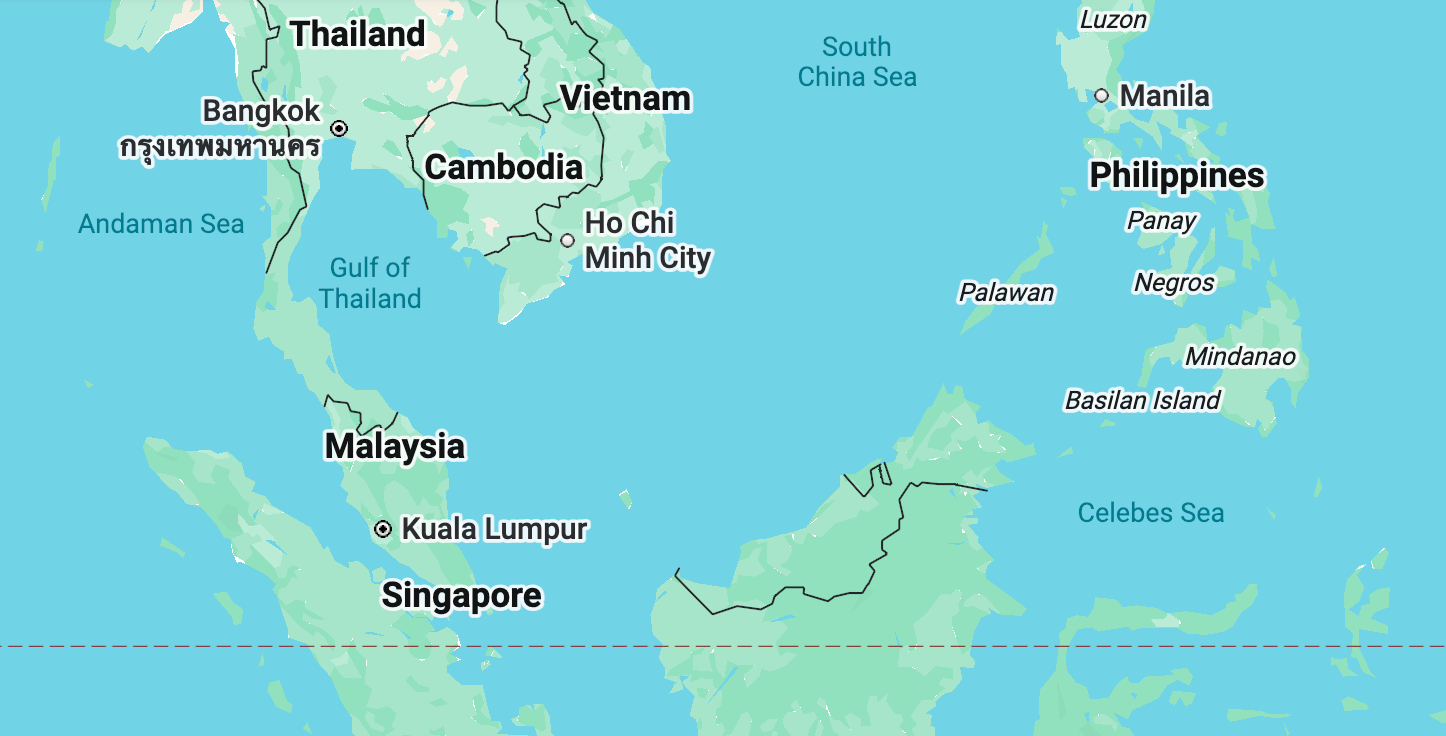
Where is Singapore?

What does this middle aged white woman from the United States have to say to you? And, frankly, to those of you from India, Germany, the United Kingdom, and other places around the world? What is resonating? I’m dying to know!

The statistics tell me you are reading those early posts about chronic illness but also posts from the Covid era; about racism but also about minimalism. It looks like you’re interested in my teaching but also my exploration of emotions. Even my readers from the US right now seem less interested in what I’m currently writing and more in the archives.

I’d like to open this up for discussion. Would you be willing to engage with me?

I met with a long-time friend over the weekend for coffee. We’ve known each other most of our lives, but we’ve recently been reconnecting. We talked and talked for a while, as you do when you are catching up. I gave her my “latest” then said, “I think that’s all I have. What’s going on with you?” And, being asked, that dear friend trusted me with part of her story. And, in her sharing, in my sharing, we found areas of connection, of commonality, of shared experience.

So, I’m asking you — where are you from? what’s going on with you? where do you find connection with me? Maybe your responses will lead to a further conversation. I hope so! I know I have something to learn from you!

To share, you could use the comment feature on Word Press, or you could follow this blog on Facebook and comment there. Let’s see what happens, shall we? Maybe someday I’ll even travel to Singapore!

Whether or not you decide to share, thank you for taking the time to engage with my writing.

Last-minute Christmas Prep

You are all but ready for the holidays, but you’re starting to feel a little edgy because the gatherings are starting to happen? Me, too! Seeing all of our people can tricky — especially at the holidays.

It’s not because of the presents or the food or the clothing we choose to wear, it’s because of all the meaning we attach to the smallest of things. We come carrying the historical experiences we’ve had with each important person in our life, and our brains use some kind of warped algorithm to assign emotional value to every holiday interaction:

the language in that text,

the gesture she made when she said that thing about you know what,

the fact that she said nothing about you know what,

the size of the gift,

the absence of a gift,

the appropriateness of the gift,

the inappropriateness of the gift,

that phone call,

the lack of a phone call,

the food that was served,

the food that wasn’t served,

how much he ate,

how much he didn’t eat,

the church service,

the hymns we sang,

the hymns we didn’t sing,

the outfit they wore,

what they didn’t wear,

who showed up,

who didn’t show up…

It’s all laden with our individual and collective histories of hurt, joy, regret, longing, grief, love, loss, and all the other emotions that seem amplified around the holidays.

And why are they amplified? Maybe because holidays are times of expectation — we build them up to be the pinnacle of our human existence. When did you see your first holiday commercial or store display this year? When did you hear your first Christmas carol? When did you purchase your first Christmas present or attend your first holiday party?

For months we look forward to this season with expectation, creating scenarios in our minds, imagining who will be with us, how they will react to the gift that we bring, how we will embrace and enjoy one another’s company, and how perfect the experience will be. But when each of us arrives lugging our history and our expectation, there is bound to be disappointment.

I will be so busy tending to my historical hurt — the disappointment of Christmases past when I wasn’t with my father, the longing for the holidays my grandparents created, the belief that I didn’t fit in with my family — and trying to process my current reality — the work stresses, health issues, and dysfunction in relationships– that I don’t realize that you, too, are tending to your historical hurt and current reality, which may be very similar or very different from mine.

And, since my gaze is at least partially turned inward, I might say something that is less than thoughtful or even insensitive and you may feel hurt. And since it’s a holiday, you may contain your reaction to a mere shifting of your eyes, but I will see it, and, being focused on my own hurt, I won’t see that shift as you reacting to my insensitivity but will assign it some other type of meaning — I might assume the worst about you rather than taking accountability for my own actions.

And it doesn’t take many of these small interactions to lead to a tense and emotionally charged holiday gathering, even among the most civilized and emotionally evolved among us.

Before you know it, someone says, “What do you mean by that?” and storms away to a different room or out the front door. Or, they contain their hurt inside, plastering over it with a smile, but carrying the hurt to the car with them and taking it out to nurse and nurture in the privacy of their own home so that it can be brought back to the next holiday gathering. It’s not what we are hoping for, but it’s what we often do.

Hurt people hurt people, and if we are being honest, we are all hurting.

We are all longing for someone to say:

I’m really sorry about that thing that happened to you,

I didn’t mean what I said — I was angry when I said it,

I want to heal with you,

Will you forgive me?

Can we talk about it?

How can I help?

I’m proud of you,

I support you,

I love you.

We often approach holidays playing defense — putting up our guard, expecting the blows, preparing for the worst.

What if we tried a different way? What if we planned ahead and practiced checking in, listening, caring, and supporting? What if we processed our historical hurt through writing or therapy before we loaded up the car? What if we were vulnerable and admitted to a few at our gatherings, “I’m struggling. This season is hard. I’m sorry if I seem distracted.”

How might these little moves have a significant impact on our experience of the holidays?

And while we are at it, can we plan to overlook any insensitive comments someone else might make, any seemingly judgmental facial expressions, any downright rude comments? Can we chalk them up to the heightened emotions of the holidays and not give them too much weight? Can we decide in advance not to gather these infractions up in a bag to take home and examine under a microscope? Can we instead choose to sweep them up with the crumbs from the table and toss them in the trash, not because they are meaningless, but because we are not choosing to assign them any additional meaning?

Can we plan to check in with the oldest, the youngest, the quietest among us? Can we set out to embrace those we know are grieving? Can we provide space for those who need an ear? Can we offer to help? Can we turn our gaze away from ourselves?

Could we give that one extra gift?

…Love one another. (John 13:34)