I’m breaking from my recent rhythm of ranting about the new year in hopes that you can answer some questions for me. I’ve been writing this blog for going on twelve (12!) years. In the beginning, most of my readers were folks who knew me and who were following my journey through a recent chronic illness diagnosis and my resulting exit from teacher life. I was writing my way through a major transition and my readers were empathizing and cheering me on. Much has changed since then — while I still write about my journey into a healthier existence, I more often write about my life back in the world of education, about current political issues, or about my inner journey to emotional healing. My readership has changed, too!
WordPress has an app where I track my statistics — how many people view a particular post on a given day, what country each reader is from, and what was the referral source. I will admit to being a bit of a data geek, and recently I have noticed an odd trend. In the past few months, the overall activity on my blog has increased — overall views have more than tripled — and it doesn’t seem to be because my recent content has been more engaging, more inspiring, or more colorful. No. When I look at the stats, it seems the increased viewership is coming (at least partially) from abroad and the engagement is with stuff that was written a year, five years, or even twelve years ago!
Most notably, I’ve seen a surge in views from Singapore! Substantial clicks are also originating in India, Germany, and China! This information has me over here scratching my head.
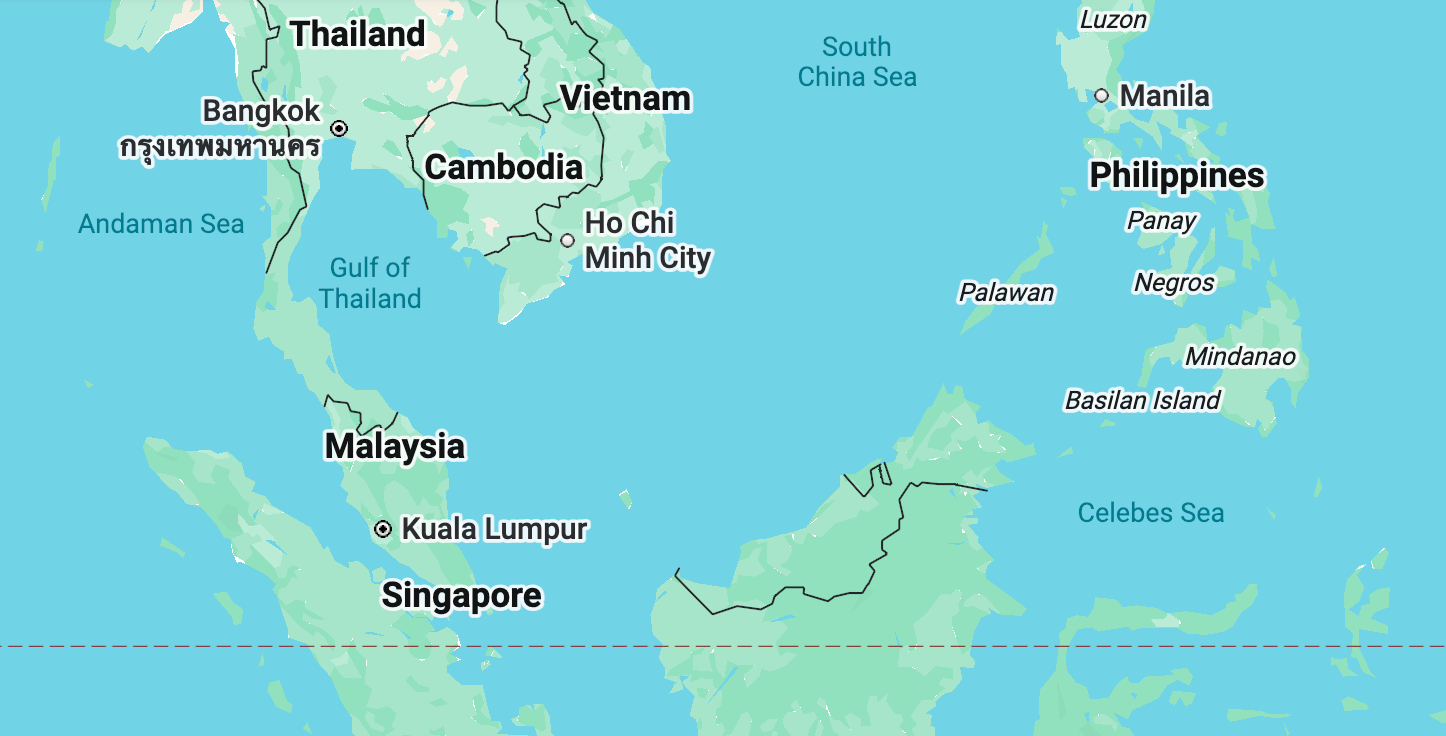
In full transparency, I can locate Germany, India, and China quite easily on a map, but while I’ve heard of Singapore, I definitely needed to go to Google to learn that it’s an island nation off the south of the Malay peninsula (home to Thailand., Cambodia, and Vietnam). While its inhabitants are Chinese, Malay, and Indian, one of its official languages is indeed English, so some folks there can easily read this blog, but why, reader, why would you want to?
Where is Singapore?
What does this middle aged white woman from the United States have to say to you? And, frankly, to those of you from India, Germany, the United Kingdom, and other places around the world? What is resonating? I’m dying to know!
The statistics tell me you are reading those early posts about chronic illness but also posts from the Covid era; about racism but also about minimalism. It looks like you’re interested in my teaching but also my exploration of emotions. Even my readers from the US right now seem less interested in what I’m currently writing and more in the archives.
I’d like to open this up for discussion. Would you be willing to engage with me?
I met with a long-time friend over the weekend for coffee. We’ve known each other most of our lives, but we’ve recently been reconnecting. We talked and talked for a while, as you do when you are catching up. I gave her my “latest” then said, “I think that’s all I have. What’s going on with you?” And, being asked, that dear friend trusted me with part of her story. And, in her sharing, in my sharing, we found areas of connection, of commonality, of shared experience.
So, I’m asking you — where are you from? what’s going on with you? where do you find connection with me? Maybe your responses will lead to a further conversation. I hope so! I know I have something to learn from you!
To share, you could use the comment feature on Word Press, or you could follow this blog on Facebook and comment there. Let’s see what happens, shall we? Maybe someday I’ll even travel to Singapore!
Whether or not you decide to share, thank you for taking the time to engage with my writing.
I wish I had a documentary film crew that had followed me over the last 30 plus days, because there is no way I can adequately communicate the amount of training, preparation, planning, sweat equity, and problem-solving I have witnessed and participated in to prepare for this the school year. Nor could I paint a full picture of the first interactions my team and I have had with our students as they have returned to our building over the last week. How could I ever show what I’ve seen with nuance and love and candor? And what is my point in doing so, anyway?
My point, I think, is that I want to both process what I’m experiencing and also share my experience — the ways that my lived reality continues to shape my thinking around education [and educational inequity] and how that thinking connects to my life as a believer in the power of the grace of God to transform lives.
The last thirty days or more has been powered by that belief. I didn’t return to work on July 31 to maintain the status quo. No. I returned with my leadership team a month before my students because this team actually has as one of its core values to be transformative. We all choose to stay with this organization because we believe that the status quo is perpetuating inequitable practices that limit the opportunities for our students and other students in communities across the country. We spent the past month reviewing the data from the past few years that shows us how far we have yet to go to close learning gaps caused by these inequities, situating ourselves within our teaching framework, building strong relationships with one another, and managing the unexpected.
I want to share a glimpse at the intentionality that goes into such work but also to show all the pivots that have to be made to function within and reform a structure that is inherently broken — kind of like trying to re-tool a machine that is continuously in production. The whole works can’t be shut down so that we can fix it. We’ve got to fix it while it’s running.
So I am going to scroll back through my mental camera roll and share a few images to show what this looks like.
In one shot, the teaching staff gathers on their first day together after the summer break. They are munching on breakfast snacks, hugging, laughing, sharing vacation stories, then finding their seats to hear network-wide updates: the fact that student phones will be “away for the day” — collected in the morning at arrival and returned to students right before dismissal — and the “new” dress expectations that students will wear school colors every day — a return to pre-Covid expectations with no hoodies, no hats, no pajama pants, no house shoes. Then, when the large group breaks into smaller teams, our high school teachers hear from our new principal who was once a teacher and then a coach in our building. She shares her vision for the school year — we will activate excellence in all that we do, holding ourselves and our students to a high bar from day one.
I’m seeing our staff show up the Thursday before school starts, many quite early in the morning, to put last minute touches on classrooms and hallways before families start arriving to pick up class schedules, sign up for transportation, obtain supplies and a free haircut, and reconnect with school life. Teachers call students by name, often running to wrap them in hugs. Students, in loud smiling groups, walk through the hallways, fist-bumping, hand-shaking, and laughing.
I’m picturing the hot, sticky day I showed up at our building almost a month ago, dressed fairly professionally because my principal and I were scheduled to interview a teaching candidate. We met to discuss which questions we each would ask and then chatted about other building-related issues while we waited. The time for the interview arrived and passed — still no candidate. Eventually, HR informed us that our candidate was no longer coming. This happened over and over this past summer. It would have been a mere frustration if we eventually found all the staff we needed to fill our classrooms. Unfortunately, it became a necessary pivot point when we realized we would start the school year three teachers short.
Pivot we did. In the last days before school started, we enlisted two ancillary staff to facilitate two classrooms where students will receive instruction in math and science via live online instruction over zoom. We also persuaded a paraprofessional to teach freshman English Language Arts each morning in the same classroom where I will teach two sections of senior ELA in the afternoon [in addition to my instructional coach duties]. In this way, all classrooms are “covered” until we can find certified teachers to add to our team.
The next shot in my camera roll is of students reluctantly turning in their phones in the morning (while some sneakily hide theirs on their person claiming, “I didn’t bring my phone today”).
Another is students struggling to know what to do with their hands, asking frequently what time it is, and clamoring to be first in line when the phones are returned at the end of the day.
In between those two scenes, I’m seeing students attend more to learning. I’m watching them find ways to talk to their classmates at lunch. I’m noticing frustration, resignation, and adaptation. And, I’m also noticing some who are not adapting — they are choosing to transfer to another school, to move to our self-paced online platform that will allow them to earn high school credits from home, or they are staying in the building and acting out. And we’re finding ways to manage each of those scenarios, too.
I’m seeing first-week fatigue — emotional outbursts, heads on desks, and students walking slowly to their busses at the end of the day, but I’m also seeing excitement — when the principal provides teachers with new t-shirts and free lunch on the first Friday, when the football team and cheerleaders wear jerseys for their first game, when the stands at the game are full of staff, students, and families [is it possible that they’ve never been this full before?]. I’m seeing our cheerleaders looking sharp and our team bringing home a win.
I’m remembering the one fight I heard in the hallway outside my room at the end of day two, but I’m also thinking about the three students who were brave enough to demonstrate their singing ability in my class while the rest of the room [instead of jeering or laughing] snapped and clapped along in support.
We aren’t fully staffed, we’ve got a busted up parking lot, lunch doesn’t always arrive on time, and next week our classrooms are going to be uncomfortably warm, but I’ve got a good feeling about this year — about the students who are showing up every day, about little [and big] moments of excellence, and about a front row seat to transformation.
I’ll try to share more snapshots with you along the way.
If you are interested in supporting the work that we do at Detroit Leadership Academy, check out my wishlist.
I went back to work this past week after what was a very unusual summer — a summer that started with a week of dish washing in the desert of Arizona, transitioned to supporting some of our parents through their health crises, included my 40th high school class reunion, and ended with me transitioning into a new position at my school.
It was such an unusual summer that my suitcase stayed in some state of “packed” for the entirety of June and July, our garden was given over to monstrous intertwined vines of squash and cantaloupe bordered by overgrown rhubarb and zucchini, and I was rarely able to move my writing from my morning pages– scribbles of to-dos and emotion — to anything resembling a blog. My regular rhythms were disrupted.
It probably needed to happen — this season of go with the flow that included so many trips up and down the state of Michigan — which is breathtakingly beautiful in the summer — lazy hours on the beach, playtime with our granddaughters, laughter with former classmates, dozens of phone calls with parents and siblings, and a looser hold on all the anchors I’ve been gripping for years in my physical recovery — regimented bed times, a consistent morning routine, strict dietary guidelines, and a deep commitment to not only writing every day but also posting every week.
I think I needed this summer’s less-regimented experience to see that a looser grip is ok. I can relax a little bit. If I generally follow the routines that I have found work best to keep my inflammation and pain at bay, I can veer off that path from time to time and be fine. I’ve been a little afraid of that since I’ve been dealing with autoimmunity — afraid that if I don’t do everything correctly, I’ll end up in a flare. It’s a valid fear, because that sometimes happens (and it did happen a couple of times this summer), but holding too tightly to systems and regimens can also cause the anxiety that might lead to a flare. Maybe, I’m learning, taking a breath and veering off the path for a moment can be ok.
Because I veered off the path, I had countless hours with my mother as she cleaned, organized, and prepared her home for my stepfather’s return from an extended hospital stay. I had the opportunity — many times — to sit in my stepfather’s hospital room — witnessing his vulnerability, providing some consistent communication (even if I got on his nerves a bit), and watching him become someone I didn’t recognize, and then, someone that I did. I had time with my in-laws who are also navigating difficult waters — joking a little with my father-in-law and sharing some private moments with my mother-in-law. We enjoyed a few precious days with our granddaughters, feeding alpacas and goats, walking to playgrounds, watching movies, and reading stories until we heard, “I’m so tired, can we go to bed now.” Finally, my husband and I enjoyed four quiet days away — alone, just the two of us — to explore nature, breathe clean air, and celebrate the miracle of thirty-four years of marriage.
I didn’t get every weed out of the garden. I didn’t, as I’d hoped, dive back into The Artist’s Way, and I didn’t meet my writing goals, but I logged so many memories that I will be carrying with me as I head into the school year.
This summer was all about remaining flexible — going with the flow, changing plans at the last minute, missing a day or two of yoga, living without a decent cup of tea once in a while, staying up a little later, getting up a little earlier, and being mostly ok.
And, when I haven’t been ok, I’ve used the tools I’ve learned over the last ten years to recover — epsom salt baths, lots of water, ice packs, Motrin, and rest.
I know the value of staying on the path, I’m learning the richness of wandering away from time to time, and I know the potential outcomes of both ways.
I’m mostly back on the straight and narrow; I need to be as I learn my new role at school — more on that next time.
I’d been watching the girls’ basketball team all season — from the first game of their first season ever, where very few showed any evidence of having played the game before, where one girl received a “traveling” call for carrying the ball football-style while running down the court, where our players froze in place as the other team stole the ball, where the referees pulled our girls aside to teach them the rules in the middle of the game. From that game forward, I had been encouraging the girls, both on the court and in the hallways, letting them know I was seeing their progress. They were not only learning the game –the skills, the rules, and the strategies — they were also building confidence, stamina, and resiliency.
Many on the team were girls I had had the previous year in my reading intervention class. They had been freshmen– freshmen who had spent most of middle school on Covid lock-down, freshmen who had missed some social development experiences, freshmen who had very little capacity to manage challenge, difficulty, or conflict. So when I saw them during that first game, barely hitting double digits on the score board, I wondered if they would make it the whole season. Could they take the losses they would certainly face? Could they [and their coach] see this for what it was — a building year. Could these young women show up every day, practice the basic skills of basketball, and arrive at the end of the season better for it?
Only time would tell.
But here I stood at the end of the season, watching this same group of girls prepare for one of the last games. As the other team was rolling into the building, our girls were practicing an inbounding strategy while the coach called cues from the sideline. The girl with the ball slapped it loudly, and the four on the floor quickly shifted to their new positions to receive the thrown in ball. I stood on the sidelines, recording the scene on my phone, grinning with pride.
I was there to sell concessions, so I was in a little room at the corner of the gym with one eye on the game and one eye on my concession window, when I noticed that one of the players, the center, was shuffle-jogging down the court. I had noticed that she wasn’t a very fast runner earlier in the season, but I had assumed it was as fast as she could move given that she was about 5’10” and probably close to 200 pounds or that she simply didn’t have the stamina to run up and down the court for an entire game. Being the first season, the team only had about ten team members total, and typically only six or seven of them were eligible to play on any given day. Whoever showed up typically played all four quarters — that’s a lot of running for anyone, even those who are are in top physical shape.
But for some reason on this day when I noticed her shuffle jogging, my eyes moved toward the floor and I noticed that her shoes appeared to be untied. When I looked a little closer, it appeared that they were not actually untied, but in a permanently knotted state of floppiness. She could neither tie nor untie them., so the laces flopped as she ran, and the shoes, a pair of high tops that appeared to have seen some days on and off the court, seemed to be of little support in her efforts to improve her pace.
Is this the pair of shoes she’s been wearing all season? Why didn’t I notice this before?
Now look, every day at my school I see need. I see students who need food, who need new clothing, who need a haircut, personal hygiene supplies, pens, pencils, or even a water bottle, but this pair of shoes got to me.
This girl, who against all odds shows up for school every day, goes to basketball practice every day, has a C average, and dares to put herself in front of an audience of classmates, teachers, and parents, has been doing so inside sneaker head culture where the shoes on your feet can be linked to your status, your belongingness, or your ridicule. (It would take another whole post to examine the complexity of sneaker head culture within the context of high poverty neighborhoods, so let me just say that yes, a student may have brand new Jordans and still experience housing insecurity or food insecurity. It is what it is.)
This girl, despite her classmates’ comments and/or ridicule, has enough grit and determination to continue to show up on the court in these beat up kicks for the entirety of the season. That should tell you something about her.
So, I’m standing, watching the game from the concession stand, a game in which an adult in the stands got in an insult contest with one of our sophomores that escalated into a fist fight that DID NOT disrupt the game play — nope, our girls kept right on playing as security officers wrangled a punching mass of bodies out of the gym–a game in which they were down by double digits, came back to tie and go into overtime, a game where they lost by two points at the buzzer, and I’m taking in the wonder of these young ladies who could barely bounce a ball at the beginning of the season, who were making eye contact and passing, who were boxing out under the boards, and I’m understanding the impact of it all on their development — their ability to overcome difficulty, their ability to stay the course, their ability to trust themselves in difficult times.
I was overwhelmed.
A couple weeks later, after the season had ended and track season was getting started, the same group of girls was walking down the hallway, headed to practice.
“Ya’all on the track team?” I asked.
“Yes, of course!” they replied.
“Excellent!” I said.
“Are you going to come to our meets?”
“Definitely!”
And during this quick exchange, I noticed that all of the girls had on the same shoes they had worn to run up and down the basketball court all season — including that beat up pair of high tops.
And something inside me snapped.
A few minutes later I saw the track coach, “Hey,” I said discreetly, ‘I notice that K’s shoes are not really appropriate for track. I’d be happy to anonymously fund a new pair for her. Is there a way to make that happen?”
“I’ll figure out a way,” she said.
A few days later, I mentioned the situation to our athletic director. “I don’t know how many students you have that could use running shoes or spikes for track, but if I gathered a few hundred dollars, could you put it to use?”
“I would love that,” she replied. “Let me take a little inventory and see how many pair of shoes we need.”
So here I am telling this story, friends, because this is what I know how to do. I know how to tell you that having athletics is transformational for all kids — but for my students, who have experienced poverty and trauma beyond what I can imagine, who have every reason to give up hope for a brighter future for themselves, sports can offer an opportunity to practice navigating low stakes wins and losses and build the muscle they need to weather bigger wins and losses outside of sports. For my students, the power of athletics is essential.
My school is doing what it can to build programs. Two years ago, the only sports we offered were boys’ basketball, football, and cheerleading. Last year we added track. This year we added girls’ volleyball and basketball. In the fall, we hope to have a cross country team.
Teachers show up to coach, to run a clock, and to sell concessions because we see the impact of these programs on the educational engagement and morale of our students. If they aren’t passing classes, they don’t get to play, so they get more invested in their classes. When they are invested in their classes, they learn more, their grades improve, and they have more opportunity for their future.
It’s not hard to connect the dots between athletic programs and successful adulthood. We’ve known this for decades. All students should have access to programs that lead to a hopeful future, and they should have everything they need to participate in such programs.
So I’m asking, friends. I’m asking you for help — again. If you love sports, if you love kids, if you have an insufferable belief in transformation, please consider joining me in building an Athletic Shoes Fund for my students. Funds will be used to provide athletic shoes for students like K who cannot otherwise purchase their own.
Email me at krathje66@gmail.com for details on how to give or simply send a check with “DLA Athletic Shoes Fund” in the memo line to Detroit Leadership Academy 5845 Auburn Street, Detroit, MI 48228.
And if this isn’t your project to give to, I hope you’ll keep cheering us on as I keep on sharing our stories.
My first impressions of Netta are fragmented. Hers was a name on my roster that I rarely marked present.
When she did show up during the first quarter, it was hard to get a read on her. At times she seemed withdrawn, introverted, like she preferred to be left alone. She sat in the back, by herself, and I didn’t often hear her speak. In fact, the sounds I usually heard from her were the sounds of deep contented sleep — the rhythmic breathing that is not easily disturbed, the kind that causes others around her to turn and look, to say, “Man, she is knocked out!”
I stopped fighting the sleep battle long ago. I have no idea what is going on with my students outside of my classroom, so if I nudge them once and encourage them to “come on, you’re here, you might as well get something for your efforts,” and I get no response, I am prone to let them sleep. Maybe it’s the only rest they’ll get today.
So, Netta was a show up once a week kind of gal who often spent that day in slumber, face pressed against the desk, eyes closed behind the very thick coke-bottle lenses of her glasses.
I didn’t know her well, but I got the impression that she wasn’t a meek, shy, introvert. No, she seemed more like a sleeping bear — completely content if left alone, but disturbed? You’d better run for your life.
Every so often during that first quarter, she would blow into the building like a force. Her hair would be done, her clothing would be intentional, she would sit up straight in class, she would feverishly take notes, and she would demand that I answer her questions about the assignment, never mind that she had missed the last two weeks of school.
It didn’t make sense to me. Why such apathy followed by such intentionality. Then I heard the rumor that Netta’s probation officer was scheduled to show up on that particular day, and Netta was going to make sure to leave a good impression.
I never did see the probation officer, and Netta reverted to her status quo.
I’d be lying if I said that I didn’t have my hackles up just a little bit every time she showed up. The fact that she was often reserved coupled with the fact that she could occasionally show up like it was game day put me off balance, and occasionally I’d see her — rather hear her — move through the hallway, strings of expletives bursting from her like machine gun fire. I presumed, if provoked, she could tear me to shreds. I wasn’t planning to provoke her, but I couldn’t be sure no one else would. So, I was often just a little hyper-vigilant when she came to class during that first quarter.
For some reason, she showed up on the first day of the second quarter, the day that I characteristically give each student a printed summary of their academic performance so far. It’s a simple sheet from PowerSchool that lists the student’s current grade, how many assignments they completed, how many times the student was tardy, and how many times the student was absent. I do this to provide information to my students — to allow them space to reflect — but also to reward what I have seen. If they have earned an A or a B, if they have had fewer than two tardies or fewer than two absences, I give them a “Rathje Ticket” that they can use to purchase items from my class store.
On this particular day, I was calling special attention to students who had been chronically absent — who had more than two absences per month for the first quarter. Raising attendance has been my classroom goal this year, and although attendance had definitely improved from previous years, students like Netta still had a way to go. So, because she was in class on that day, I handed her the report that I had marked with yellow highlighter, showing her double-digit absences and noting that she had been “chronically absent.”
Netta, typically quiet [or sleeping] Netta, said quite loudly, “Mrs. Rathje, this is terrible! Imma do better.”
And do you know what? She did.
She started coming to class, just in time for the unit on personal narratives. I wanted students to show themselves in a scene or several scenes that revealed to the reader who they were, what was important to them, or what their strengths were.
Netta dove in. In fact, she asked to move to the front row, smack-dab in the middle. She read the models I provided. She did the brainstorming, she chose a prompt, and she began to write.
I can see her now, totally honed in, bent over her desk, face inches away from the paper as she wrote and wrote.
“Mrs. Rathje, can you read this and tell me how I’m doing?”
The writing was rough — very rough — the kind of writing you might have if you only went to school one or two days a week for several years. The penmanship, the spelling, the grammar — not anywhere close to what I would call standard. But as I read, everything else in the room fell away. She was writing about the fact that her mom had died — during Netta’s birthday week — six weeks before the start of her senior year. Six weeks before she started sporadically showing up in my class to sleep in the back of the room.
“Wow, Netta. This just happened?”
She nodded, looking through those thick lenses into my eyes.
“This past summer?”
“Mm-hmm.”
“I’m so sorry. Thank you so much for sharing this. I’m so glad you chose this topic. I want you to write more. Give more detail.”
“Mrs. Rathje, I know it’s a mess. I want to make it better. Will you help me?”
“Of course. We’ll work on it together. That’s what this assignment is all about.”
And that was the beginning. Of Netta’s engagement in my class, of Netta showing up four to five days a week instead of one, of Netta communicating (if at the last minute and out of desperation) with our social workers before her next probation officer visit or court date.
She hadn’t ascended to a straight A student by any means, but I was watching her transform before my eyes.
Now, she NEVER enters my classroom quietly. No. How do I describe the self-confident force of nature that is Netta, that boldly proclaimed during our Intro to Racism unit this past week, “I know what my unconscious biases are, and I’m not changing them!”
“I guess you might say they are no longer unconscious then, am I right?” I grinned at her.
She crossed her arms, gave me the side eye, and said, “They are not. I am fully aware of my bias. And I am keeping it.”
She is not afraid to tell a classmate, “Shut the hell up, you talk too much, and you sound stupid,” and although I check the outburst, I can’t often disagree with her assessment.
On Friday, late in the afternoon, she was walking down my hallway and she shouted at me, “Mrs. Rathje, you would be so proud — I didn’t cuss at all in that class.”
“That’s amazing, Netta,” I said, smiling, as I watched her walk into a classroom.
Two. seconds. later. I heard the most profane stream of words come from her mouth halfway down the hallway.
I walked down to the room she was in, popped my head in the door, looked her in the face, and said, “Netta, did you not just say I’d be proud of you for not swearing?”
“Mrs. Rathje, I had to get it out of my system before this class started.”
I smiled, shook my head, and walked away.
Earlier that day, she had come into my room, dressed as though she had something important going on after school, sat down, and handed me a paper she had pulled from her purse, “You wanna see my momma, Mrs. Rathje?”
“Of course!” I said, taking the funeral program from her hand. Her mother’s face was on the front, and I said, “Netta, you look like her. This is so precious. I had forgotten that this just happened last summer.”
She looked at me, putting the coke bottle lens back in the broken frame of her glasses, “I don’t read the obituary,” she said. “It makes me cry.”
“Of course it does,” I replied. “I love that you carry this with you. Your mom would be very proud of you.”
“Yes, she would.”
We move through the class, past fires to put out, questions to answer, demands to respond to and then it was almost 3:15, time for me to take my post at the end of the hallway to make sure that students don’t leave their classrooms before the bell.
I saw a door open and then Netta as she stepped into the hall.
“OK, Netta, back it right up, the bell has not rung,” I say.
In slow motion, she puts herself in reverse, maintaining eye contact with me, and retreating into the classroom.
The action of it cracks me up. I laugh, and I say, “I just love you, Netta.”
When I re-posted Write Away last Thursday, I had no idea that I would wake up this [Saturday] morning feeling frustrated that I didn’t have an idea for what to write about, that I would open a blank page, stare at it for a while, then close my laptop and grab a notebook in resignation. Fine, I muttered. I guess I don’t need to post on my blog this week. I don’t have a lot of time anyway. I’ll just write my regular three pages and try again next week.
As I began to put pen to paper, I could tell I was stressed because the pages of my notebook started filling up first with a list of what I wanted to accomplish today — lesson plans for Monday, a little grading, laundry, and a bit of cooking — and then with a calendar countdown to Spring Break.
Why am I stressed? I had two weeks off at Christmas followed by just three weeks of school, each of which has been at least partially abbreviated due to weather. I’ve had plenty of time to put together puzzles, read books, crochet, and watch movies. I’ve slept late, popped popcorn in the middle of the day, and even had time to go on social outings with friends.
So why am I already counting down to Spring Break?
Well, I do think most of us look forward to time off. Don’t we all long for days of no responsibility, days where we lose track of time, days where we can come and go as we please?
I’m saying that, and I know that I also love to work — I mean whole pages of this blog have been devoted to my search for meaningful employment after my health crisis and the journey that led me to my current position which I love.
If I love it so much, why do I already have February 19 and 20, our extended President’s Day weekend, circled on the calendar?
I think it has something to do with the quest for balance.
I wasn’t feeling balanced this morning when I closed my laptop. I was feeling stressed. How would I be able to do the things I wanted to do today and find the time that it takes to clickety-clack my way through the stream of consciousness in my brain, to dispatch with all the noise, and find some little nugget that I might carry into my week.
I didn’t think it was possible.
So, I filled my three pages, did ten minutes of yoga, showered, ate some breakfast, and then opened a zoom room to join my second Breathwork session with Lynette Rasmussen. I mentioned in my last post that I had participated in a Breathwork session a few weeks ago and that I had had a profound experience. Well, today was a different experience, but equally as profound.
As we did before, a group of us logged in, received some instruction, and then settled onto our mats. We followed the directions to breathe in a specific pattern as we listened to music — in, in, out, in, in, out, in, in, out. In the beginning it’s challenging because of the aforementioned stream of consciousness that is trying to maintain center stage. We are reminded to focus on the breath — in, in, out, in, in, out — and the chatter will eventually quiet.
It’s hard for me to conceptualize the chatter quieting because I have very rarely experienced that. I am ALWAYS flooded with thoughts — to do lists, memories, anxieties, strategies, meal plans, calendar items — in no particular order. Perhaps you are like this, too, always trying to move forward amid the onslaught of brain activity that can be both useful and annoying.
This state of always trying to manage responsibilities while always trying to manage the noise in my head can be exhausting. It can be difficult to hold conversations on the outside of my head while trying to ignore what is going on inside my head. Leading a classroom where much thought has gone into planning with intentionality can get highjacked by the narrative of the mind that demands to be heard. And disconnecting from the perpetual feed of the brain seems impossible.
I mean, we try. We think that scrolling on our phones, bingeing Netflix shows, or blasting music can help us escape, but I find that although those strategies can be enjoyable, they don’t quiet my brain noise, and sometimes they even add to it.
So, there I was, lying on my back on my yoga mat this morning — in, in, out, in, in, out, — remembering that just a couple weeks ago, I was able to experience a few chatter-free moments. Hopeful that I could experience that again, I did as I was told, and focused on the breath.
It takes about 30 minutes of intentional breathing for the brain to get the message that all is well and it can check out for a moment, and during those 30 minutes, it can seem like you might never get there, but twice now, I have. My brain has completely quieted, and I have found myself lying on the floor, in a state of indescribable calm.
Lynette, says, “Allow yourself to get heavy, and just receive.”
And, I do.
I lie there, aware but unconcerned that my mouth is hanging open, staring past closed eyes into a brilliant light blue nothingness. I feel my body opening outward, a tingling in my hands. Again, I get the overwhelming sense that I am being healed — today I felt that healing happening in my neck, my digestive system, my eyes, and my mind. I can’t explain how I know that healing is happening, but I am aware of movement, of cell reconstruction, of realignment.
And then I feel my hands opening and a nudge to let go…you’ve been holding on for so long. I feel such relief, and one tear of gratitude that has probably been being held inside for quite some time slides out of each eye and down the side of my head.
I didn’t even know I had anything to let go of, and yet it is very difficult for me to explain the satisfaction I got from releasing my hold.
And I think that is the nugget, my friends. Perhaps the reason I’m often feeling stressed is because I’m trying to hold all the things — all the thoughts, all the responsibilities, all the outcomes, all the memories, all the relationships — while also trying to do all the things. And it’s just not possible.
One little person can’t hold all the things and do all the things and still be present for the people in their lives.
I wish I would’ve learned that about thirty years ago, but here I am, learning it now.
This year I am sharing posts that I’ve written over the last 10 years since I first started this blog in 2014. This one, from October 2014, shares a bit about my writing process — the process that allows me to … process.
A friend asked me yesterday if I know what I am going to write before I sit down at my laptop. Not usually. I sit down and think “Well, what’s it going to be today?” Sometimes I just start typing. Sometimes I look at a blank screen for a very long time. Sometimes I get two or three paragraphs in, delete the whole thing, lather, rinse, repeat.
On rare very blessed days, I wake up with an idea in my mind, sometimes in the middle of the night, and I can’t get to the keyboard fast enough. I have a start, I don’t know where it will take me, but I know for sure that I have the topic right. In those moments, I feel like I am being instructed by the Teacher himself, as though He is pushing the words through my fingertips onto the screen, because He knows that is where I am most likely to pay close attention to them.
On other days, I get up, drink my tea, eat my oatmeal, skim Facebook, read my emails, do my Bible study, then come to my computer with a general idea of where I am headed. This type of writing is usually an extension of my Bible study, allowing my brain to explore what I just studied, making it personal.
Sometimes my writing sorts out what is happening in my life — the death of a friend, a change in medication, a potential job. This writing usually reveals the feelings that I typically keep below the surface…the ones that are pressing to be examined…the ones that I really need to process in order to move forward.
And today, I am writing about my writing. Writing allows my soul to breathe. I learned that when I was very young, back in the days of pink diaries that locked with a little golden key. I treasured the time I could lie on my bed and write in my diary. I poured my little heart out into those cheesy little books. Somewhere along the way I discovered poetry and dabbled a little in finding just the right combination of words to cryptically express my innermost emotions. Later, poetry gave way to song lyrics, devotions, and lesson plans.
My student often asked me if I would ever write a novel. “No, I don’t really know how to write what’s not true.” And that’s a fact. The only type of writing I really know how to do is this — putting the ordinary stuff of life on the page in order to make sense of it.
Some people paint. Others dance. Some run marathons. Others garden. We each have to find the language of our heart and use it to say what’s inside of us. We know when we’ve found it because we can’t help but run to it, and getting there, we see that others too, miraculously, are blessed.
It’s a mystery, isn’t it? Someone could be blessed by my fumblings? Your fumblings? But they are! So, I’ll continue to fumble along.
I Corinthians 12:4
Now there are varieties of gifts, but the same Spirit…
It’s been 10 years since I wrote that first post, and since then I’ve written 652 more (653, if you count this one). In the beginning, I wrote almost every day. Having been instructed to be still after years of routine — first teaching, then parenting young children, then graduate school, then teaching and parenting combined — I needed something that would bring order to my day. So in those first months in the little house by the river, I woke every morning, made my tea, and wrote a post before I did anything else.
I think I began blogging because I needed a purpose, something that I could accomplish each day, something that I could produce — a physical representation that I could still do something. I didn’t really know what I was going to write each day, but an instinct — perhaps after years of journaling and teaching others the value of daily writing — pushed me to the keyboard every morning, and this writing became a lifeline.
Some of you began to read perhaps out of curiosity — why would someone daily post about their life? why would a teacher at the height of her career walk away? why were we moving to Michigan after years in Missouri? Some of you have told me that you resonated with the chronicling of my autoimmune disease. You, too, suffered with chronic health issues and my willingness to write about being stuck on the couch or lying on the bathroom floor writhing in pain let you know that you were not alone. Some of you read because you knew me as a child and wondered what I was up to. Some of you are my family and friends (or my husband) and you read out of care, concern, and solidarity.
Whatever the reason you read, the fact that someone — anyone — was reading gave me the encouragement I needed to keep going.
And when I kept going, kept writing, day after day after day, I dug deeper into my interior and discovered things about myself that had long been buried or that simply needed articulation — precious memories from my childhood that revolved around my grandparents and godparents, deep sadness over losses that had never been processed, my ongoing journey with autoimmune disease, my strong feelings about political issues, and probably more than anything my passion for educational equity.
I often tell my students (and my friends and anyone else who will listen) that I (and perhaps you) don’t know what I am thinking or feeling until I see what I have written on the page. Perhaps it is because I have spent a life in motion, constantly doing, producing, going, and moving, that I have pushed my thoughts and, even more so, my feelings deep down inside without taking the time to process them.
Having a health crisis and being forced to stop and be still provided the space in which I could — finally — pull up all those thoughts and feelings and begin to examine them, evaluate them, feel them, grieve them, and in some cases, move on from them.
So I’m sitting here, in my little home with the garden, ten years later, candle burning on my desk, still in my pajamas, reflecting on how far I (we) have come. In over 600 blog posts I’ve moved from debilitating pain and fatigue to manageable symptoms that remind me to move slowly and to routinely pause to take stock. I’ve transitioned from taking daily anti-inflammatory medication and monthly injectable biologics to mostly just daily vitamins and supplements with occasional Motrin added in. I’ve been growing in my ability to write and subsequently speak about my deepest hurts, greatest losses, daily struggles, and strongest passions. And, most tangibly, I’ve gone from my insecure 2014 self that felt like an invalid to my confident 2024 self, which my instructional coach recently described as “effortlessly dope”. (I think that’s the most treasured compliment I’ve ever been given.)
Do I owe it all to the writing? No, I wouldn’t say all, but I would say I wouldn’t be where I am today without the discipline of this blog. My commitment to write regularly and truthfully — sometimes painfully truthfully — has been not only the evidence of the miraculous growth and healing I have experienced in this next chapter, but also a primary instrument in that healing.
I don’t think I can unpack what I mean by that in one blog post, so the assignment I’m giving myself this year is to share a “vintage” post each Thursday and a new post most Mondays. The objective is to deeply reflect on the power of writing, of routine, of discipline, of transparency, of community, and of vulnerability. I can’t predict where this assignment will take me — I won’t know what happens until I see it on the page, but I invite you to come along with me.
If you dare, I challenge you to write along — you might just open a blank page and write for 5 minutes each morning to start. You might find that’s not enough. You might find it’s too much. But if you’ve read my blog for any amount of time, I hope you will see the possibility for transformation that might happen if you are willing to take a chance.
I’d love to hear from you — what you are finding out about yourself, what are you unearthing, what is happening for you as you write. It doesn’t have to be for the public eye as I am allowing here. Writing can be magical even if it is for your eyes only.
Whatever you choose — reading along on my journey, writing along with me, or doing something altogether different, I pray God’s blessing upon you — may 2024 be a year of growth, of healing, of transformation. May it be filled with love, with joy, and with a renewed sense of hope.
If you don’t believe that God can restore what is all but lost, let my blog be a testament that nothing is beyond His ability.
Behold, I am going to do something new, Now it will spring up; Will you not be aware of it? I will even make a roadway in the wilderness, Rivers in the desert.
We’re two weeks away from Christmas Break, and I’m having my seniors write a personal essay. This essay could be used for a variety of purposes — to submit with a college application, to enter a scholarship contest, or simply to explore one’s own identity.
The students read and analyze several models, we practice using sensory language, and then we prepare to write. The first step is to choose from a variety of prompts such as “describe a time when you overcame a challenge” or “tell us about a time you stepped up as a leader”. Then, I direct them to identify a trait they want their reader to recognize in them. Are they hardworking? resilient? creative?
The big lift comes next. Students must respond to the prompt they have chosen while also displaying the strength they have selected by describing a scene — a snapshot or highlight tape — from their lives in which they have embodied that characteristic.
As has been my practice for going on twenty years, I write alongside my students, modeling my process for them in real time so that a) they can see an “expert” at work, b) they can see that even “experts” struggle and fumble, and c) so that they can acknowledge that even for “experts” the writing process is messy, laborious, and non-linear.
This past week, I was doing that modeling when I wrote about the time almost 10 (TEN!) years ago when I left my classroom in St. Louis convinced that I would likely never teach — at least not in a high school — again. I was reading this highlight tape to my students, describing how I tearfully carried a milk crate out of my room, and they looked at me with blank faces. What was I talking about that I might never teach again? I’m standing right in front of them — teaching! — and I’ve been in this classroom since they were freshmen. Was this story supposed to be fiction?
And, you know, sometimes I start to believe it is — maybe I wasn’t really that sick. Maybe I didn’t need to step away from my work. Maybe I don’t have symptoms right now. Maybe I’ve made it all up.
I was feeling that way last night. It was my youngest daughter’s and my youngest granddaughter’s birthday yesterday. I was on the phone wishing my daughter a happy birthday, struggling to sustain a conversation after 5pm on a Friday, “Happy birthday! What did you do today?” She shared how she had spent her day and asked what we were up to this weekend. I explained that her father had travelled to Cincinnati for her niece’s birthday, but that I didn’t have the gas in the tank to go.
“Oh? What do you mean?”
“I just find that in December I have very little margin to do something like a weekend trip.”
“Oh, why? Is it because it is the end of the semester and you have a lot of papers to grade?”
“Well,” I struggled to articulate the thing I have been trying to articulate for going on 10 years — that it doesn’t matter if I have a pile of papers in front of me or not, I am just on E, and E won’t get me to Cincinnati.
The same thing happened when I was FaceTime-ing with my six year old granddaughter. My husband called from Cincinnati to let me watch her open her gifts. She was sitting in her Grogu chair grinning and talking as she tore the paper. The rest of her grandparents, other family members, and some friends would be there soon for a party with pizza, butterfly decorations, and, of course, a purple cake. I watched, smiling, but internally I was interrogating myself, “Seriously, you couldn’t find it in you to go to Cincinnati for one weekend? It’s your granddaughter’s birthday!”
I do this sometimes, I question whether I really need the weekend at home, or if I am just being selfish.
I logically know the answer — even without 4 hours in the car, a change in routine, sleeping in a different bed, and the drain of social interactions, I woke up this morning with a splitting headache and an electric/IcyHot heat in all of my joints from my toes to my neck. During this time of year, it takes a whole weekend to recover from a week in the classroom. I will spend a couple hours this morning writing, then I will go for a long walk followed by an epsom salt bath. Hours might be spent reading a novel or watching The Crown, and I’ll have to somehow fit in about an hour of prep time so that I’m ready to teach my students on Monday. Sunday is more rest — Zoom time with our small group followed by worship and another long walk, followed by more writing and resting, and prepping for the start of the week.
When I interrupt that rhythm, like I did over Thanksgiving, I walk into Monday less resilient than I need to be — I am more likely to be reactive, I am less likely to be on my A game. I will likely miss things — like a small cue that someone is angry and tempted to fight, that another is sad and needs someone to listen, or that my room is too hot or too cold or that someone in my room didn’t get breakfast or lunch. I will be more likely to get an inflammatory issue like pain behind my eye or a headache or extreme fatigue that has me wondering how I drove myself home.
While I can occasionally take the risk and do something social on the weekend, it is really best if I stick to the routine which means saying no to fun opportunities like a whirlwind trip to Cincinnati.
You might ask if I should continue teaching if it costs me weekends with a granddaughter or my parents or our friends? The answer is still yes, absolutely yes.
For one thing, I will see that granddaughter and her sister in three weeks. That doesn’t make up for missing her birthday, of course, but I do get time with both of our grand girls on a fairly regular basis. We FaceTime and send letters, and, honestly, their lives are busy, too. I miss them, but I’m not sure I would see them more if I wasn’t teaching.
And, the reason I continue in the role I have now is because it gives me life. Leaving my classroom in June of 2014 was only slightly less than devastating because my autoimmune disease is absolutely real — I was flaring so badly in that season that I could barely function. I would have never left the classroom if there was any other option.
The six months that I was unemployed and the slow crawl back was a very difficult time. In my mind I was sick, compromised, washed-up, old, past my prime. As I regained my health, as I gradually built more teaching back into my life, I regained confidence and a sense of purpose.
I am not a perfect teacher — I don’t always have the most engaging activities or the cutest classroom decor. I sometimes lose my sense of humor, overuse sarcasm, and fail to give students the one-on-one attention they deserve. Despite all that, I am my best self when I am connected to education, for now that means in the classroom, particularly a high school classroom, especially in a context where I can call out injustice and work to bring a more equitable experience for my students.
When I get to spend my days being the best version of myself, I get more moments of sharing that best version with the people that I love — my husband, my children, and my grandchildren. For a few years there, I think that much of what they got from me was shrouded in self-doubt, self-pity, and an overwhelming sense that I was past my prime.
On Monday, I’ll share my second highlight tape with my seniors, the scene where I carry my items back into the classroom I work in now. I’ll share a glimpse at the slow crawl back, but I’ll focus on the triumphant return. Then I will prod, cajole, and cheer them as they write their own highlight tapes. I’ll nudge them to add more sensory detail, I’ll celebrate their risk-taking, and I’ll gently introduce MLA format and model Standard Academic English norms. I’ll do my best to help them finish strong.
Then, near the end of December, I’ll take a break to catch my breath, and then I’ll pack my bag and head to the land of grand girls where we’ll snuggle, do crafts, eat yummy foods, watch movies, and giggle. I’ll tell them how proud I am when they read hard words and ask good questions — they’ll get the imperfectly best version of me because that is what I am right now.
I woke up before five this morning, even though we don’t have school. It’s election day as I’m writing, and it might make sense for me to get up this early, if there was anything on my precinct’s ballot, but there is not.
So, I rolled over and closed my eyes, but despite the fact that I have an opportunity to sleep late, my brain is engaged. It’s problem-solving issues that aren’t mine to solve. It’s running scenarios for situations over which I have no control.
I use my tried and true strategy of grabbing the novel I’m currently working on. Maybe if I get lost in a story, I’ll go back to sleep. But books being what they are, and me being who I am, the story of a racially charged shooting is just giving my brain more fodder.
I sigh, roll out of bed, and tend to a few things over which I do have control — a load of laundry, a few rogue dishes in the sink, my cluttered desk. I’m trying to bring order to my immediate surroundings despite the far-flung chaos which we now find to be just another Tuesday.
Even though this is not supposed to be just another Tuesday. It’s supposed to be a day that I can weigh in, have my say.
It’s election day, and I can’t even cast my vote for change.
So, I light a candle, do some yoga, brew a pot of tea, and go with what I know — words on the page.
I can’t solve problems that aren’t mine — the ones of those dear to me who are trying to find the right employment fit or the ones of two students who, after moving to a new place, likely due to housing insecurity, are no longer on the bus route and will likely move to virtual school, eventually, after they’ve had no schooling for the last few weeks.
I can’t understand why more than half of the country, according to a new New York Times poll, would still be ok with electing a man who’s been found guilty of sexual assault, is currently on trial for financial crimes, and is facing a total of 91 felony counts! when countless are the American citizens who cannot get a paid position with merely 1 felony count.
I can’t fathom the devastation in Israel and Gaza where over 1400 Israelis and over 10,000 Palestinians — mostly civilians — have died. Thousands of lives lost within a month — families destroyed forever. I have no words.
I don’t get how our country has over $105 BILLION to send to Israel and the Ukraine to aid in their wars but it doesn’t have enough money to ensure that our parents (or we!) don’t go broke paying for healthcare or enough to provide an equitable education to all American children, or even, for heaven’s sake, a decent breakfast and/or lunch for my students. (No, I do not consider a Pop Tart and a juice box a decent breakfast for a teenager, even if it is free).
I can’t solve the problems with transportation, attendance, and substance abuse that impact my students every day because those problems are mere symptoms of a larger multi-system malignancy that has roots that reach before my lifetime and spread far beyond my influence.
I don’t have that kind of power. I don’t have that kind of wisdom.
So, I return to what I know. I light a candle. I go to my yoga mat. I breathe in and out.
I sigh a prayer — a simple Lord, have mercy.
Lord, help! Lord, guide! Lord, intervene!
Make sense out of confusion. Make order out of chaos.
Replace poverty with plenty, violence with peace, hatred with love.
You have that kind of power. You have that kind of wisdom.

 Next Chapter