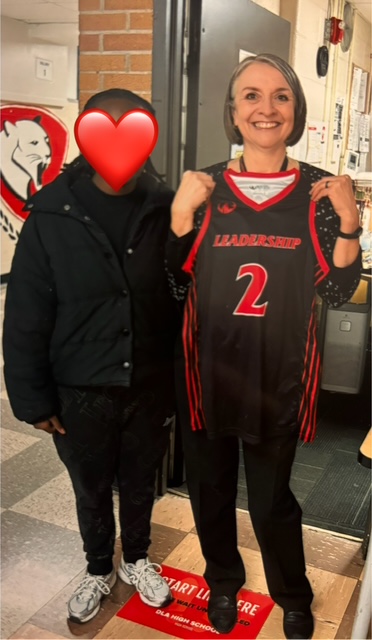
Finding a Footing

At the end of the last school year, as I waved goodbye to students and wished my colleagues a safe and restful summer, I was envisioning long days of reading broken up by an hour here or there with my hands in the dirt — weeding our garden, tending to our plants, and bringing in the fruits of our labor. I saw days on the beach of a great lake and others poolside with our granddaughters.

While I did manage to experience all of that, much of my summer was not what I was expecting. At all. Particularly not when, just a month ago, I was searching for an assisted living facility for my stepfather, helping my brothers move him in, being present for his rapid decline, then processing with my mom and siblings through his passing.

The flurry of activity was unanticipated and un-mooring. I’ve felt a little tossed about for several weeks, so the return to the rhythms of back-to-school prep of the past many days has been a welcome and anchoring exercise.

As I’ve been walking the hallways of our school buildings, I’ve been wondering if our students, too, have felt a little at sea. What has their summer been like — have they been working? helping out at home? have they had plenty to eat? time and space to rest? have they experienced loss? or trauma? joy? or celebration? Has their summer been what they were expecting? Are they, too, in need of the rhythms that will bring stability?

Because I’m not teaching this year, but rather supporting our teachers and students from a more global perspective, I’ve been managing tasks all summer like updating scope and sequence documents for various courses, familiarizing myself with the curricula taught in our building, creating Google classrooms for all of our teachers, updating our school’s testing plan, organizing and auditing the curriculum I created, and managing several other tasks. Over the last couple of weeks, I’ve also been preparing presentations and materials for the teacher orientation that begins this week.

As I’ve been checking all these boxes, I’ve needed some support (and grace) from my supervisors to reconnect with the world of school, to remind me what each of the pieces are exactly, to steady me as I find my way back to the vernacular of academics — to norms and standards, to unit plans and instructional strategies, to engagement and discourse.

I’m guessing that our teachers and students are going to need support (and grace), too. Certainly their summers have been far from the academic realm — less structured or predictable. Sure, some of them have punched a clock or had regular eating and sleeping habits, but many will have had no routine at all. Surely few, if any of them, will have sat in a desk, attended to a slide deck, navigated to a Google classroom, or submitted a document for review.

Transitioning away from my erratic summer to more routine work has not been easy nor has my body been quick to adapt. While I’m being quite diligent in getting back to eating three meals a day at the designated times and observing my normal bedtime, my body is still on high alert after weeks of urgent phone calls, last minute trips, and unexpected decisions. My digestive tract is suffering from role confusion, and my sleep patterns remain inconsistent.

Perhaps the bodies of my students and teachers, too, will be a bit out-of-kilter. Perhaps they will find it difficult to endure a seven hour school day, to sit upright for long stretches, to use the restroom at designated passing times, to make it from breakfast to lunch without a snack, to remember to get a drink between classes, or to stay awake for the entire day.

I’m finding a few things helpful in my regulation. First is seeing my people. As I’ve gone into our buildings over the last few weeks, I’ve reconnected with my colleagues, many of whom have offered hugs both of “I’ve missed you” and “I’m sorry for your loss.” We’ve shared stories and laughter as we’ve navigated our tasks.

I’ve found stability in the familiar — the drive, the building, and the faces.

I’ve found comfort in the physical — walking into my office, arranging my supplies, moving books, and touring classrooms.

I’ve found security in doing what I know how to do — creating a document, sending an email, meeting a deadline, planning a presentation.

I’m thinking about how I can use my experience of re-entry, my realization of what I’ve needed to re-acclimate, to support my teachers and students as they move from what also may have been erratic to what is more routine.

We already engineer the first week to be less about curriculum and more about connection. We are a trauma-informed organization, after all, and we know that Maslow comes before Bloom. We have a system of delivering school-wide norms and expectations, and we support teachers in integrating warm-ups, games, and getting-to-know-you activities. The first week is all about learning names and building community. It’s an opportunity for our students to get a literal or metaphorical hug– to reconnect with their teachers and classmates.It’s a time to situate themselves inside of the familiar — not only the building and its classrooms but the bell schedule, the movement patterns, the physicality of being in the space, and the kind of routine assignments that warm up muscles and build confidence.

How can I normalize the weirdness of it all — how our bodies and minds take time to adapt, how we may feel irritated, foggy-headed, tired, and out-of-sorts? The best way I know is to name it — call it out — talk about it.

Our teachers and our students may need the leaders in the building to acknowledge the heavy lift of transition — of moving from the summer-realm to the world of school. These worlds are not the same, and the move can be jarring. For me, back to school has always been a comfort — school is a place where I know how to be, what to do, and how to succeed — but it’s not like that for everyone. For some, school is an increase in stress, a place of conflict, a world of insecurity.

So, in my new role, I think one thing I can be is present — observing what is happening for teachers and for students, being willing to acknowledge that what they are experiencing is real. Of course you’re tired! Coming back to school takes a lot of effort! Yes, this is a lot of information to take it all at once, and our summer brains are not used to it.

I can also offer compassion. I get it! My body is still adjusting to the school day, too! I can cover your class while you run to the restroom. How can I support you in getting your documents completed on time? Would you like to tell me about what you are experiencing?

That’s the benefit of my role — I’ve got a head start on my teachers and my students. I have had a preview of what they might experience in the coming weeks. Now that I am feeling a little more stable, I can lend some of that to them as they transition. I can be a reminder that they will soon be settled in as well.

That, and I can make sure that my snack drawer is full, because I can bet that soon I will be hearing both teachers and students say, “Mrs. Rathje, you got anything to eat?”

I’ll be ready for them; I’m getting closer each day.

put on compassion, kindness, humility, gentleness, and patience. Colossians 3:12

**If you’d like to support what we do at Detroit Leadership Academy, here is a current wish list

The Giving Season

Since seven (yes, 7!) of our immediate family members have December birthdays, our “season” starts a little earlier than most. We have said for years that we start partying on Thanksgiving and finish on New Year’s Day. This year is no different. The birthday gifts are all but purchased, at least one package has been shipped, and our our living room is staged with “gifts in process” for both birthdays and Christmas so that we don’t miss anyone.

And each morning, I leave my comfortable home that is well-stocked with food, clothing, and this somewhat moderate collection of gifts, cross 28 miles of metro Detroit, pull into a disintegrating parking lot, enter the building, and prepare to meet the reality of the students that I serve.

Today’s reality came in the form of Kaden*, one of my seniors. I was in the gym when he entered from the bus, scowling.

“Good morning, Kaden. Everything ok?”

“I don’t know why we had school today. I almost froze to death.”

“Hey, come here a minute. You only have on a hoodie. Do you need a coat?”

“I mean, I have a coat,” his demeanor was shifting, “we just don’t have a washing machine right now, so I can’t wash it.”

“Ok, but we have coats. I can get you one this morning. Would you be good with that?”

“Yeah, that would be good. I would take a coat.”

Later in the day, I found him, we walked to our clothing closet, and he chose one of several new coats that remained from a large donation we received last year.

We have a fairly decent supply in that closet — coats, shirts, hats, and some miscellaneous toiletries and nonperishable food items — but it goes away quickly because our students are continuously in need of something.

Each day I am asked if I have something to eat — often by students I’ve never even had in class. I try to always say yes and walk students to my stash where they can select a granola bar, some trail mix, or a package of cheese crackers. Most teachers of teenagers probably have a similar routine.

I also get requests for deodorant, for socks, for cough drops, band aids, a toothbrush, or a safety pin — again pretty typical requests for teenagers, and fairly easy to accommodate. These small items solve in-the-moment problems for my students and allow them to get back to learning. I have a pretty healthy stash that many in my village help keep stocked, but when the holiday season comes around, the depth of my students’ need comes into sharp focus.

Before coming to this school, I’d never met families who simply “don’t do Christmas” but here I have met many students for whom December 25 is just another day because their families simply don’t have the financial capacity to purchase anything extra, let alone the privilege many of us have to line their living rooms with gifts, to create an elaborate feast, to deck the halls, and to gather with friends and family.

I have students who are housing insecure — one young woman whose mother died during Covid and who is currently carrying her possessions with her and bouncing between two places to “find a place to sleep”. I have students whose families bounce from apartment to apartment — one young man I spoke to yesterday said “we are definitely moving in a couple of weeks, but I don’t know where yet.” We have families who don’t have reliable transportation — who can’t join the basketball team because they don’t have a ride home after practice and have to take the school bus that leaves at 3:15. I have students who, in addition to coming to school, work to help their parents pay the bills. I have a senior whose very demeanor and aptitude scream “engineer” who is in the manager training program at McDonald’s. He often closes the store and does inventory or other related tasks that keep him up well into the night rendering him incapable of staying awake in school the next day. He’s working this hard, yet he is wearing the same worn clothes and shoes I’ve been seeing him wear since I’ve known him, which is most of high school.

Our students and their families are barely getting by. How in the world can they dream of doing anything for Christmas?

Yet these students keep showing up. They come to school, they log onto their school-issued chromebooks, they complete independent modules to earn their financial literacy credit, they come to my class, bend over their notebooks scrawling out the purpose and audience for their next essay, practice the nuance of Standard Academic English while teaching their middle-aged English teacher the current vernacular. They have big dreams — of being nurses and engineers and game designers and ultrasound technicians — and they need a whole village to rise up around them to give those dreams every chance at reality.

I’m part of their village, and I’m raising my voice to invite you to be part of their village with me.

School leaders have selected nine families who are in dire need of support this holiday season. Because it is already December 6, and we have to get items to our students before they leave for break on December 20, we won’t be filling traditional wish lists. Instead, we have set a goal of giving each of these 9 families one grocery gift card, one department store (Target or Kohl’s) gift card, and one gas gift card. Additionally, I have created an Amazon wish list of items that our students frequently request.

Joining this initiative may be a small part of your holiday giving, but it could make all the difference for a struggling family — it could help them put food in the fridge, buy some new jeans for a child, and put gas in their car so that they can visit a friend. It won’t change their whole world, but it might just change their opinion about the people in it.

All of us have many opportunities to give at Christmas. If caring for my students in Detroit is something you are interested in doing, I invite you to check out that Amazon wish list or to make a donation to our gift card initiative. To do that, you can send a check to Detroit Leadership Academy, 5845 Auburn Street, Detroit, MI 48228 or donate via CashApp.

so in Christ we …form one body, and each member belongs to all the others. We have different gifts, according to the grace given to each of us. If your gift … is serving, then serve; if it is teaching, then teach; if it is to encourage, then give encouragement; if it is giving, then give generously. Romans 12: 5-8, selected portions

The Buried Difficult

Dude.

Bruh . [or, Bro,]

That’s what the kids say these days when they just. can’t.

I think we used to say, “Ok, Ok!” And maybe our parents said, “Uncle!”

It’s what we say when we just don’t have a response because we are at the end of our rope.

I was trying to think of what to write today after several weeks of posting nothing, and all I could think was….

Dude.

Been there?

Have you been in those seasons when life is coming at you from all directions and you just. can’t. even?

I mean, this is definitely not the worst season of my life. In fact, the roughest seasons have given me so many tools that I am using to navigate this one — therapy, self-care, boundaries, yoga, music, laughter, and Netflix. [By the way, if you need something to carry you through difficulty, I have often recommended The Great British Baking Show; I now add to that Somebody Feed Phil (Netflix) and The Reluctant Traveler (Apple).]

But guys, there’s a lot going on right now. Some of it is great — my work, my husband’s new role as a private practice therapist, the fact that Spring is now here, our kids are doing great things and really stepping into their adulthood– but much of it is hard — the death of an extended family member, the cancer journeys of two others, and the uncovering of hidden realities that will need to be faced in the very near future.

And all I can say is…

Bruh.

It’s a lot.

It’s nothing uncommon to the human experience to be sure. Anyone reading this has navigated similar — illness, addiction, failure to communicate, and the accumulation of it all that someone eventually has to deal with.

And sometimes the ones who have to deal with it are the adult children of those who kept putting off the difficult.

Here’s the thing, though. The difficult doesn’t go away just because you don’t talk about it.

In fact, if you bury the difficult, keep it in a dark place, and even continue to water it from time to time, the damn thing grows. And often, it devours the beneficial, the beautiful, the healthy, the wonderful.

It just eats the good up and continues to grow until it bursts into the open — often at the most difficult of times — and somebody, finally, has to look it in the face, call it what it is, and give it its reckoning.

Dude.

I have been training for this moment my whole adult life, and still, I don’t wanna do it!

Just like my student didn’t wanna write a simple 300-600 word retelling of a day of his life where he learned a hard truth, I don’t want to look the difficult in the face.

But guys, the difficult thing has already surfaced. It’s sitting in the middle of the room, and everyone is trying to avert their eyes for just a little bit longer.

Fine. Look away if you must, but the difficult is not going anywhere.

It will not get easier to look at in a day or a week or a month.

I have been there.

Thing is, most things surface over time. Some of us learn this the hard way.

I’m not scared to look this thing in the face, but it’s not mine.

If it was mine, I might be throwing extra dirt on it right this minute.

But that would not keep it buried.

Nope.

It’s just a matter of time until all things surface.

So, here’s the thing. I have no judgment for the bury-er. Some anger, yes, but not judgment. I have no idea what led to the development of this difficulty. I don’t know the full story. I don’t even need to or want to. That is not my business.

It is truly none of my business to know about a “coming of age” moment that my student may or may not have had, but I always give the opportunity to students to tell their story, because telling about the difficult is where transformation happens.

But that kind of vulnerability is not for everyone. It can be downright terrifying to look the difficult in the eye.

But here’s the thing — once you have stared down the difficult, called it by name, navigated the ugly, grieved the devastating, and realized the freedom that comes with the uncovering, once you have tasted the power of transformation —

Dude.

You won’t wanna bury anything ever again.

I can almost guarantee it.

Gem of the Week: Netta*

My first impressions of Netta are fragmented. Hers was a name on my roster that I rarely marked present.

When she did show up during the first quarter, it was hard to get a read on her. At times she seemed withdrawn, introverted, like she preferred to be left alone. She sat in the back, by herself, and I didn’t often hear her speak. In fact, the sounds I usually heard from her were the sounds of deep contented sleep — the rhythmic breathing that is not easily disturbed, the kind that causes others around her to turn and look, to say, “Man, she is knocked out!”

I stopped fighting the sleep battle long ago. I have no idea what is going on with my students outside of my classroom, so if I nudge them once and encourage them to “come on, you’re here, you might as well get something for your efforts,” and I get no response, I am prone to let them sleep. Maybe it’s the only rest they’ll get today.

So, Netta was a show up once a week kind of gal who often spent that day in slumber, face pressed against the desk, eyes closed behind the very thick coke-bottle lenses of her glasses.

I didn’t know her well, but I got the impression that she wasn’t a meek, shy, introvert. No, she seemed more like a sleeping bear — completely content if left alone, but disturbed? You’d better run for your life.

Every so often during that first quarter, she would blow into the building like a force. Her hair would be done, her clothing would be intentional, she would sit up straight in class, she would feverishly take notes, and she would demand that I answer her questions about the assignment, never mind that she had missed the last two weeks of school.

It didn’t make sense to me. Why such apathy followed by such intentionality. Then I heard the rumor that Netta’s probation officer was scheduled to show up on that particular day, and Netta was going to make sure to leave a good impression.

I never did see the probation officer, and Netta reverted to her status quo.

I’d be lying if I said that I didn’t have my hackles up just a little bit every time she showed up. The fact that she was often reserved coupled with the fact that she could occasionally show up like it was game day put me off balance, and occasionally I’d see her — rather hear her — move through the hallway, strings of expletives bursting from her like machine gun fire. I presumed, if provoked, she could tear me to shreds. I wasn’t planning to provoke her, but I couldn’t be sure no one else would. So, I was often just a little hyper-vigilant when she came to class during that first quarter.

For some reason, she showed up on the first day of the second quarter, the day that I characteristically give each student a printed summary of their academic performance so far. It’s a simple sheet from PowerSchool that lists the student’s current grade, how many assignments they completed, how many times the student was tardy, and how many times the student was absent. I do this to provide information to my students — to allow them space to reflect — but also to reward what I have seen. If they have earned an A or a B, if they have had fewer than two tardies or fewer than two absences, I give them a “Rathje Ticket” that they can use to purchase items from my class store.

On this particular day, I was calling special attention to students who had been chronically absent — who had more than two absences per month for the first quarter. Raising attendance has been my classroom goal this year, and although attendance had definitely improved from previous years, students like Netta still had a way to go. So, because she was in class on that day, I handed her the report that I had marked with yellow highlighter, showing her double-digit absences and noting that she had been “chronically absent.”

Netta, typically quiet [or sleeping] Netta, said quite loudly, “Mrs. Rathje, this is terrible! Imma do better.”

And do you know what? She did.

She started coming to class, just in time for the unit on personal narratives. I wanted students to show themselves in a scene or several scenes that revealed to the reader who they were, what was important to them, or what their strengths were.

Netta dove in. In fact, she asked to move to the front row, smack-dab in the middle. She read the models I provided. She did the brainstorming, she chose a prompt, and she began to write.

I can see her now, totally honed in, bent over her desk, face inches away from the paper as she wrote and wrote.

“Mrs. Rathje, can you read this and tell me how I’m doing?”

The writing was rough — very rough — the kind of writing you might have if you only went to school one or two days a week for several years. The penmanship, the spelling, the grammar — not anywhere close to what I would call standard. But as I read, everything else in the room fell away. She was writing about the fact that her mom had died — during Netta’s birthday week — six weeks before the start of her senior year. Six weeks before she started sporadically showing up in my class to sleep in the back of the room.

“Wow, Netta. This just happened?”

She nodded, looking through those thick lenses into my eyes.

“This past summer?”

“Mm-hmm.”

“I’m so sorry. Thank you so much for sharing this. I’m so glad you chose this topic. I want you to write more. Give more detail.”

“Mrs. Rathje, I know it’s a mess. I want to make it better. Will you help me?”

“Of course. We’ll work on it together. That’s what this assignment is all about.”

And that was the beginning. Of Netta’s engagement in my class, of Netta showing up four to five days a week instead of one, of Netta communicating (if at the last minute and out of desperation) with our social workers before her next probation officer visit or court date.

She hadn’t ascended to a straight A student by any means, but I was watching her transform before my eyes.

Now, she NEVER enters my classroom quietly. No. How do I describe the self-confident force of nature that is Netta, that boldly proclaimed during our Intro to Racism unit this past week, “I know what my unconscious biases are, and I’m not changing them!”

“I guess you might say they are no longer unconscious then, am I right?” I grinned at her.

She crossed her arms, gave me the side eye, and said, “They are not. I am fully aware of my bias. And I am keeping it.”

She is not afraid to tell a classmate, “Shut the hell up, you talk too much, and you sound stupid,” and although I check the outburst, I can’t often disagree with her assessment.

On Friday, late in the afternoon, she was walking down my hallway and she shouted at me, “Mrs. Rathje, you would be so proud — I didn’t cuss at all in that class.”

“That’s amazing, Netta,” I said, smiling, as I watched her walk into a classroom.

Two. seconds. later. I heard the most profane stream of words come from her mouth halfway down the hallway.

I walked down to the room she was in, popped my head in the door, looked her in the face, and said, “Netta, did you not just say I’d be proud of you for not swearing?”

“Mrs. Rathje, I had to get it out of my system before this class started.”

I smiled, shook my head, and walked away.

Earlier that day, she had come into my room, dressed as though she had something important going on after school, sat down, and handed me a paper she had pulled from her purse, “You wanna see my momma, Mrs. Rathje?”

“Of course!” I said, taking the funeral program from her hand. Her mother’s face was on the front, and I said, “Netta, you look like her. This is so precious. I had forgotten that this just happened last summer.”

She looked at me, putting the coke bottle lens back in the broken frame of her glasses, “I don’t read the obituary,” she said. “It makes me cry.”

“Of course it does,” I replied. “I love that you carry this with you. Your mom would be very proud of you.”

“Yes, she would.”

We move through the class, past fires to put out, questions to answer, demands to respond to and then it was almost 3:15, time for me to take my post at the end of the hallway to make sure that students don’t leave their classrooms before the bell.

I saw a door open and then Netta as she stepped into the hall.

“OK, Netta, back it right up, the bell has not rung,” I say.

In slow motion, she puts herself in reverse, maintaining eye contact with me, and retreating into the classroom.

The action of it cracks me up. I laugh, and I say, “I just love you, Netta.”

“I love you, too, Mrs. Rathje.”

And who needs more of a gem than that?

Wins and Losses

I lost some sleep last night— it’s not too atypical for me, a gal in her 50s, to be unable to sleep at night because a) I’ve got some losses on my brain I haven’t yet processed and b) while trying to distract myself from those unprocessed losses, I have stumbled into a particularly engaging murder mystery.

The coincidence, though, is that the book revolves around multiple losses! Somehow reading about fictional losses is preferable to thinking about the real ones I’ve witnessed in the past week.

I prefer to celebrate wins — I just finished the third week of the school year, and the wins are stacking up! The majority of my students have been consistently opting in to learning, the weather has been near perfection, our seniors (and some juniors) toured two colleges this past week, and my newest cohort of reading students is off to a great start!

There is so much to celebrate, but wins in every context are invariably set against an undeniable backdrop of loss. For example, in the last three weeks, our school, which routinely has a 90% staff retention rate, has lost one teacher each week. The first week, our newly hired freshman ELA teacher resigned to return to a district where he had previously been employed. The second week, a strong team member who has taught financial literacy to our students with her whole heart, left to pursue an administrative role in another district. And this week, perhaps the hardest hit of all, our long-time algebra and geometry teacher who has some of the strongest relationships in the building, announced that he is making a career move at the end of next week.

In a small school like ours, with just under 300 students, these blows hit hard. We are a family, after all. We all know each other by name. We razz each other in the hallway. We defend each other in the midst of chaos. We cheer each other on. We have each other’s backs.

And the loss is not only a blow to the morale of the staff, it is the latest in a string of losses for our students.

You may be tired of me saying it, but it is the reality I witness each day — many of my students have suffered deep, deep loss. Just this past week, I learned of a junior who lost her mother since school started and a senior whose grandmother died last week. Then Friday, one of my seniors stepped out of class to take a call during which he learned that his brother, who had been in critical condition, had just died! And these are not isolated cases. Each year — each and every year — I have had a student who has lost a parent. It seems each year I have also had a student who has lost a sibling. And last year, I even had a student who lost her own newborn child.

So imagine that you’re in your senior year, that you spent your freshman year in your bedroom peering into a zoom room on a chromebook that you didn’t quite yet know how to navigate, that you lost one or two or three close family members to Covid, that your family had to move one or two or three times within the last two to three years because they a) couldn’t afford the rent, b) got evicted, or c) had some other family trauma that necessitated a move, and then you show up to your senior year and notice that once a week a staff member disappears. How does one respond in the face of loss after loss after loss?

You might be overwhelmed. You might become depressed. Or, you might do whatever you have to do to survive — you might keep people at arm’s length, or you may put up an crusty exterior so that people don’t know you’re hurting.

I’ve seen that. I watched a girl all last fall defiantly walk out of classes, repeatedly (and sometimes aggressively) spar with classmates, and verbally challenge those who might dare to hold her accountable. She was a junior, but I knew her name because I had repeated hallway interactions with her.

“Where are you supposed to be, LaShay?”

“I’m goin’ to the bathroom.”

“Didn’t you just come from the bathroom?”

“Stop talkin to me.”

She was angry, it was obvious. And she was kind of hard to like, if I’m gonna be honest. And, I’ll admit, that when she was removed from the building and forced to do online learning after an incident that threatened the safety of others, I was a bit relieved. She was a high-flyer, constantly in need of redirection from not just me, but all of the members of the leadership and school culture teams.

When she showed up at the back to school fair a few weeks ago, with her younger sister, who had also been sent home due to the same incident, I swallowed hard and thought, Well, here we go. This time, she’s in my class..

Her sister sought me out, gave me a hug, and said, “Mrs. Rathje, we’re back!”

I hugged her, and said, “Great to see you! Is LaShay here?”

“She’s in the gym.”

“Let’s go find her,” I said.

I walked to the gym, found LaShay, walked up to her, smiled, and said, “Welcome back,” with the most genuine smile I could conjur. I was determined to start off on the right foot.

She side-eyed me, and then looked down.

“You’re with me this year, dear. I’m looking forward to it.”

Without answering, she walked away, to go talk to a friend on the other side of the gym.

The first week with LaShay was a little dicey. She showed up to class consistently a little late. She scrolled on her phone when everyone else in the class followed my direction to “stow phones during instruction,” and got a little huffy with me when I joined her for partner work when she refused to join anyone else.

But I persisted. I pointed out that her attendance had been perfect near the end of the second week, “even if you do tend to show up late,” I said.

“I don’t show up late. I’m here on time. I’m doing my best. My mom has cancer, and I’m the oldest. I gotta get myself and all my siblings together, but I get all of us here on time.”

There it was. My opportunity. I remembered a brief interchange from the year before when I learned that her mom was sick, when I asked her why she was crying in the hallway. She wasn’t crying now. She was, indeed, “together” and she and her siblings were consistently in the building.

“LaShay, I’m so sorry to hear that. I do see you in school every day. I was noticing that you are often late to my class, but I didn’t realize that you were the oldest or that your mother was still sick. You probably have a lot of responsibility right now.”

She looked at me and nodded.

“Ok. I can give you some grace, but I’m gonna ask you to do your best to get here by the bell. It’s something we are really working on this year. However, now that I know what’s going on, I will try to be understanding. Please let me know how I can support you.”

“Ok.” she said, and she got back to her work.

I’m gonna call that a win — a big win! — against a backdrop of devastating loss. She lost half a year in the building last year because of a dust up that was likely a response to the trauma of her mom being critically ill. She is losing some of her childhood and her innocence because she has to take on the mantle of responsibility during her mother’s illness. However, she is winning, because she is developing the skills to communicate her reality in a way that will help her get the understanding she needs.

It takes vulnerability to share with a teacher, one who has historically been on your case, that something is not right in your world. She couldn’t count on me responding like I did. She doesn’t know me that well. But she took the chance, and that’s a win.

On Friday afternoon, I got in my car, and drove to a football field in the heart of Detroit to work the gate at our team’s game. La Shay is a cheerleader — on top of everything else right now, she is claiming the opportunity to fully opt in to her senior year. In order to stay on the team, she will have to keep herself together, stay out of trouble, and represent the school well.

During half time, the cheerleaders came over to where I was standing with last year’s principal, who came to the game because even though she no longer works in our building, these are her babies. The girls took turns hugging their former principal, and I took the opportunity to move in closer.

“LaShay, come here,” I said as I waved her over, “Your principal needs to hear that you are killing it this year. That you’ve got perfect attendance and you’re completing your assignments!”

She beamed. The principal hugged her, encouraged her to keep it up, and hugged her again, saying, “I knew you would!”

Another win — and this girl could really use some wins right now.

Loss is the reality of life on the planet — the hits inevitably keep coming, so it’s important to not only process the loss, but to note the wins. I didn’t always do this. Because I was so frantically trying to create perfection, I didn’t leave the space to acknowledge, let alone grieve, loss. Instead, I defiantly moved forward, demanding those around me to join my pursuit of perfection, and because I was looking for perfection, I didn’t celebrate all the wins.. I lost a lot in those days — the tenderness I could have had in some of my most dear relationships, the opportunity to show the people I love the most the grace that they needed in their losses, and the opportunity to celebrate their wins. I wasn’t brave enough (or self-aware enough) at the time to be vulnerable — to communicate my reality in ways that get me the understanding that I needed.

But I’m brave enough now — brave enough to seek out a defiant young woman in a school gym and to take the chance at building a relationship with her, because she looks a lot like someone I used to be, and it seems she could use someone to help her learn to celebrate the wins that happen against the backdrop of loss.

Praise be to the God and Father of our Lord Jesus Christ, the Father of compassion and the God of all comfort, who comforts us in all our troubles, so that we can comfort those in any trouble with the comfort we ourselves receive from God

2 Corinthians 1:3-4

*One of the ways I celebrate student wins (and cushion losses) is by providing a steady stream of snacks, supplies, and prizes in my classroom. Many of you have contributed to my stockpile, and I am thankful for you! You make this work possible!

Post-Covid Learning: One Teacher’s Experience

In March of 2020, we sent all of the nation’s children home in the first weeks of the Covid Pandemic. How could we have anticipated the impact of this decision? While some students were home for several weeks, many students, especially students of color in our nation’s urban areas, were home for more than a year. How might this have impacted their social-emotional development, they mental health, or their learning?

We educators have been beginning to unpack the broad impacts of the pandemic on our students over the last two to three school years. Here’s what I’ve seen.

In the fall of 2021, when my students first returned to in-person learning at my Detroit charter school after 18 months of remote instruction — which for many in my community meant no instruction at all — I noticed extremely high anxiety and a limited ability to interact with peers without conflict. Our students needed support to merely exist in the classroom within six feet of their peers. Although everyone was masked, these students had learned that proximity meant danger. It took some time for them be comfortable around one another, particularly because with some regularity, whole groups were sent home to quarantine after one member of their classroom cluster tested positive. It wasn’t until late in that school year that the Covid protocols changed, masks became optional, and our whole community started to relax a little. The heightened anxiety surrounding that school year led some students to stay home intermittently, to switch to virtual learning for yet another year, or to do their best to muddle through day by day. For teachers, this meant that academics, while important, were not the priority. Since Maslow illustrated his hierarchy of needs we’ve recognized that a student needs to feel safe before he can be free to learn. Our focus was on building predictability through routine and on getting our students the social work supports that they needed.

Much of this carried into that second fall — 2022 — where our back to school professional development sessions centered on the brain science behind trauma. We learned about the amygdala’s response to danger — flight, fight, freeze, and appease — and how our routines and instructional strategies can minimize this response and the interruptions it causes to learning. This is relevant in our context not only because our students have experienced the extended communal trauma of the pandemic but because they have also endured the traumas associated with systemic racism such as food insecurity, housing insecurity, violence, and negative experiences with law enforcement. Our social workers and behavioral specialists worked overtime to anticipate difficult situations, to mitigate conflict, and to restore relationships. Again, although academics were moving up on the priority list, they were not at the top.

As we were moving through the virtual year and the return to in-person learning — I, fresh from working at Lindamood-Bell where our whole gig was reading intervention and remediation, noticed that very few, if any, of my of my students were reading and comprehending at grade level. I lifted my concern to our Director of Academics, “We’ve got to get a reading interventionist in here — these students need support.”

I said that during the 2021-2022 school year and found myself in August of 2022 at an intensive training week for the reading program called Adolescent Accelerated Reading Intervention (AARI). I would be piloting this program for one year — last school year. During that academic year, I worked with 18 freshmen over the course of two semesters. Each of them started AARI with an instructional reading level at or below third grade. Over the course of one semester, the students and I worked on decoding (sounding out words, breaking words into syllables, etc), which is not part of AARI, building a mental movie about what we were reading (also not AARI), and using the text to support our thinking and developing metacognitive skills (all AARI). After one semester of work, I only had one student who did not improve at all — and that was likely due to the fact that he was absent almost half of the days that we met. Two students grew one grade level during that semester, most grew two to three grade levels, and a few grew four or more grade levels in one semester. It’s quite a remarkable program.

As a result of this success, and the data I obtained testing students over two semesters, our school adopted a broad tier-two intervention called Read 180 for all of our freshmen for this school year. That means that rather than 18 freshmen getting the intensive remediation that I provided, ALL incoming freshmen would receive an intervention that, delivered via computer, in small groups, and with the aid of an instructor, yields two years of growth in one year. I was very excited to hear that we were getting help for all of our freshmen. I was even more excited when I learned that I would be providing AARI to a select group of sophomores and juniors.

I have spent the last two weeks working one-on-one to evaluate students who scored the lowest among their classmates on the Reading and Language section of the PSAT last Spring. (Perhaps one day I will write a whole post about my feelings regarding standardized testing in general and the SAT/ACT specifically, but not today.) I pulled each of these students to my room, had a conversation with them, administered the Qualitative Reading Inventory (QRI) and determined their need for AARI. I was gut punched when I realized that two sophomores and one junior in our building scored at the first grade level for reading comprehension. How in the world were they functioning in high school? How could they continue to show up if the content of their classes was that frustrating?

Most of the students I selected for the class tested at the second or third grade level when measuring reading comprehension. When we take into account that many of them did not read much from 2020-2021, and that many of them have been in a trauma response for the past two to three years or more, this is not terribly surprising. What is surprising is the half dozen students I met with who scored much higher. These few lit up when I told them that the PSAT is not an accurate measure of their intellect, that although Covid was devastating and their skills are possibly rusty, they have the capacity to be successful not only in high school but beyond. I looked them in the eyes and assured them that now that I know who they are and what they can do, I will be watching and expecting great things. These few, mostly black males, sat up straighter, looked me in the eyes, said, “Yes, Ma’am,” and “thank you.” One young woman who, despite severe anxiety, demonstrated a keen aptitude for academics said, “I am thankful for you and what you are doing..”

The ones who qualified for my class had an equally amazing response. To a person, they acknowledged that “reading is hard for me.” They said, “I need this class, ” and “thank you for doing this.”

Here’s what they didn’t do. They didn’t say, “I don’t need help with reading.” or “I’m not taking some dumb reading class.” They didn’t refuse to read lists of words or answer questions about the similarities and differences between whales and fish. They didn’t question why I was pulling them from class. They didn’t resist.

No, these students recognize what they have lost. They know they need help. They know support when they see it.

How do I know? Because for the past two weeks, as I have moved through the halls, I have heard these students, and the students I worked with last year. They call out, “Hi, Mrs. Rathje.” They don’t act like they don’t know me. They don’t avoid me. No. They stop by my room, they give me a fist bump as I pass, they throw their arms around me in a hug.

But they do these things not just to me. They love all the teachers in our building because they feel safe here. They see the hard work we have done to create a predictable environment. They notice us responding to their mental health needs. They understand that we see them, we know what they have been through, and we are here for them, cheering them on to success.

On Friday, I was calling all the parents of my new cohort. “Good afternoon, this is Mrs. Rathje from Detroit Leadership Academy.” I explained why I was calling, that we had noticed since Covid that many of our students are below grade level in reading comprehension, and that their student had been identified as one who could benefit from this class. Most parents said, “Ok, thank you,” or “Whatever he needs, I support,” but one mother took my breath away.

“Thank you so much for noticing this. I lost both of my parents during Covid and to be honest, I’ve been deep in grief and didn’t even realize that he was falling behind. Thank you so much for paying attention to him.”

These students are not behind in reading because they are dumb or poor or Black. They are behind in reading because they have been through a lot, their learning has been interrupted, and they need some support to get back on track.

I can’t wait to get started with them and to cheer them on as they learn and grow this year.

I’m a sucker for a story of restoration, especially when I have a front row seat.

I am confident of this: I will see the goodness of God in the land of the living.

Psalm 27:13

*For data surrounding the impact of Covid on learning, check out the documents linked below:

Harvard School of Education, May 2023

Center for School and Student Progress, July 2023

NWEA Study, Chalkbeat, July 2023

**If you know an educator in the Detroit area that cares about educational equity, please connect them with me. Because of the nature of our work, we are always looking for partners, teachers, coaches, and other encouragers.

Front Row Seat

The Thursday before school started, we the staff of Detroit Leadership Academy took our stations around the building, preparing for the open house where students would come to get their schedules and chromebooks and begin to reconnect with the world of school after eight weeks away.

I was at the main entrance, checking students in. I didn’t know the freshmen, of course, they were new to our building, but I was watching for those students I recognized, especially the small group of students I had had in my reading class the previous year.

“Hey! How was your summer?” I said as I stood from my seat to receive a hug. “It’s so good to see you!”

I was also watching for last year’s juniors, who would be my new senior class. I knew some of their names, but we aren’t familiar enough for a hug.

“Are you ready for this?” I would say, “You ready to be a senior?”

The replies were varied: “Of course!” “Hell, yeah!” “I think so.” “I’m not sure.” “I’m scared.”

I’ve seen it from every group of seniors I’ve ever taught. Some things don’t change; others do.

The first day of school was predicted to be in excess of 90 degrees, and since our school doesn’t have air conditioning, our administration determined to have an early release. We would see each group of students for just 30 minutes, and then they would board their non – air conditioned busses for the sweltering ride home,.

I had two box fans and two ceiling fans blowing, and my two operational windows as far open as they go. I stationed a cooler full of water bottles covered in ice at the front of my room, and kept the lights off to keep the room as cool as possible.

When the bell sounded, my students met me at the door, got their seat assignments, and made their way to their desks. It took me a while — perhaps until this reflective moment — to register that something felt different.

This wasn’t the fall of 2020 where I met my students inside the small square of the zoom room.

It wasn’t the fall of 2021 where my students entered my room mask-clad, the vibration of anxiety among us palpable.

And it wasn’t the manufactured bravado and audaciousness of 2022 — the defiant swagger born of two years of persistent trauma.

No, this past week, the first week of school year 2023-24 felt….light…spacious…and maybe even hopeful.

As I shared the big picture goals for the year — the district-wide vision that all of our students would be accepted to a college, that 80% of them would enroll in some kind of post-secondary training, and that all of them would attend school more than 90% of the time — I watched the faces of my students, expecting the usual push-back, disinterest, or defiance, but what I saw was a collective subtle nod, an acceptance of this reality, and (an at least temporary) buy in.

Now, don’t be mistaken. I still saw seniors struggling to stay off their phones. I still had one student who, when I mentioned that we would be filling out the FAFSA together, stood up from his desk and said, “I ain’t doing that.” I still had at least one student who proclaimed his main post-secondary goal to be “making music”. It was a room full of high school seniors after all, but something felt different.

While our community regularly struggles with chronic absenteeism, the majority of my students attended all four days last week — even though the temps did crawl into the nineties and both my classroom and the busses were stiflingly hot. Not only that, all of my students made eye contact with me this week. All of my students, even on day one, responded to my call for attention. All of my students participated in gatherings, like the one below, where I asked them to stand and move to the four corners of the room to demonstrate their preferences and interests.

And all of my students participated in the making of our class contract, and when asked, every single student in my class stood up and signed their name in agreement to our class norms.

Some teachers may not think this is a big deal. Perhaps they get 100% buy in on every activity they do in their classrooms, but this has not been the case for me. Not since Covid. Not in my little charter school in Detroit. Not with seniors. Not in this demographic that has historically and recently suffered so much.

In the past few years, it has taken me quite a bit of time to build the relationships and trust that lead to this kind of engagement. When I first started at this school, I was some middle-aged white lady from Ann Arbor — how could I have any idea of what life was like on the other side of the zoom camera where an adolescent Black student sat on her bedroom floor trying to figure out what a URL was and how she was going to move from one zoom room to the other.

The following year, my giddiness at finally getting to be “in the flesh” with students was met with distrust, apprehension, and the layers of protectiveness that Covid and generations of systemic racism had produced. My students were stand-offish, skittish, and surly. It was well into the second semester before I had any meaningful relationships.

Last year, it took less time to build trust with most, but some still refused to engage for the entire year. Yes, the entire year.

So when I got 100% opting in on the first day last week, I was a little stunned.

I was even more surprised on Thursday when I collected the student survey I had handed out and started to read the vulnerable responses to my question: What are you concerned about as you start this year?

Do I have enough credits to graduate? Will I be able to fill out the FAFSA if I’m undocumented? Will I be able to stay focused?

I was in awe of their transparency with their answers to my question: What do you want me to know about you?

English is not my first language. I get mad easily. I am a hard worker. I am funny. I hate school.

And I was touched by their responses to my question, How can I support you this year?

Push me. Help me understand. Explain things when I am confused. Be patient with me.

I’ve just finished the first week of school and I know more about this year’s seniors than I have known about many of the grads for the last three years. Why is this? Is it a sign that the trauma from Covid is waning? Is this just a more self-aware and confident group? Have I been in this school long enough that I have built a reputation of being one who can be trusted? Or is this just evidence that God’s grace is flooding my classroom?

Perhaps it’s some of all of that, but I am not going to look away. I am sensing a rare opportunity with this group. It is smaller than any senior class I have ever had, and they have already opened themselves up so much. I am sensing that we just might become a little family, and I am here for it.

So pray for me, if you would. Pray that I would truly see these students, that I would hear them, and that I would be willing to share with them what I know about the English language, of course, but more importantly what I know about life, about vulnerability, and about change.

Because guys, one thing I know about people who are willing to open themselves up is that they are on the verge of transformation, and I am going to have a front row seat.

What types of changes do I think I’ll see? I’m not sure of all of them, but I have already told my students several times this week that “this is the year when we make the transition from childhood to adulthood.” And for many of these students that is more true than I know. One just had a baby. Some will move straight into the military. Some will go straight to work. And even those who are moving on to more education in college will be shifting to a world that they have never seen before — one where the students around them will be from vastly different backgrounds, one where they won’t necessarily be near the family they have been used to, one where they are going to feel potentially more vulnerable than they have ever felt before.

So the fact that they are already willing to bare a small bit of themselves to me gives me a lot of hope that they will be ready for all the change that is coming at them, and because of that I am sitting on the edge of my front row seat.

I will see the goodness of God in the land of the living.

Psalm 27:13

Gem of the Week: Kia*

This is the second in a sporadic series.

I met Kia last September. She had done poorly on last year’s NWEA MAP testing and had been identified, along with seven others from among our incoming freshman class, as being most in need of the Adolescent Accelerated Reading Intervention, the program I had been trained in last summer. (I described what our classroom’s version of AARI looks like in this post.)

I started pulling these eight into my classroom, one by one, to evaluate them by way of the QRI — The Qualitative Reading Inventory. This assessment requires students to first read lists of words sorted by grade level to determine their basic skills of decoding and identifying sight words — the ability to get words off the page. Some of my students read these lists fairly independently up to 6th, 7th, and 8th grade level; a few could barely make it through a second grade list. Once I got a glimpse at their ability to read, I had them read grade-level passages and answer comprehension questions — some that were easy to identify from the text, others that required inference. The majority of the eight freshmen I tested demonstrated the ability to read and comprehend at levels between the third and fifth grade; three were frustrated at first grade level or below.

How do students get to their freshmen year reading only at the first through fifth grade level? I suspect two reasons.

First, my students have grown up in Detroit Public Schools (and the charter schools, like mine, within that district) where they have received inconsistent instruction for a variety of reasons such as low attendance of both students and staff, insufficient funding and resources, and multiple out-of-school factors that impact learning such as housing and food insecurity, domestic disruption, trauma, and other realities that have grown out of centuries of systemic racism.

Second, even in the best of schools in the wealthiest of communities, the data shows COVID’s impact on learning over the last two years. Even students who had mostly face-to-face instruction over the two years of the pandemic have scored lower on standardized tests than expected. Students like mine, who had little to no schooling in the Spring of 2020 due to lack of technology and Internet connectivity, followed by one year of virtual instruction where they had to attempt to log in and focus despite many barriers including poor Internet, other siblings in the home (maybe even in the same room), family responsibilities, and the like, followed by another year of continuous transition between in-person and virtual instruction due to insufficient staffing, high COVID rates, and building issues, have been impacted much more dramatically. And, in addition to not being in school, most of my students report that they read very little or not at all between March 2020 and September 2022. That’s thirty months away from reading

It’s no wonder that when it was Kia’s turn to come into my room, she was a little nervous. She giggled a lot and apologized for missing words but did her best. I found her to be comfortable reading at the third grade level; the fourth grade passage was frustrating.

She has been in my room since September. I should say, she has sometimes been in my room since September. She’s been absent thirty-three times. And, on about a half-dozen occasions when she’s been in my class, she has fallen asleep to the degree that I have been unable to wake her. When she is present and awake, she is either fully engaged and a star participant or is having an emotional meltdown in response to a teasing comment from one of the boys in the class. She has demonstrated very little consistency, staying power, or resiliency.

So, when I pulled her out of class to retest her this past Tuesday, the first day back in the building after a two-week break, I did not have high expectations. I had already tested most of the others who had improved their reading scores by 1-3 grade levels in just one semester! I was hopeful, despite her poor attendance, that she would demonstrate the same growth.

We found a quiet corner of the building, and I asked, “Are you ready for this?”

“I’m nervous,” she replied.

“You’re going to do fine,” I said. “In fact, you’ve been telling me all semester that you don’t need this class. Here is your chance to prove it to me!”

I started her with a fifth grade passage, assuming two years’ worth of growth, and she aced it. We moved to the sixth grade passage. She missed a couple comprehension questions, but still fell in the ‘instructional’ range, so we moved on to the next passage which is labelled “upper middle school”. Again, she missed only a couple questions on a dense passage about the life cycle of stars, so we moved to a high school level passage. The text was two single-spaced pages with illustrations describing the functions of DNA and RNA. It took her a while to respond to the questions, as she had permission, according to QRI instructions, to go back to the text and find the answers, but she found them — enough to fall in the “instructional” range once again.

As I watched her read and then search for answers — her determination to prove that she could do this — I was getting choked up. The others had tried hard, too, but she was clearly on a different level.

When she finished, I said, “Kia, how do you feel?”

“I feel good!”

“Do you know what level you started at in September?”

“No.”

“You were comfortable at third grade level. Fourth grade level was frustrating.”

“Oh my God!” she said, covering her face in embarrassment.

“Be kind to yourself!” I explained. “We were just coming back after COVID! It was a very difficult time! How much did you read during COVID?”

“Nothing,” she said with a sheepish grin on her face.

“Right! Do you know you just read a complex biology text at the high school level?” I could barely get the words out because my throat was tightening.

“I did?”

“You understood all that stuff about cells and DNA and replication! Everybody can’t do that!”

She looked at me, locking eyes.

“Kia, you could be a nurse!”

“That’s what I want to be!” she smiled broadly.

“You can! You are very bright!”

She started crying, too. We hugged. I passed her a tissue, then I pulled myself together.

“Listen, Kia, I’m gonna be real with you. You have the stuff it takes to be a nurse, but you aren’t going to get there unless something changes. Do you know what I’m talking about?”

“I gotta come to school.”

“Yes, you’ve got to come to school. If you want to get into a nursing program, you need As and Bs from now on, and you have the ability to do that.”

We talked a little bit longer about how I was going to be after her, checking in on her, even after she has left my class when the semester ends in two weeks. Then we walked through the halls telling administrators and teachers about what she had accomplished — we needed to celebrate.

Everyone applauded her, hugged her, congratulated her — she was beaming.

The next day Kia showed up in my room before school asking to borrow a laptop. She’d lost her charger and hers was dead — had been dead for weeks. I loaned her my laptop, and said, “Here’s a charger. You can keep it.”

“Thank you! Now I can get caught up at home!”

She came to my class later that day, sat up straight, answered questions, and smiled broadly.

She dropped by my room the next day to say, “I’m making up all my missing work, Mrs. Rathje, and I’m staying awake in all my classes.”

“Amazing, Kia! Keep going!”

Do I think that Kia’s ability to read improved nine — 9! — grade levels in one semester? No. However, I think that some basic skills that had gone dormant during COVID were re-engaged. I believe Kia’s brain, like many others I see every day, had learned to “sleep” during the trauma and disruption of COVID, and needed to be woken up.

AARI for an hour a day five days a week, despite her absences, was enough to wake her up, and realizing her potential was the cup of coffee that put her in motion.

I tested Kia on Tuesday, and she was still going strong on Friday. I suspect her momentum will fluctuate. She’ll have hard days, she’ll get discouraged, and she’ll be tempted to go back to sleep, if just to get some relief.

She’s gonna need all kinds of encouragement to build the stamina she’ll need to make it all the way to a nursing degree, because all of the obstacles didn’t magically go away. She’s still going to have to get herself up every morning. She’s still going to have to show up. She’s going to have to learn to tune out the voices of adolescent boys who like to get a reaction out of her. She’s going to have to overcome a lot more than what I see on the surface — whatever is going on at home that allowed her to miss thirty-three days of school, whatever reason there is for the fact that she needs glasses and hasn’t had then for the entire first semester, whatever has happened in her life that makes her so tender to break down so easily from everyday jabs of a few adolescent boys.

She’ll leave my class at the end of this semester, but our school is small, and I will make an effort to see her most days — to engage with her and to wave the cup of coffee under her nose, to remind her of the future that is possible for her.

But mostly it’s going to be up to her to do the next hard thing day after day after day. It’s gonna get tiring. And lonely. And the odds are against her.

But with some determination and a few miracles, she just might make it.

May God make her path straight and may He raise up a great cloud of witnesses to cheer her on her way.

I’m happy to be one among the crowd shouting “Keep going! You’re almost there!”

*Name changed for confidentiality.

Pit Stops

Click the arrow to listen.

We were rolling — we were!! — but this week, we got sent to the pits — twice!

It’s hard to believe that it happened so early in the school year — week three!! — but, as I’ve heard my principal say, “It is what it is, and we do what we can.”

It was Tuesday afternoon, and I was in the teacher’s lounge doing some required online training (blood born pathogens, sexual harassment, asthma, concussion, and the like), when my principal asked if she could speak to me. She wanted to let me know that we would not be in the building on Wednesday. The weather forecast was predicting temperatures in excess of 90 degrees, and our building does not have air conditioning. It had been warm on Monday, and with the poor ventilation in our building, our students had struggled to stay on task; one had even had an anxiety attack that had led to a 911 call.

If our first goal this year is to ensure our students that they are safe, we certainly couldn’t bring them into a sweltering building. We couldn’t expect their brains to allow higher cognitive functioning if they were preoccupied with survival.

You might think we would swiftly transition to remote learning for the day, but it’s not as easy as it sounds. Our students do have chromebooks, but in week three, we are still working out all the kinks. Some chromebooks are malfunctioning, and there’s a long line for tech support. Some students had a chromebook and lost it, and we don’t have replacements on hand even if they did have the money to pay for them. And, even if every student did have a chromebook, we brought on four new teachers this fall who have not had the training they would need to transition to teaching in a Zoom room, and even if they did, not all of our students have at-home internet.

We want to get this all in place, but it’s week three, and we are still enrolling students, still balancing schedules, and still dealing with the disruptive behaviors that come from transitioning back to school in a culture that is characterized by trauma, poverty, and inequity.

Even though we started the school year with intentional school-wide culture-setting and community-building informed by the brain science around trauma, even though the general temperature of our school is warm and settled, we have still had daily behavioral issues to manage. Behavioral issues are common anywhere two or more adolescents are gathered, of course, but when those adolescents have experienced trauma, when they are living in poverty, when they have been consistently underserved in educational spaces, these behaviors are amplified.

Our administration and our wellness team have been on top of it all. They have intervened in arguments that might have led to violence. They have restored relationships that were on the verge of disrepair. They have picked up signals, anticipated trouble, and taken steps to ensure the safety of our students and our staff. It has been a moment by moment journey over the past few weeks, so pardon them if every student does not currently have the means to swiftly transition to online instruction. Forgive them if a student or two in each class is still doing all of their assignments on their phone.

“It is what it is, and we do what we can.”

So, Wednesday, the black flag was waving, all forward progress was halted, and all of us headed to our pits. Each staff member was given a list of tasks to complete — meet with your instructional coach, complete lesson planning for next week, make contact with families, finish online training — and teachers were happy to have the time to comply. By the end of Wednesday, all systems had been checked, fuel levels had been topped off, and we were anticipating the waving of the green.

It did wave, and we resumed forward progress, but not for long. Thursday afternoon, the administration became aware of a social media threat of violence against our school that was planned for Friday. This team — the same team that has been working non-stop since September 6 to read the temperature of each room in the building, to study the body language of students in the hallway, to stand between two teens who are lunging at one another — this team followed protocol, worked with the police, and determined that we would not have school on Friday. For the second time inside of one week the black flag was waving, and it was only the third week of school.

On Thursday night, when the news came through that we would be closed on Friday, our leadership advised us to ” take care of yourselves tomorrow and over the weekend.” They understand that merely learning of a threat of harm can be traumatic, so they didn’t heap expectations on us; they merely gave us permission to drive into the pit, turn off the engine, close our eyes, and take rest.

For me, rest looks like preparation, so I spent most of Friday checking off items on my to-do list: preparing for Monday’s instruction, recording grades from last week’s assignments, and coaching my student teacher and another new hire on some instructional practices that will make their work a little easier. I took a long walk, folded a little laundry, and plucked some fresh tomatoes from the garden.

For the weekend, I’m doing the things that refuel me: writing this piece, receiving acupuncture care, eating well, worshiping, reading, sleeping.

Monday, God willing, the green flag will wave and we’ll return to the building and get rolling again. I don’t want to anticipate that we will be stopping and starting like this all year, but I have to remain flexible in case we do. I’ve got to roll when we are able to roll, and rest when we are able to rest.

I’ve got big plans for next week — giving my students opportunities to dream about their future: a career, an education, a life that looks different than what they see now. I hope to give them space to research colleges, to begin to learn the language of academia, and finally, to tour Henry Ford College at the end of the week. I’m praying we get to do it all, that we won’t have any more unexpected stops.

But if the black flag waves again, I will obediently head for the pit and await further instructions.

It is what it is, and we do what we can.

…we know that in all things God works for the good of those who love Him.”

Romans 8:28

Do Something: Update 2022

On Tuesday, May 24, 2022, an 18 year old carried an AR-15-style semi-automatic rifle into a school and fired shots killing 19 children and their teacher before being shot and killed by police. This was the most deadly school shooting since Sandy Hook almost 10 years ago. Following is an update of a post I wrote in response to one of countless other shootings.

On Sunday August 4, 2019, Ohio Governor Mark DeWine addressed a crowd on the same day that a mass shooting killed 9 and left 27 injured. He had just barely begun to speak when someone shouted, “Do something!” Before long, many had joined the chant, “Do something! Do something!”

DeWine was moved to action. Within 48 hours, he had proposed several changes to gun laws including a red flag law and universal background checks; his initiatives also included measures related to education and mental health. He announced his actions saying, “We must do something.”

Now that is what I’m talking about.

The people in that Dayton crowd, along with many others, are done with hand-wringing and weeping. They are tired of thoughts and prayers. They have seen enough bloodshed, and they are demanding change.

“Do Something!” they yell, and I find myself joining their cries, “Do Something! Do Something!”

Last week I wrote about prayer — the lifting up of our burdens to the One who is able to change everything.

I’m not taking that back.

Pray. Keep praying. Never stop praying.

But here’s the thing, we can pray with our breath at the same time that we are doing something.

Yes, we can have dedicated times of solitude, where we go in our prayer closets or lie on our beds and cry out to God. Do that! However, you can also put your prayers into motion. Much like you talk to a friend as you go for a run, drive down the road, or cook a meal, you can continue in conversation with God as you do something about the things you are lifting up to Him.

You can cry, “Do you see this, God? We’ve had 213 mass shootings already in 2022! We’ve had 27 school shootings this year!” while you are demonstrating in front of a governor, or writing a letter to your congressman, or donating money for mental health resources in your community or educational services at your local school or making a choice to vote only for leaders who support and will enact common sense gun legislation.

You can say, “Lord, I’m really worried about the environment, I beg for your mercy and the renewal of our planet,” as you ride on public transportation, use cloth shopping bags, or carry your compost outside.

You can sob, “I’m begging you to heal my broken relationships,” as you encourage the people you encounter every day, as you go to therapy to process your regrets and learn healthier strategies, as you do your best to rebuild relationships.

We can be people of prayer and still do something. We can do more than put on sackcloth and ashes, grieving the loss of a life we once knew. We can speak out and fight for change. We can defend the defenseless, call out the unjust, and offer solutions.

We can engage in conversations about politics — ask the hard questions, admit that we don’t have all the answers, and even change our minds.

We can volunteer in our communities — working with the homeless, tutoring public school kids, or leading clean-up projects.

We can support the people in our neighborhoods — being available, providing resources, mowing lawns, or dropping off flowers or meals.

I don’t know what your gifts are, but even while you are praying, you can do something.

Why should you? Why should you expend any effort? What difference is one person going to make any way? The problems we face are big — almost insurmountable — rampant gun violence, a drug epidemic, a decaying environment, a world-wide sex trafficking network, an immigration crisis, our dysfunctional families, and our own broken hearts.

We could crawl into our beds, cover our heads with blankets, and weep as we cry out, “Come, Lord Jesus, come.”

But, friends, while we wait for His return, He is inviting us to do something.

I am not suggesting that you strap on your gear and go about butt-kicking and name-taking. Instead, I am suggesting a mindful, prayerful approach to action.

You and I can consider the items we are continually lifting up in prayer: a family member with health concerns, a strained relationship, personal debt, the environment, racial disparity, and violence against women, for example.

As we lift up these concerns, we can be asking, “What difference can I make? What is one thing that I can do? How can I help?” And we will begin to see opportunities: we can make a phone call to encourage that family member, we can respect the requests of the one who just needs some time and space, we can pay off some bills and move toward financial freedom, we can decide to buy fewer products packaged with plastic, we can vote for proposals that promote equity, or volunteer at a local women’s shelter. We can do something.

We don’t have to do everything, but we can each do something.

Imagine the impact of 10 people consistently choosing to do one thing toward improving a neighborhood, of 100 people dedicated to just one action to decrease homelessness, of 1000 people committed to improving the lives of children living in poverty.

You could be the start of transformational change, if you just decide that you are going to do something.

For the past few years I’ve been looking for something big to do. As I’ve been sorting through the broken pieces of my life, I keep trying to put them together into one redemptive action that will somehow turn my tears into wine. I want to end poverty and violence and heal all the broken hearts. I want a project, a mission, a cause.

And as I lift the broken pieces up in prayer, I hear a still small voice saying, “you don’t need to single-handedly change the world, Kristin, but you can do something. How about you just start with one small thing?”

But there is so much that needs changing!

“Behold, I am making all things new.”

I want to help!

“Act justly, love mercy, walk humbly.”

Ok. I hear you. I’ll start small, but I’ll dream big.

I’m praying that others will pick their one small thing and join me.

Whatever you do, work heartily, as for the Lord and not for men.”

Colossians 3:23

**This was written in 2019, before God answered my prayer by placing me in my current classroom and giving me a place where I can do one small thing every day.