It’s been a minute since we’ve spoken. I know that first conversation we had might have felt a little off-putting. I’ll admit that I was coming in defensively and demanding a lot. The last few years have been quite difficult, after all. I circled back a week later, and acknowledged the fact that while I can’t control what you bring, I do have control over my responses to you. Now, a month into your tenure, I’m feeling the need for a check-in. I’ve got some feedback on how it’s going — some affirmations, for sure, but also some areas where we’d hope to see some growth moving forward.
We can start with the snow day count — well done! This performance has exceeded my expectations. Although extreme weather could be a sign of irreversible climate change, I did welcome the days to be at home, to rest a little, and to get caught up on some work.
Speaking of work, I’ve been pushing pretty hard, as you know, because I’ve been covering a teacher vacancy, but I’ve got to hand it to you — not only did you allow me to step back into the classroom to support our juniors in the run up to the SAT, you came through with another certified English Language Arts teacher who even has experience in our cultural context. You somehow provided this teacher, who will start with our sophomores on Monday, before the end of January, just as I requested. Hopefully, he will bring some normalcy to our students for the remainder of the year.
Now that I’ve started with some kudos, I must acknowledge that all has not been rosy. You did bring my family another loss — we’ve had one a year for the last three years. Granted, my sweet aunt was 96 and ready to go, but her passing still hurt.
However, that sting was much more bearable than the shock and horror at the deaths of Renee Good and Alex Pretti. It seems unconscionable that regular citizens acting out of care and concern for the foreigner and the stranger would lose their lives at the hands of government agents.
And speaking of unconscionable, I thought we’d seen all the presidential misconduct we’d ever need, but you managed to give us some more — directly from the Oval Office, again! — racist images of former world leaders distributed by the now-more-than-embarrassing leader of the free world. During the opening week of Black History Month, to boot.
Now lest I get busy casting stones without acknowledging my own shortcomings, I will admit that, I, too, have had less than stellar moments in recent days. I have forgotten my training, lost my center, and acted out of character, and not just in the confines of my own home, but in the space where I hope to have the most impact — the classroom. I showed my students a frustrated, tired, unprofessional side of me, and I’m not proud of that. So, I had to put down my shaking fist for a moment — I had to stop blaming you, 2026. I had to stop looking at the failures of ICE, Republican leaders, and even my students, who I briefly tried to blame for my poor behavior.
Look, all of us have good moments and bad moments. We are imperfect humans. I’ve had to remind myself of that this weekend when I’ve found myself bloodied by self-flagellation. None of us meets every moment with grace and maturity. The best we can do — the most we can hope for from others — is best intention, self-reflection, the admission of failure, and a commitment to do better.
What would it look like if those entrusted with making sure that all folks from other countries followed the laws for living in the United States did so with hospitality. What if their intention was to support those who legally entered our country as they navigate their adjustment to the way we do things around here. What if they participated in regular debriefing that honestly evaluated their practices, acknowledged shortcomings, and worked to improve the process in ways that positively benefitted the community?
What would happen if at their worst moments — when, say, a civilian was killed — they would admit their wrongdoing and follow the steps of accountability and restoration? What if those worst moments propelled them to changes that produced some of the best moments?
What might happen if people in positions of power didn’t demonize those who think, look, act differently, but instead worked with intention to find understanding, common ground, ways of living together in unity, despite our differences? What if we had regular community forums to instead celebrate those differences, to find solutions to problems, and to build strong relationships?
What impact might it have if a middle aged white woman went into her classroom on Monday, admitted to a roomful of teenaged students of color that she lost her shit on Friday and that it wasn’t, as she might’ve suggested, their fault, but hers. What if she used her admission of culpability to build a culture of error in that classroom — where students, too, can admit that they have been wrong, and where they can shed their shame through vulnerability, and be brave enough to try again?
What impact might it have if, instead of waving our fists at everyone else, we opened our hands and asked for forgiveness for the things we, ourselves, have done wrong? How might that change what happens this year?
Right now in Italy, young people from all over the globe are coming together in the spirit of sportsmanship to compete in the snow and on the ice. They have worked hard for years to make it to the Olympic Games and we are inspired by not only their athleticism, but their tenacity, their sacrifice, their willingness to set other things aside for this one goal — the highest level of competition with other humans from all around the world. For sixteen days we will watch people of different races, faiths, and backgrounds share space — racing side by side, watching one another’s efforts, and even congratulating those who bested them. It’s a picture of shared struggle, shared victory, shared humanity.
We can learn from them, can’t we, 2026? Can’t we learn to exist side by side with people who are very different from ourselves — can’t we find ways of working together, of inspiring one another, of celebrating together? Can we respect the humanity in front of us, even if we haven’t made it to the Olympics?
Let’s try for more of that, shall we? I know we’ve got it in us.
if it is possible, as far as it depends on you, live at peace with everyone. Romans 12:18
I am not sure I made my expectations clear. When I wrote my letter to 2026 last week, I thought I spelled out the fact that I was looking for something different than years past — something better — but perhaps I was not specific enough.
When I asked for no falls, no cancer or chronic illness diagnoses, I guess I should have specified that aging family members experiencing strokes was also off the table. Maybe when I asked for grace for those who are already suffering, I should’ve included a request that they have access to the meds and the care that they need.
Now, I will acknowledge that while I haven’t received the snow (or snow day) that would’ve been not only acceptable but welcome, I was not disappointed in the unseasonably warm temps we experienced this past week.
However, my staffing vacancy has not been resolved unless you count the fact that I am — while also attending to my myriad other responsibilities — cleaning up the former teacher’s grade book, giving assignments, communicating with students, and preparing for the more formal transition when we will indeed have a highly qualified replacement, before the end of January, even. However, I probably should have made it clear that I was thinking that replacement wouldn’t have the exact same name and birthdate as me.
And, when I asked for sanity in the political realm, perhaps I should have started by defining some terms. By sanity, I mean “reasonable and sensible behavior or thinking.” Since all of the words in that definition are abstract let me provide a concrete example. A reasonable way to arrest an unarmed protestor who is driving a car is perhaps to, I don’t know, aim your gun at their tires to stop them rather than, say, at their head. And perhaps a way to stay out of wars is to speak respectably to the leaders of other nations, inviting them to civil conversations, and not, say, threatening to “do it the hard way.”
I was encouraged by crowds gathering in Minneapolis, Minnesota to mourn the loss of life of a civilian who was committing no crimes and then almost immediately discouraged by a subsequent shooting of similarly innocent civilians in Portland, Oregon.
This violence stems, of course, from racist and xenophobic rhetoric (which I also asked for an end to) that comes straight out of the Oval Office, where the president has, for example, called Somalian immigrants “garbage” and has said that ICE agents, those responsible for these and nine other shootings since September, “acted in self-defense,” which you’d be hard pressed to agree with if you examined the collection of videos that have been compiled.
All of this can be downright discouraging less than two weeks into a year that many of us were hoping would be different — and by that I mean the good kind of different, not the insane kind of different.
Ugh! I can’t stay in this angry space for the whole year! I can’t keep seeing headlines, shaking my head, and sputtering!. Instead, I am going to willfully point out some bright spots from the past seven days so that I can keep myself grounded in hope, in the belief in human decency and resiliency. For that, I have to turn my eyes away from national headlines and take a look at the spaces where I spend most of my time.
I will start by sharing the fact that I work with an amazing staff — there is some kind of magic that brings a team together to work in an under-resourced environment serving students who are significantly below grade level. Every person on the team wants to be there — and, we quickly (as you’ve seen) weed out those who are not on board. Because of that, staff meetings are often enjoyable, even fun — a gathering of like-minded folks who want to be together, who support and celebrate one another.
Next, I must mention our resilient students. All of our 10th and 11th grade students had a substitute science teacher for about eight weeks this fall. This same group — which now has a very capable science teacher who has quickly re-established a culture of learning — this very same group of students just found out that they no longer have an English Language Arts teacher, at least temporarily, and how did they respond? They listened to the administrator who delivered the news, they gathered evidence of assignments they had completed, they cooperated with school staff, and they opted in to the temporary plan, and trusted those who said a permanent plan was on the way.
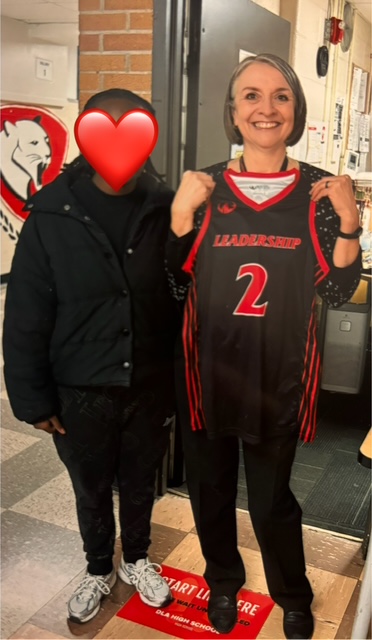
Some of these same students and others — the athletes in our building — worked with the athletic director this week to hand deliver printed invitations to the Friday night basketball game to school staff members. Not only that — the following day they delivered team jerseys to each staff member, took photos with them, and invited them to wear the jersey to the game.
The hype continued to build throughout the week, and many staff wore the jerseys to school and showed up on a Friday at 5:30, after a very long week, to cheer on their students, first at the ladies’ game and then the men’s game. The AD and students had created a VIP section decorated with photos of every staff member in the building posing with a student. Colleagues chatted and laughed together as they watched the games, cheering loudly for every steal, every change in possession, every landed shot, and especially that one sweet moment when a 6’5″ senior who we’ve all watched grow up from a timid impulsive freshmen to the guy who waited for just the opportunity, saw his moment, and slam-dunked like a pro! The crowed (especially the VIP section) went wild!!
Throughout the evening, students boldly grabbed the mic to shout out their teachers, and then, between the games, the whole group — athletes and staff — took to the floor for a photo op. Smiles everywhere!
It’s still January. Nothing has really changed, but all is not tragic.
In a small building on the border of Detroit and Dearborn is a little community that is somehow choosing to keep going. Communities like this exist everywhere, despite corruption, despite tragedy, despite illness, despite loss. Folks who would have every reason to throw their hands in the air and say, “that’s a wrap” are getting out of bed, combing their hair, and showing up for another day, and sometimes, that day, against all odds, turns into a celebration. Even now. Even in places like Minneapolis and Portland.
No matter how politely we ask, we have little control over what 2026 brings, however, we can choose to search out these spaces and these moments. We must, also, call out corruption, gather to protest, and work for the change we wish to see in the world; in order to do all that, we’ve got to hold on to hope.
I am confident that I will see the goodness of God in the land of the living. Psalm 27:13
I realize we are just getting to know one another, and perhaps this is too soon, but seeing as we are going to spend the next twelve months together, I wanted to make my expectations and non-negotiables clear. (It’s something I’m working on.) You see, the last few years have been a little unkind, and I want to be clear from the jump that I’m looking for something different.
Now, you may be coming to this relationship innocently — full of promise and potential — but I’ve heard similar claims before. Fool me once and all that…I don’t want to judge you on my past experiences but, look, if we don’t learn the lessons of history, we are bound to repeat them, am I right?
So let me state it plainly, I will be tolerating no January falls that injure the elders in my life. No new cancer diagnoses are welcome. In fact, make that no new chronic illness diagnoses either. And for those in our lives who are already suffering, let’s agree on a little grace — a little compassion — you know what I mean?
I don’t mind, particularly, if you want to bring a significant snowfall to kick off our time together. I mean, what’s six to eight inches of snow and a school cancellation between you and me? In fact, it could set us off on the right foot together.
I did hear a rumor that you have already provided me with a staff vacancy to work through — so thanks for that. I am willing to overlook this offense if you quickly provide a highly qualified replacement who has a passion for my students. Bonus points if that happens inside of January and if they come with loads of experience. But let’s have no more teachers walking away from their positions before the end of the school year. Got it?
Now, what you could provide is some sanity in the political realm. I’m not picky; it just might be nice to have leaders held to the same levels of accountability as average folks. Also, a return to the constitutional balance of powers might be nice — you know where Congress has to approve things before the president takes sweeping action or where the Supreme Court holds him accountable when he doesn’t. That type of thing. I’m not crazy enough to hold out for indictments against the president that lead to conviction — I mean we’ve seen how that plays out. I’m trying to keep things realistic here.
What I’m not looking for is more innocent civilians, minding their own business and committing no crimes, being targeted by federal agencies. I’mnot looking for racist or hate-filled language from government leaders or the policies that are birthed from such rhetoric. Instead, what I am looking for is the people in positions of power to stand up and do something. I honestly don’t even care how they protest, as long as it looks like elected and appointed officials are not just serving to prop up a very corrupt enterprise. You want to get in good with me? Inspire some justice, some equity, some good old fashioned civil disobedience.
I’m not expecting miracles — just movement. A movement toward policies that benefit the poor, the voiceless, the helpless, the disenfranchised. I’m looking for some legislative moves that benefit those who don’t make six- or seven- or 10-digit salaries, that help those who aren’t necessarily white, that benefit women, and children, for heaven’s sake.
These asks have grown to sound audacious in recent years. I am begging you to provide a different climate — a climate where all voices can be heard, where all bodies are safe, where all children are fed.
I realize I’m coming in kind of pointy here, but if you scroll back through the timelines of the last few years, you may begin to understand how insane it has been. I’m just trying to find some days, weeks, and months that hold some hope.
Hope for healed relationships, hope for improved health, hope for immigrants, for the poor, for the LGBTQ community, for the aging, for my students.
Wouldn’t you like to be different, innovative, dare I say transformational? Imagine what people might say about a year that turned the tables, changed the course, began a new era? A year without gun violence, without scandal, without sexual crime, without devastating fire or flood or war?
I do recognize that you can’t do this on your own. We can’t expect a new year to waltz in here and create all this change by itself. You’ll need partners who are willing to think differently and act differently. You’ll need folks to put in some effort, not to just shrug their shoulders muttering, “well this sucks, doesn’t it?” You’ll need people to envision the possibilities and then work toward them. You’ll need us to believe in One who makes all things new — even when we’ve stopped believing, perhaps because we’ve stopped believing.
So here I am, 2026. I am taking a step of faith, believing that you might be different from the ones who have come before you. I’m committing to doing my part to be the change I want to see in this world. I am trusting not in you — come on, I wasn’t born yesterday — but in the Creator of all things, the great Transformer, to do a new thing. And when He does, I’ll be writing about it. You just watch and see.
[for] He is able to do immeasurably more than all we ask or imagine. Ephesians 3:20
*A quick note, sources and resources are linked in the text.
I’ve been kind of quiet in this space lately. It’s May, and I’ve only posted six times so far this year. For a girl who posted almost daily when this blog began, six times in four months is virtually silent.
But here’s the thing….
Just kidding…there isn’t one thing that is keeping me from putting words on the page (or rather the screen)…it’s more like a steady stream of things that seem to keep coming at me (at you?) in such a way that I can’t really focus. I can’t keep my eyes on one thing for long enough to form a thought, let alone an opinion.
At work, I’m down to just a few weeks with my seniors, and their excitement/ambivalence/annoyance would be a lot to process and respond to on its own, but we’ve also had Family Conferences and Decision Day. Each of these events takes a team effort to prepare for and execute. (You know the drill — communications, set up, station assignments, and the running of the actual event, and although neither is my responsibility, I am a member of the team.) I also have had the responsibility this year to recognize students of the month (one for each teacher in the building) and honor roll recipients. This entails identifying honorees, pulling them from class for a photo, and sending those photos to someone — preferably not myself — to have them loaded into a Canva document before they are printed out and posted in the hallways. In addition to all of this “normal” school activity, the authorizer of our school charter is visiting us this week for an educational program review that we learned about just several weeks ago. Such a visit, like school accreditation, requires the submission of countless artifacts such as lesson plans, IEPs, coaching trackers, professional development documents, etc. I was part of a team that pulled all those together and submitted them electronically. This past week leadership and staff met to prepare for the visit that will be spread over three days — all while school is in session, you know, the actual teaching and learning part. Spring is always busy at school, but this year is exceptionally so.
At home, things are a bit more relaxed –we have no major repairs pending, and we’re happily in the midst of installing our garden — but if home life includes extended family, then I have to disclose that my mother and stepfather have had some pretty difficult challenges for all of 2025 that just right now seem to be stabilizing if you don’t mention the fact that at least one of them is recently ready to start exploring assisted living facilities, which takes the coordination of six adult children to do lots of fact finding. I would also be remiss if I did not mention that my dear Aunt Margaret, after many years of relative health, has taken a sudden and recent decline.
All of this is, of course within the realm of “normal” adult life. You have also had busy seasons at work and at home — they come and they go — and although they are at times taxing to navigate, we somehow make it through to the other side in time for the next wave of whatever it is that is coming.
But these are not the things that are blurring my focus. No, they take time, of course, and energy, but they are manageable. I think what has me off balance may have many of us off balance — the continuous stream of government actions that may or may not impact us directly, but nevertheless are jarring to the brain and that lead us, at least me, to at times retreat, to dissociate, to not want to process or deal with any of it.
In 2018, presidential strategist Stephen K. Bannon bragged about that administration’s strategy to “flood the zone” with initiatives. The idea was to roll out a constant flow of orders and directives to throw “the opposition” (you know, other Americans) off balance so that they could not respond (Source). Since that administration regained the presidential office this past January, this strategy is being used again, only to the nth degree.
In the first 100 days of this administration (in just under four months) we have been overwhelmed by actions such as: the pardoning of those who invaded the US capitol on January 6, 2020; the freezing of funds for cancer research, Meals on Wheels, and disaster relief; the implementation of tariffs on every country in the world, the pause in tariffs, the subsequent roll-back of said tariffs, and currently, the exponentially high tariffs on China (which will certainly impact most of us); the firing of countless federal employees followed by the attempt to rehire some of them; the withholding of funds to public universities who refuse to comply with the administration’s agenda; the deportation of countless immigrants, some whom are legal residents, with some being sent to foreign prisons; the continuing and hard to follow involvement in the ongoing conflicts in Israel/Gaza and Russia/Ukraine; the president’s attendance at the funeral of the Pope followed by his posting of an image of himself dressed as the pope on social media; and this is just scratching the surface (Source). You might be shouting at me right now, “what about the…[fill in the blank].”
Frankly, I’ve got to look at what is happening on the national scene through a peep hole with one eye covered. I can’t look at it in full — and that’s exactly the idea. This administration is using the everything, everywhere, all at once strategy to keep us all in this state of slack-jawed disbelief.
And that is where I find myself, only I’ve moved from stunned to numb. I feel detached from reality, not wanting to engage because I can’t keep up. But that is what this administration has said it wants — to “flood the zone” so that we become overwhelmed.
But here’s the thing — the actual thing — we can’t do that.
We can walk away. We can take breaks. We can sit for two hours after a long day and work on a 1000-piece puzzle depicting van Gogh’s “Irises”, or take a walk through the park plucking lilac sprigs, inhaling their beauty on a glorious spring day, or lose track of time choosing the latest fiction from the library shelves, or binge-watch “The Four Seasons” on Netflix, but then we’ve got to re-engage.
We’ve got to notice the actions that are being proposed — such as cuts to education, to PBS, to NPR!! — we’ve got to let our voices be heard — through letter writing, phone calling, boycotting or participating in peaceful protests. What we tolerate, what we look away from, what we allow — these are the things we accept.
And, overwhelmed though I might be, I cannot accept funding cuts to public education — not when I see the inequities that already exist. I cannot accept the devaluing of other humans — not immigrants, not members of the LGBTQ+ community, not minorities, not women, not anyone. I cannot accept that as the profits of billionaires increase their taxes are not commensurate, especially not at the expense of the poor. I cannot accept a disregard for the fragility of the environment — when we know better we have to do better.
We are indeed looking at a flood of issues, and each of us also has our own life to manage. None of us can stop a flood alone, but we can each do our part — we can warn the others, we can grab a bucket and start bailing, we can plug a hole, we can help those who are drowning.
Note: If you are listening to this blog post, several links are embedded in the print if you are interested in reading further.
Many years ago, not long after I met my husband, we began discussing a topic I’d never really considered before — boycotting. As I’ve mentioned here before, I grew up in a family that rarely, if ever, discussed politics. I remember when the Watergate hearings were on TV, but I have no shred of memory of how my parents felt about Nixon or the scandal. I have no idea, even, how they voted..
So when I met my husband, it was a little surprising to hear open political discussions — in the back yard, over dinner, on a car ride — about elections, of course, but much more specific issues such as unions, public assistance, and even (gasp!) abortion.
When I learned that in my husband’s family everyone drove American made cars or were required to park across the street when visiting, it made sense to me. My father-in-law was a retiree of General Motors and brand loyalty mattered. However, when my husband said he didn’t want to shop at Walmart, I had to ask why. He explained that Walmart was anti-union, and as a child of an autoworker, he had learned the power of the union to protect and support workers. He preferred not to support a company that wouldn’t allow its employees to organize. I didn’t feel passionately about it at the time, but I could get behind it.
As the years have passed, I’ve learned more about how Walmart underpays its employees while the owners become billionaires, I’ve grown my own distaste for the company and have shopped elsewhere. (This Time article chronicles some of Walmart’s journey including attempts they have made — under pressure from boycotting! — to improve.)
Of course, Amazon is similar in its practices. While it has made moves to reform, well-documented accounts cite drivers not being able to stop on their routes to use the bathroom and how they adapt to this expectation by carrying urine receptacles in their vehicles or by wearing disposable undergarments. Other accounts cite unpaid overtime, unsafe working conditions, and low wages, all while corporate profits rose to $88 Billion in the first quarter of 2025.
Amazon, Walmart, and other large companies are known for using employees — many of whom are low income and/or people of color — working them just up to the number of hours that don’t require them to pay benefits like insurance and sick leave and hiring for “provisional” employment and firing before the employee qualifies for permanent status. As a result, many employees of these companies remain on state and federal assistance while their CEOs pay a lower tax rate than the average American.
I have seen many of my students lured into jobs at Walmart, Amazon, and McDonald’s, promised pay raises, promotions, and an actual future, only to realize just weeks or months later that they had been misled.
So, what’s a middle-aged, middle-income woman like me supposed to do? How can I show that I don’t stand for this kind of corruption, that I don’t agree with these unfair practices? I vote with my purse. I’ve been doing this for years — avoiding companies that I don’t want to support and purchasing from those that I do. For many years this has been an isolated act that helps me feel like I have integrity. I doubt that I’ve made much impact, but I’ve slept better at night.
But this year, in 2025, anything can happen! All kinds of everyday people, using the engine of social media, can rise up and say, “You’re not getting our money!” If you take away your DEI programs, “you’re not getting our money.” If you won’t pay your employees a fair wage, “you’re not getting our money.” If you stand behind causes that harm our fellow Americans, “you are not getting our money.”
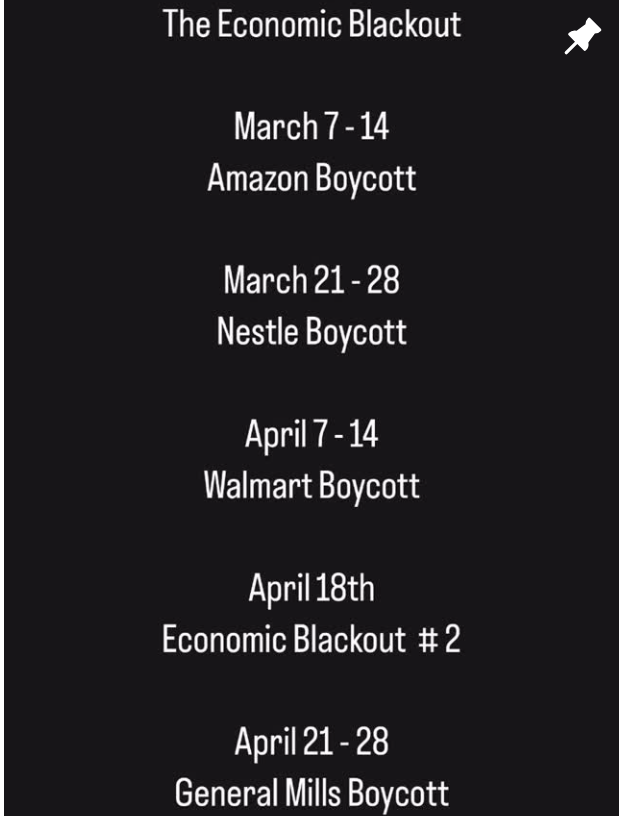
In 2025, I am not standing alone! People across the country are cancelling their Prime memberships and refusing to shop at Target, Amazon, Walmart, and other retailers. Last weekend, many refused to spend any money at all for 24 hours. This week, thousands are abstaining from Amazon purchases, and this is just the beginning!
Organizations like the People’s Union have coordinated efforts to systematically send a message to corporations that will hurt their bottom line without jeopardizing the jobs of those who currently work for these entities.
And the beauty of this protest is that it doesn’t cost anything, you don’t have to go anywhere, no one gets hurt, and if you don’t like it, you get to make your own choices. That’s what is great about living in the United States — we still have the freedom to say what we want, to spend what we want, and to support what we want.
For me, that means speaking up about inequity wherever I see it — in education, in health care, in commerce.
Now, I’m sure I still spend money, unwittingly, at businesses that have practices that don’t jive with my guiding principles, and if I learn about them, I will shift. It’s as easy as that.
What do I hope to accomplish? I truly hope the combined efforts of all those who are shifting their buying habits (some sources say 24% of Americans so far in 2025) will get the attention of these corporate giants and they will begin to change some of their policies. I think this could happen, because although the pen is mightier than the sword, money is what really talks.
If this movement can sustain itself long enough for these large corporations to notice changes in their quarterly earnings, we just might get their attention. And if we get their attention, they may hear our message — you can’t abuse people and still get our business.
It’s a small action of many that stands up for those whose voices are not being listened to; it’s an expectation that in a country that professes that all are created equal, that all would be given equal opportunity. Period
That’s reason enough for me to boycott.
uphold the cause of the poor and the oppressed; rescue the weak and the needy; deliver them from the hand of the wicked. Psalm 82:3-4
On Monday I wrote a post about inequity in schools. It’s not the first time. In the fall of 2020, I wrote a piece called “What World Are We Living In” when I first started commuting from Ann Arbor to Detroit to teach in a small charter school and began to daily witness the disparity between the two communities. In the spring of 2023, I wrote the following after a day spent in a suburban school district. I’m posting it again because I’ve spent the last three weeks facing the realities of life in my school — inadequate staffing, building issues, and a paucity of resources — and I feel compelled to share these realities and to call for change.
Last Wednesday, instead of driving to Detroit first thing in the morning, I drove to Oakland County to participate in a day of professional development along with a dozen other teachers who use the Adolescent Accelerated Reading Intervention. I’ve been using the program for a little over a semester with great results, but I have been aware that I might not be crossing all my t’s and dotting all my i’s. Having the opportunity to be a fly on the wall of two separate classrooms as other teachers implemented this intervention would hopefully help me see what I’ve been missing.
The beginning of my commute looked largely the same as it does on my daily trip to Detroit — interstate highway merging onto surface streets. However, I noted that while my regular route takes me past fast food, gas stations, minimarts, and older working class neighborhoods, this route into Oakland County took me past Starbucks, Trader Joes, and nicer restaurants before it led me through residential sections with large suburban homes. And then, when I took the final turn, I saw the school where I would begin the day.
It was a sprawling two-story building on a large piece of property surrounded by multiple well-lit and freshly-lined parking lots. I found a spot, grabbed my stuff, and made my way to the guest entrance at the front of the building. I approached a door, pushed a button, and looked into the camera before I was buzzed in to a glass-enclosed foyer.
There, a staff member looked me over and buzzed me through the second door. She knew why I was there and directed me to room “two-oh-something or other”.
“Which way is that?” I asked.
“Up those stairs and follow the signs.”
I walked up the open carpeted stairway in the expansive atrium to the second floor, also carpeted, and found the group of teachers already in conversation.
They sat in a semicircle in the [also] carpeted classroom. I found a seat in the back of the room in a bar stool height chair next to a tall table. The students had not yet arrived, and the teachers were discussing what was on the agenda for the class this day — one of the final steps of reading a book in the AARI program, mapping the text.
I heard the bell ring in the hallway, and the students started coming in, finding their resources in a strategically placed filing system, then making their way to the table where I was sitting. I relocated myself and began to observe.
Right away I noticed a t I hadn’t been crossing when I looked at the big piece of butcher paper where they had started their text map. My students and I had mapped our own text the day before, and it looked somewhat similar to, if noticeably messier than, the one I was looking at, but there was one big difference — ours was written all in black on white paper. The map in this classroom was color-coded to illustrate its organization — sections of the book written in sequential order were outlined in pink, those written in a compare/contrast format were outlined in green, etc. I mentally thunked my forehead with my palm and said, “the colors! why do I always forget the colors!” And then I noticed the posters hung on the wall in this spacious classroom. At both the front and the back of the room, the teacher had full-color posters representing each of the eight text structures. Oh, I’d like to have those, I thought. If I had full color posters in my classroom instead of the black-and-white print outs I have, I might remember to use the color coding system!
One teacher asked, “Where did you get the posters?”
“Oh, I just printed them on our poster printer!”
Oh, I thought, they have a poster printer.
The class functioned mostly as my class does. The teacher had seven students around the table; one was absent. I have ten on my roster right now; typically one is absent. She used the socratic questioning that I use, and her students engaged as much as mine do, if slightly more politely, but then again, when I had a guest in my room last semester, my students were on their A game, too.
The second building was a literal carbon copy of the first, down to the same double buzzered entryway and carpeted stairs. We gathered in a classroom that “isn’t currently being utilized” where we found flexible seating — restaurant like booths, chairs on wheels at tables, and the one I chose, a rocking pod-like chair, where I noticed I could quietly shift my weight and stay better engaged in the discussion we were having before our second observation. Wow, I thought, I have some students who would benefit from chairs like these.
When the bell rang, we walked down the hall where our second teacher met us at the door and invited us first into her classroom and then across the hall to another room that “isn’t currently being utilized” so that she and her students could map their text.
Like me, she had a projection system where she displayed a slide that she used for her gathering — the time when we engage with our students to set the climate and build community. Her students were seated, much like mine are, around the room at desks. The difference I saw was, again, the carpeted floor, the colorful text-structure posters, and stacks of resources in every corner of the room.
In the room across the hall, we again found flexible seating — bar-height chairs with optional attached desks, lower seats on wheels, and one other form of desk-like seating. Again, full-color posters on the wall illustrating each of the text structures and some key questions to ask during the AARI process.
The students again were on their A-game, and I wondered if that was the case every day, even when they didn’t have a dozen teacher-y observers. I mean, what would get in the way of their learning in an environment like this?
As I drove home, I continued wondering, why do these schools look so different from my school? Why do students in Oakland County walk into a brand spanking new building every morning, pick what kind of chair works best for them, experience the warmth of carpeting, the advantage of full-color visual aids, and, when it’s hot outside, the benefit of air conditioning, while my students just thirty minutes down the road are bussed onto a crumbling parking lot, walk into an aging building with an inadequate gym, some windows that open and some that don’t, no air conditioning, no rooms that “aren’t currently being utilized”, one seating option whether it is appealing or not, and a jillion other obstacles to learning on any given day.
Is it just a case of money?
I spent some time this morning trying to figure out Michigan’s formula for school funding that might explain this disparity — why one child’s experience is so different from another’s when they both reside in the same state. But guys, I don’t understand the model.
It’s complicated and based on per student funding from the state, property taxes, income taxes, and even cigarette taxes! Low-income (and underperforming) districts like mine are supposed to get supplemental funding from the state — which is earmarked, but historically not always allocated. And even when it is allocated, why are most Detroit schools in disrepair, lacking in resources, and understaffed when schools in higher income districts are well maintained, richly resourced, and fully staffed with high quality instructors?
Why do they get the cool rocking pod chairs and my students don’t?
Is it because those students deserve better?
No! All students deserve better! Yet these disparities continue to exist — for going on centuries now.
And why?
The simple answer is systemic racism — in education, yes, but also in real estate, in health care, in hiring, in so many sectors of our society. It’s the historical practice of separating those who have from those who don’t to ensure that those who have will always have and those that don’t never will. And the remedy is anything but simple. It begins with recognizing that selfishness and greed have created the structures in our country that enable some to have a lovely experience and to guarantee that others do not.
Now, if you are in the camp that thinks I am completely off base and that the difference in schools is sheer economics and not based in historical racism at all, I ask you why the establishment is so up in arms about our students learning African American history or looking at history through the lens of Critical Race Theory? If there is nothing there to see, why not let our kids take a look for themselves? Maybe you’d like to take a look for yourself. If so, I recommend you check out the 1619 Project* which is available through The New York Times, on Apple podcasts, or in video form on Hulu. And if you still think I’m out of my mind, come spend a day with me at my school. Get to know my students and decide for yourself if you think they deserve more.
Yes, I feel pretty strongly about this.
It probably won’t come as a surprise that my seniors and I just finished learning about systemic inequities in preparation for reading Trevor Noah’s Born a Crime, where we see through the lens of his experience the structural racism of Apartheid and how it impacted his childhood experience. We learned terms like unconscious bias, prejudice, racism, and systemic racism, and my students created posters to illustrate disparities in health care, generational wealth, criminal justice, and education.
When I returned to my students on Thursday and we started our class with a review of terms, I saw that not everyone understood that Apartheid was like the systemic racism we see in the US. In order to help them fully make the connection, I asked them to recall examples of where we experience inequities in our community. As they started to list them off, I told them about my experience in the Oakland Schools.
I wondered if it was necessary — to point out the details I had experienced. Would I be rubbing it in their faces?
But then I thought, Don’t they deserve to know what the experience of students 30 minutes away is like? especially as we prepare to read this book? especially since some of them are about to go to college and may study beside some of these very students who are walking carpeted hallways, sitting in rocking pods, and enjoying an air conditioned full-sized gym? (Let alone taking AP classes, music, and other electives we are unable to offer.)
I described what I had seen, and I could see their faces register the reality — the reality that their experience is not equal to the students I observed just 24 hours before.
“This is educational inequity,” I said. “It is one aspect of systemic racism. And why do you suppose it’s not easy to change?”
“Because,” one student answered, “it’s part of so many systems — not just education. And they don’t want it to change.”
“Who doesn’t want it to change?”
“The people in power.”
“Yes.” I gulped. “I suppose you are right. The people in power don’t want it to change.”
Pretty astute observation for a kid from Detroit? No. Kids from Detroit have this down, folks. They understand disparity; it’s the world they live in.
And the people in power can do something to change it. We are the people in power, my friends — people who vote, people in education, people in the church, white people — we can make choices that begin to make a difference for my students and their children and grandchildren. If we do nothing, this pattern will continue for more generations, and we shouldn’t be ok with that.
It’s not enough to fight for what’s best for our kids; we have to do what’s best for all kids.
As we established in my last post, I have “an insufferable belief in restoration.” The first step in restoration is acknowledging that our stuff is broken down, dilapidated, and no longer working, so I’m gonna keep talking about what’s broken to those who have the power and resources to fix it.
I hope you’ll start talking (and doing something) about it, too.
Do not withhold good from those to whom it is due, When it is in your power to do it. Proverbs 3:27
Across the country, students are returning to school. My social media feeds are beginning to fill with first day pics of kids (including my own granddaughters) in new clothes and bright smiles, ready to launch into another year.
And teachers, like me, are putting last touches on their classrooms — arranging desks, putting up posters, checking supplies– and preparing to share the school year with their students.
And what will that experience look like? It varies widely. All American schools are not created equal.
Some students are born into families who have the means to spend any dollar amount on their children’s education. These students might find themself on brick and ivy campuses wearing plaid uniforms with jackets. They might spend their mornings with highly qualified teachers in experiential labs mixing chemicals or gathering eggs from the campus micro-farm. They might dine on one of many selections prepared by the campus chef for lunch, then work in an outdoor creative writing space before moving to the art studio for some time throwing pots. After the final bell, they can choose to dabble in fencing, interpretive dance, Japanese club, or any of dozens of other extracurricular choices. They can certainly count on an air conditioned ride home at the end of the day.
Many students have parents who send their children to public schools in districts with a strong tax base — the kind of areas that realtors refer to while driving their clients around looking at homes, saying “Oh, the schools here are excellent!” In these schools, students stream in by car or bus, walk through clean, well-lit and spacious hallways, and choose from a variety of electives taught by certified teachers — multicultural literature, environmental science, personal fitness, or Chinese. Further, they can enroll in cooperative programs such as cosmetology, auto mechanics, or computer-aided design, and choose from a variety of lunch options — pizza, salad bar, sandwich station, or hot entree. After school, they might participate in any number of pursuits — chess club, soccer, swimming, musical theater, or the model UN, and then catch a bus or ride home with their parents or friends.
This is America, after all, where the children are our future, where we provide the best education possible, where the sky is the limit — unless you are poor, or live in a less than desirable area.
In that case, you might experience school differently. You might wait for a bus that arrives late or not at all. You might then walk a mile or so to get to school or, more likely, walk the few blocks back home and simply crawl back into bed. If you do arrive at school, you will probably walk through a metal detector, have your bags examined, and then wait in a common area. In that space you will have access to a free breakfast, if you call a cold bagel and a packet of cream cheese breakfast. When the bell rings, you will be released into the building to find teachers of varying skill and experience, some trained and certified, some not, who have been assigned to teach the classes required for you to earn a high school diploma — English Language Arts, physical education, financial literacy, and United States History. Your schedule has been pre-built for you, because there isn’t the funding or staffing for enough electives to provide a choice. You get what you get, and you have learned to not throw a fit. You assume this is just the way it is, because you have no idea what students are experiencing just a few miles down the road — it couldn’t be possible that just one zip code over you could be choosing African American literature instead of the standard ELA III that everyone at your school takes. Surely that kid you sometimes run into at the mall doesn’t have a different lunch than the lukewarm burger and fries you were just served in your gym/lunch room.
I mean, how would you feel if you knew that not every school has a parking lot with a huge crater in the middle that has flooded into a lake for the past four school years? What conclusions would you draw if you knew that not every school has inoperable windows in every classroom or that some schools have air conditioning? How would you process the reality that for many students in America, having a fully-staffed building is just…normal?
I know how I feel about it. I feel angry.
Every time I pull into the parking lot, I have to dissociate just a bit so that I don’t go off on a rant about the crumbling asphalt beneath my feet. Each morning, I shake my head when I see the tax-payer provided “meal” such as a Fruity Pebbles bar and a child-sized juice box. Daily, I ignore the window in my classroom with “do not open” written on a piece of notebook paper that’s affixed to it with Scotch tape. I have to look past all these realities because I have to convey to my students that they are valuable, worthy, and full of potential even when their physical space is telling them differently.
I don’t fault my administration or our school network. They are working their asses off to provide instruction that is trauma-informed, culturally responsive, and well-prepared inside of a system that is, at its heart, inequitable.They are doing everything they can to find teachers, but that is difficult when schools like mine are stigmatized as unsafe, failing, or insufficient because they exist inside of contexts that have been historically underfunded, underserved, under-resourced, understaffed, and undervalued.
How can this be in a country that pays lip-service to the credo that “all men are created equal”? How can teenagers growing up in neighboring counties have such vastly different experiences? How do we let this continue? How can we hope for a better future for our children if we allow these inequities to persist?
The way things stand, wealth begets wealth and poverty begets poverty. Those students with the best resources will matriculate to the best post-secondary programs followed by the best job opportunities. Students with a substandard experience will go on to less than stellar programs and be afforded less impressive opportunities.
Nothing will change until something changes.
I know, I know, you’ve heard all this from me before.
And, if you continue to spend time with me or my blog, you’ll hear it again.
I will continue drawing attention to these inequities until those who have the power and means to do something about it — do something.
Many of you partner with me by providing snacks and needed supplies for my students. Please, continue to do that — you are making a tangible difference in the lives of the small group of students that I interact with each day.
Also, please, please, look around you. Where do you see similar inequities in your community? How can your voice, your vote, your labor, your dollars make a broader impact?
It is very easy to look past inequity, but we must begin to turn our eyes directly at it. We must see how devastating it is to the people it impacts, and those of us who are able must act. Period.
I don’t see an easy solution to the systemic inequities in our country, but I do know there will be no solution until we are willing to admit that we could do much better. We can, and we must.
Much of the work of my adult life has been unlearning the internalized messages I have picked up inadvertently. Messages about my identity, about how the world works, about the value of others, and even about my faith are regularly being viewed under a microscope to see if they hold up to scrutiny.
The first time I remember doing this was in the counselor’s office in the mid 80s where I was being treated for an eating disorder. Regularly in my sessions, my therapist would ask me questions that would confuse me. Why did I need to lose weight? Why did I believe I would be more attractive if I was thinner?
Why would he ask me such questions when the answers seemed obvious. Throughout my whole twenty year life, I had learned to believe that thin was better than fat, that I’d better watch my weight, that “those fat people over there” were disgusting, probably lazy, and not worth as much as “we” thinner people. I was ever anxious that I, in my body, which was just a tad larger than those of my friends and my sister, was ounces away from losing my status as one of “us” and becoming one of “them”.
In fact, in my freshman year of college, like many overwhelmed, depressed, and floundering college students, I did put on ten or fifteen pounds, and people I barely new — dorm mates and classmates — repeated the refrain I’d heard at home, I’d better be careful. I should get my weight under control. Did I really want to eat that dessert?
I believed their messages, and in fear and trembling, I overcorrected. I began a regimented way of life that escalated into anorexia nervosa. I lost all the weight I’d gained my freshmen year plus another 20 or so pounds over the summer before transferring to a much smaller school in the fall.
There, my excessively thin body soon gained its reward. That very fall, I was selected for the Homecoming court. I’m guessing I was selected solely based on my appearance because no one could have known the real me. When I wasn’t studying in the library, I was secretly writing down every food I ate, calculating calories, and sneaking to step on the industrial scale in cafeteria where I worked to make sure the number continued to go down — the only way I knew to measure my value.
I felt so out of place on the stage being crowned in one of the most ironic moments of my life. My cohort was apparently applauding my external worth, while I was trembling on the inside — afraid of being revealed as an imposter, knowing that what they saw was artificial, a fragile facade concealing a very broken interior.
That was close to 40 years ago, so you might think I have completely unlearned that lie. That might be true if everyone in the culture I live in had learned it, too. Alas, they have not. Messaging about the connection between thinness and beauty persists today. It has lost some of its power what with the greater diversity of representation of women in the media, the elevation of body positive messaging (if you are willing to look for it), and the shift in the fashion industry toward inclusivity, but the message remains among us — thin is better than fat, especially for women who live under continuous pressure to present themselves in flawless well-toned bodies despite genetics, health, or circumstance.
So, my unlearning continues. When I hear my mind say, You’ve put on a couple of pounds; you’d better be careful. I ask myself questions that I started hearing from my therapist years ago: Why are those pounds bad? What will change about you if you decide to keep them rather than lose them? Why are you connecting those pounds to your value as a person?
Why indeed.
What is true about my body is that it is strong — it has carried my children, it has finished half marathons, it has communicated with me when I have overworked, it has kept going when my mind has refused to rest. It is strong and beautiful and resilient. It has value at any size. Period.
Do you see how it works? It takes awareness, diligence, and intentionality to unlearn the messages we carry with us all the time, often unknowingly.
My students and I just started reading Born a Crime by Trevor Noah, a memoir of the comedian’s life growing up in South Africa during Apartheid. Before we read the book, we start with learning about unconscious bias — the beliefs that we have that shape the way we view the world. We talk about bias against people of other races of course, but we also talk about gender bias, religious bias, disability bias, and even weight bias.
The very nature of unconscious bias is that we don’t know that we have it. That’s why I was confused when my therapist asked me questions that challenged my unconscious bias– my beliefs were so ingrained, I accepted them as fact — didn’t everyone feel this way? didn’t everyone know that being overweight was bad?
So as my students and I learn about unconscious bias, I have them take the Harvard Implicit Associations Test. This is an ongoing study that gathers data from participants regarding their bias around a variety of topics. It takes about 10 minutes per topic such as race, age, weapons, or weight. The participant clicks on images in response to the directions, and the speed of the response reveals the participants’ unconscious associations. It’s fascinating.
Now, I will admit that this is uncomfortable work. In all my years of teaching students of color, I have been working to unlearn the racist beliefs that permeate our culture — the not always subtle implication that Black people are poor and dangerous and not as smart as white people. I know that these statements are untrue. I have countless examples of students, coworkers, and friends of color who are wealthy and brilliant and successful and generous and kind, and yet my unconscious bias still sometimes reveals itself. I don’t like when this happens.
Let me give you an example. I was venting to my instructional coach one day. She is a brilliant educator who, like me, is committed to educational equity. She has taught in Detroit Schools for thirteen years and has risen through the ranks because of her commitment to excellence and her undeniable ability to support other educators in instructional design and implementation. Also, she is Black. It had been a difficult school day and the halls were loud and unruly, and I said, “Man, it is zoo-y in here today.”
She replied, “Well, I wouldn’t use the word zoo-y.” She was matter of fact, not accusatory, not incriminating. She just said it, and gave me a beat to process.
“Oh, wow,” I said out loud. “I never considered that using that word implies that our students are animals. Yikes. I won’t say that again. Thank you for bringing it to my attention.”
Even typing the words right now, I have an ache in my chest. How could I have used such language when I work so hard to push against racist ideas?
My coach happened to be in my classroom a few weeks ago when I shared this example with my students. I said, “If we really want to uncover our unconscious bias, we have to give the people around us permission to point it out to us. It was brave of my colleague to say something to me. She did not know how I would react.”
“Wait, why is zoo-y a bad word,” one of my students asked.
My colleague stepped in, “For many generations, white people used language that made Black people seem like animals so that they could justify the way they treated them — with slavery, with separate bathrooms and water fountains, with unequal schooling, you name it. To say that the school feels zoo-y implies that you are animals. And, you are not.”
All eyes on her. Silence. Reprogramming in process. A moment of unlearning. Priceless.
I continued, “Maybe you have heard me say something that revealed my unconscious bias in this class. I am giving you permission right now to let me know when that happens. It is the only way I can bring these beliefs to my consciousness, put them under a microscope, and reveal them for what they are. That’s the only way I can hope to change.”
A few days later, one student, my boldest, most confident rising star, interrupted me when I was explaining the term “white privilege” and how I have benefitted from it. I’m not sure what I said, to be honest, but she challenged my delivery and said, “I wouldn’t say it like that again.” It takes a lot of courage for an 18 year old girl to challenge her teacher in the middle of a lesson, so I stopped, heard what she had to say, thanked her for her courage, and practiced rephrasing my thoughts.
It was an uncomfortable moment for me, to be sure, but I am hopeful that it was a moment of agency for her. Perhaps she, too, will start on a lifelong journey of unlearning the things she has picked up about herself, her world, and the ways that she can operate within it.
The alternative is staying where we are, holding fast to every lie we have ever believed, which for me has felt like a trap. The unlearning, although at times uncomfortable, is liberating. In fact, it’s a transformation.
My first impressions of Netta are fragmented. Hers was a name on my roster that I rarely marked present.
When she did show up during the first quarter, it was hard to get a read on her. At times she seemed withdrawn, introverted, like she preferred to be left alone. She sat in the back, by herself, and I didn’t often hear her speak. In fact, the sounds I usually heard from her were the sounds of deep contented sleep — the rhythmic breathing that is not easily disturbed, the kind that causes others around her to turn and look, to say, “Man, she is knocked out!”
I stopped fighting the sleep battle long ago. I have no idea what is going on with my students outside of my classroom, so if I nudge them once and encourage them to “come on, you’re here, you might as well get something for your efforts,” and I get no response, I am prone to let them sleep. Maybe it’s the only rest they’ll get today.
So, Netta was a show up once a week kind of gal who often spent that day in slumber, face pressed against the desk, eyes closed behind the very thick coke-bottle lenses of her glasses.
I didn’t know her well, but I got the impression that she wasn’t a meek, shy, introvert. No, she seemed more like a sleeping bear — completely content if left alone, but disturbed? You’d better run for your life.
Every so often during that first quarter, she would blow into the building like a force. Her hair would be done, her clothing would be intentional, she would sit up straight in class, she would feverishly take notes, and she would demand that I answer her questions about the assignment, never mind that she had missed the last two weeks of school.
It didn’t make sense to me. Why such apathy followed by such intentionality. Then I heard the rumor that Netta’s probation officer was scheduled to show up on that particular day, and Netta was going to make sure to leave a good impression.
I never did see the probation officer, and Netta reverted to her status quo.
I’d be lying if I said that I didn’t have my hackles up just a little bit every time she showed up. The fact that she was often reserved coupled with the fact that she could occasionally show up like it was game day put me off balance, and occasionally I’d see her — rather hear her — move through the hallway, strings of expletives bursting from her like machine gun fire. I presumed, if provoked, she could tear me to shreds. I wasn’t planning to provoke her, but I couldn’t be sure no one else would. So, I was often just a little hyper-vigilant when she came to class during that first quarter.
For some reason, she showed up on the first day of the second quarter, the day that I characteristically give each student a printed summary of their academic performance so far. It’s a simple sheet from PowerSchool that lists the student’s current grade, how many assignments they completed, how many times the student was tardy, and how many times the student was absent. I do this to provide information to my students — to allow them space to reflect — but also to reward what I have seen. If they have earned an A or a B, if they have had fewer than two tardies or fewer than two absences, I give them a “Rathje Ticket” that they can use to purchase items from my class store.
On this particular day, I was calling special attention to students who had been chronically absent — who had more than two absences per month for the first quarter. Raising attendance has been my classroom goal this year, and although attendance had definitely improved from previous years, students like Netta still had a way to go. So, because she was in class on that day, I handed her the report that I had marked with yellow highlighter, showing her double-digit absences and noting that she had been “chronically absent.”
Netta, typically quiet [or sleeping] Netta, said quite loudly, “Mrs. Rathje, this is terrible! Imma do better.”
And do you know what? She did.
She started coming to class, just in time for the unit on personal narratives. I wanted students to show themselves in a scene or several scenes that revealed to the reader who they were, what was important to them, or what their strengths were.
Netta dove in. In fact, she asked to move to the front row, smack-dab in the middle. She read the models I provided. She did the brainstorming, she chose a prompt, and she began to write.
I can see her now, totally honed in, bent over her desk, face inches away from the paper as she wrote and wrote.
“Mrs. Rathje, can you read this and tell me how I’m doing?”
The writing was rough — very rough — the kind of writing you might have if you only went to school one or two days a week for several years. The penmanship, the spelling, the grammar — not anywhere close to what I would call standard. But as I read, everything else in the room fell away. She was writing about the fact that her mom had died — during Netta’s birthday week — six weeks before the start of her senior year. Six weeks before she started sporadically showing up in my class to sleep in the back of the room.
“Wow, Netta. This just happened?”
She nodded, looking through those thick lenses into my eyes.
“This past summer?”
“Mm-hmm.”
“I’m so sorry. Thank you so much for sharing this. I’m so glad you chose this topic. I want you to write more. Give more detail.”
“Mrs. Rathje, I know it’s a mess. I want to make it better. Will you help me?”
“Of course. We’ll work on it together. That’s what this assignment is all about.”
And that was the beginning. Of Netta’s engagement in my class, of Netta showing up four to five days a week instead of one, of Netta communicating (if at the last minute and out of desperation) with our social workers before her next probation officer visit or court date.
She hadn’t ascended to a straight A student by any means, but I was watching her transform before my eyes.
Now, she NEVER enters my classroom quietly. No. How do I describe the self-confident force of nature that is Netta, that boldly proclaimed during our Intro to Racism unit this past week, “I know what my unconscious biases are, and I’m not changing them!”
“I guess you might say they are no longer unconscious then, am I right?” I grinned at her.
She crossed her arms, gave me the side eye, and said, “They are not. I am fully aware of my bias. And I am keeping it.”
She is not afraid to tell a classmate, “Shut the hell up, you talk too much, and you sound stupid,” and although I check the outburst, I can’t often disagree with her assessment.
On Friday, late in the afternoon, she was walking down my hallway and she shouted at me, “Mrs. Rathje, you would be so proud — I didn’t cuss at all in that class.”
“That’s amazing, Netta,” I said, smiling, as I watched her walk into a classroom.
Two. seconds. later. I heard the most profane stream of words come from her mouth halfway down the hallway.
I walked down to the room she was in, popped my head in the door, looked her in the face, and said, “Netta, did you not just say I’d be proud of you for not swearing?”
“Mrs. Rathje, I had to get it out of my system before this class started.”
I smiled, shook my head, and walked away.
Earlier that day, she had come into my room, dressed as though she had something important going on after school, sat down, and handed me a paper she had pulled from her purse, “You wanna see my momma, Mrs. Rathje?”
“Of course!” I said, taking the funeral program from her hand. Her mother’s face was on the front, and I said, “Netta, you look like her. This is so precious. I had forgotten that this just happened last summer.”
She looked at me, putting the coke bottle lens back in the broken frame of her glasses, “I don’t read the obituary,” she said. “It makes me cry.”
“Of course it does,” I replied. “I love that you carry this with you. Your mom would be very proud of you.”
“Yes, she would.”
We move through the class, past fires to put out, questions to answer, demands to respond to and then it was almost 3:15, time for me to take my post at the end of the hallway to make sure that students don’t leave their classrooms before the bell.
I saw a door open and then Netta as she stepped into the hall.
“OK, Netta, back it right up, the bell has not rung,” I say.
In slow motion, she puts herself in reverse, maintaining eye contact with me, and retreating into the classroom.
The action of it cracks me up. I laugh, and I say, “I just love you, Netta.”
I woke up before five this morning, even though we don’t have school. It’s election day as I’m writing, and it might make sense for me to get up this early, if there was anything on my precinct’s ballot, but there is not.
So, I rolled over and closed my eyes, but despite the fact that I have an opportunity to sleep late, my brain is engaged. It’s problem-solving issues that aren’t mine to solve. It’s running scenarios for situations over which I have no control.
I use my tried and true strategy of grabbing the novel I’m currently working on. Maybe if I get lost in a story, I’ll go back to sleep. But books being what they are, and me being who I am, the story of a racially charged shooting is just giving my brain more fodder.
I sigh, roll out of bed, and tend to a few things over which I do have control — a load of laundry, a few rogue dishes in the sink, my cluttered desk. I’m trying to bring order to my immediate surroundings despite the far-flung chaos which we now find to be just another Tuesday.
Even though this is not supposed to be just another Tuesday. It’s supposed to be a day that I can weigh in, have my say.
It’s election day, and I can’t even cast my vote for change.
So, I light a candle, do some yoga, brew a pot of tea, and go with what I know — words on the page.
I can’t solve problems that aren’t mine — the ones of those dear to me who are trying to find the right employment fit or the ones of two students who, after moving to a new place, likely due to housing insecurity, are no longer on the bus route and will likely move to virtual school, eventually, after they’ve had no schooling for the last few weeks.
I can’t understand why more than half of the country, according to a new New York Times poll, would still be ok with electing a man who’s been found guilty of sexual assault, is currently on trial for financial crimes, and is facing a total of 91 felony counts! when countless are the American citizens who cannot get a paid position with merely 1 felony count.
I can’t fathom the devastation in Israel and Gaza where over 1400 Israelis and over 10,000 Palestinians — mostly civilians — have died. Thousands of lives lost within a month — families destroyed forever. I have no words.
I don’t get how our country has over $105 BILLION to send to Israel and the Ukraine to aid in their wars but it doesn’t have enough money to ensure that our parents (or we!) don’t go broke paying for healthcare or enough to provide an equitable education to all American children, or even, for heaven’s sake, a decent breakfast and/or lunch for my students. (No, I do not consider a Pop Tart and a juice box a decent breakfast for a teenager, even if it is free).
I can’t solve the problems with transportation, attendance, and substance abuse that impact my students every day because those problems are mere symptoms of a larger multi-system malignancy that has roots that reach before my lifetime and spread far beyond my influence.
I don’t have that kind of power. I don’t have that kind of wisdom.
So, I return to what I know. I light a candle. I go to my yoga mat. I breathe in and out.
I sigh a prayer — a simple Lord, have mercy.
Lord, help! Lord, guide! Lord, intervene!
Make sense out of confusion. Make order out of chaos.
Replace poverty with plenty, violence with peace, hatred with love.
You have that kind of power. You have that kind of wisdom.




 Next Chapter