It’s been a minute since we’ve spoken. I know that first conversation we had might have felt a little off-putting. I’ll admit that I was coming in defensively and demanding a lot. The last few years have been quite difficult, after all. I circled back a week later, and acknowledged the fact that while I can’t control what you bring, I do have control over my responses to you. Now, a month into your tenure, I’m feeling the need for a check-in. I’ve got some feedback on how it’s going — some affirmations, for sure, but also some areas where we’d hope to see some growth moving forward.
We can start with the snow day count — well done! This performance has exceeded my expectations. Although extreme weather could be a sign of irreversible climate change, I did welcome the days to be at home, to rest a little, and to get caught up on some work.
Speaking of work, I’ve been pushing pretty hard, as you know, because I’ve been covering a teacher vacancy, but I’ve got to hand it to you — not only did you allow me to step back into the classroom to support our juniors in the run up to the SAT, you came through with another certified English Language Arts teacher who even has experience in our cultural context. You somehow provided this teacher, who will start with our sophomores on Monday, before the end of January, just as I requested. Hopefully, he will bring some normalcy to our students for the remainder of the year.
Now that I’ve started with some kudos, I must acknowledge that all has not been rosy. You did bring my family another loss — we’ve had one a year for the last three years. Granted, my sweet aunt was 96 and ready to go, but her passing still hurt.
However, that sting was much more bearable than the shock and horror at the deaths of Renee Good and Alex Pretti. It seems unconscionable that regular citizens acting out of care and concern for the foreigner and the stranger would lose their lives at the hands of government agents.
And speaking of unconscionable, I thought we’d seen all the presidential misconduct we’d ever need, but you managed to give us some more — directly from the Oval Office, again! — racist images of former world leaders distributed by the now-more-than-embarrassing leader of the free world. During the opening week of Black History Month, to boot.
Now lest I get busy casting stones without acknowledging my own shortcomings, I will admit that, I, too, have had less than stellar moments in recent days. I have forgotten my training, lost my center, and acted out of character, and not just in the confines of my own home, but in the space where I hope to have the most impact — the classroom. I showed my students a frustrated, tired, unprofessional side of me, and I’m not proud of that. So, I had to put down my shaking fist for a moment — I had to stop blaming you, 2026. I had to stop looking at the failures of ICE, Republican leaders, and even my students, who I briefly tried to blame for my poor behavior.
Look, all of us have good moments and bad moments. We are imperfect humans. I’ve had to remind myself of that this weekend when I’ve found myself bloodied by self-flagellation. None of us meets every moment with grace and maturity. The best we can do — the most we can hope for from others — is best intention, self-reflection, the admission of failure, and a commitment to do better.
What would it look like if those entrusted with making sure that all folks from other countries followed the laws for living in the United States did so with hospitality. What if their intention was to support those who legally entered our country as they navigate their adjustment to the way we do things around here. What if they participated in regular debriefing that honestly evaluated their practices, acknowledged shortcomings, and worked to improve the process in ways that positively benefitted the community?
What would happen if at their worst moments — when, say, a civilian was killed — they would admit their wrongdoing and follow the steps of accountability and restoration? What if those worst moments propelled them to changes that produced some of the best moments?
What might happen if people in positions of power didn’t demonize those who think, look, act differently, but instead worked with intention to find understanding, common ground, ways of living together in unity, despite our differences? What if we had regular community forums to instead celebrate those differences, to find solutions to problems, and to build strong relationships?
What impact might it have if a middle aged white woman went into her classroom on Monday, admitted to a roomful of teenaged students of color that she lost her shit on Friday and that it wasn’t, as she might’ve suggested, their fault, but hers. What if she used her admission of culpability to build a culture of error in that classroom — where students, too, can admit that they have been wrong, and where they can shed their shame through vulnerability, and be brave enough to try again?
What impact might it have if, instead of waving our fists at everyone else, we opened our hands and asked for forgiveness for the things we, ourselves, have done wrong? How might that change what happens this year?
Right now in Italy, young people from all over the globe are coming together in the spirit of sportsmanship to compete in the snow and on the ice. They have worked hard for years to make it to the Olympic Games and we are inspired by not only their athleticism, but their tenacity, their sacrifice, their willingness to set other things aside for this one goal — the highest level of competition with other humans from all around the world. For sixteen days we will watch people of different races, faiths, and backgrounds share space — racing side by side, watching one another’s efforts, and even congratulating those who bested them. It’s a picture of shared struggle, shared victory, shared humanity.
We can learn from them, can’t we, 2026? Can’t we learn to exist side by side with people who are very different from ourselves — can’t we find ways of working together, of inspiring one another, of celebrating together? Can we respect the humanity in front of us, even if we haven’t made it to the Olympics?
Let’s try for more of that, shall we? I know we’ve got it in us.
if it is possible, as far as it depends on you, live at peace with everyone. Romans 12:18
I am not sure I made my expectations clear. When I wrote my letter to 2026 last week, I thought I spelled out the fact that I was looking for something different than years past — something better — but perhaps I was not specific enough.
When I asked for no falls, no cancer or chronic illness diagnoses, I guess I should have specified that aging family members experiencing strokes was also off the table. Maybe when I asked for grace for those who are already suffering, I should’ve included a request that they have access to the meds and the care that they need.
Now, I will acknowledge that while I haven’t received the snow (or snow day) that would’ve been not only acceptable but welcome, I was not disappointed in the unseasonably warm temps we experienced this past week.
However, my staffing vacancy has not been resolved unless you count the fact that I am — while also attending to my myriad other responsibilities — cleaning up the former teacher’s grade book, giving assignments, communicating with students, and preparing for the more formal transition when we will indeed have a highly qualified replacement, before the end of January, even. However, I probably should have made it clear that I was thinking that replacement wouldn’t have the exact same name and birthdate as me.
And, when I asked for sanity in the political realm, perhaps I should have started by defining some terms. By sanity, I mean “reasonable and sensible behavior or thinking.” Since all of the words in that definition are abstract let me provide a concrete example. A reasonable way to arrest an unarmed protestor who is driving a car is perhaps to, I don’t know, aim your gun at their tires to stop them rather than, say, at their head. And perhaps a way to stay out of wars is to speak respectably to the leaders of other nations, inviting them to civil conversations, and not, say, threatening to “do it the hard way.”
I was encouraged by crowds gathering in Minneapolis, Minnesota to mourn the loss of life of a civilian who was committing no crimes and then almost immediately discouraged by a subsequent shooting of similarly innocent civilians in Portland, Oregon.
This violence stems, of course, from racist and xenophobic rhetoric (which I also asked for an end to) that comes straight out of the Oval Office, where the president has, for example, called Somalian immigrants “garbage” and has said that ICE agents, those responsible for these and nine other shootings since September, “acted in self-defense,” which you’d be hard pressed to agree with if you examined the collection of videos that have been compiled.
All of this can be downright discouraging less than two weeks into a year that many of us were hoping would be different — and by that I mean the good kind of different, not the insane kind of different.
Ugh! I can’t stay in this angry space for the whole year! I can’t keep seeing headlines, shaking my head, and sputtering!. Instead, I am going to willfully point out some bright spots from the past seven days so that I can keep myself grounded in hope, in the belief in human decency and resiliency. For that, I have to turn my eyes away from national headlines and take a look at the spaces where I spend most of my time.
I will start by sharing the fact that I work with an amazing staff — there is some kind of magic that brings a team together to work in an under-resourced environment serving students who are significantly below grade level. Every person on the team wants to be there — and, we quickly (as you’ve seen) weed out those who are not on board. Because of that, staff meetings are often enjoyable, even fun — a gathering of like-minded folks who want to be together, who support and celebrate one another.
Next, I must mention our resilient students. All of our 10th and 11th grade students had a substitute science teacher for about eight weeks this fall. This same group — which now has a very capable science teacher who has quickly re-established a culture of learning — this very same group of students just found out that they no longer have an English Language Arts teacher, at least temporarily, and how did they respond? They listened to the administrator who delivered the news, they gathered evidence of assignments they had completed, they cooperated with school staff, and they opted in to the temporary plan, and trusted those who said a permanent plan was on the way.
Some of these same students and others — the athletes in our building — worked with the athletic director this week to hand deliver printed invitations to the Friday night basketball game to school staff members. Not only that — the following day they delivered team jerseys to each staff member, took photos with them, and invited them to wear the jersey to the game.
The hype continued to build throughout the week, and many staff wore the jerseys to school and showed up on a Friday at 5:30, after a very long week, to cheer on their students, first at the ladies’ game and then the men’s game. The AD and students had created a VIP section decorated with photos of every staff member in the building posing with a student. Colleagues chatted and laughed together as they watched the games, cheering loudly for every steal, every change in possession, every landed shot, and especially that one sweet moment when a 6’5″ senior who we’ve all watched grow up from a timid impulsive freshmen to the guy who waited for just the opportunity, saw his moment, and slam-dunked like a pro! The crowed (especially the VIP section) went wild!!
Throughout the evening, students boldly grabbed the mic to shout out their teachers, and then, between the games, the whole group — athletes and staff — took to the floor for a photo op. Smiles everywhere!
It’s still January. Nothing has really changed, but all is not tragic.
In a small building on the border of Detroit and Dearborn is a little community that is somehow choosing to keep going. Communities like this exist everywhere, despite corruption, despite tragedy, despite illness, despite loss. Folks who would have every reason to throw their hands in the air and say, “that’s a wrap” are getting out of bed, combing their hair, and showing up for another day, and sometimes, that day, against all odds, turns into a celebration. Even now. Even in places like Minneapolis and Portland.
No matter how politely we ask, we have little control over what 2026 brings, however, we can choose to search out these spaces and these moments. We must, also, call out corruption, gather to protest, and work for the change we wish to see in the world; in order to do all that, we’ve got to hold on to hope.
I am confident that I will see the goodness of God in the land of the living. Psalm 27:13
Some people don’t like it when I talk about politics….I get it. If, as Wikipedia* states, politics is “the set of activities that are associated with making decisions in groups, or other forms of power relations among individuals, such as the distribution of status or resources,” I can see why the topic might make some people feel uncomfortable.
I mean, why would you want to examine the reality of which folks hold the power, which groups benefit from the decisions of those folks, and which groups are historically and perpetually disenfranchised by those decisions. That examination could lead to unsavory images, to be sure, and we wouldn’t want anyone to have to see that, so, let’s not talk about politics.
Instead, class, today let’s talk about bullies.
Every single school I have been a part of has had its bullies.
They don’t have to be the stereotypical intimidatingly oversized thugs that might be populating on your brain screen. In fact the bully of my first class was quite undersized. Physicality is not essential to the bully. Rather what characterizes the bully is the behavior that seeks to dehumanize, belittle, embarrass, or otherwise harm others and the presence of, at first, a yes man, then a crew, and ultimately the compliance of the larger group in allowing the bully to continue harming others.
It often starts with the bully targeting someone who is demonstrably“weak”. The bully might make fun of the disabled, denigrate immigrants, or even make jokes about someone’s weight. He (or she) looks around for a target then slings a grenade with the intent to do harm. But the harm is not where the power lies.
No. The power lies in the reaction to the harm. He gets a laugh at the expense of the disabled, a snicker at the expense of the immigrant, a guffaw at the expense of the overweight. And those responses are the fuel for the next attack.
Still high from the reaction of the yes men, the bully begins to scope out his next target — maybe someone with a little more clout — maybe a classmate or a peer. First he spreads rumors to harm his target’s reputation, he engages in name-calling to dehumanize his foe, he might even accuse others of wrong-doing, whether or not there is credence to his claims.
Throughout all of this, those around him, seeing the power he is building, have to make a choice — do they want to land in the bully’s sites or take a position at his side?
That’s a tough call, especially if you are in middle school or still have the insecurities that you had when you were in middle school. You might not think you can handle humiliation. You might not think you could weather the name-calling. You might not think you could bear up under the rumors. So, you chuckle at his antics, you move to his side of the room, you excuse his behavior as harmless, and you turn your eyes away from the victim.
And you continue to live with that decision because it still feels safer than having him turn the attention on you.
But then the assaults escalate. The blows become physical. And he’s going after someone who is or who used to be your friend. He might even attack a member of your family. Then you have to face a crisis of identity — who do you want to be? Do you want to stand behind this guy, smiling for the camera in your suit, waving your flag of allegiance, as he takes shots at not only the least of these but also at your neighbor, your brother, your friend, or your mom?
This moment happens in every bullying movie you’ve ever watched — The Karate Kid, when Danny LaRusso takes the blows of Johnny Lawrence almost to his peril in the final match, Mean Girls when Cady, who was once part of Regina George’s crew, finds herself a target when the burn book is circulated — the individual who had chosen to capitulate or even join a bully has to decide if they are going to stand up.
The rare ones who, despite their inner terror, find the courage to say “Not here, not today,” rise up from their devastation and face the bully. In the movies, this usually results in the bully walking away in shame or, in the most ideal of scenarios, having a change of heart and determining to be a different kind of person.
This sometimes happens in real life, too, although not inside the space of 90 minutes, and certainly not when the bully has been allowed to gain control beyond the schoolyard and into the community. No, in those cases, one person standing up will not be enough. To stop a bully who has, through all the text-book tactics of instilling fear through intimidation, established a culture of systemic compliance to the most ludicrous of actions, the community must come together and take a collective stand. They must, united, shout “Not here, not today!”
One person might not stop a bully, but a lot of single people, together, can do almost anything.
The bully can’t continue unless the community lets him.
Certainly the community will wake up and put a stop to it — it’s not politics, after all, it’s just refusing to let one person dehumanize another.
Defend the weak and fatherless; uphold the cause of the poor and the oppressed. Psalm 82:3
A couple of notes:
*If you were a student of mine in the early 2000s and cannot believe that I actually cited Wikipedia, see also lecture #497 entitled “Anybody Can Change”**.
**And when I say “anybody can change”, I do mean even bullies.
Also, if you listened to this post, you might be interested to know that the text version has several embedded links.
*A quick note, sources and resources are linked in the text.
I’ve been kind of quiet in this space lately. It’s May, and I’ve only posted six times so far this year. For a girl who posted almost daily when this blog began, six times in four months is virtually silent.
But here’s the thing….
Just kidding…there isn’t one thing that is keeping me from putting words on the page (or rather the screen)…it’s more like a steady stream of things that seem to keep coming at me (at you?) in such a way that I can’t really focus. I can’t keep my eyes on one thing for long enough to form a thought, let alone an opinion.
At work, I’m down to just a few weeks with my seniors, and their excitement/ambivalence/annoyance would be a lot to process and respond to on its own, but we’ve also had Family Conferences and Decision Day. Each of these events takes a team effort to prepare for and execute. (You know the drill — communications, set up, station assignments, and the running of the actual event, and although neither is my responsibility, I am a member of the team.) I also have had the responsibility this year to recognize students of the month (one for each teacher in the building) and honor roll recipients. This entails identifying honorees, pulling them from class for a photo, and sending those photos to someone — preferably not myself — to have them loaded into a Canva document before they are printed out and posted in the hallways. In addition to all of this “normal” school activity, the authorizer of our school charter is visiting us this week for an educational program review that we learned about just several weeks ago. Such a visit, like school accreditation, requires the submission of countless artifacts such as lesson plans, IEPs, coaching trackers, professional development documents, etc. I was part of a team that pulled all those together and submitted them electronically. This past week leadership and staff met to prepare for the visit that will be spread over three days — all while school is in session, you know, the actual teaching and learning part. Spring is always busy at school, but this year is exceptionally so.
At home, things are a bit more relaxed –we have no major repairs pending, and we’re happily in the midst of installing our garden — but if home life includes extended family, then I have to disclose that my mother and stepfather have had some pretty difficult challenges for all of 2025 that just right now seem to be stabilizing if you don’t mention the fact that at least one of them is recently ready to start exploring assisted living facilities, which takes the coordination of six adult children to do lots of fact finding. I would also be remiss if I did not mention that my dear Aunt Margaret, after many years of relative health, has taken a sudden and recent decline.
All of this is, of course within the realm of “normal” adult life. You have also had busy seasons at work and at home — they come and they go — and although they are at times taxing to navigate, we somehow make it through to the other side in time for the next wave of whatever it is that is coming.
But these are not the things that are blurring my focus. No, they take time, of course, and energy, but they are manageable. I think what has me off balance may have many of us off balance — the continuous stream of government actions that may or may not impact us directly, but nevertheless are jarring to the brain and that lead us, at least me, to at times retreat, to dissociate, to not want to process or deal with any of it.
In 2018, presidential strategist Stephen K. Bannon bragged about that administration’s strategy to “flood the zone” with initiatives. The idea was to roll out a constant flow of orders and directives to throw “the opposition” (you know, other Americans) off balance so that they could not respond (Source). Since that administration regained the presidential office this past January, this strategy is being used again, only to the nth degree.
In the first 100 days of this administration (in just under four months) we have been overwhelmed by actions such as: the pardoning of those who invaded the US capitol on January 6, 2020; the freezing of funds for cancer research, Meals on Wheels, and disaster relief; the implementation of tariffs on every country in the world, the pause in tariffs, the subsequent roll-back of said tariffs, and currently, the exponentially high tariffs on China (which will certainly impact most of us); the firing of countless federal employees followed by the attempt to rehire some of them; the withholding of funds to public universities who refuse to comply with the administration’s agenda; the deportation of countless immigrants, some whom are legal residents, with some being sent to foreign prisons; the continuing and hard to follow involvement in the ongoing conflicts in Israel/Gaza and Russia/Ukraine; the president’s attendance at the funeral of the Pope followed by his posting of an image of himself dressed as the pope on social media; and this is just scratching the surface (Source). You might be shouting at me right now, “what about the…[fill in the blank].”
Frankly, I’ve got to look at what is happening on the national scene through a peep hole with one eye covered. I can’t look at it in full — and that’s exactly the idea. This administration is using the everything, everywhere, all at once strategy to keep us all in this state of slack-jawed disbelief.
And that is where I find myself, only I’ve moved from stunned to numb. I feel detached from reality, not wanting to engage because I can’t keep up. But that is what this administration has said it wants — to “flood the zone” so that we become overwhelmed.
But here’s the thing — the actual thing — we can’t do that.
We can walk away. We can take breaks. We can sit for two hours after a long day and work on a 1000-piece puzzle depicting van Gogh’s “Irises”, or take a walk through the park plucking lilac sprigs, inhaling their beauty on a glorious spring day, or lose track of time choosing the latest fiction from the library shelves, or binge-watch “The Four Seasons” on Netflix, but then we’ve got to re-engage.
We’ve got to notice the actions that are being proposed — such as cuts to education, to PBS, to NPR!! — we’ve got to let our voices be heard — through letter writing, phone calling, boycotting or participating in peaceful protests. What we tolerate, what we look away from, what we allow — these are the things we accept.
And, overwhelmed though I might be, I cannot accept funding cuts to public education — not when I see the inequities that already exist. I cannot accept the devaluing of other humans — not immigrants, not members of the LGBTQ+ community, not minorities, not women, not anyone. I cannot accept that as the profits of billionaires increase their taxes are not commensurate, especially not at the expense of the poor. I cannot accept a disregard for the fragility of the environment — when we know better we have to do better.
We are indeed looking at a flood of issues, and each of us also has our own life to manage. None of us can stop a flood alone, but we can each do our part — we can warn the others, we can grab a bucket and start bailing, we can plug a hole, we can help those who are drowning.
On Thursday afternoon, I tidied my classroom, finalized some grades, and walked away from school and toward my Spring Break. The mere thought of not having to set an alarm for 10 days would’ve put a pep in my step if I’d had any pep left at all, but I did not.
All teachers are exhausted by this time in the year. Even though we had Christmas break, even though we might’ve had a long weekend or even a full week off in February, we’ve been, since September, coordinating learning for our students, planning multiple presentations each day, keeping records, reporting to our supervisors, and (and this is the most draining part) making countless in-the-moment decisions:
What is the first thing I need to do when I walk in the door?
Do I have an extra stapler, know where more chart paper is, and can I laminate another hall pass for Room 117?
No, you can’t go to my classroom unattended; yes, I can get you a bandaid; no I don’t know where Mr. Smith is,
You can’t go to the bathroom right now, but ask me again in 10 minutes.
Yes, you can take that pencil, borrow that book, eat that snack.
You sit over here; you stay there.
Yes, your topic sentence is solid, but no, that is not an adequate example.
You’ve used AI here, and you must re-do the assignment.
You’ve used AI here, and you cannot re-do the assignment.
Yes, you can turn it in late. No, the deadline has passed.
Yes, you can work with a partner. No, you can’t get the answers from a peer.
This is non-stop all day long, but teachers, while keeping this decision-making machine running, must also, intervene in interpersonal conflicts, address misbehavior, meet demands for mandatory documentation, and, oh yeah, provide high quality instruction.
And most of us are happy to do all of this. We see each piece as necessary for supporting human development, for preparing the next generation of humans for meaningful life in our society. We’re teaching our students to co-exist with one another, to manage themselves, to hold themselves accountable, to read, to write, to identify a career, and to begin to take steps toward attaining that career. We’re in this work because we like kids but also because we believe in the power of education to create possibility for students of all backgrounds and abilities and to create a better future for all of us.
In the school where I work — a small charter school on the edge of Detroit, where 99% of my students are Black, where 100% of the students qualify for free breakfast and lunch, where almost all of the students are below the national average in reading and math scores by no fault of their own but because of centuries-long inequity in education–the teachers, like me, believe in the transformative power of education. We see it as an opportunity to not only change lives but to save lives.
In addition to the exhausting work that teaching is in any context, teachers in buildings like mine have the added weight of wondering if our kids have enough to eat, if they have a home to sleep in, if their home is safe, if they will have what they need for the next 10 days, or if they will be alone, hungry, cold, or in danger. Our students have the same needs as any students in the country, but they have additional needs as a result of poverty that stems from systemic inequities that go back through the history of our nation — school segregation, red-lining in real estate, unconscious bias in hiring practices, and other elements of historical and current systemic racism.
So, you might imagine how I am feeling, heading into a much-needed break while simultaneously worrying about my students’ welfare, to learn that the president of this country has ordered the Director of the Department of Education to dismantle it.
You may say, “Settle down, Kristin, most funding for education comes from the state.”
That is true, most money for education comes from the state — but do you know what does come from the federal government? Funds that make a difference for students like mine. For example, Title I, which provides $18 million to low-income districts. It’s not enough to make up for the economic disparity between neighboring districts, but it’s a start. The Department of Education also provides IDEA (Individuals with Disabilities Education Act) funds to the tune of $15 billion to help districts provide additional resources to students with learning disabilities, cognitive impairments, and other diagnoses such as autism. Source.
Furthermore, the US Department of Education manages Federal Student Aid for post-secondary education, providing over $120 billion annually in grants, loans, and work study that allows students like mine to dream of a career. And not just students like mine — I myself relied on federal money to get my degrees, didn’t you? Source
Can you imagine what might happen in communities across the country if high school seniors no longer have access to the FAFSA? if they can no longer apply for federal dollars to fund their education through grants and/or loans? Tuition alone for Michigan State University is over $16,000 a year. Add in room and board and your talking about $35,000+. Most students need at least four years to get a basic degree. Who among us can fund $140k without the aid of at least a student loan?
Now, the State of Michigan is prepared to fund up to two years of community college and up to $5,500 per year at state universities, but states rely on the federal mechanism of the FAFSA to distribute those funds. If the DOE is dismantled, how long will it take for states to pivot to their own systems to ensure that students who need these funds get them? And, where will students borrow the balance that is not covered by state funds if they don’t have access to federal student loans?
How many students will take post-secondary education right off the table — including trade school programs that prepare our electricians, plumbers, welders, builders, and the like?
As I consider the potential outcomes of such action, the faces of my seniors are appearing in my mind — J. who wants to be a programmer, who has already completed several summers developing coding skills, L. who plans to be a nurse, K. who wants to be a truck driver, and S. who plans to become a police officer. None of these students can take one more step without the FAFSA and right this minute the Secretary of Education (who has zero experience with issues that impact schools) is busy laying off DOE employees under a directive from the president.
I am exhausted, and it’s my Spring Break, but I can’t just sit by and watch this happen.
So, I’m doing two things: First, I’m writing this post, and second I’m committing to use the app “Five Calls” to involve myself in the American process.
Here is how it works. Download the app, select the issue you are concerned about, and enter your zipcode. You will see a timeline of updates on that issue and a list of representatives from your district. One click later, you will see a page like this:
You click on the number, wait for an answer, read the script, and and click a blue button to register whether you left a voicemail or made contact, and the app sends you to the next number.
In just a few moments this morning I made three calls.
This may seem like something small — just like my boycotting may seem small and ineffectual to some –but if we truly believe that our government is of, by, and for the people, then we, the people, need to get involved. We need to do something when we see that our government is not representing all of the people — particularly when they are taking steps to further disenfranchise the most marginalized among us.
Look, you’re probably exhausted and overworked, too. You might feel like this is not worth your time, but perhaps you can take a journey back to your high school self, remember what it feels like to have a dream in front of you — of a career, a family, a whole adult life. Remember what that feels like? Don’t we want to make sure that every kid in America has an opportunity to pursue their dreams?
If you believe in the transformative power of education like I do, I urge you to make 5 calls — today, tomorrow, and until our voices are heard.
It’s a small decision you and I can make that could make a monumental difference for our kids, our country, our future.
Speak up … defend the rights of the poor and the needy. Proverbs 31:9
On Monday I wrote a post about inequity in schools. It’s not the first time. In the fall of 2020, I wrote a piece called “What World Are We Living In” when I first started commuting from Ann Arbor to Detroit to teach in a small charter school and began to daily witness the disparity between the two communities. In the spring of 2023, I wrote the following after a day spent in a suburban school district. I’m posting it again because I’ve spent the last three weeks facing the realities of life in my school — inadequate staffing, building issues, and a paucity of resources — and I feel compelled to share these realities and to call for change.
Last Wednesday, instead of driving to Detroit first thing in the morning, I drove to Oakland County to participate in a day of professional development along with a dozen other teachers who use the Adolescent Accelerated Reading Intervention. I’ve been using the program for a little over a semester with great results, but I have been aware that I might not be crossing all my t’s and dotting all my i’s. Having the opportunity to be a fly on the wall of two separate classrooms as other teachers implemented this intervention would hopefully help me see what I’ve been missing.
The beginning of my commute looked largely the same as it does on my daily trip to Detroit — interstate highway merging onto surface streets. However, I noted that while my regular route takes me past fast food, gas stations, minimarts, and older working class neighborhoods, this route into Oakland County took me past Starbucks, Trader Joes, and nicer restaurants before it led me through residential sections with large suburban homes. And then, when I took the final turn, I saw the school where I would begin the day.
It was a sprawling two-story building on a large piece of property surrounded by multiple well-lit and freshly-lined parking lots. I found a spot, grabbed my stuff, and made my way to the guest entrance at the front of the building. I approached a door, pushed a button, and looked into the camera before I was buzzed in to a glass-enclosed foyer.
There, a staff member looked me over and buzzed me through the second door. She knew why I was there and directed me to room “two-oh-something or other”.
“Which way is that?” I asked.
“Up those stairs and follow the signs.”
I walked up the open carpeted stairway in the expansive atrium to the second floor, also carpeted, and found the group of teachers already in conversation.
They sat in a semicircle in the [also] carpeted classroom. I found a seat in the back of the room in a bar stool height chair next to a tall table. The students had not yet arrived, and the teachers were discussing what was on the agenda for the class this day — one of the final steps of reading a book in the AARI program, mapping the text.
I heard the bell ring in the hallway, and the students started coming in, finding their resources in a strategically placed filing system, then making their way to the table where I was sitting. I relocated myself and began to observe.
Right away I noticed a t I hadn’t been crossing when I looked at the big piece of butcher paper where they had started their text map. My students and I had mapped our own text the day before, and it looked somewhat similar to, if noticeably messier than, the one I was looking at, but there was one big difference — ours was written all in black on white paper. The map in this classroom was color-coded to illustrate its organization — sections of the book written in sequential order were outlined in pink, those written in a compare/contrast format were outlined in green, etc. I mentally thunked my forehead with my palm and said, “the colors! why do I always forget the colors!” And then I noticed the posters hung on the wall in this spacious classroom. At both the front and the back of the room, the teacher had full-color posters representing each of the eight text structures. Oh, I’d like to have those, I thought. If I had full color posters in my classroom instead of the black-and-white print outs I have, I might remember to use the color coding system!
One teacher asked, “Where did you get the posters?”
“Oh, I just printed them on our poster printer!”
Oh, I thought, they have a poster printer.
The class functioned mostly as my class does. The teacher had seven students around the table; one was absent. I have ten on my roster right now; typically one is absent. She used the socratic questioning that I use, and her students engaged as much as mine do, if slightly more politely, but then again, when I had a guest in my room last semester, my students were on their A game, too.
The second building was a literal carbon copy of the first, down to the same double buzzered entryway and carpeted stairs. We gathered in a classroom that “isn’t currently being utilized” where we found flexible seating — restaurant like booths, chairs on wheels at tables, and the one I chose, a rocking pod-like chair, where I noticed I could quietly shift my weight and stay better engaged in the discussion we were having before our second observation. Wow, I thought, I have some students who would benefit from chairs like these.
When the bell rang, we walked down the hall where our second teacher met us at the door and invited us first into her classroom and then across the hall to another room that “isn’t currently being utilized” so that she and her students could map their text.
Like me, she had a projection system where she displayed a slide that she used for her gathering — the time when we engage with our students to set the climate and build community. Her students were seated, much like mine are, around the room at desks. The difference I saw was, again, the carpeted floor, the colorful text-structure posters, and stacks of resources in every corner of the room.
In the room across the hall, we again found flexible seating — bar-height chairs with optional attached desks, lower seats on wheels, and one other form of desk-like seating. Again, full-color posters on the wall illustrating each of the text structures and some key questions to ask during the AARI process.
The students again were on their A-game, and I wondered if that was the case every day, even when they didn’t have a dozen teacher-y observers. I mean, what would get in the way of their learning in an environment like this?
As I drove home, I continued wondering, why do these schools look so different from my school? Why do students in Oakland County walk into a brand spanking new building every morning, pick what kind of chair works best for them, experience the warmth of carpeting, the advantage of full-color visual aids, and, when it’s hot outside, the benefit of air conditioning, while my students just thirty minutes down the road are bussed onto a crumbling parking lot, walk into an aging building with an inadequate gym, some windows that open and some that don’t, no air conditioning, no rooms that “aren’t currently being utilized”, one seating option whether it is appealing or not, and a jillion other obstacles to learning on any given day.
Is it just a case of money?
I spent some time this morning trying to figure out Michigan’s formula for school funding that might explain this disparity — why one child’s experience is so different from another’s when they both reside in the same state. But guys, I don’t understand the model.
It’s complicated and based on per student funding from the state, property taxes, income taxes, and even cigarette taxes! Low-income (and underperforming) districts like mine are supposed to get supplemental funding from the state — which is earmarked, but historically not always allocated. And even when it is allocated, why are most Detroit schools in disrepair, lacking in resources, and understaffed when schools in higher income districts are well maintained, richly resourced, and fully staffed with high quality instructors?
Why do they get the cool rocking pod chairs and my students don’t?
Is it because those students deserve better?
No! All students deserve better! Yet these disparities continue to exist — for going on centuries now.
And why?
The simple answer is systemic racism — in education, yes, but also in real estate, in health care, in hiring, in so many sectors of our society. It’s the historical practice of separating those who have from those who don’t to ensure that those who have will always have and those that don’t never will. And the remedy is anything but simple. It begins with recognizing that selfishness and greed have created the structures in our country that enable some to have a lovely experience and to guarantee that others do not.
Now, if you are in the camp that thinks I am completely off base and that the difference in schools is sheer economics and not based in historical racism at all, I ask you why the establishment is so up in arms about our students learning African American history or looking at history through the lens of Critical Race Theory? If there is nothing there to see, why not let our kids take a look for themselves? Maybe you’d like to take a look for yourself. If so, I recommend you check out the 1619 Project* which is available through The New York Times, on Apple podcasts, or in video form on Hulu. And if you still think I’m out of my mind, come spend a day with me at my school. Get to know my students and decide for yourself if you think they deserve more.
Yes, I feel pretty strongly about this.
It probably won’t come as a surprise that my seniors and I just finished learning about systemic inequities in preparation for reading Trevor Noah’s Born a Crime, where we see through the lens of his experience the structural racism of Apartheid and how it impacted his childhood experience. We learned terms like unconscious bias, prejudice, racism, and systemic racism, and my students created posters to illustrate disparities in health care, generational wealth, criminal justice, and education.
When I returned to my students on Thursday and we started our class with a review of terms, I saw that not everyone understood that Apartheid was like the systemic racism we see in the US. In order to help them fully make the connection, I asked them to recall examples of where we experience inequities in our community. As they started to list them off, I told them about my experience in the Oakland Schools.
I wondered if it was necessary — to point out the details I had experienced. Would I be rubbing it in their faces?
But then I thought, Don’t they deserve to know what the experience of students 30 minutes away is like? especially as we prepare to read this book? especially since some of them are about to go to college and may study beside some of these very students who are walking carpeted hallways, sitting in rocking pods, and enjoying an air conditioned full-sized gym? (Let alone taking AP classes, music, and other electives we are unable to offer.)
I described what I had seen, and I could see their faces register the reality — the reality that their experience is not equal to the students I observed just 24 hours before.
“This is educational inequity,” I said. “It is one aspect of systemic racism. And why do you suppose it’s not easy to change?”
“Because,” one student answered, “it’s part of so many systems — not just education. And they don’t want it to change.”
“Who doesn’t want it to change?”
“The people in power.”
“Yes.” I gulped. “I suppose you are right. The people in power don’t want it to change.”
Pretty astute observation for a kid from Detroit? No. Kids from Detroit have this down, folks. They understand disparity; it’s the world they live in.
And the people in power can do something to change it. We are the people in power, my friends — people who vote, people in education, people in the church, white people — we can make choices that begin to make a difference for my students and their children and grandchildren. If we do nothing, this pattern will continue for more generations, and we shouldn’t be ok with that.
It’s not enough to fight for what’s best for our kids; we have to do what’s best for all kids.
As we established in my last post, I have “an insufferable belief in restoration.” The first step in restoration is acknowledging that our stuff is broken down, dilapidated, and no longer working, so I’m gonna keep talking about what’s broken to those who have the power and resources to fix it.
I hope you’ll start talking (and doing something) about it, too.
Do not withhold good from those to whom it is due, When it is in your power to do it. Proverbs 3:27
**I wrote a piece called “What World Are We Living In” in the fall of 2020 when I first started commuting from Ann Arbor to Detroit to teach in a small charter school and began to daily witness the disparity between the two communities. The following post grew out of an experience I had last week in another school district.
Last Wednesday, instead of driving to Detroit first thing in the morning, I drove to Oakland County to participate in a day of professional development along with a dozen other teachers who use the Adolescent Accelerated Reading Intervention. I’ve been using the program for a little over a semester, with great results, but I have been aware that I might not be crossing all my t’s and dotting all my i’s. Having the opportunity to be a fly on the wall of two separate classrooms as other teachers implemented this intervention would hopefully help me see what I’ve been missing.
The beginning of my commute looked largely the same as it does on my daily trip to Detroit — interstate highway merging onto surface streets. However, I noted that while my regular route takes me past fast food, gas stations, minimarts, and older working class neighborhoods, this route into Oakland County took me past Starbucks, Trader Joes, and nicer restaurants before it led me through residential sections with large suburban homes. And then, when I took the final turn, I saw the school where I would begin the day.
It was a sprawling two-story building on a large piece of property surrounded by multiple well-lit and freshly-lined parking lots. I found a spot, grabbed my stuff, and made my way to the guest entrance at the front of the building. I approached a door, pushed a button, and looked into the camera before I was buzzed in to a glass-enclosed foyer.
There, a staff member/gatekeeper looked me over and buzzed me through the second door. She knew why I was there and directed me to room “two-oh-something or other”.
“Which way is that?” I asked.
“Up those stairs and follow the signs.”
I walked up the open carpeted stairway in the expansive atrium to the second floor, also carpeted, and found the group of teachers already in conversation.
They sat in a semicircle in the [also] carpeted classroom. I found a seat in the back of the room in a bar stool height chair next to a tall table. The students had not yet arrived, and the teachers were discussing what was on the agenda for the class this day — one of the final steps of reading a book in the AARI program, mapping the text.
I heard the bell ring in the hallway, and the students started coming in, finding their resources in a strategically placed filing system, then making their way to the table where I was sitting. I relocated myself and began to observe.
Right away I noticed a t I hadn’t been crossing when I looked at the big piece of butcher paper where they had started their text map. My students and I had mapped our own text the day before, and it looked somewhat similar to, if noticeably messier than, the one I was looking at, but there was one big difference — ours was written all in black on white paper. The map in this classroom was color-coded to illustrate its organization — sections of the book written in sequential order were outlined in pink, those written in a compare/contrast format were outlined in green, etc. I mentally thunked my forehead with my palm and said, “the colors! why do I always forget the colors!” And then I noticed the posters hung on the wall in this spacious classroom. At both the front and the back of the room, the teacher had full-color posters representing each of the eight text structures. Oh, I’d like to have those, I thought. If I had full color posters in my classroom instead of the black-and-white print outs I have, I might remember to use the color coding system!
One teacher asked, “Where did you get the posters?”
“Oh, I just printed them on our poster printer!”
Oh, I thought, they have a poster printer.
The class functioned mostly as my class does. The teacher had seven students around the table; one was absent. I have ten on my roster right now; typically one is absent. She used the socratic questioning that I use, and her students engaged as much as mine do, if slightly more politely, but then again, when I had a guest in my room last semester, my students were on their A game, too.
The second building was a literal carbon copy of the first, down to the same double buzzered entryway and carpeted stairs. We gathered in a classroom that “isn’t currently being utilized” where we found flexible seating — restaurant like booths, chairs on wheels at tables, and the one I chose, a rocking pod-like chair, where I noticed I could quietly shift my weight and stay better engaged in the discussion we were having before our second observation. Wow, I thought, I have some students who would benefit from chairs like these.
When the bell rang, we walked down the hall where our second teacher met us at the door and invited us first into her classroom and then across the hall to another room that “isn’t currently being utilized” so that she and her students could map their text.
Like me, she had a projection system where she displayed a slide that she used for her gathering — the time when we engage with our students to set the climate and build community. Her students were seated, much like mine are, around the room at desks. The difference I saw was, again, the carpeted floor, the colorful text-structure posters, and stacks of resources in every corner of the room.
In the room across the hall, we again found flexible seating — bar-height chairs with optional attached desks, lower seats on wheels, and one other form of desk-like seating. Again, full-color posters on the wall illustrating each of the text structures and some key questions to ask during the AARI process.
The students again were on their A-game, and I wondered if that was the case every day, even when they didn’t have a dozen teacher-y observers. I mean, what would get in the way of their learning in an environment like this?
As I drove home, I continued wondering, why do these schools look so different from my school? Why do students in Oakland County walk into a brand spanking new building every morning, pick what kind of chair works best for them, experience the warmth of carpeting, the advantage of full-color visual aids, and, when it’s hot outside, the benefit of air conditioning, while my students just thirty minutes down the road are bussed onto a crumbling parking lot, walk into an aging building with an inadequate gym, some windows that open and some that don’t, no air conditioning, no rooms that “aren’t currently being utilized”, one seating option whether it is appealing or not, and a jillion other obstacles to learning on any given day.
Is it just a case of money?
I spent some time this morning trying to figure out Michigan’s formula for school funding that might explain this disparity — why one child’s experience is so different from another’s when they both reside in the same state. But guys, I don’t understand the model.
It’s complicated and based on per student funding from the state, property taxes, income taxes, and even cigarette taxes! Low-income (and underperforming) districts like mine are supposed to get supplemental funding from the state — which is earmarked, but historically not always allocated. And even when it is allocated, why are most Detroit schools in disrepair, lacking in resources, and understaffed when schools in higher income districts are well maintained, richly resourced, and fully staffed with high quality instructors?
Why do they get the cool rocking pod chairs and my students don’t?
Is it because those students deserve better?
No! All students deserve better! Yet these disparities continue to exist — for going on centuries now.
And why?
The simple answer is systemic racism — in education, yes, but also in real estate, in health care, in hiring, in so many sectors of our society. It’s the historical practice of separating those who have from those who don’t to ensure that those who have will always have and those that don’t never will. And the remedy is anything but simple. It begins with recognizing that selfishness and greed have created the structures in our country that enable some to have a lovely experience and to guarantee that others do not.
Now, if you are in the camp that thinks I am completely off base and that the difference in schools is sheer economics and not based in historical racism at all, I ask you why the establishment is so up in arms about our students learning African American history or looking at history through the lens of Critical Race Theory? If there is nothing there to see, why not let our kids take a look for themselves? Maybe you’d like to take a look for yourself. If so, I recommend you check out the 1619 Project* which is available through The New York Times, on Apple podcasts, or in video form on Hulu. And if you still think I’m out of my mind, come spend a day with me at my school. Get to know my students and decide for yourself if you think they deserve more.
Yes, I feel pretty strongly about this.
It probably won’t come as a surprise that my seniors and I just finished learning about systemic inequities in preparation for reading Trevor Noah’s Born a Crime, where we see through the lens of his experience the structural racism of Apartheid and how it impacted his childhood experience. We learned terms like unconscious bias, prejudice, racism, and systemic racism, and my students created posters to illustrate disparities in health care, generational wealth, criminal justice, and education.
When I returned to my students on Thursday and we started our class with a review of terms, I saw that not everyone understood that Apartheid was like the systemic racism we see in the US. In order to help them fully make the connection, I asked them to recall examples of where we experience inequities in our community. As they started to list them off, I told them about my experience in the Oakland Schools.
I wondered if it was necessary — to point out the details I had experienced. Would I be rubbing it in their faces?
But then I thought, Don’t they deserve to know what the experience of students 30 minutes away is like? especially as we prepare to read this book? especially since some of them are about to go to college and may study beside some of these very students who are walking carpeted hallways, sitting in rocking pods, and enjoying an air conditioned full-sized gym? (Let alone taking AP classes, music, and other electives we are unable to offer.)
I described what I had seen, and I could see their faces register the reality — the reality that their experience is not equal to the students I observed just 24 hours before.
“This is educational inequity,” I said. “It is one aspect of systemic racism. And why do you suppose it’s not easy to change?”
“Because,” one student answered, “it’s part of so many systems — not just education. And they don’t want it to change.”
“Who doesn’t want it to change?”
“The people in power.”
“Yes.” I gulped. “I suppose you are right. The people in power don’t want it to change.”
Pretty astute observation for a kid from Detroit? No. Kids from Detroit have this down, folks. They understand disparity; it’s the world they live in.
And the people in power can do something to change it. We are the people in power, my friends — people who vote, people in education, people in the church, white people — we can make choices that begin to make a difference for my students and their children and grandchildren. If we do nothing, this pattern will continue for more generations, and we shouldn’t be ok with that.
It’s not enough to fight for what’s best for our kids; we have to do what’s best for all kids.
As we established in my last post, I have “an insufferable belief in restoration.” The first step in restoration is acknowledging that our stuff is broken down, dilapidated, and no longer working, so I’m gonna keep talking about what’s broken to those who have the power and resources to fix it.
I hope you’ll start talking (and doing something) about it, too.
Do not withhold good from those to whom it is due, When it is in your power to do it.
*Perhaps the Gem of the Week will turn into a series. Sam is a fictional name for a real person.
Click the arrow to listen.
I “met” Sam last year after seeing him regularly walking or running in the hallways during class periods. He’s what I affectionately call a “hall walker”. A hall walker is not a student who regularly asks for a pass to go to the bathroom or even one who is routinely late. No, a hall walker is a student who appears to spend at least as much class time in the hallway or the office as she does in her actual classroom. Hall walkers are clever; they have somehow managed to convince a number of authority figures at a variety of different times that they have legitimate reasons for being in the hallway.
I was aware of Sam, who last year was a junior, even though he was not assigned to my classroom. I didn’t know his name, but I was familiar with his face and the red jacket that he wore almost every day. Because my student rosters are mostly full of seniors, it is the exceptional underclassman who falls onto my radar, and when I say ‘exceptional’ in this context, it is not always a compliment.
One day, last winter, I was in the hallway on my lunch period, and I saw Sam, red jacket and all, flying down the hallway, away from a staff member who was asking him to come back. I overheard Sam call the staff member an expletive right before he slid back into his classroom.
I took note.
I did not track him down in the moment because he was finally where he was supposed to be, but I logged the interaction and determined to find out the student’s name.
It wasn’t the last time I saw such an interaction. Sam seemed to have a default emotion of “pissed”, as several of our students do, and for good reason. I didn’t know the whole story, but I knew there probably was one.
On one occasion, I happened to be walking down the hall side by side with Sam, and I spoke to him, calling him by name.
“You know my name?” he said.
“Yes. Do you know mine?” I asked.
“No.”
“I’m Mrs. Rathje. What grade are you in?”
“I’m a junior. How do you know my name?”
“Well, usually, if you’re not a senior and I know your name, it’s probably because you’re a hall walker.”
“Whatchu mean? I’m not a hall walker.”
“Well, I see you in the hall a lot.”
“That’s not me.”
“I’m pretty sure it is.”
And then we were no longer walking together.
But I saw him often throughout last school year. He was usually not where he was supposed to be, and he was usually running his mouth, stirring up negativity, as one does. I made a point to speak to him when I had opportunity.
“How’s it going, Sam?”
I didn’t always get a response.
But then, on the night of the Senior Pinning last May, when all of our seniors come dressed to the nines, and their parents stand next to them and “pin” them to show that they are nearly there, I walked into the hall, to find Sam, dressed in his red jacket, hovering near the registration table.
“Hey, Sam,” I said.
“Hey,” he said, but he looked different. He looked timid. He hovered near one of the senior sponsors, and waited for her instructions. He carried in boxes, he ran errands, he watched everything.
Our seniors strutted in, suited and heeled, hair freshly done, and shoes at high polish.
Sam stood to the side and watched, eyes wide, mouth closed.
A couple weeks later, he stepped into my room for the first time. I was between classes, and I looked up.
“Hey, Sam, what’s up?”
“Is your class hard?” he asked.
“No, I wouldn’t say it’s hard. Why?”
“Everyone says it’s hard.”
“I can’t imagine why. Everything is spelled out. You just have to follow directions. It’s no big deal. You worried?”
“Yeah. I’m a little worried.”
“You’ll be fine. You’re pretty bright — you have to be — you’re a hall walker.”
“I’m not hall walker.”
“Ok.”
The summer passed, and a couple weeks ago, we had our back to school open house. Who did I see first? Sam.
“Hey, Sam! Welcome back,” I said. “I hear you are in the dual-credit class that is going to Lawrence Tech twice a week. That’s amazing!”
“I ain’t doing that.”
“Well, you’re on the roster. It’s quite a privilege to go to college during high school. Only the brightest seniors get to go.”
“I ain’t doing it.”
“Ok.”
On the second day of class last week, I saw Sam again. He was visibly upset. He seriously did not want to go to Lawrence Tech twice a week. He didn’t think he would like it, and he didn’t want to be stuck there for his whole senior year if he hated it.
Two teachers were already speaking to him, but he was not budging.
“I ain’t going. I don’t want to go to college.”
“Sam,” I said, “you’re deciding that you don’t like it before you even get there. I can promise you, it’s a whole new world out there. You have to at least give it a try. You’re going to get to leave school twice a week — not everybody gets to do that. You were hand picked because we know you can do it.”
“I don’t want to do it.”
“Just go. Give it a chance.”
Other teachers continued the conversation, but he seemed resolute. He was not planning to go.
On Friday, I saw the small group of seniors — just 12 of them — as they got ready to get on the bus to go to their orientation. I looked at the group and said, “Have fun, guys! You’re gonna love it!” They were all clumped together.
I didn’t see Sam.
A few hours later, I found myself walking down the hall, in step with — Sam.
“Mrs. Rathje, I got my college ID!” he said smiling as he pulled it out of his pocket.
“You went! I knew you would love it!”
“Well, we ain’t been to the class yet. I probably ain’t going to like it.”
“But you got an ID! You’re on your way! I’m telling you — you’re going to love it. It’s a whole different world out there. I’m proud of you for going.”
“Thanks.”
Yup. Sam the hall walker said “thanks”.
He’s in my first hour class along with all the other kids who are going to Lawrence Tech twice a week. He sits in the back because that’s where he feels comfortable. He can’t see the board because he needs glasses, so he takes out his phone, takes a picture of my screen and blows it up to read it.
I walk near him, tap him on the shoulder and say, “Great use of your phone, Sam. Way to get what you need.”
We’ve only finished one week, and we’ve got a lot of heavy lifting to do between now and June, but I do believe I’m witnessing a transformation in progress.
I [can] see the goodness of God in the land of the living.
This is an updated version of a post I wrote in 2019.
On Monday, a draft ruling, written by Supreme Court Justice Alito, was leaked to the public. This draft signals an overturn to the Roe v. Wade decision that legalized abortion almost 50 years ago. Since Monday, the American public has been in hot debate about the impact of such a decision.
The reactions can be heard across the nation. One camp is celebrating, believing they’ve won the war. Another is rallying its troops, preparing for the fight of their lives.
And I’m sitting here asking questions.
Do we actually believe overturning Roe will eliminate abortion in our country?
Do laws really have the power to change behavior?
Does the law prohibiting alcohol consumption under the age of 21 stop underage drinking? Did it stop you? Or did it merely force you to find ways to conceal the fact that you were drinking?
I had one of my first drinks around age 15 in a friend’s basement an hour before a school dance. A dozen of us drank too much, piled ourselves into cars driven by those who shouldn’t have been driving, and, by the grace of God, made it to the dance. Things could’ve gone much differently.
Actions pressed into hiding don’t often turn out well.
Prior to Roe v. Wade which legalized abortion up to the age of viability, women got abortions illegally. No official records were kept, obviously, but researchers now estimate that approximately 800,000 illegal abortions were performed annually prior to 1973 (The Guttmacher Institute). Women snuck around corners into dark alleys, paid people who may or may not have had medical expertise, and took risks that often ended their lives or left them permanently unable to bear children. They sought out secret abortions regardless of a law that prohibited them.
Let me stop right here and say that I am not pro-abortion. Actually, I imagine very few people would say that they like abortion — even among the most liberal pro-choice advocates. I am merely questioning whether restrictive legislation will decrease the number of abortions performed in our country. And, even if it does, will it have the greater impact of ‘removing this sin from our land’ as some Evangelicals hope?
Is abortion the greatest sin we’ve got? Or is it human trafficking, or systemic racism, or the prison industrial complex, or drug and alcohol addiction, corporate greed, or sexual assault, or the epidemic of homelessness in this wealthy first world country? Perhaps some of the energy spent on overturning Roe could be diverted to one of the myriad other widespread ills of our land.
But I digress. If we really want to decrease abortions and care for the unborn, is overturning Roe the best way?
Perhaps the answer to decreasing the number of abortions and changing the hearts and behaviors of those who would choose abortion lies instead in changing the culture in which women are pressed into desperate situations — a culture where sexual assault impacts more than 1 in 4 women and where the words of women are often not believed.
What if we could change the culture that was ok with electing a president even after learning that he had bragged about his sexual exploitation of women? a culture that leaves thousands of rape kits in warehouses — untested for years — while perpetrators make more women into victims?
What if we could change a culture that shames women who rely on public assistance into one that provides all women (and men) with resources — for contraceptives, mental health care, medical costs, and child care?
We need to look at such a cultural shift because creating bills and laws that outlaw behavior do not, in and of themselves, eliminate that behavior.
According to the National Institute for Drug Abuse Statistics, 11.7% of Americans over the age of 12 use illegal drugs. Ten million Americans misuse opioids at least once over a 12 month period. The number of overdose deaths increases at an annual rate of 4%.
Laws do not eliminate behavior, they merely push it behind closed doors.
Not only that, laws often position us one against another. They put us in camps, as though we are at war with one another. Haven’t we sorted ourselves as either pro-life or pro-choice, as if this complex issue could be boiled down to either/or?
The problems we face are more complicated than that — abortion is but a symptom of a much larger problem — one that is quite complex. In this country, which was founded on the principle that all [men] were created equal, we have not historically extended liberty to people who were not [white] men. Women [and people of color, and most especially, women of color] in our country have long felt unheard, disrespected, and undervalued. They have long been dismissed, abused, underpaid, and neglected.
Women who have found themselves in desperate situations, have sometimes chosen abortion when the alternative has been shame, condemnation, parental or spousal punishment, physical harm, an inability to provide, or having to raise a child born of assault. Deprived of other forms of agency, women have chosen the most desperate of actions.
The solution to the problem is not merely prohibiting abortion. No, if you want to value life, you have to value all life, and that starts with valuing the lives of women. Seeing women, listening to women, paying women equally, promoting women, electing women, and caring for [all] women.
In this country of wealth, education, and privilege, certainly we can handle complex problems such as this. Surely we have the wherewithal to consider a solution that is multi-faceted and takes into account the welfare of all — the unborn and those who are already living.
It sure looks like the Supreme Court is going to overturn Roe v. Wade. And what will be our response?
Will we continue with our division, holing up in our camps slinging grenades at one another? Or are we willing to do something bigger, something better, something we have the capacity for — to craft a new way forward.
What if we tried coming together, listening to one another, hearing each other’s stories, and working together to find unique and complex solutions? Right now, we are staying in our own lanes, each convinced that he is going the right way, refusing to cross paths, take detours, or share the ride. When we refuse to communicate, when we resist difficult dialogue, we lock ourselves in opposition; we prohibit change.
And don’t we want change? Don’t we all want what is best for our country and the people who live within it? Don’t we want all women, men, and children (born and unborn) to be safe and valued? To be cared for, provided for, nurtured, and loved?
Perhaps we can start by asking ourselves a few questions.
If you stand against abortion, do you also stand with and for women and children? Do you befriend them? even if they don’t look like you? Do you encourage them? how? Do you provide for them? In what way?
If you are pro-choice, what actions are you taking to support and sustain the lives around you? to offer a variety of choices that may or may not include abortion? Are you willing to interact with those who say they are pro-life? Are you willing to sit down over a cup of coffee and have a real conversation? Are you willing to listen openly, without formulating rebuttal in your mind?
I recently had the opportunity to share the room with some recovering alcoholics. I listened carefully to their stories and their conversations, and I learned from them. Do you know what got them to stop drinking? Was it a law? Not typically. Sure some addicts dry up when they are arrested or thrown in jail, but more stop drinking and stay sober when they have, in finding the bottom, looked up to see a support system gathering around them — a bunch of fellow wanderers who are stumbling together toward a better life. They aren’t shaking their fists and pointing fingers at each other. No, they are offering a hand or sharing a ride; they are reaching out, listening, and showing up.
Wouldn’t it be great if the mere passage of laws remedied the ills of a society?
It doesn’t work that way.
We’re much more broken than that, my friends. Pointing fingers, passing judgement, heaping on shame, and throwing people in jail do not fix brokenness.
Brokenness can only be healed in community — in partnership — through love.
Rather than passing more punitive laws, I wonder if we might try a different way — a coming together, a collective sharing of lives, a genuine care for the people around us. A gathering, lifting up, supportive kind of sharing that is willing to walk with people through complex situations and even, dare I say, pass laws and create policies that provide alternate paths, financial support, and an entrance ramp to a different way of life.
Are you willing to give it a try? Where do we start?
As I’ve written about racism and posted about it on social media, I have been reminded that not all people believe that racism even exists.
You may be shaking your head, saying: Come on, Kristin! Why do you keep beating this drum! I’m not racist. Racism is a thing of the past. All this talk just serves to further divide us.
I disagree, and I think our denial of racism is further evidence of its insidious nature — proof that it is way beyond individual acts of prejudice to being deeply rooted in our collective ideology.
Over the past couple of weeks in this space, I have explored the use of Critical Race Theory in the classroom. Some may think I use this framework principally because I teach Black students, but that’s not true. I would use CRT and other antiracist strategies in any classroom — even if my students were all white.
Why? Because racism impacts all of us — most dramatically and tangibly people of color, to be sure, but no less tragically white people.
Think about it. Way back when European explorers came to this continent, they saw its beauty and expansiveness and determined to have it for themselves. Native Americans, of course, had been inhabiting this land for quite some time, and surely some colonists befriended them and sought to share the land peacefully. So, what happened? How did Native Americans end up being called ‘savages’? How did it happen that as this land was being ‘settled’, countless Native Americans were killed or displaced?
Do we ask these questions in school? Or do we take at face value the fact that colonists came to the continent, met the Indians, had Thanksgiving, and, yeah, there were a few massacres here and there, but ultimately the white people got the land and lived happily ever after?
Do we assume that the white people made out pretty well? Certainly, they got what they wanted. Whatever actions they might have taken toward the Native Americans — assimilation, displacement, or the decimation of an entire people group — had little negative impact on the white people, right? Or did they? Did the ‘success’ they found feed the belief among white people that if we want something and fight hard for it, it can be ours? Isn’t this the American Dream? Don’t we all aspire to dream big and succeed, just like the early explorers did? Does it matter if our success comes at someone else’s expense? Isn’t it a dog-eat-dog world, survival of the fittest and all that?
Are we proud of this characteristic of the American ethos? Do we want to perpetuate it further?
What if in teaching this history to American students we asked some questions? What if we sat at a table, map spread wide, and examined what happened? What were the Native Americans doing? What were the white people doing? Who had the right to be on the land? Who won? Who lost?
A question-based strategy such as this, which is informed by Critical Race Theory, encourages learners to ask questions that enable them to see a fuller picture of the story, from more than one perspective. In asking questions, students become critical thinkers. As they ask questions, they find they have more questions: What happened to the Native Americans next? What impact did the colonists’ actions have on their lives? What long-term effects did these events have on the Native American people as a whole?
In asking such questions, students might discover that colonization had a dramatic impact on Native Americans. They might discover the practices connected to Native American residential schools, legislation impacting Native American tribes, and statistics around addiction and suicide among Native American people. They might connect some dots and realize that when we ‘fight for what we want’ and ‘win’, almost without exception, someone loses.
They might develop empathy.
Are there other parts of history where racism played a role? Let’s consider slavery, the practice of kidnapping, buying, selling, beating, and exacting labor from another human. From as early as 1619, Black humans were brought on overcrowded ships by slave traders to the shores of this continent.
What happened next? Weren’t these ships unloaded at American docks where plantation owners bought and sold humans like cattle? Weren’t these humans forced to work to ensure the financial prosperity of their owners? Weren’t laws enacted to protect the slave owners and to allow them to use any means necessary to force these people to work for no money while living in uninhabitable conditions with little food, clothing, or health care? Weren’t most slave owners white? Weren’t most slaves Black?
Who benefitted from slavery? Who suffered? While Black people worked hard and endured abuse, were they the only ones who were adversely affected by slavery? Or did white people — slave holders, people of the community, citizens of our country — ‘learn’ through slavery that they were superior, that Black lives were expendable, that their own wealth was more important than human rights, that in order to keep and maintain their wealth, they would have to create systems and laws that safeguarded their practices, even if those practices were inhumane?
It can be hard to face the answers to these questions, unless we discover that things truly have changed. And have they?
How would you describe the experience of Black people today? Where do we see them working? Are they gaining wealth or do they continue to work hard to support the wealth of white people? In what ways has the experience of Black people changed in America? What evidence do you find for a shift in the beliefs and attitudes of white people? Do you see an acknowledgment of the impact of racism and slavery on our collective culture?
This Socratic questioning provides students an opportunity to look at the information that is presented and to interrogate it. When we ask questions, when we look for answers, we learn.
In our quest to discover how racism has shaped the American experience, we must start in the beginning with the treatment of Native Americans and Blacks imported through the slave trade, but we must then trace racism’s path through educational practices — what education has been provided for white children, Black children, Native American children, Latino children? Has any group of people received better or worse schooling simply because of their race?
We must continue to follow racism through voting practices — who first held the right to vote? When did others get to participate in elections? Are all groups of people equally able to participate in the electoral process? If not, how can it become more equitable?
We can continue our quest by exploring health care, law enforcement, the prison system, athletics, and higher education, and we can keep on going from there.
What happens when we encourage our students to interrogate both our history and our current practices, to ask: Who is benefitting? Who is hurting? Whose life is positively impacted by this action? Is anyone, intentionally or unintentionally, made to pay a price so that someone else can ‘win’?
When schools allow students to ask these types of questions, particularly about racism in our country, we will begin to see an unveiling of this sin that we often try to hide and deny. Saying that racism does not exist or that it is a thing of the past not only perpetuates the sin against people of color, it also further advances the sins of pride, selfishness, greed, and apathy among people who are white. Refusing to have compassion for all of humanity denies our own humanity.
Discussing race does not divide us — the division is already there. The only way toward healing is to expose the infection, see its pervasiveness, and get on a path toward healing. This work cannot be done in Black communities alone. White people must also acknowledge the impact of racism, the crime it continues to be against humanity, and work to expose it in all its forms and eradicate it. And the only path toward such acknowledgement is a willingness to ask some questions.
For what does it profit a man to gain the whole world and forfeit his soul?

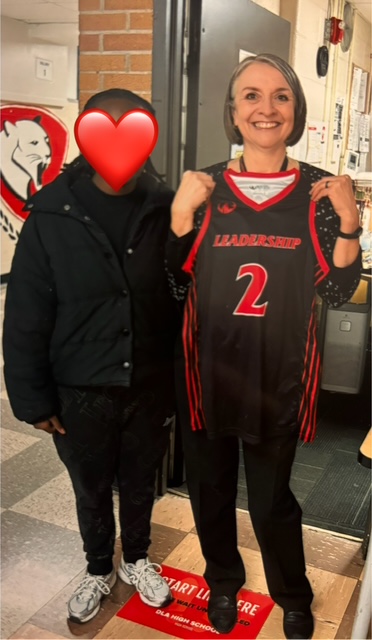


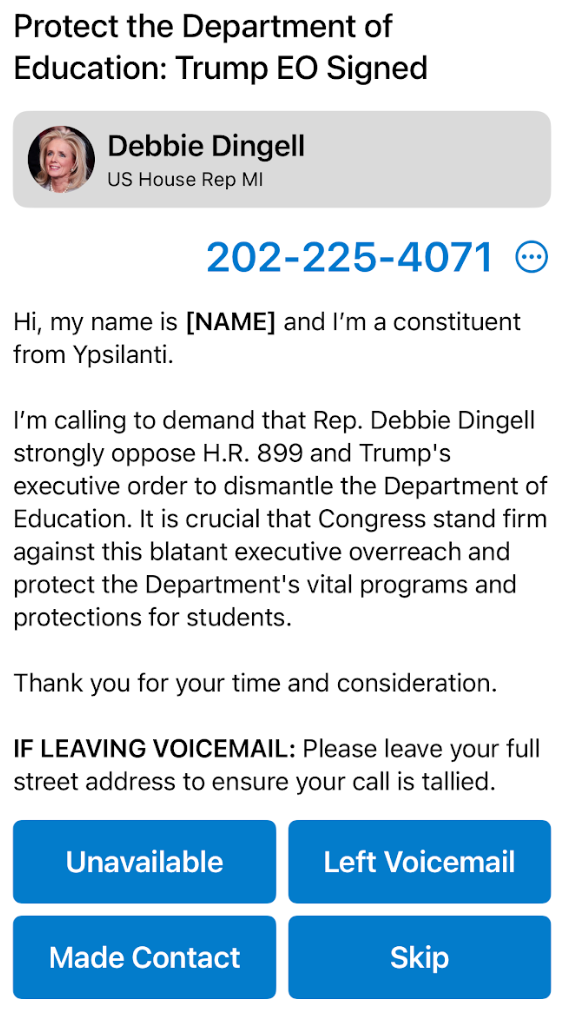





 Next Chapter