It’s been 10 years since I wrote that first post, and since then I’ve written 652 more (653, if you count this one). In the beginning, I wrote almost every day. Having been instructed to be still after years of routine — first teaching, then parenting young children, then graduate school, then teaching and parenting combined — I needed something that would bring order to my day. So in those first months in the little house by the river, I woke every morning, made my tea, and wrote a post before I did anything else.
I think I began blogging because I needed a purpose, something that I could accomplish each day, something that I could produce — a physical representation that I could still do something. I didn’t really know what I was going to write each day, but an instinct — perhaps after years of journaling and teaching others the value of daily writing — pushed me to the keyboard every morning, and this writing became a lifeline.
Some of you began to read perhaps out of curiosity — why would someone daily post about their life? why would a teacher at the height of her career walk away? why were we moving to Michigan after years in Missouri? Some of you have told me that you resonated with the chronicling of my autoimmune disease. You, too, suffered with chronic health issues and my willingness to write about being stuck on the couch or lying on the bathroom floor writhing in pain let you know that you were not alone. Some of you read because you knew me as a child and wondered what I was up to. Some of you are my family and friends (or my husband) and you read out of care, concern, and solidarity.
Whatever the reason you read, the fact that someone — anyone — was reading gave me the encouragement I needed to keep going.
And when I kept going, kept writing, day after day after day, I dug deeper into my interior and discovered things about myself that had long been buried or that simply needed articulation — precious memories from my childhood that revolved around my grandparents and godparents, deep sadness over losses that had never been processed, my ongoing journey with autoimmune disease, my strong feelings about political issues, and probably more than anything my passion for educational equity.
I often tell my students (and my friends and anyone else who will listen) that I (and perhaps you) don’t know what I am thinking or feeling until I see what I have written on the page. Perhaps it is because I have spent a life in motion, constantly doing, producing, going, and moving, that I have pushed my thoughts and, even more so, my feelings deep down inside without taking the time to process them.
Having a health crisis and being forced to stop and be still provided the space in which I could — finally — pull up all those thoughts and feelings and begin to examine them, evaluate them, feel them, grieve them, and in some cases, move on from them.
So I’m sitting here, in my little home with the garden, ten years later, candle burning on my desk, still in my pajamas, reflecting on how far I (we) have come. In over 600 blog posts I’ve moved from debilitating pain and fatigue to manageable symptoms that remind me to move slowly and to routinely pause to take stock. I’ve transitioned from taking daily anti-inflammatory medication and monthly injectable biologics to mostly just daily vitamins and supplements with occasional Motrin added in. I’ve been growing in my ability to write and subsequently speak about my deepest hurts, greatest losses, daily struggles, and strongest passions. And, most tangibly, I’ve gone from my insecure 2014 self that felt like an invalid to my confident 2024 self, which my instructional coach recently described as “effortlessly dope”. (I think that’s the most treasured compliment I’ve ever been given.)
Do I owe it all to the writing? No, I wouldn’t say all, but I would say I wouldn’t be where I am today without the discipline of this blog. My commitment to write regularly and truthfully — sometimes painfully truthfully — has been not only the evidence of the miraculous growth and healing I have experienced in this next chapter, but also a primary instrument in that healing.
I don’t think I can unpack what I mean by that in one blog post, so the assignment I’m giving myself this year is to share a “vintage” post each Thursday and a new post most Mondays. The objective is to deeply reflect on the power of writing, of routine, of discipline, of transparency, of community, and of vulnerability. I can’t predict where this assignment will take me — I won’t know what happens until I see it on the page, but I invite you to come along with me.
If you dare, I challenge you to write along — you might just open a blank page and write for 5 minutes each morning to start. You might find that’s not enough. You might find it’s too much. But if you’ve read my blog for any amount of time, I hope you will see the possibility for transformation that might happen if you are willing to take a chance.
I’d love to hear from you — what you are finding out about yourself, what are you unearthing, what is happening for you as you write. It doesn’t have to be for the public eye as I am allowing here. Writing can be magical even if it is for your eyes only.
Whatever you choose — reading along on my journey, writing along with me, or doing something altogether different, I pray God’s blessing upon you — may 2024 be a year of growth, of healing, of transformation. May it be filled with love, with joy, and with a renewed sense of hope.
If you don’t believe that God can restore what is all but lost, let my blog be a testament that nothing is beyond His ability.
Behold, I am going to do something new, Now it will spring up; Will you not be aware of it? I will even make a roadway in the wilderness, Rivers in the desert.
We’re seven weeks into this school year, and I’m not sure who is learning more — me or my students.
This is always the case, of course, but I continue to be amazed. You would think that since I am fifty-seven years old, and my students are mere teenagers, that my maturity, at least, would exceed theirs. In some ways it does, for sure, but they are teaching me to receive feedback and to alter my approach.
Now, they don’t necessarily know they are doing this — they aren’t setting goals, writing lesson plans, or assessing my progress. No. They are just navigating their lives in the best ways that they know how, but when our paths cross, they are not afraid to give me the feedback that I need.
And I am not too stubborn to receive it. Not any more.
Recently, I was trying to get started with my fourth hour class — they come to me straight from lunch, and my expectation is that they would just walk in, grab their materials, sit down, and be ready to engage with learning. Yes, I do see, as I type those words that my expectations border on lunacy. For one, any teenager coming straight from lunch might be transitioning from a fun conversation with peers, from an attempt to engage with a person of romantic interest, or from a mild or moderate altercation with a staff member. To expect them to instantly shed those interactions and be fully engaged in English Language Arts is, although an appropriate academic posture, probably not entirely sensitive to adolescent development.
And I know that, and I prepare for it. Each period, I plan a “gathering” — some short activity to pull us all together. For example, I might display a slide showing that October 23 is National TV Talk Show Host Day and then ask my students, “if you could be interviewed by any TV Talk Show Host, who would it be, and what would you want to talk about?”
We might take a few minutes to discuss and laugh in an attempt to build a classroom culture and foster engagement before I try to deftly transition into the goals for the day.
On this recent day, the one I was starting to tell you about, I could tell that the majority of my students were not with me. I was having a hard time getting everyone to find their seats, to put their phones away, and to engage with our gathering. So, in the “kick butts and take names” fashion that I learned somewhere along the way, I started moving around the classroom in my ‘large and in charge’ type of way in an attempt to get them settled in.
I narrowed my proximity. I bantered with students, interjecting myself into their conversations, and trying to overpower them into submission. This strategy might have worked once upon a time, but my current students are not having it. The power play does not work with them. I know this, but on this particular day, I was frustrated enough with their lack of attention that I reverted to the muscle memory of raising my voice, getting an attitude, and using language that is not typically mine.
My students’ response? They kept doing what they were doing — they were unbothered — until the language that came out of my mouth elicited a “Whoa, Mrs. Rathje, you can’t say that,” and then the room went quiet. And I knew the student was right. My language had crossed a boundary. I had gotten their attention, for sure, but not in the way that I wanted.
I backpedaled.
“You’re right. That was inappropriate. I think I am feeling frustrated because we don’t seem ready to get started. But that is no excuse. I apologize. Can we start over?”
The room quieted, but some of the respect that I had spent weeks building inside of this space, had crumbled beneath my feet, and I instantly knew I would have to do some rebuilding. Nevertheless, my duty to instruction prevailed, and I began with our lesson. Just as we were finding our rhythm, one of my students jumped up and said, “Mrs. Rathje, I gotta take this call,” as she speedily went to the hallway.
Well, that irritated me, but I kept moving with the students whose minimal attention I was holding and then met her at the door when she returned.
“You can’t just walk out of class, ” I said, my attitude re-engaged, “You haven’t been here all week, and now that you’re back, you just jump up and take a phone call?”
I think I expected her to say, “You’re right. I’m sorry,” but instead, she looked me straight in the eye and said, “I am feeling a certain kind of way because of how you are talking to me. The reason I have been missing school is because I was at a party last weekend where my cousin was killed.”
I put my hands up in quiet surrender and took a step back.
“Wow. I didn’t know that. Thank you for telling me. You are right. I didn’t need to give you any attitude. I apologize. I am glad you are here. Will you let me know if there is anything I can do?”
“I will. Thank you.”
Sheesh! Twice inside of twenty minutes, I had had to apologize for defaulting to a power play and my students were the ones who gave me the feedback that allowed me to check myself and try a different way. I thought I was the one who was supposed to be doing that for them.
Each day, I have to remind myself that I am not the center of the universe; the behavior of my students is not directed at me. They are dealing with all kinds of things. For example, not one, not two, but three of my students reported “my aunt just died” this week! I have got students who are homeless, some who work over twenty hours a week, and some who are earning money to help their families pay the bills. I’ve got students who have family in jail or who are on probation themselves. I’ve got students whose families do not have a vehicle and can’t come to get them in the middle of the day if they are suddenly sick or injured or overwhelmed by the amount of loss in their lives.
And these are the things I know about. Many of the struggles my students face are too private to share.
So, instead of being annoyed when my students don’t walk in on time and enthusiastic for learning, I need to be curious.
What is going on that has everyone distracted today? I noticed you weren’t at school for several days, is everything ok? I can see that you are preoccupied with your phone — are you just caught up in scrolling? or is it deeper than that?
I don’t need to have an attitude. Asking a simple question can provide my students with the feedback that might allow them to a) provide me with information that explains what’s going on or b) check themselves and try a different way.
Life is complex and English Language Arts aren’t the top priority for a student who is reeling from crisis. However, it is my job to share the value of learning ELA for the purpose of having strong communication skills, succeeding in postsecondary learning, and for being prepared for future employment. I need to be compassionate in regard to my students’ reality while also engaging them in learning and holding them accountable to meet the learning standards that will give them access to spaces beyond my classroom.
It’s a big job. And sometimes I get tired, and I blow it.
However, I am noticing that the class of 2024 doesn’t have any trouble holding me accountable. They are not afraid to say, “Mrs. Rathje, you can’t say that.” or “I don’t like the way you are coming at me.” or “Mrs. Rathje, are you doing ok?” They are modeling for me the ways that might be appropriate to hold them accountable!
And, if I’m not too consumed with being in control, if I’m brave enough, I might just model for them the ways that they can respond to my feedback.
You’re right, that was harsh. Did that sound sarcastic? I apologize. Guys, can I be honest — I’m not feeling the best today. Can I just take a minute to gather myself? Can you all cut me some slack?
I love these kids so much, and I am so impressed by their ability to notice that something doesn’t feel right and, in that moment, to say something. In this way, they are worlds ahead of me. They are brave, and I want to honor their bravery in a way that seems counterintuitive — I want to be vulnerable.
Brene Brown in Atlas of the Heart says: ” In a world where perfectionism, pleasing, and proving are used as armor to protect our egos and our feelings, it takes a lot of courage to show up and be all in when we can’t control the outcome. It also takes discipline and self-awareness to understand what to share and with whom. Vulnerability is not oversharing, it’s sharing with people who have earned the right to hear our stories and our experiences” (14).
If what I’m trying to do is build transformative relationships with my students, what better way do I have than modeling vulnerability — welcoming feedback, admitting I was wrong, saying I’m sorry, and moving forward in a way that honors the humanity of the people in front of me.
Back in the early days of my teaching, the old pros used to advise us to “not smile before Thanksgiving.” Their philosophy was that teachers had to be hard asses for the first quarter if they wanted to maintain control of their classrooms. For many it worked.
But I’m not interested in control.
I’m in education because I have an insufferable belief in transformation, and in my experience, I have to let go of my need to control in order to create the space in which change is possible.
I can’t create that space through force. I need to be willing to step back — to be the one to create an opening.
If my students are brave enough to hold me accountable, I’m going to be brave enough to try a different way..
Do not conform to this world, but be transformed by the renewing of your mind.”
I lost some sleep last night— it’s not too atypical for me, a gal in her 50s, to be unable to sleep at night because a) I’ve got some losses on my brain I haven’t yet processed and b) while trying to distract myself from those unprocessed losses, I have stumbled into a particularly engaging murder mystery.
The coincidence, though, is that the book revolves around multiple losses! Somehow reading about fictional losses is preferable to thinking about the real ones I’ve witnessed in the past week.
I prefer to celebrate wins — I just finished the third week of the school year, and the wins are stacking up! The majority of my students have been consistently opting in to learning, the weather has been near perfection, our seniors (and some juniors) toured two colleges this past week, and my newest cohort of reading students is off to a great start!
There is so much to celebrate, but wins in every context are invariably set against an undeniable backdrop of loss. For example, in the last three weeks, our school, which routinely has a 90% staff retention rate, has lost one teacher each week. The first week, our newly hired freshman ELA teacher resigned to return to a district where he had previously been employed. The second week, a strong team member who has taught financial literacy to our students with her whole heart, left to pursue an administrative role in another district. And this week, perhaps the hardest hit of all, our long-time algebra and geometry teacher who has some of the strongest relationships in the building, announced that he is making a career move at the end of next week.
In a small school like ours, with just under 300 students, these blows hit hard. We are a family, after all. We all know each other by name. We razz each other in the hallway. We defend each other in the midst of chaos. We cheer each other on. We have each other’s backs.
And the loss is not only a blow to the morale of the staff, it is the latest in a string of losses for our students.
You may be tired of me saying it, but it is the reality I witness each day — many of my students have suffered deep, deep loss. Just this past week, I learned of a junior who lost her mother since school started and a senior whose grandmother died last week. Then Friday, one of my seniors stepped out of class to take a call during which he learned that his brother, who had been in critical condition, had just died! And these are not isolated cases. Each year — each and every year — I have had a student who has lost a parent. It seems each year I have also had a student who has lost a sibling. And last year, I even had a student who lost her own newborn child.
So imagine that you’re in your senior year, that you spent your freshman year in your bedroom peering into a zoom room on a chromebook that you didn’t quite yet know how to navigate, that you lost one or two or three close family members to Covid, that your family had to move one or two or three times within the last two to three years because they a) couldn’t afford the rent, b) got evicted, or c) had some other family trauma that necessitated a move, and then you show up to your senior year and notice that once a week a staff member disappears. How does one respond in the face of loss after loss after loss?
You might be overwhelmed. You might become depressed. Or, you might do whatever you have to do to survive — you might keep people at arm’s length, or you may put up an crusty exterior so that people don’t know you’re hurting.
I’ve seen that. I watched a girl all last fall defiantly walk out of classes, repeatedly (and sometimes aggressively) spar with classmates, and verbally challenge those who might dare to hold her accountable. She was a junior, but I knew her name because I had repeated hallway interactions with her.
“Where are you supposed to be, LaShay?”
“I’m goin’ to the bathroom.”
“Didn’t you just come from the bathroom?”
“Stop talkin to me.”
She was angry, it was obvious. And she was kind of hard to like, if I’m gonna be honest. And, I’ll admit, that when she was removed from the building and forced to do online learning after an incident that threatened the safety of others, I was a bit relieved. She was a high-flyer, constantly in need of redirection from not just me, but all of the members of the leadership and school culture teams.
When she showed up at the back to school fair a few weeks ago, with her younger sister, who had also been sent home due to the same incident, I swallowed hard and thought, Well, here we go. This time, she’s in my class..
Her sister sought me out, gave me a hug, and said, “Mrs. Rathje, we’re back!”
I hugged her, and said, “Great to see you! Is LaShay here?”
“She’s in the gym.”
“Let’s go find her,” I said.
I walked to the gym, found LaShay, walked up to her, smiled, and said, “Welcome back,” with the most genuine smile I could conjur. I was determined to start off on the right foot.
She side-eyed me, and then looked down.
“You’re with me this year, dear. I’m looking forward to it.”
Without answering, she walked away, to go talk to a friend on the other side of the gym.
The first week with LaShay was a little dicey. She showed up to class consistently a little late. She scrolled on her phone when everyone else in the class followed my direction to “stow phones during instruction,” and got a little huffy with me when I joined her for partner work when she refused to join anyone else.
But I persisted. I pointed out that her attendance had been perfect near the end of the second week, “even if you do tend to show up late,” I said.
“I don’t show up late. I’m here on time. I’m doing my best. My mom has cancer, and I’m the oldest. I gotta get myself and all my siblings together, but I get all of us here on time.”
There it was. My opportunity. I remembered a brief interchange from the year before when I learned that her mom was sick, when I asked her why she was crying in the hallway. She wasn’t crying now. She was, indeed, “together” and she and her siblings were consistently in the building.
“LaShay, I’m so sorry to hear that. I do see you in school every day. I was noticing that you are often late to my class, but I didn’t realize that you were the oldest or that your mother was still sick. You probably have a lot of responsibility right now.”
She looked at me and nodded.
“Ok. I can give you some grace, but I’m gonna ask you to do your best to get here by the bell. It’s something we are really working on this year. However, now that I know what’s going on, I will try to be understanding. Please let me know how I can support you.”
“Ok.” she said, and she got back to her work.
I’m gonna call that a win — a big win! — against a backdrop of devastating loss. She lost half a year in the building last year because of a dust up that was likely a response to the trauma of her mom being critically ill. She is losing some of her childhood and her innocence because she has to take on the mantle of responsibility during her mother’s illness. However, she is winning, because she is developing the skills to communicate her reality in a way that will help her get the understanding she needs.
It takes vulnerability to share with a teacher, one who has historically been on your case, that something is not right in your world. She couldn’t count on me responding like I did. She doesn’t know me that well. But she took the chance, and that’s a win.
On Friday afternoon, I got in my car, and drove to a football field in the heart of Detroit to work the gate at our team’s game. La Shay is a cheerleader — on top of everything else right now, she is claiming the opportunity to fully opt in to her senior year. In order to stay on the team, she will have to keep herself together, stay out of trouble, and represent the school well.
During half time, the cheerleaders came over to where I was standing with last year’s principal, who came to the game because even though she no longer works in our building, these are her babies. The girls took turns hugging their former principal, and I took the opportunity to move in closer.
“LaShay, come here,” I said as I waved her over, “Your principal needs to hear that you are killing it this year. That you’ve got perfect attendance and you’re completing your assignments!”
She beamed. The principal hugged her, encouraged her to keep it up, and hugged her again, saying, “I knew you would!”
Another win — and this girl could really use some wins right now.
Loss is the reality of life on the planet — the hits inevitably keep coming, so it’s important to not only process the loss, but to note the wins. I didn’t always do this. Because I was so frantically trying to create perfection, I didn’t leave the space to acknowledge, let alone grieve, loss. Instead, I defiantly moved forward, demanding those around me to join my pursuit of perfection, and because I was looking for perfection, I didn’t celebrate all the wins.. I lost a lot in those days — the tenderness I could have had in some of my most dear relationships, the opportunity to show the people I love the most the grace that they needed in their losses, and the opportunity to celebrate their wins. I wasn’t brave enough (or self-aware enough) at the time to be vulnerable — to communicate my reality in ways that get me the understanding that I needed.
But I’m brave enough now — brave enough to seek out a defiant young woman in a school gym and to take the chance at building a relationship with her, because she looks a lot like someone I used to be, and it seems she could use someone to help her learn to celebrate the wins that happen against the backdrop of loss.
Praise be to the God and Father of our Lord Jesus Christ, the Father of compassion and the God of all comfort, who comforts us in all our troubles, so that we can comfort those in any trouble with the comfort we ourselves receive from God
2 Corinthians 1:3-4
*One of the ways I celebrate student wins (and cushion losses) is by providing a steady stream of snacks, supplies, and prizes in my classroom. Many of you have contributed to my stockpile, and I am thankful for you! You make this work possible!
In March of 2020, we sent all of the nation’s children home in the first weeks of the Covid Pandemic. How could we have anticipated the impact of this decision? While some students were home for several weeks, many students, especially students of color in our nation’s urban areas, were home for more than a year. How might this have impacted their social-emotional development, they mental health, or their learning?
We educators have been beginning to unpack the broad impacts of the pandemic on our students over the last two to three school years. Here’s what I’ve seen.
In the fall of 2021, when my students first returned to in-person learning at my Detroit charter school after 18 months of remote instruction — which for many in my community meant no instruction at all — I noticed extremely high anxiety and a limited ability to interact with peers without conflict. Our students needed support to merely exist in the classroom within six feet of their peers. Although everyone was masked, these students had learned that proximity meant danger. It took some time for them be comfortable around one another, particularly because with some regularity, whole groups were sent home to quarantine after one member of their classroom cluster tested positive. It wasn’t until late in that school year that the Covid protocols changed, masks became optional, and our whole community started to relax a little. The heightened anxiety surrounding that school year led some students to stay home intermittently, to switch to virtual learning for yet another year, or to do their best to muddle through day by day. For teachers, this meant that academics, while important, were not the priority. Since Maslow illustrated his hierarchy of needs we’ve recognized that a student needs to feel safe before he can be free to learn. Our focus was on building predictability through routine and on getting our students the social work supports that they needed.
Much of this carried into that second fall — 2022 — where our back to school professional development sessions centered on the brain science behind trauma. We learned about the amygdala’s response to danger — flight, fight, freeze, and appease — and how our routines and instructional strategies can minimize this response and the interruptions it causes to learning. This is relevant in our context not only because our students have experienced the extended communal trauma of the pandemic but because they have also endured the traumas associated with systemic racism such as food insecurity, housing insecurity, violence, and negative experiences with law enforcement. Our social workers and behavioral specialists worked overtime to anticipate difficult situations, to mitigate conflict, and to restore relationships. Again, although academics were moving up on the priority list, they were not at the top.
As we were moving through the virtual year and the return to in-person learning — I, fresh from working at Lindamood-Bell where our whole gig was reading intervention and remediation, noticed that very few, if any, of my of my students were reading and comprehending at grade level. I lifted my concern to our Director of Academics, “We’ve got to get a reading interventionist in here — these students need support.”
I said that during the 2021-2022 school year and found myself in August of 2022 at an intensive training week for the reading program called Adolescent Accelerated Reading Intervention (AARI). I would be piloting this program for one year — last school year. During that academic year, I worked with 18 freshmen over the course of two semesters. Each of them started AARI with an instructional reading level at or below third grade. Over the course of one semester, the students and I worked on decoding (sounding out words, breaking words into syllables, etc), which is not part of AARI, building a mental movie about what we were reading (also not AARI), and using the text to support our thinking and developing metacognitive skills (all AARI). After one semester of work, I only had one student who did not improve at all — and that was likely due to the fact that he was absent almost half of the days that we met. Two students grew one grade level during that semester, most grew two to three grade levels, and a few grew four or more grade levels in one semester. It’s quite a remarkable program.
As a result of this success, and the data I obtained testing students over two semesters, our school adopted a broad tier-two intervention called Read 180 for all of our freshmen for this school year. That means that rather than 18 freshmen getting the intensive remediation that I provided, ALL incoming freshmen would receive an intervention that, delivered via computer, in small groups, and with the aid of an instructor, yields two years of growth in one year. I was very excited to hear that we were getting help for all of our freshmen. I was even more excited when I learned that I would be providing AARI to a select group of sophomores and juniors.
I have spent the last two weeks working one-on-one to evaluate students who scored the lowest among their classmates on the Reading and Language section of the PSAT last Spring. (Perhaps one day I will write a whole post about my feelings regarding standardized testing in general and the SAT/ACT specifically, but not today.) I pulled each of these students to my room, had a conversation with them, administered the Qualitative Reading Inventory (QRI) and determined their need for AARI. I was gut punched when I realized that two sophomores and one junior in our building scored at the first grade level for reading comprehension. How in the world were they functioning in high school? How could they continue to show up if the content of their classes was that frustrating?
Most of the students I selected for the class tested at the second or third grade level when measuring reading comprehension. When we take into account that many of them did not read much from 2020-2021, and that many of them have been in a trauma response for the past two to three years or more, this is not terribly surprising. What is surprising is the half dozen students I met with who scored much higher. These few lit up when I told them that the PSAT is not an accurate measure of their intellect, that although Covid was devastating and their skills are possibly rusty, they have the capacity to be successful not only in high school but beyond. I looked them in the eyes and assured them that now that I know who they are and what they can do, I will be watching and expecting great things. These few, mostly black males, sat up straighter, looked me in the eyes, said, “Yes, Ma’am,” and “thank you.” One young woman who, despite severe anxiety, demonstrated a keen aptitude for academics said, “I am thankful for you and what you are doing..”
The ones who qualified for my class had an equally amazing response. To a person, they acknowledged that “reading is hard for me.” They said, “I need this class, ” and “thank you for doing this.”
Here’s what they didn’t do. They didn’t say, “I don’t need help with reading.” or “I’m not taking some dumb reading class.” They didn’t refuse to read lists of words or answer questions about the similarities and differences between whales and fish. They didn’t question why I was pulling them from class. They didn’t resist.
No, these students recognize what they have lost. They know they need help. They know support when they see it.
How do I know? Because for the past two weeks, as I have moved through the halls, I have heard these students, and the students I worked with last year. They call out, “Hi, Mrs. Rathje.” They don’t act like they don’t know me. They don’t avoid me. No. They stop by my room, they give me a fist bump as I pass, they throw their arms around me in a hug.
But they do these things not just to me. They love all the teachers in our building because they feel safe here. They see the hard work we have done to create a predictable environment. They notice us responding to their mental health needs. They understand that we see them, we know what they have been through, and we are here for them, cheering them on to success.
On Friday, I was calling all the parents of my new cohort. “Good afternoon, this is Mrs. Rathje from Detroit Leadership Academy.” I explained why I was calling, that we had noticed since Covid that many of our students are below grade level in reading comprehension, and that their student had been identified as one who could benefit from this class. Most parents said, “Ok, thank you,” or “Whatever he needs, I support,” but one mother took my breath away.
“Thank you so much for noticing this. I lost both of my parents during Covid and to be honest, I’ve been deep in grief and didn’t even realize that he was falling behind. Thank you so much for paying attention to him.”
These students are not behind in reading because they are dumb or poor or Black. They are behind in reading because they have been through a lot, their learning has been interrupted, and they need some support to get back on track.
I can’t wait to get started with them and to cheer them on as they learn and grow this year.
I’m a sucker for a story of restoration, especially when I have a front row seat.
I am confident of this: I will see the goodness of God in the land of the living.
Psalm 27:13
*For data surrounding the impact of Covid on learning, check out the documents linked below:
**If you know an educator in the Detroit area that cares about educational equity, please connect them with me. Because of the nature of our work, we are always looking for partners, teachers, coaches, and other encouragers.
The Thursday before school started, we the staff of Detroit Leadership Academy took our stations around the building, preparing for the open house where students would come to get their schedules and chromebooks and begin to reconnect with the world of school after eight weeks away.
I was at the main entrance, checking students in. I didn’t know the freshmen, of course, they were new to our building, but I was watching for those students I recognized, especially the small group of students I had had in my reading class the previous year.
“Hey! How was your summer?” I said as I stood from my seat to receive a hug. “It’s so good to see you!”
I was also watching for last year’s juniors, who would be my new senior class. I knew some of their names, but we aren’t familiar enough for a hug.
“Are you ready for this?” I would say, “You ready to be a senior?”
The replies were varied: “Of course!” “Hell, yeah!” “I think so.” “I’m not sure.” “I’m scared.”
I’ve seen it from every group of seniors I’ve ever taught. Some things don’t change; others do.
The first day of school was predicted to be in excess of 90 degrees, and since our school doesn’t have air conditioning, our administration determined to have an early release. We would see each group of students for just 30 minutes, and then they would board their non – air conditioned busses for the sweltering ride home,.
I had two box fans and two ceiling fans blowing, and my two operational windows as far open as they go. I stationed a cooler full of water bottles covered in ice at the front of my room, and kept the lights off to keep the room as cool as possible.
When the bell sounded, my students met me at the door, got their seat assignments, and made their way to their desks. It took me a while — perhaps until this reflective moment — to register that something felt different.
This wasn’t the fall of 2020 where I met my students inside the small square of the zoom room.
It wasn’t the fall of 2021 where my students entered my room mask-clad, the vibration of anxiety among us palpable.
And it wasn’t the manufactured bravado and audaciousness of 2022 — the defiant swagger born of two years of persistent trauma.
No, this past week, the first week of school year 2023-24 felt….light…spacious…and maybe even hopeful.
As I shared the big picture goals for the year — the district-wide vision that all of our students would be accepted to a college, that 80% of them would enroll in some kind of post-secondary training, and that all of them would attend school more than 90% of the time — I watched the faces of my students, expecting the usual push-back, disinterest, or defiance, but what I saw was a collective subtle nod, an acceptance of this reality, and (an at least temporary) buy in.
Now, don’t be mistaken. I still saw seniors struggling to stay off their phones. I still had one student who, when I mentioned that we would be filling out the FAFSA together, stood up from his desk and said, “I ain’t doing that.” I still had at least one student who proclaimed his main post-secondary goal to be “making music”. It was a room full of high school seniors after all, but something felt different.
While our community regularly struggles with chronic absenteeism, the majority of my students attended all four days last week — even though the temps did crawl into the nineties and both my classroom and the busses were stiflingly hot. Not only that, all of my students made eye contact with me this week. All of my students, even on day one, responded to my call for attention. All of my students participated in gatherings, like the one below, where I asked them to stand and move to the four corners of the room to demonstrate their preferences and interests.
And all of my students participated in the making of our class contract, and when asked, every single student in my class stood up and signed their name in agreement to our class norms.
Some teachers may not think this is a big deal. Perhaps they get 100% buy in on every activity they do in their classrooms, but this has not been the case for me. Not since Covid. Not in my little charter school in Detroit. Not with seniors. Not in this demographic that has historically and recently suffered so much.
In the past few years, it has taken me quite a bit of time to build the relationships and trust that lead to this kind of engagement. When I first started at this school, I was some middle-aged white lady from Ann Arbor — how could I have any idea of what life was like on the other side of the zoom camera where an adolescent Black student sat on her bedroom floor trying to figure out what a URL was and how she was going to move from one zoom room to the other.
The following year, my giddiness at finally getting to be “in the flesh” with students was met with distrust, apprehension, and the layers of protectiveness that Covid and generations of systemic racism had produced. My students were stand-offish, skittish, and surly. It was well into the second semester before I had any meaningful relationships.
Last year, it took less time to build trust with most, but some still refused to engage for the entire year. Yes, the entire year.
So when I got 100% opting in on the first day last week, I was a little stunned.
I was even more surprised on Thursday when I collected the student survey I had handed out and started to read the vulnerable responses to my question: What are you concerned about as you start this year?
Do I have enough credits to graduate? Will I be able to fill out the FAFSA if I’m undocumented? Will I be able to stay focused?
I was in awe of their transparency with their answers to my question: What do you want me to know about you?
English is not my first language. I get mad easily. I am a hard worker. I am funny. I hate school.
And I was touched by their responses to my question, How can I support you this year?
Push me. Help me understand. Explain things when I am confused. Be patient with me.
I’ve just finished the first week of school and I know more about this year’s seniors than I have known about many of the grads for the last three years. Why is this? Is it a sign that the trauma from Covid is waning? Is this just a more self-aware and confident group? Have I been in this school long enough that I have built a reputation of being one who can be trusted? Or is this just evidence that God’s grace is flooding my classroom?
Perhaps it’s some of all of that, but I am not going to look away. I am sensing a rare opportunity with this group. It is smaller than any senior class I have ever had, and they have already opened themselves up so much. I am sensing that we just might become a little family, and I am here for it.
So pray for me, if you would. Pray that I would truly see these students, that I would hear them, and that I would be willing to share with them what I know about the English language, of course, but more importantly what I know about life, about vulnerability, and about change.
Because guys, one thing I know about people who are willing to open themselves up is that they are on the verge of transformation, and I am going to have a front row seat.
What types of changes do I think I’ll see? I’m not sure of all of them, but I have already told my students several times this week that “this is the year when we make the transition from childhood to adulthood.” And for many of these students that is more true than I know. One just had a baby. Some will move straight into the military. Some will go straight to work. And even those who are moving on to more education in college will be shifting to a world that they have never seen before — one where the students around them will be from vastly different backgrounds, one where they won’t necessarily be near the family they have been used to, one where they are going to feel potentially more vulnerable than they have ever felt before.
So the fact that they are already willing to bare a small bit of themselves to me gives me a lot of hope that they will be ready for all the change that is coming at them, and because of that I am sitting on the edge of my front row seat.
I will see the goodness of God in the land of the living.
In a little over a week, I’ll be standing at the door to my classroom, waiting to greet my new students. I have seniors for English Language Arts, and I’ll also have one section each of sophomores and juniors for the reading intervention I lead.
For the past few weeks I’ve been analyzing my scope and sequence, reviewing my summative assessments, and examining data from last year. Last week I met with colleagues to plan and prepare. This week I’ll be in my classroom arranging desks, putting up decor, and finalizing my lesson plans.
As I move closer and closer to being with my students, I am beginning to wonder what their summer has been like.
Mine was filled with family, wedding preparation, food, celebration, and time in the garden, with friends, and in long, luxurious reading sessions.
To be honest, with all the activity around here, I haven’t given much thought to what my students have been up to.
Have some of them had summer jobs? Have others been responsible to care for younger siblings at home?
Have they spent time with their friends or family?
Have they had plenty to eat? Have they been safe? Have they suffered a loss?
Are they ready to come back to our building — to the predictability, the routine, the familiar faces?
Do they have what they need to feel comfortable walking through those doors on day one?
I don’t know.
What I do know is that we’re changing things up for our students this year, and change is hard. When teachers learned last week that we’d changed from a block schedule (four 100-minute periods a day) to a traditional schedule (seven 50-minute periods a day), there was some scuttlebutt in the room. The rhythm in the building will be different — students will get up and move every hour, and seven times a day the halls will be teeming with the entire student body. The goal? That each student will interact with each of their teachers every day.
Ultimately, the change will benefit both teachers and students. Our data shows us that our students need more “at-bats” — they need to touch math every day, practice language arts principles every day, and get micro doses of science each day. We moved to the block schedule during Covid to simplify virtual instruction — to give teachers more time with each class to get connected, to build a sense of community, and to be able to touch base with each of the students within the confines of the zoom room. When we returned to in-person learning, we kept the block schedule to minimize the amount of change that our teachers and students were managing. We remained in the block schedule last year, but as June rolled around and the data came in — low attendance, low test scores, low family engagement — we had to take a look at making some changes.
We’ve got to see our students every day. We’ve got to build a stronger sense of community and belonging. We’ve got to strengthen connections with our families, to clearly convey the fact that we want their students to succeed — in high school, but more importantly, beyond high school. We’ve got to build strong relationships so that our students and their families can see the why of education — the possibilities it provides, the doors it opens.
And in order for our students and families to be able to buy in, they need to be able to trust us — their teachers, their staff, their administrators — they need to see that we are for them, and that can only happen over time and with plenty of reps.
The good news is that we have a strong, committed staff. We routinely retain over 90% of our teachers. Inside an environment like ours — one with 100% free and reduced lunch, 99% students of color, and a history of educational inequity — this kind of loyalty is rare. Our teachers function like a family — one that cares wildly for its kids.
These teachers and administrators, seeing the data and recognizing the work it would take to reconfigure their instructional plans into a different model, took a collective deep breath and got busy. They want their “babies” to have what they need — mastery of content, success in the classroom, an opportunity to move beyond the high school to other worlds they have not yet dreamed of. And because of that, they are willing to do the hard work — not only of reconfiguring their plans, but of communicating their buy-in to a few hundred teenagers who will likely have some opinions about this change.
I can see it now. I’ll be standing at my door next week wearing the stupid grin I always wear on the first day back to school — man I love love school! — and the students will start showing up at my door.
“Mrs. Rathje, what’s up with this schedule?”
“We’ve got seven classes every day?!”
“Ya’all doing too much!”
“I’m already ready to go back home!”
It’s the sound of discomfort around change. They had pictured what this first school day would look like, but when they arrived, reality didn’t match expectations. And if you’ve lived through some trauma, which most of our students have, the unexpected can be unsettling. So, I’ll want to hear my students. I’ll want to acknowledge that they are experiencing something new, and I’ll want to assure them that everything will be ok.
“Yes. The schedule is different this year. Yes. We’ve got seven classes every day. Yes. It’s going to feel like a lot for a minute. And, yes, I am sure you feel like going home. Let’s look at your schedule together. What period do you think you’ll enjoy the most? What time do you have lunch? When will I see you each day?”
I’ll want to come beside my students. I’ll want to let them know that although change can be intimidating, it can also bring a freshness, a new outlook, an opportunity for something different.
They won’t believe me right away. Life has taught the students of today to be wary — to be suspicious — to anticipate the other shoe to drop. So, I’ll have to encourage them to hang in there, to give it a try, to go through the motions, to watch and see.
They’ll grumble, but most will find a seat. They’ll engage in whatever silly gathering activity I lead them through, some rolling their eyes and exuding disinterest or annoyance. I’ll reward any tiny glimpse of compliance, engagement, or cooperation, and I’ll work hard to call each student by name beginning on the very first day. I’ll share my interests with them by showing this slide:
Then I’ll invite them to make something similar to share with the class. Some will love the opportunity to have the spotlight. Others will beg me to let them just show me — not the rest of the class.
I’ll begin to see who my students are, and they will begin to see me. That will be the start — of relationship, of trust, of finding a space in which to learn and grow.
My students might be uncomfortable with change — most of us are — but this teacher has been through enough change to know that possibility lives on the other side. I won’t get it all right, but hopefully I can be a reassuring voice as we move through this change together.
I’ll let you know how it turns out, of course, and I would love your prayers and encouragement along the way.
Therefore encourage one another and build up one another, just as you also are doing.
I Thessalonians 5:11
*If you are able, support or encourage a teacher in your life. If you would like to support me and my students, email me at krathje66@gmail.com and I’ll send you my wishlist.
**I wrote a piece called “What World Are We Living In” in the fall of 2020 when I first started commuting from Ann Arbor to Detroit to teach in a small charter school and began to daily witness the disparity between the two communities. The following post grew out of an experience I had last week in another school district.
Last Wednesday, instead of driving to Detroit first thing in the morning, I drove to Oakland County to participate in a day of professional development along with a dozen other teachers who use the Adolescent Accelerated Reading Intervention. I’ve been using the program for a little over a semester, with great results, but I have been aware that I might not be crossing all my t’s and dotting all my i’s. Having the opportunity to be a fly on the wall of two separate classrooms as other teachers implemented this intervention would hopefully help me see what I’ve been missing.
The beginning of my commute looked largely the same as it does on my daily trip to Detroit — interstate highway merging onto surface streets. However, I noted that while my regular route takes me past fast food, gas stations, minimarts, and older working class neighborhoods, this route into Oakland County took me past Starbucks, Trader Joes, and nicer restaurants before it led me through residential sections with large suburban homes. And then, when I took the final turn, I saw the school where I would begin the day.
It was a sprawling two-story building on a large piece of property surrounded by multiple well-lit and freshly-lined parking lots. I found a spot, grabbed my stuff, and made my way to the guest entrance at the front of the building. I approached a door, pushed a button, and looked into the camera before I was buzzed in to a glass-enclosed foyer.
There, a staff member/gatekeeper looked me over and buzzed me through the second door. She knew why I was there and directed me to room “two-oh-something or other”.
“Which way is that?” I asked.
“Up those stairs and follow the signs.”
I walked up the open carpeted stairway in the expansive atrium to the second floor, also carpeted, and found the group of teachers already in conversation.
They sat in a semicircle in the [also] carpeted classroom. I found a seat in the back of the room in a bar stool height chair next to a tall table. The students had not yet arrived, and the teachers were discussing what was on the agenda for the class this day — one of the final steps of reading a book in the AARI program, mapping the text.
I heard the bell ring in the hallway, and the students started coming in, finding their resources in a strategically placed filing system, then making their way to the table where I was sitting. I relocated myself and began to observe.
Right away I noticed a t I hadn’t been crossing when I looked at the big piece of butcher paper where they had started their text map. My students and I had mapped our own text the day before, and it looked somewhat similar to, if noticeably messier than, the one I was looking at, but there was one big difference — ours was written all in black on white paper. The map in this classroom was color-coded to illustrate its organization — sections of the book written in sequential order were outlined in pink, those written in a compare/contrast format were outlined in green, etc. I mentally thunked my forehead with my palm and said, “the colors! why do I always forget the colors!” And then I noticed the posters hung on the wall in this spacious classroom. At both the front and the back of the room, the teacher had full-color posters representing each of the eight text structures. Oh, I’d like to have those, I thought. If I had full color posters in my classroom instead of the black-and-white print outs I have, I might remember to use the color coding system!
One teacher asked, “Where did you get the posters?”
“Oh, I just printed them on our poster printer!”
Oh, I thought, they have a poster printer.
The class functioned mostly as my class does. The teacher had seven students around the table; one was absent. I have ten on my roster right now; typically one is absent. She used the socratic questioning that I use, and her students engaged as much as mine do, if slightly more politely, but then again, when I had a guest in my room last semester, my students were on their A game, too.
The second building was a literal carbon copy of the first, down to the same double buzzered entryway and carpeted stairs. We gathered in a classroom that “isn’t currently being utilized” where we found flexible seating — restaurant like booths, chairs on wheels at tables, and the one I chose, a rocking pod-like chair, where I noticed I could quietly shift my weight and stay better engaged in the discussion we were having before our second observation. Wow, I thought, I have some students who would benefit from chairs like these.
When the bell rang, we walked down the hall where our second teacher met us at the door and invited us first into her classroom and then across the hall to another room that “isn’t currently being utilized” so that she and her students could map their text.
Like me, she had a projection system where she displayed a slide that she used for her gathering — the time when we engage with our students to set the climate and build community. Her students were seated, much like mine are, around the room at desks. The difference I saw was, again, the carpeted floor, the colorful text-structure posters, and stacks of resources in every corner of the room.
In the room across the hall, we again found flexible seating — bar-height chairs with optional attached desks, lower seats on wheels, and one other form of desk-like seating. Again, full-color posters on the wall illustrating each of the text structures and some key questions to ask during the AARI process.
The students again were on their A-game, and I wondered if that was the case every day, even when they didn’t have a dozen teacher-y observers. I mean, what would get in the way of their learning in an environment like this?
As I drove home, I continued wondering, why do these schools look so different from my school? Why do students in Oakland County walk into a brand spanking new building every morning, pick what kind of chair works best for them, experience the warmth of carpeting, the advantage of full-color visual aids, and, when it’s hot outside, the benefit of air conditioning, while my students just thirty minutes down the road are bussed onto a crumbling parking lot, walk into an aging building with an inadequate gym, some windows that open and some that don’t, no air conditioning, no rooms that “aren’t currently being utilized”, one seating option whether it is appealing or not, and a jillion other obstacles to learning on any given day.
Is it just a case of money?
I spent some time this morning trying to figure out Michigan’s formula for school funding that might explain this disparity — why one child’s experience is so different from another’s when they both reside in the same state. But guys, I don’t understand the model.
It’s complicated and based on per student funding from the state, property taxes, income taxes, and even cigarette taxes! Low-income (and underperforming) districts like mine are supposed to get supplemental funding from the state — which is earmarked, but historically not always allocated. And even when it is allocated, why are most Detroit schools in disrepair, lacking in resources, and understaffed when schools in higher income districts are well maintained, richly resourced, and fully staffed with high quality instructors?
Why do they get the cool rocking pod chairs and my students don’t?
Is it because those students deserve better?
No! All students deserve better! Yet these disparities continue to exist — for going on centuries now.
And why?
The simple answer is systemic racism — in education, yes, but also in real estate, in health care, in hiring, in so many sectors of our society. It’s the historical practice of separating those who have from those who don’t to ensure that those who have will always have and those that don’t never will. And the remedy is anything but simple. It begins with recognizing that selfishness and greed have created the structures in our country that enable some to have a lovely experience and to guarantee that others do not.
Now, if you are in the camp that thinks I am completely off base and that the difference in schools is sheer economics and not based in historical racism at all, I ask you why the establishment is so up in arms about our students learning African American history or looking at history through the lens of Critical Race Theory? If there is nothing there to see, why not let our kids take a look for themselves? Maybe you’d like to take a look for yourself. If so, I recommend you check out the 1619 Project* which is available through The New York Times, on Apple podcasts, or in video form on Hulu. And if you still think I’m out of my mind, come spend a day with me at my school. Get to know my students and decide for yourself if you think they deserve more.
Yes, I feel pretty strongly about this.
It probably won’t come as a surprise that my seniors and I just finished learning about systemic inequities in preparation for reading Trevor Noah’s Born a Crime, where we see through the lens of his experience the structural racism of Apartheid and how it impacted his childhood experience. We learned terms like unconscious bias, prejudice, racism, and systemic racism, and my students created posters to illustrate disparities in health care, generational wealth, criminal justice, and education.
When I returned to my students on Thursday and we started our class with a review of terms, I saw that not everyone understood that Apartheid was like the systemic racism we see in the US. In order to help them fully make the connection, I asked them to recall examples of where we experience inequities in our community. As they started to list them off, I told them about my experience in the Oakland Schools.
I wondered if it was necessary — to point out the details I had experienced. Would I be rubbing it in their faces?
But then I thought, Don’t they deserve to know what the experience of students 30 minutes away is like? especially as we prepare to read this book? especially since some of them are about to go to college and may study beside some of these very students who are walking carpeted hallways, sitting in rocking pods, and enjoying an air conditioned full-sized gym? (Let alone taking AP classes, music, and other electives we are unable to offer.)
I described what I had seen, and I could see their faces register the reality — the reality that their experience is not equal to the students I observed just 24 hours before.
“This is educational inequity,” I said. “It is one aspect of systemic racism. And why do you suppose it’s not easy to change?”
“Because,” one student answered, “it’s part of so many systems — not just education. And they don’t want it to change.”
“Who doesn’t want it to change?”
“The people in power.”
“Yes.” I gulped. “I suppose you are right. The people in power don’t want it to change.”
Pretty astute observation for a kid from Detroit? No. Kids from Detroit have this down, folks. They understand disparity; it’s the world they live in.
And the people in power can do something to change it. We are the people in power, my friends — people who vote, people in education, people in the church, white people — we can make choices that begin to make a difference for my students and their children and grandchildren. If we do nothing, this pattern will continue for more generations, and we shouldn’t be ok with that.
It’s not enough to fight for what’s best for our kids; we have to do what’s best for all kids.
As we established in my last post, I have “an insufferable belief in restoration.” The first step in restoration is acknowledging that our stuff is broken down, dilapidated, and no longer working, so I’m gonna keep talking about what’s broken to those who have the power and resources to fix it.
I hope you’ll start talking (and doing something) about it, too.
Do not withhold good from those to whom it is due, When it is in your power to do it.
Like many of you, I’ve been checking off items on my to-do list as I prepare for Christmas. In fact, I’ve got multiple lists! We’ve still got a few gifts to purchase, some homemade gifts to finish, and some food to prepare before holiday gatherings. Each day, I complete a task or two and then revise my list, recalculating to make sure everything will be done “on time”.
And while I’m doing that, I’m insisting that my students attend to their own lists.Yes, we are still in school. Our last day is Thursday, December 22. Between now and then, my seniors will complete an essay, which many of them have not yet started. They’ll write a rough draft, participate in peer review, attend to revisions, and carefully proofread before submitting their final drafts. We’re on a tight schedule, but if we stick to our lists, they [and I] will complete everything right on time.
Sounds like no problem, but we’re all kind of over it, if I’m going to be honest — the getting up in the dark, traveling to school in the cold, filing into the building, taking our places, and trudging through the motions, day after day after day.
And, as though she had her finger on the ho-hum pulse of the collective arm of our community, our instructional coach created a spirit week for this of all weeks — the week that I’ve scheduled down to the minute with very little room for getting off task.
The announcement came on Friday at around 1:30. “Get excited, everyone! Next week is spirit week!”
Sigh.
Monday we’ll have a door decorating competition. Tuesday everyone will enjoy hot chocolate and cookies at lunch. Wednesday will be ugly sweater day, and Thursday, our last day at school before break, will be Holiday Cheer Day, where everyone is encouraged to wear Santa hats, jingle bells, or other holiday items.
My first response on Friday afternoon at 1:30pm, as I was wrapping up the week’s work and preparing for the final push, was a very Scrooge-y “Seriously? One more thing to cram into next week?” and “You really want me to take time out of class on Monday to decorate my classroom door? My students are writing a paper!?!?!”
Then I progressed to, “I don’t even have an ugly Christmas sweater!” and “I need to bring supplies to decorate my door?”
Didn’t she know about my lists and my strategy for getting each item ticked off before Christmas? How was I going to fit MORE to-dos onto my lists?
But this morning, my eyes are turned to our students.
This past week, as we have been preparing to write our personal essays, my students have been sharing scenes from their lives, letting me in just a bit, sharing a peek at the things that have shaped them.
Calvin’s* mother died in 2017, when he was just 13. He said it “messed me up”. He found comfort in eating and ballooned to over 300 pounds. But, last summer, an area gym offered free memberships to teens, so he joined. He and his sister, who he now lives with, stopped eating fast food and started cooking at home, and he has lost over 70 pounds. He wants to keep going; his goal is to look sharp for prom — one of the biggest days in the lives of our students.
Monette*, who started this school year pregnant but gave birth and then lost her young son a few days later, says she wants to write about this experience. She says holding her son was a moment she was proud, and losing him was the biggest hurt of her life.
Hope* engaged in an argument with someone on Twitter who claimed that Breonnna Taylor’s boyfriend was a drug dealer. She searched for evidence to disprove his theory and stayed at it until the original post was deleted.
Kevin’s* enlisting in the Army. He spent last summer training with his recruiters, cutting the weight he gained during Covid. He’s our valedictorian, and his ASVAB score qualifies him for just about any military training he chooses. He’s going through the steps now to ensure that he’ll start boot camp just a couple weeks after graduation.
These seniors of mine stand at the edge of adulthood, where the choices they are making have long-lasting impact. They are showing up each day, working hard, and looking forward to a not-too-distant future where they will be responsible for every aspect of their lives. It’s heavy, and I need to take a moment to acknowledge that.
The weight they are carrying goes beyond checking off items on their Christmas to-do list, beyond choosing which salad they will make for Christmas Eve, beyond what gift to purchase for a colleague. They are engaging with real adult stuff — health, loss, political engagement, and military service — when they have a few fleeting moments left to enjoy being kids.
What will it cost me to allow them a little bit of fun this week? a little bit of encouragement? A little reward for continuing to show up even when they are over it?
And won’t I enjoy it, too? Won’t it be fun seeing my seniors scrambling within the 10 minutes they have been allotted to decorate my classroom door, glancing over their shoulders at the classes across the hall to see what they are doing?
Won’t it be great to see our students sipping cocoa and dunking Christmas cookies?
Won’t it bring some laughs and joy to compare our ugly Christmas sweaters?
And won’t it lighten the mood to hear some jingle bells in the hallway?
Yes, of course, yes.
So, I dragged myself out today, found an ugly sweater that I will try to make uglier before Wednesday. I picked up some supplies for our door decorating contest, and while I was out I bought a chai latte to sip on as my attitude finished adjusting.
I checked some other items off my to-do list, too, and then reminded myself to relax. What gets done, gets done. Christmas is about more than my to-do list. It’s about seeing the people in front me, enjoying the time I have with them, and sharing the joy of a love that offers hope, restoration, and a future.
Once again, my instructional coach gave me just what I needed.
I clicked ‘publish’ on last week’s blog, jumped in my vehicle, and drove to school. By the time I got there I had a text message, “I want to feed your students!”
At the end of last week’s post about my developing freshman readers, I had mentioned that they eat a ton and had invited my readers to a) support any teachers they know with gifts of snacks, or to b) help me feed mine. A close friend and fellow educator was the first to raise her hand and say, “pick me, pick me!” It’s such an encouragement to me when any of you reach out — you read my blog, you ask me about my students, you send cash for feminine supplies, or you buy snacks, and I feel encouraged to keep going.
Within a couple of hours, two retired teachers (who taught some of my children!) reached out with a very generous gift of support and another educator who got connected to my blog through a mutual friend, emailed to say “snacks are on the way!”
Monday night the Amazon trucks started arriving. By Tuesday morning, I had a large tote to carry in to school full of protein bars, fruit snacks, and candy,
Why do I need so many snacks? Because I have 80 students of my own who come into my class most days and many more who have become aware that “Mrs. Rathje probably has something.” Students come to me to borrow chargers, to get a bandaid, or to ask for feminine supplies, deodorant, or something to eat. Our school provides breakfast and lunch to all of our students, but breakfast often looks like a juice box, a granola bar, and an apple — hardly enough to hold a teenager until lunch time. Lunch might be pizza, “walking tacos” (taco fixings piled inside a snack-sized bag of Doritos), or more standard school lunch fare like chicken with mashed potatoes, all of which sound decent, but each of these arrives in large insulated boxes which cafeteria workers open up before distributing the food through a window in the gym where the teeming masses fight for a place in line. It’s loud and chaotic. You get one choice, and if you don’t like that, you are, as they say, out of luck. Many kids do eat what is provided, but some check out in a “quiet” corner, where they mind their own business and scroll on their phones.
Whether they’ve eaten or not, teenagers are always persistently hungry.
I don’t give snacks every day, but students know that if they missed breakfast, if they are going straight to work after school, or if they are just plain hungry, they can ask, and I will have something.
So, I hauled snacks into school Tuesday morning, and Tuesday afternoon, instead of going back home, I drove north for a two-day conference. The Michigan College Access Network (MCAN) was having its annual conference at a casino in Mt. Pleasant, MI, and I had received a scholarship to attend on behalf of my school and the Michigan Teacher Leader Collaborative (MTLC), of which I am currently a fellow.
When the conference started Tuesday morning, I learned about state funding for students like mine that has been made available in the wake of Covid and a disengagement in postsecondary enrollment. We’re talking millions of dollars! As the director of MCAN said, we have right now “unprecedented funding for unprecedented impact.”
Over lunch, I learned about LA Room and Board an organization that provides housing for the 1 out of 5 community college students in Los Angeles who are homeless.
The next day, I learned about the Digital Equity Act, a bi-partisan $2.75 billion initiative that provides funding for building out Internet infrastructure, providing devices, and increasing digital literacy so that “everyone – no matter where they live – can fully participate in our society, democracy, and economy,” and that means college access, job preparation, and, ultimately, increased financial freedom.
I was surrounded, for two days, by individuals who were aware of and leveraging resources that have the potential to transform the lives of my students and others like them. In the midst of this, I found myself at a table with three complete strangers. I was catching up on notes and eating my meal, when one of the others introduced himself. I told him I was a high school teacher in Detroit and then asked him what he did. He said said he was a gifts manager at a major agency in Detroit; his main project is funding the post-secondary pursuits of Detroit students.
I perked up. “Do you have a card?”
He handed me one.
I made it my job for the next few minutes to invite him to speak at our career day and to “sell” him on the mission of our school. Whenever I shared a fact or detail about the lived experiences of my students, he replied, shaking his head, “I already know. I already know.”
We parted ways to go to separate sectionals, but I found him again at lunch, and continued our conversation, sharing specific stories like the one about the brother (a freshman) and his sister (a senior) at my school who have dealt with homelessness and are now trying to navigate into more permanent living situations. I shared that one obstacle they’ve had is finding transportation to school since their new address is no longer on our bus line. I shared, “I do a little grass roots philanthropy, enlisting a small group of friends who help me out from time to time. One set of friends right now is financing Lyft and Uber rides for these two while we figure out a longer term solution. Their gifts are small compared to what you are looking at….”
He interrupted me and said, “but they add up to big wins.”
They do! I cant tell you the impact it has had on my relationship with these two students and the senior’s boyfriend, who is currently arranging all the rides because the siblings do not currently have a cell phone. The boyfriend, who had previously not wanted to engage in my class — who would barely speak to me — is now greeting me in the hallway, texting me on the weekend, and leaning in a little harder to academics. The freshman is trying to be just a little less squirrel-y (bless his heart), and his sister is growing up before my eyes, advocating for herself, navigating difficult waters, and trying to emancipate herself so that she can provide a space for her and her brother until he, too, is of an age to do for himself.
I was sharing this with my new friend, when he said, “Can you imagine what it would look like if my organization set up a fund to cover expenses like these?”
“I can!” I said, and I promised to email him the next day.
I returned home Thursday night to find an enormous pile of Amazon deliveries waiting for me — trail mix, more candy, beef jerky, cheese and cracker packs, an enormous box of potato chips, feminine supplies, deodorant, and on, and on, and on.
Big wins for my students, for sure.
Saturday, I participated in a small virtual conference put on by the MTLC. One of the speakers, Silver Moore, said she likes to picture each of her students as a hero on the hero’s journey, traversing through challenges, receiving supernatural aid and assistance from mortal helpers, on their way to transformation. She said, that “if indeed they are heroes on their journeys, they need us to tell them they are amazing.”
And I thought, “they really do!” They need my little group of friends to spoil them with snacks and Uber rides for their journey. They need the state of Michigan to provide “unprecedented funds” to overcome their challenges. They need the federal government to fund access to the technology that will help them navigate their paths, and they need philanthropic agencies to commit their resources in a way that signifies that they are truly heroes.
This is a message that is unfamiliar for students like mine. They don’t often hear that they are amazing. Instead they hear through both words and actions that they are simultaneously too much and not enough, that they are loud, wrong, and unworthy of a hero’s life.
So this week, I’m gonna haul a bunch of snacks into my room to celebrate my amazing students who are on various points of their hero’s journey. I’m going to tell them they are amazing, and I’m going to let them know that you are cheering them on.
We are the ‘great cloud of witnesses’ that might enable them to ‘run with perseverancethe race that is set before [them]’.
One week ago, the Supreme Court overturned the 1973 Roe v. Wade decision, thereby taking away the right to abortion.
So now what? Will the number of abortions performed in this country go down?
History tells us no. However, I can envision a world where it might possibly happen, but much more would be required of Americans than merely one overturned decision.
I can see it now, a woman takes a pregnancy test, which she obtained at no charge from her local pharmacy, and discovers she’s pregnant. She rushes home to tell her family, and they immediately throw a party. They are thrilled! They’ve won the lottery — a new life is coming into the world. The woman doesn’t experience embarrassment or shame. She was fully aware that she might become pregnant since sex was regularly discussed in her home, in her church, and in her school — and not as something to be avoided, but as a natural function of the body, intended for mutual enjoyment, mutual expression of love, and for procreation. She had access to free contraception until she was ready to build a family.
And now that she is ready, everyone celebrates — a baby is coming!
The next move is to make an appointment with an OB/GYN to get the kind of prenatal care only found in the wealthiest country in the world. Regardless of her income, her care costs her nothing — not the immediate supply of prenatal vitamins, not the prenatal testing including bloodwork and imaging, not the monthly wellness checks by her doctor. In fact, even the labor and delivery would come at no cost to this expectant mother. This is very different than in days before the overturn of Roe in June of 2022 when the cost of a typical birth averaged $6,940 — that’s with medical insurance, it would’ve been $13,024 without.
Throughout the pregnancy, the parents participate in free parenting courses in which they learn the developmental stages, a wide variety of safety guidelines, proper nutrition, and other useful information. When they finally arrive in labor and delivery, despite their age, race, or socio-economic status, they are greeted with smiles of congratulation and a room full of taxpayer-sponsored supplies — a year’s worth of diapers, a top-of-the-line car seat, a steady supply of formula (if they so choose), and baby’s first sleeper and blanket. All babies are offered a solid start. All babies are well-fed, protected, and provided for.
Gone are the days when young families took home, along with their newborn, a huge burden of hospital debt and a long shopping list of expensive supplies. Since the country determined to be fully pro-life, it has put its money toward this priority. No family here will scramble to provide necessities that ensure the healthy development of their child.
In fact, the country is so pro-life, that it has established a practice of paid parental leave for both the mother and the father — just twelve weeks each, not as much as Sweden (68 weeks combined) or Japan (52 weeks each), but still a chance to bond as a family and adapt to a new way of life that includes providing for and loving this new child. So, the new mother and father take the first two weeks together with their baby, the mother takes the next ten weeks, then the father takes the following ten weeks. In this way, their newborn receives at-home loving care from its parents for the first twenty-two weeks of life, and his parents continue receiving their pay the whole time. It makes sense in a country that is pro-life to guarantee this strong start for each new life.
Gone are the days, before the overturn of Roe in June of 2022, when parents had to choose between getting their paychecks and staying at home with their newborns. Gone are the tearful goodbyes of new parents leaving their babies before they were ready. These first months are essential for bonding and emotional health, so it has been prioritized.
Since the health and well-being of children is paramount, in fact, child care is one of the most esteemed professions. Charged with the privilege of caring for these precious lives, child care providers are well-paid, highly-trained professionals who receive the new parents’ child with honor. They greet the parents at the door, celebrate the new life, hear the parents’ concerns, and dutifully and lovingly care for that child when the parents finally do return to work. This child care, of course, is fully funded by the same government that supports all pregnancies to reach full term and result in healthy births. Gone are the days when parents forked over 20% of their income (an average of $14, 117 post pandemic) or resorted to less than ideal childcare situations. In this truly pro-life society, all children get the best quality care. In fact, if the parents decide that one of them will stay home with their children, they can receive a tax credit in the amount of what they would have spent on child care. Each family has the opportunity to decide what is best for their child.
School teachers, too, are elevated. They, after all, spend the most time with children of anyone, providing high quality instruction, individualized, of course, to each child’s needs, strengths, and interests, Schools are universally outfitted with the best technology, state-of-the art facilities, up-to-date resources, nutritional and delicious foods for both breakfast and lunch, and unlimited opportunities to explore sports, the arts, science, math, and technology. Children, regardless of their background, race, or economic status, receive the best education available — they are, of course, the future of this great nation and worthy of our best investments.
Gone are the days of stigma associated with people who receive public assistance since everyone receives public assistance. Gone are the days of stigma associated with pregnancy — the days where unwed women who become pregnant were deemed promiscuous for having been “knocked up” and should be ashamed of themselves, especially if they were young, or Black, or poor. Gone are the days when these women were pushed into hiding, believing they had to “get rid of” the pregnancy before people found out — particularly if they were Christian and had been pressured to “stay pure”.
Gone would be sexual assault, wouldn’t it? Wouldn’t a pro-life society put every resource imaginable into ensuring the safety of all women and children rather than turning a blind eye to the blatant and subliminal messaging that has historically taught women that they are objects of desire rather than partners in pleasure? In this post-Roe world, where we value all life, would we not dramatically put a stop to any behaviors that devalued or objectified any life?
Gone would be racism, too, would it not? Wouldn’t Black mothers and white mothers receive the same resources? Wouldn’t Latinx and Asian families receive the same medical care? Wouldn’t all children be highly valued, provided for, well-educated, and protected in their communities?
Limiting access to abortions does not, on its own, make a society pro-life. The number of abortions in this country is a symptom, not the cause, of widespread malignancy. The core of the problem is a society that pretends to be good, right, just, even “Christian” while quietly (and sometimes loudly) allowing — even perpetuating — harmful behaviors that are in no way pro-life.
Our society, at its core, is pro-power, pro-money, pro-dominance. If we truly want to be pro-life, we’re going to have to re-assess our priorities and reallocate our funds to match those newly clarified values.
It is possible to reduce the number of abortions performed in this country, but I don’t see it happening simply through the overturn of Roe. I suspect that criminalizing abortion will merely push it into hiding.
True change will not be born out of legislation alone but out of the shifting of paradigms, behaviors, and systems. Are we ready for that kind of transformation?



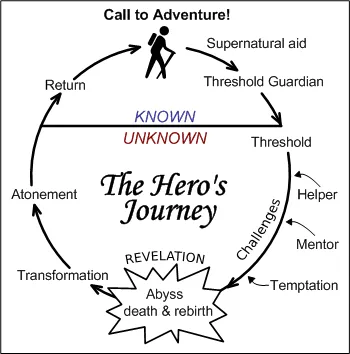
 Next Chapter