I’m breaking from my recent rhythm of ranting about the new year in hopes that you can answer some questions for me. I’ve been writing this blog for going on twelve (12!) years. In the beginning, most of my readers were folks who knew me and who were following my journey through a recent chronic illness diagnosis and my resulting exit from teacher life. I was writing my way through a major transition and my readers were empathizing and cheering me on. Much has changed since then — while I still write about my journey into a healthier existence, I more often write about my life back in the world of education, about current political issues, or about my inner journey to emotional healing. My readership has changed, too!
WordPress has an app where I track my statistics — how many people view a particular post on a given day, what country each reader is from, and what was the referral source. I will admit to being a bit of a data geek, and recently I have noticed an odd trend. In the past few months, the overall activity on my blog has increased — overall views have more than tripled — and it doesn’t seem to be because my recent content has been more engaging, more inspiring, or more colorful. No. When I look at the stats, it seems the increased viewership is coming (at least partially) from abroad and the engagement is with stuff that was written a year, five years, or even twelve years ago!
Most notably, I’ve seen a surge in views from Singapore! Substantial clicks are also originating in India, Germany, and China! This information has me over here scratching my head.
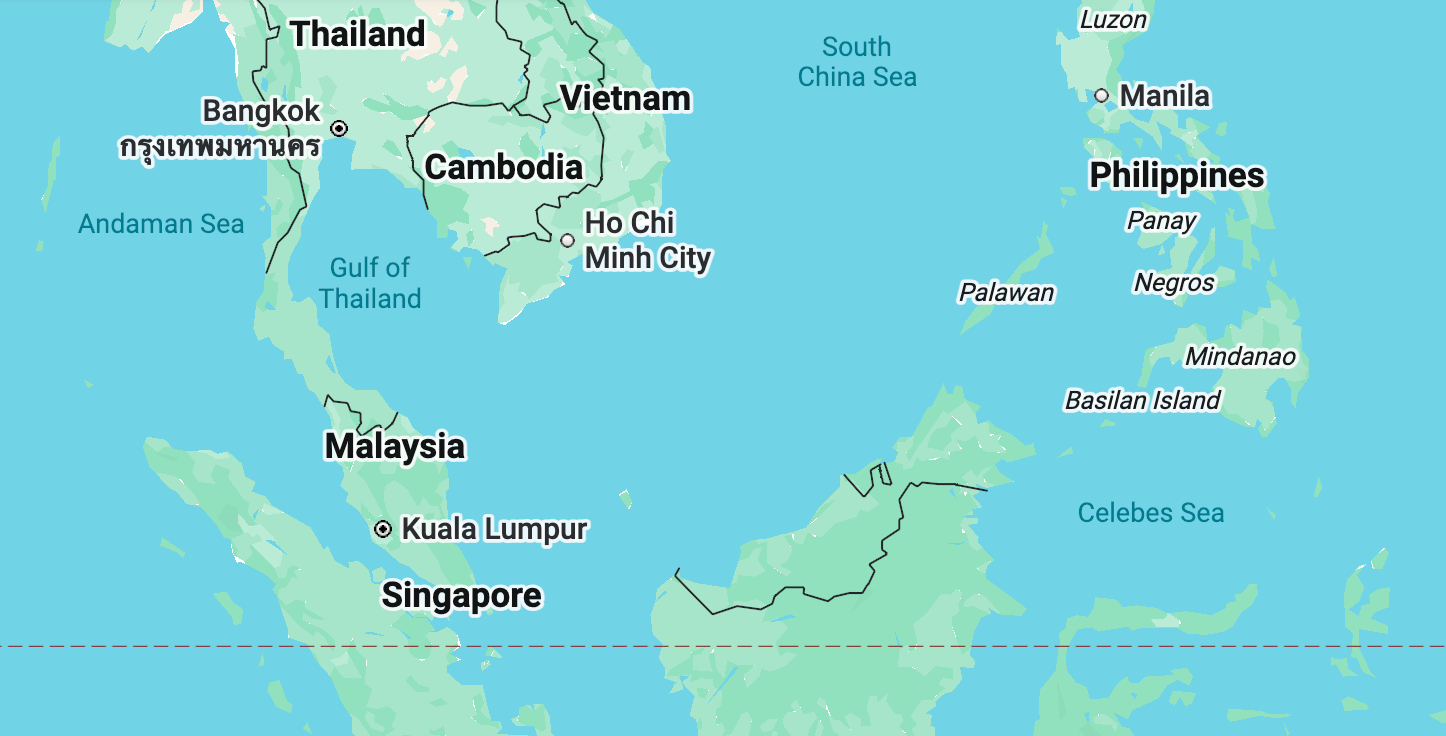
In full transparency, I can locate Germany, India, and China quite easily on a map, but while I’ve heard of Singapore, I definitely needed to go to Google to learn that it’s an island nation off the south of the Malay peninsula (home to Thailand., Cambodia, and Vietnam). While its inhabitants are Chinese, Malay, and Indian, one of its official languages is indeed English, so some folks there can easily read this blog, but why, reader, why would you want to?
Where is Singapore?
What does this middle aged white woman from the United States have to say to you? And, frankly, to those of you from India, Germany, the United Kingdom, and other places around the world? What is resonating? I’m dying to know!
The statistics tell me you are reading those early posts about chronic illness but also posts from the Covid era; about racism but also about minimalism. It looks like you’re interested in my teaching but also my exploration of emotions. Even my readers from the US right now seem less interested in what I’m currently writing and more in the archives.
I’d like to open this up for discussion. Would you be willing to engage with me?
I met with a long-time friend over the weekend for coffee. We’ve known each other most of our lives, but we’ve recently been reconnecting. We talked and talked for a while, as you do when you are catching up. I gave her my “latest” then said, “I think that’s all I have. What’s going on with you?” And, being asked, that dear friend trusted me with part of her story. And, in her sharing, in my sharing, we found areas of connection, of commonality, of shared experience.
So, I’m asking you — where are you from? what’s going on with you? where do you find connection with me? Maybe your responses will lead to a further conversation. I hope so! I know I have something to learn from you!
To share, you could use the comment feature on Word Press, or you could follow this blog on Facebook and comment there. Let’s see what happens, shall we? Maybe someday I’ll even travel to Singapore!
Whether or not you decide to share, thank you for taking the time to engage with my writing.
Every fall, teachers have to teach students how to enter their classrooms, how to walk down the hallways, and how to raise their hands before speaking in a group setting.
Students, of course, have been taught before how to gather supplies, find their desks, and wait for instructions, but after a long summer of loosened expectations, a short weekend at home, or even just transitioning from one classroom to another, they often need explicit directions in order function in ways that support classroom learning.
They need a review.
Teachers need to relearn every fall, too. Administrators spend much of the first few weeks re-establishing norms like arrival times (teachers must be in their classrooms well before the students), duty stations (every teacher at their doorway during transitions), and procedural expectations (no bathroom passes during the first and last 10 minutes of class).
Teachers know these norms, of course; they haven’t changed since last year, and even if you switched schools, many routines are consistent from building to building. Nevertheless, teachers, too, have had loosened expectations over the summer, have checked out over the weekend, or are simply exhausted and have momentarily “lost track” of the ways we do things around here.
Teachers, too, need a review.
Folks outside of school need to be reminded of the rules, too.. For example, even though we’ve been knowing the speed limit is 65 miles per hour, even though we got a ticket for going 78 last February, even though we had to sit through an online driving course, don’t we find ourselves edging back up to 78? And even though we promised our dental hygienist that we would brush two times a day and floss daily, don’t we find ourselves skipping the floss or (gasp) the brushing from time to time?
I don’t think we [or most teachers or students] are deliberately trying to break the rules or walk a dangerous path. No, I think we are just living in the moment and not considering the impact of our actions on ourselves and others.
My students don’t consider what happens when they walk into my classroom five minutes late announcing, “What up, Rathje?” after the rest of the class has already settled in to our daily routine. They don’t see that they draw every eye away from learning and that they have initiated a series of steps that I wasn’t planning on — first giving them a consequence, then re-establishing the momentum of the class. No, they were merely chatting with a friend in the hallway, trying to grab a last minute drink, or possibly trying to avoid coming to class for as long as possible. They weren’t thinking that they were missing on the first few minutes of learning or stealing a couple of minutes from the teacher and the rest of the class; they thought they were hanging on to a few more minutes for themselves.
Likewise, teachers are not intending to create an unsafe environment when they arrive five minutes past their report time, finish entering grades instead of moving to their threshold during a transition, or allow a student to go to the bathroom five minutes after the hallways have cleared and classes have begun. No, they aren’t thinking of that impact. They are thinking, Surely five minutes is no big deal, or What difference does it make if I stand at my doorway? or But the kid really had to go! But the impact of any one of those decisions could be that students are left unsupervised for just a minute or even five minutes, and without supervision, our students might do something without considering the consequences — shove a friend, initiate a fight, or slip away undetected.
This is why rules and norms exist — to keep everyone safe, to maximize learning time, to create a culture in which people can thrive.
We’ve all got our own routines for similar reasons. I, for example, as you may have read about a thousand times in this blog, have many routines to keep my inflammation in check so that I can continue to be involved in education. The litany includes daily yoga, walking, writing, mental health therapy, physical therapy, Hellerwork massage, acupuncture, a diet that excludes gluten and dairy, intentional rest, and a variety of other strategies. When I follow my routine, I stay safe; in fact, I thrive. Recently, after our teachers had returned to the building and I was leading sessions, helping prepare the building, meeting with teachers, and preparing my own lessons, I remarked to my husband, “I am amazed at what this body is letting me do!” And, I truly was! I had been able to navigate long days and stressful situations including what is the most challenging for me — last minute changes of plans — with minimal stress or impact on my body.
So, I just kept chugging! I was living my best life, oblivious to the potential impact on me or anyone else.
Until last Tuesday afternoon around 5:15pm when I was sitting in a meeting at the end of the day. I’d been at the school since 7:30am — had greeted students as they had entered the building, had read and answered email, had observed two teachers, and had sat through two classes with my seniors who were visited by a college rep. I had helped supervise dismissal and gotten students on their busses and then reported to a meeting with the other leaders in our building. Over an hour into the meeting, I felt something weird in my left eye.
Huh. I thought. What’s that? It was like I had never had ocular herpes, iritis, or episcleritis before. I didn’t think anything of it. That’s a weird sensation, I thought. Probably something with my contacts.
The next morning, around 5:30am, as I was doing my morning writing, I thought, Oh, my eye is still bothering me,. Then, Oh, no! And I ran to the bathroom to look in the mirror. No signs of pink eye — wait, is this an autoimmune response?
Now, I am happy to report that five days later I am still not in a full-blown flare, but let me tell you, as one who has had several full-blown flares, that once I realized that this was a warning sign, I began taking steps.
Step one: Wear glasses. Vanity be damned.
Step two: Bathe the eye in sterile tears at least hourly. I was scheduled to go on a field trip that morning, so I scrounged around the house for every vial of sterile tears I could find. [Picture me on a college campus with 35 teens trying to find a place to discreetly administer eye drops.]
Step three: take Motrin. 800mg every 8 hours.
On that first day, these steps seemed to do the trick, so I got comfortable and ended up staying at the building until almost 5:30 again. It wasn’t until my phone reminded me that I was supposed to be in an online counseling session at 5:15 that I started planning my exit strategy, removing myself from a meeting, packing my things, and texting my therapist to tell her I would have to meet her via phone call.
I climbed in my car, got on the phone, took note of the growing pressure in my eye and made my confession: I am doing too much, pushing too hard, and my body is waving a warning flag.
And in her kindest way possible, she said, as she’s said many times before: What are you able to do to create some space so that you will be able to sustain this position?
I know all the things. I know to do all the things. I just get so excited about the possibilities of what we are doing that I start running at full speed forgetting that this is a marathon and not a sprint. I’ve gotta pace myself, plan my nourishment, utilize my support team, and visit the aid station.
I needed my therapist to point me to the review.
We are three weeks into school, and I find myself standing at my classroom door telling my students, “Good afternoon, grab your notebook and laptop.; get logged in, and…
They are beginning to interrupt me, “We got it, Mrs. Rathje. We’re already there.”
“Excellent,” I say, “that’s excellent.”
They are remembering what they need to do, and perhaps — for now — so am I.
if you listen to correction, you grow in understanding Proverbs 15:32
I went back to work this past week after what was a very unusual summer — a summer that started with a week of dish washing in the desert of Arizona, transitioned to supporting some of our parents through their health crises, included my 40th high school class reunion, and ended with me transitioning into a new position at my school.
It was such an unusual summer that my suitcase stayed in some state of “packed” for the entirety of June and July, our garden was given over to monstrous intertwined vines of squash and cantaloupe bordered by overgrown rhubarb and zucchini, and I was rarely able to move my writing from my morning pages– scribbles of to-dos and emotion — to anything resembling a blog. My regular rhythms were disrupted.
It probably needed to happen — this season of go with the flow that included so many trips up and down the state of Michigan — which is breathtakingly beautiful in the summer — lazy hours on the beach, playtime with our granddaughters, laughter with former classmates, dozens of phone calls with parents and siblings, and a looser hold on all the anchors I’ve been gripping for years in my physical recovery — regimented bed times, a consistent morning routine, strict dietary guidelines, and a deep commitment to not only writing every day but also posting every week.
I think I needed this summer’s less-regimented experience to see that a looser grip is ok. I can relax a little bit. If I generally follow the routines that I have found work best to keep my inflammation and pain at bay, I can veer off that path from time to time and be fine. I’ve been a little afraid of that since I’ve been dealing with autoimmunity — afraid that if I don’t do everything correctly, I’ll end up in a flare. It’s a valid fear, because that sometimes happens (and it did happen a couple of times this summer), but holding too tightly to systems and regimens can also cause the anxiety that might lead to a flare. Maybe, I’m learning, taking a breath and veering off the path for a moment can be ok.
Because I veered off the path, I had countless hours with my mother as she cleaned, organized, and prepared her home for my stepfather’s return from an extended hospital stay. I had the opportunity — many times — to sit in my stepfather’s hospital room — witnessing his vulnerability, providing some consistent communication (even if I got on his nerves a bit), and watching him become someone I didn’t recognize, and then, someone that I did. I had time with my in-laws who are also navigating difficult waters — joking a little with my father-in-law and sharing some private moments with my mother-in-law. We enjoyed a few precious days with our granddaughters, feeding alpacas and goats, walking to playgrounds, watching movies, and reading stories until we heard, “I’m so tired, can we go to bed now.” Finally, my husband and I enjoyed four quiet days away — alone, just the two of us — to explore nature, breathe clean air, and celebrate the miracle of thirty-four years of marriage.
I didn’t get every weed out of the garden. I didn’t, as I’d hoped, dive back into The Artist’s Way, and I didn’t meet my writing goals, but I logged so many memories that I will be carrying with me as I head into the school year.
This summer was all about remaining flexible — going with the flow, changing plans at the last minute, missing a day or two of yoga, living without a decent cup of tea once in a while, staying up a little later, getting up a little earlier, and being mostly ok.
And, when I haven’t been ok, I’ve used the tools I’ve learned over the last ten years to recover — epsom salt baths, lots of water, ice packs, Motrin, and rest.
I know the value of staying on the path, I’m learning the richness of wandering away from time to time, and I know the potential outcomes of both ways.
I’m mostly back on the straight and narrow; I need to be as I learn my new role at school — more on that next time.
After writing White Flag Warning! earlier this week, I was scrolling through some old posts when I saw this one from early 2016 that reminded me how far I have come in my health journey. Where now I might end up on the couch once every few months, I used to end up there almost daily. The reason why I am doing so much better is exactly what I mentioned on Monday — my life style routines which include not only dietary choices and exercise and regular visits to a variety of practitioners but also regular attention to how much battery life I have and what kinds of things help me recharge.
In 2003, Christine Miserandino explained chronic illness to a friend in terms that are now widely referred to as “The Spoon Theory”, see it here. Since that time, people like me, who have chronic illness, have been thankful to have a way to more accurately describe what it feels like to be totally depleted, or “out of spoons”.
We were away this past weekend at a basketball tournament in Chicago, and, having used all of my spoons, I shared the analogy with my husband. I told the story, as best I could remember it, and he said, “Hm. I like the analogy. I get how spoons can carry, or hold, energy.” Yesterday I was talking with my daughter after almost two days of trying to replenish my store of spoons. She was trying to understand how a whirlwind trip to Chicago took me out of commission for most of two days. My husband prompted me to share the spoon theory with her. I did. She said, “so can you store up spoons in advance?” I replied, “No. You can borrow some from the future, but you’ve got to pay them back. That’s what I’m doing now.”
So, if you got this far without clicking on the link above, you are probably scratching your head and trying to decide whether or not you are going to continue reading this cryptic post or if you are just going to close the window. If you clicked and saw the page-long “spoon theory” you might have said, “Well, I’m not gonna read all that and this blog post.” I know. That’s why in the past three or four years I have only shared the spoon theory a half a dozen times. It’s an effective analogy, yes. But it takes some explaining.
So, I was going through my motions this morning thinking to myself, “is there a more accessible way to convey how I am feeling?” I mean, people with chronic invisible illness find themselves in this position rather often. People look at us and think, “She looks alright to me!” They don’t understand when we “can’t” stay to watch the second round of games in the tournament because we have to go sleep. They don’t understand why we always make plans “tentatively” because we might feel like crap on that day. They wonder why we didn’t make it to Bible study in the morning, but we were able to teach a class in the afternoon.
Maybe we could think of it in terms of limited battery life. We all carry devices around with us wherever we go, don’t we? They all rely on batteries. To make sure that our devices are functional all day long, we plug them in every night at our bedside. Some of us have chargers in our cars. In many public places — airports, malls, libraries –we can now find charging stations. We push our devices to their limits. They get depleted; we have to plug them back in or they will be rendered useless.
Most people have internal “batteries” that can keep them running for twelve to fourteen hours with a minimal recharge sometime during the day. They might be up and out the door before seven, sipping a cuppa joe on the way to work. They might need a brief pause around 10 o’clock and some kind of a lunch break, but then they are good to go for the rest of the day. They might even have enough battery life left to get dinner with friends or attend a play or a concert in the evening. In fact, they can keep up this pace day after day and even get away on the weekend occasionally without fully depleting their battery life.
Not me. Not any of us with chronic illness. Our batteries have been rendered less effective. I might have up to eight hours of battery life per day. If I start off at 7 am and don’t take a break, I will almost certainly be done and in my pajamas at 3 pm. So, I don’t usually function that way. I use 20% of my battery, then I sit down and try to ‘re-charge’. I may get 5-10% back if I sit down, put my feet up, have a cup of tea, or close my eyes. In that way, I s-t-r-e-t-c-h eight hours of battery life into twelve to fourteen hours of wakefulness, if not usefulness.
Occasionally, I throw all caution to the wind and decide that I am going to take a chance, push my battery to the limits, attend a basketball tournament out of state, and suffer the consequences. That’s what I did this last weekend. I had already had a pretty busy week — I had tutored twelve hours, taught the first two classes of the semester, arranged for doggy care, done laundry, tidied the house, purchased new jeans, and packed — before we woke at 5:30am to prepare for a journey to Chicago that would begin at 7am. We arrived in Chicago around 11am CST, found the gym, got some lunch, then watched two basketball games. Of course we “sat” at the top of the student section, so, because they stood for the whole two games, we stood for the whole two games. All of this was a physical drain on my batteries. And then there was the emotional drain. All emotion drains battery life — positive and negative. While at this tournament, I saw many former students and some former colleagues. There was so much hugging and smiling! I loved it, but it drained me. By the time we headed back to the hotel at 5pm, I was done. I put on my pajamas, crawled in bed, and began to read student papers. (Yes, I realize that I said I was done and then I continued to do more — I’m telling you, I threw caution to the wind!) My husband and the others went out to get food. When he got back, I had barely enough energy to chew. I ate my dinner, then fell asleep before one episode of “Modern Family” could play out.
Then I slept for TWELVE HOURS.
We got up at 8:30am, grabbed a quick breakfast and headed back to the gym for more reunions, more hugging, more standing, more yelling, and more cheering — four games worth! Then, at 9:30pm, we started the trek back to Ann Arbor. Since my husband was driving the van following two charter busses full of students, I wanted to stay awake to keep him awake and alert. So, we drank caffeine at 10pm and chugged along. It was like I had purchased an external battery pack. I was wide awake on purpose. We blared music and sang. We talked and laughed. Finally, at 2:15am, we arrived home. Of course I couldn’t go straight to sleep. I had to run out that external battery, which was, of course, disposable, not renewable.
I found that out halfway through my sleep, if you can call it that. Having depleted all of my own battery, and the external battery, my body didn’t even have enough energy to sleep. It started to scream from the inside out — a burning sensation filled my gut, my joints ached. No position was comfortable. I thought I would have to run to the bathroom to be sick.
Have you ever run your phone battery down so low that the phone actually shuts off? When you first plug it in, you get that image of a battery with a thin red line showing the depravity of life you have allowed your phone to deplete to? Guys, I had a screaming red line.
For all of Sunday I whimpered, whined, and convalesced while my husband, dear man that he is, carried my charge cord around and kept plugging it in — he brought me scrambled eggs and toast, which at first I couldn’t even eat; he ran me an epsom salt bath, which I gladly soaked in for an hour; he brought me tea, and water, and ice; he watched a movie with me; he endured an emotional meltdown; he encouraged me to go to bed at 7:30pm.
Then I slept for TWELVE HOURS. AGAIN.
It’s now Tuesday morning, and I’m pretty sure my battery is at about 70%. I’m gonna go amble off to the gym, hobble onto the treadmill for a few minutes, then sit in the jacuzzi. After that ‘workout’, I will meet with three students and prepare for tomorrow’s class. I hope I still have 15-20% left at 7:30pm so that I can sit in on a board meeting conference call.
But if not, I’ll just have to crawl into bed and sleep some more. That’s the price of throwing caution to the wind when you have limited battery life.
He gives strength to the weary and increases the power of the weak. Isaiah 40:29
That’s right — my body started waving a white flag. Not insistently, not wailing in pain or gasping for breath, but nevertheless, waving that flag. I was leaving one parent and driving to the next before a planned holiday celebration with another relative when I first felt a tapping on my shoulder, heard a subtle clearing of the throat, and then turned to see it — the small square of white moving back and forth in my periphery.
I waved it away — I had one more stop before I arrived at fun, and I was determined to get there.
That “stop” was not glorious — it involved some demanding (from me), some literal bile (from the patient), some apologizing (from me), and some explaining (from the medical personnel).
Sigh.
I stayed until the situation was resolved then climbed back into my vehicle which has seen a lot more of me lately than is typical. “Come on, Tina Turner,” I said to my smoking hot Cayenne Chevy Trax, “let’s find some coffee and get to the fun.”
Now, some of you who have been following along just felt an involuntary raise of your eyebrow. Coffee? you ask. I thought you don’t drink coffee because it interferes with your homeopathic medicines.
Sssshhh! I’m enjoying my delicious oat milk latte over here!
Sure, I should’ve been chugging more water, doing some breathing exercises, and finding other ways to offload some cortisol, but wouldn’t you prefer an overly priced coffee beverage, too?
I have been slipping away from my regimented life just a bit as of late. Sure, I had intentions of getting back on my Artist’s Way journey — reading and writing every morning and taking artist dates. Yes, it’s summer and I have a break from my school workload and the freedom to implement routines. But, starting the summer off with a trip followed by multiple shorter trips to my parents’ has probably created a little space in which I could choose routine or impulsivity.
And, when left to my own devices, I am probably going to be impulsive. When my sister-in-law texted to see if we wanted to join them for dinner at the local Mexican place, my mother and I said “Of course!” When my brothers ordered oversized Margaritas, I did too! When I drove past a Starbucks, I pulled right in and got my fix! These things might seem small — a margarita here, a cup of coffee there, but when combined with the added stress of family illness, and some inconsistent sleep patterns, a person like me is probably going to get a few symptoms. And, typically when I get a symptom or two, the best way to resolve it is to head to the couch.
I’ve written a lot about my time on the couch as a person who lives with autoimmune disease, but I imagine every body has its limit and is prone to admit surrender if pushed too far.
We do demand a lot. We expect our bodies to be able to work, exercise, shop, garden, socialize, support our family and friends, and still put a meal on the table most nights. And, our bodies, amazing as they are, typically step up to the task and deliver — day after day after day. They can handle stressors such as difficult seasons at work, typical family crises, and other breaks in routine without much difficulty, but even for healthy bodies, stressors can accumulate and force us to take rest.
But when I initially saw that white flag, I was not interested in rest. I wanted to have some fun. So, clutching my steaming drink, I finished my drive to the destination, walked in the house, and settled in with my brother- and sister-in-law. We’d had this celebration scheduled for a while, and I had been looking forward to it. We chatted and caught up, we ate delicious (as usual) food, we played a game, we drank wine, we stayed up late, and I woke up in the morning with a big white flag waving over my bed.
“Fine,” I said. “Gimme a minute.”
I crawled out of bed, did a little yoga, grabbed my phone and headed out on a short walk. I checked in with my parents, then, dialed the number of my primary care physician. I gave the symptoms and the person on the other end of the phone said a nurse would call me back.
I glared at the dude with the white flag, “You happy now?”
He receded from my view, and I headed back to fun — coffee tasting, a delicious breakfast, more chatting and laughing, and then back to Tina Turner and another hour in the car.
When I arrived home, I took care of a few responsibilities and was headed out for another walk when my phone rang. It was the nurse asking to review my symptoms. She ordered antibiotics, extra fluids, and — of course — rest.
And that’s what I did all weekend.
It is annoying to be sidelined, of course, but it is also a good reminder. I have routines and rules because they keep me feeling well. They keep me healthy and able to manage the everyday demands and — usually — the unexpected stressors that often show up in life.
It’s really not unreasonable to get regular sleep, eat a healthy diet, get a little exercise each day, and avoid the foods and beverages that tend to give you a little trouble. And, for the last many years, I have — with a few diversions off the path — been following a pretty regimented life course in order to stay healthy. When I veer off the path too far, I get a weekend like this to remind me to get back to it.
Now, I’m not saying I’m not gonna occasionally enjoy an oat milk latte — I mean, I found the best one ever midway between my house and my parents’ house –nor am I going to always turn down a margarita — despite the excessive amount of sugar contained therein — but I am going to be mindful of the accumulative effect of these choices, particularly when I am managing more than typical amounts of stress.
That’s the thing, isn’t it? When we are under stress, we want our historical comforts — ice cream, peanut butter and jelly, warm coffee, a drink with friends or family — and they can, ironically, make us feel “cared for”. And really, I’m not at all saying those things are wrong. In fact, during times of stress, we should care for and even treat ourselves. We just have to remember how our body responds to stress and what it needs to stay healthy.
For me that means a lot of routine: water, daily vitamins and supplements, a probiotic, green (and occasional black) tea, a gluten-free/dairy-free diet, daily exercise including yoga and walking, writing, reading, and plenty of rest.
So, I’ve been spending a few days lying around, dabbling in the garden, eating fresh fruit and veggies, drinking a small amount of tea, watching movies and reading books, and my body is recovering. It’s taking a little longer than I’d hoped, but I’ll be ready to roll again pretty soon.
And hopefully, when I get rolling, I’ll stay on course for a while — and my oat milk latte can continue to be a treat.
Shhhh! A girl needs at least one extravagance every now and again.
I’ve just spent the last five days lounging around the house, moving from bed to couch to chair to bed to couch much like a cat thanks to the MLK weekend followed by a few days of below-0 wind chills. I have accomplished very little since last week, and it’s been lovely. It wasn’t always easy for me to be inactive — in fact, it was downright anxiety-inducing. Being busy was a coping strategy, but thanks to a chronic illness, a lot of therapy, and a new way of living, I am going more and more comfortable with being still. Below you’ll find a post from the beginning of my journey, when I had not yet learned to appreciate stillness.
I got my first job when I was 10. No, it wasn’t it in sweatshop. My neighbor called my mother and asked if I could babysit her two sons while she and her husband went out. They would be home by midnight. Well, they weren’t home by midnight. They were gone for seven hours and, at the extravagant rate of $0.50 per hour, I made a whopping $3.50. It’s true. I continued to babysit for that family and then practically every family in my small town of 4,000 until I went to college.
My first tax-paying job was at a small dress shop on the main street of my home town. I vacuumed, opened shipments, attached price tags, washed windows, etc. This manual labor earned me the hourly wage of $2.00. I worked Monday through Friday after school from 3:30-5:00. Do the math — I was really pulling in the dough.
When I got my driver’s license I could venture to the neighboring town where I became employed at McDonald’s. I climbed that ladder from mop-girl to fry-girl to order-girl to drive-thru-girl in no time flat.
In my senior year of high school I got a second job opening and closing at a public school day care center. I arrived at 6:00 am to let the little critters in, went to school mid-morning, then returned after school to wave goodbye and close the place down. Somehow I managed to work there, keep my job at McDonald’s, and graduate!
When I went off to college I worked several places — day care center, cafeteria, and development office. Since then I have been a camp counselor, residential care staff, teacher, freelance writer, census worker (seriously), and who knows what else.
I think you get the point. I have, almost always, had a job. I took a brief sabbatical when my kids were babies. I was blessed to stay home with them for seven years, but even then I was always busy baking, cleaning, homeschooling (seriously), leading Bible studies for women and teens, writing chancel dramas and worship songs, and (wait for it) becoming a Mary Kay consultant.
For the third day in a row I am going to say, I am not accustomed to being still. Ten years ago we moved to St. Louis so that my husband could go to the Seminary. For the next four years I was the primary wage earner in the family. By the time he became a pastor, I had become not only a teacher and department chair, but also the curriculum coordinator and member of the administrative team.
It is in my DNA to be doing. I see opportunities and know I can meet them. I see gaps and I know I can fill them. I see problems and I know I can fix them. So when my husband took the job in Ann Arbor, I immediately started looking for what I could do! (See yesterday’s post to more effectively roll your eyes at this.) I found several options. I won’t get into all of those now, because I am trying to be still! (I told you this was going to be a challenge for me.)
The words from this morning’s Bible reading were written just for me, “Therefore I tell you, do not be anxious about your life, what you will eat or what you will drink, or about your body, what you will put on, [or dear Kristin, what you will do]…Look at the birds of the air: they neither sow nor reap nor gather into barns [they aren’t busy doing, they are being], and yet your heavenly Father feeds them. Are you not of more value than they? And which of you by being anxious can add a single hour to his span of life?…But seek first the kingdom of God and his righteousness and all these things will be added to you.” (Matthew 6: 25ff)
Doesn’t get much clearer than that, does it? I am a child of God. That is my identify. My identity does not come from my work — from what I do. It comes from whose I am. I continue my mantra. I am a human, being HIs, trusting that He will feed me — literally and metaphorically. I will not be anxious. I will just be.
When I wrote The Battle is On in August of 2014, I shared what I understood about autoimmune disease. I was new to the game (just a year or so in), and I was relying mostly on what doctors were telling me and what I was reading online. I wouldn’t say that I was wrong, but I would say that my understanding of autoimmune disease, from my perspective, based on my experience, has shifted greatly since that time. The longer I live in this body, the more I learn. In fact, my thoughts on the subject shifted again just yesterday.
Let me see if I can give you a picture of what I mean
I am confident that somewhere in the pages of this blog I have at least suggested that the current state of my body is a function not only of heredity and disease but also of the ways I have lived my life in these past fifty-seven years. Whether it came from my paternal grandmother, who had rheumatoid arthritis or from my mother, who has suffered with myriad maladies including persistent issues with her right hip (as do several other members of the family), I somehow inherited (and then passed on) the hla b27 genetic marker that is associated with spondyloarthritis which includes psoriatic arthritis, Sacroiliitis, and other autoimmune disorders.
Ok, so I had the genetic marker, but I also began a pattern of persistent emotional distress in my childhood and adolescence; such a pattern can heighten the likelihood that one develops autoimmune disease. Now, I wouldn’t say that I had a terrible childhood or that my parents subjected me to any kind of trauma. However, their divorce and the subsequent separation from my father was, to me, devastating. I did not know how to process the emotions I was feeling, and my adolescence was characterized by what I would now describe as raw, untended to emotion that was trying to find comfort or at least an outlet.
Over the years, I developed many strategies for dealing with that distress — lashing out, academic achievement, an eating disorder, and finally, a survival strategy emerged — my butt-kicking, name-taking persona. This girl set her jaw, clenched her fists, and got shit done. If emotional pain surfaced, she processed it through anger and aggression — at herself, at her family, at anyone who happened to get into her path. If things were moving smoothly, she was fine — reliable, productive, and focused — but toss in the unexpected — a change of plans, an alternate view, a noncompliant child or student — and she resorted to her soldier stance, bracing her body, lashing out with her words, and forcing everyone back in line.
It was a strategy that carried me through many years, but it led me to resist compassion, perspective, empathy — not only was I unlikely to give those things to others, I was less likely to receive them for myself. Now, let me say here that every soldier lets her guard down from time to time, and moments of vulnerability crept in — times when I held my children as they cried, when I recognized defeat in a student, when I allowed myself to share my pain with others — but those moments were the exception, I am afraid, and not as much the rule.
And while this soldiering lifestyle was an “effective” strategy, every choice has unintended consequences. I wish I was scientific enough to explain how my butt-kicking, name-taking persona required my body to produce adrenaline and cortisol and how, over time, the abuse of these hormones increased the likelihood that I would experience autoimmune disease, but I have an education degree, not a medical degree.
Suffice it to say, that what I have learned over the past 10 years, is that, at least in my body, the most effective strategies for reducing my experience of autoimmune symptoms are not medical, but they are a re-learning of how to manage my emotions, of how to live my life in a way that reduces or mitigates the adrenaline and cortisol in my body.
If you have followed my blog, you already know that pharmaceuticals were not the answer for me, although I tried many over the course of 3-5 years at great expense and with significant side effects. In fact, the only pharmaceutical I take now is one that I must take to prevent a flare of the ocular herpes I acquired while on a course of steroids. Sigh.
Because I was non-responsive to pharmaceutical interventions, all doctors except my ophthalmologist dismissed me as “not having autoimmune disease”. [For the record, my ophthalmologist shakes his head at this when he sees the evidence of autoimmunity in my eyes.] This dismissal, though, was a blessing, because it led me to explore other options for improving my health — options like submersing myself in a 95 degree salt-water therapy pool (which I highly recommend for those of you who are in the midst of a flare), practices like yoga and walking that allow my body to de-stress, habits like eating unprocessed foods that are free from gluten and dairy which often trigger symptoms in my body, and routines like seeing a therapist to learn how to more effectively deal with emotions.
And while I didn’t start this blog for the purpose of improving my health, it has had the unintended consequence of giving me a space to process so many of those emotions that little-girl-me felt, that soldier-me suppressed, that mom-me didn’t feel safe exploring. And, in the unearthing of these emotions, in the vulnerability of exposing them not only to whoever wants to read them, but more importantly to myself, I have created the space within my body to breathe.
And you’d be surprised the difference a little breath can make.
I’ve been learning about breathing since I started practicing yoga several years ago. At first I was like, what? we’re gonna just sit here and breathe? I was a former distance runner, if you remember, and I was used to pounding out 4-6 miles on a regular Tuesday, so this sitting still and breathing thing was very foreign. But, I was in a room full of people who were sitting there breathing, so … I breathed. Sitting still. For long periods of time. And, though I was unsure it was doing any good, I had to admit I felt better after yoga. And, I continue to practice yoga almost every morning for that reason.
But yesterday I took this breathing thing to the next level. A friend of mine, Lynnette Rasmussen, an experienced occupational therapist and PIlates instructor, was offering a virtual breathwork class and a handful of friends and I decided we would attend. I expected more relaxation but not much else.
I was surprised by the difference a little breath could make.
Lynnette guided us through an “ancient pranayama practice that uses an active 3 part breath that continues for 25-30 minutes, followed by a 10 minute relaxation” intended to “relax the mind and reach buried emotional or physical blocks and bring them to the surface.”
I was certainly unprepared for what I experienced — at first it was awkward, this weird breathing strategy, but then, once I found the rhythm, it was calming, and more natural, but then when we entered the relaxation — man, it takes great vulnerability to tell you this – I felt healing electricity coming through my hands as they rested on my body. I felt a deep understanding that God alone — not my practices, not pharmaceuticals, not pain clinics, not anything else — has the power to heal me. I rested on a yoga mat on the floor receiving any kind of healing that He had to offer me.
And that is what I have really wanted all my life — to receive the healing that only God can provide — and to accept that He will provide it in His time and in His way — not as I demand and not in a sense that I have to “believe to receive” but just in a way that He will surprise me with.
And over these last years, He has continuously surprised me — by closing medical doors, by tossing me in a warm salt water therapy pool, by showing me that my strength is not in a set jaw and a clenched fist but in vulnerability, by reminding me through a zoom room that He can, He is, and He will heal me day by day by day, sometimes with the simple power of breath.
I am overwhelmed by His grace.
Now to him who is able to do immeasurably more than all we ask or imagine, according to his power that is at work within us, 21 to him be glory in the church and in Christ Jesus throughout all generations, for ever and ever! Amen
** I first wrote this post in August of 2014 — early in my journey with autoimmune disease. I’ve learned a lot since then, but most of this remains true. I may not feel as bold and cocky as I did the day I wrote this post, but chutzpah is still at my core. [You may note, if you read last week’s “vintage blog” that I have tried a new format here – pasting the old content into a new blog post and making just a couple updates. I don’t think I will record these older blogs; I’ll let you imagine what my voice sounded like back then. In some ways I feel like a whole different person now and don’t feel my “today” voice would fit with “vintage” me.]
“Autoimmune diseases affect approximately one in ten individuals, and their burden continues to increase over time at varying rates across individual diseases.” (US Center for Disease Control and Prevention). [Statistic updated 1.11.2024] Among the autoimmune diseases I’ve heard of are rheumatoid arthritis, diabetes, celiac disease, lupus, Sjogren’s syndrome, and the ones that I’ve become more familiar with — psoriasis, psoriatic arthritis, scleritis, and iritis. No one is really sure what causes autoimmune diseases. I have a genetic marker that is often linked with the type of disease that I have. Some people believe the diseases have links to GMOs. The CDC suggests that they may be linked to previous infection.
Whatever the case, autoimmune diseases are a malfunction of the little soldiers in our bodies that fight disease. They are a bit trigger happy, you might say. They attack when there is nothing to attack. They are always running around fighting something in our bodies, even when there is nothing to fight. In my body, they gather around my joints, in my skin, and in my eyes. They gather, they shout, they fire, they fight!
You may have noticed when you are sick, and these little soldiers are fighting their hardest, you have to go to bed and rest. They wear you out! You feel achey all over, you have a fever, a sore throat, you feel blah. That is what autoimmune disease feels like most days.
One way to treat an autoimmune disease is to take immunosuppressants — Enbrel, Humira, Remicade, etc. These drugs tell the little fighting soldiers in your body to “be ‘at ease’, the infection you are imagining is not really an infection. It’s a hallucination, so calm down.” That is all well and good until there is an actual infection. Because the soldiers are ‘at ease’ according to their orders, little enemies can infiltrate the system virtually undetected.
Ladies and gentlemen, I have been infiltrated. Last week, my dear husband had a minor cold — a little sniffle here, a little sneezing there. I felt great. I washed the sheets. I washed my hands. I kept my distance. But, some of those little enemies abandoned him and scurried over to me. They hid for a couple of days, scoping out the opposition. But they could see that my soldiers were inside their tents, under orders to “be at ease”. They decided it was safe to ‘be fruitful and multiply’.
So, I feel a little like I’ve been hit by a truck.
Not to worry. Those enemies underestimated the host body. I am not one to be messed with. I dragged myself out of bed this morning, took some Emergen-C, some Dayquil, drank a kale-hemp-berry-almond-flax-chia smoothie, made some strong black tea, and looked those little buggers in the eyes as though to say, “Come at me.”
I immediately felt a scurrying and fleeing. These little infiltrators now realize that I have had serious disease fighting training in the school of motherhood and the advanced training of teaching in a high school (with juniors — ew). Besides, I have God on my side. I am assured a victory. I am not going to lie down and be beaten. I have taken out my earrings, pulled my hair back, and I am ready.
I bet even you can hear them fleeing.
Though an army besiege me, I will not fear; though war break out against me, even then will I be confident.
It’s been 10 years since I wrote that first post, and since then I’ve written 652 more (653, if you count this one). In the beginning, I wrote almost every day. Having been instructed to be still after years of routine — first teaching, then parenting young children, then graduate school, then teaching and parenting combined — I needed something that would bring order to my day. So in those first months in the little house by the river, I woke every morning, made my tea, and wrote a post before I did anything else.
I think I began blogging because I needed a purpose, something that I could accomplish each day, something that I could produce — a physical representation that I could still do something. I didn’t really know what I was going to write each day, but an instinct — perhaps after years of journaling and teaching others the value of daily writing — pushed me to the keyboard every morning, and this writing became a lifeline.
Some of you began to read perhaps out of curiosity — why would someone daily post about their life? why would a teacher at the height of her career walk away? why were we moving to Michigan after years in Missouri? Some of you have told me that you resonated with the chronicling of my autoimmune disease. You, too, suffered with chronic health issues and my willingness to write about being stuck on the couch or lying on the bathroom floor writhing in pain let you know that you were not alone. Some of you read because you knew me as a child and wondered what I was up to. Some of you are my family and friends (or my husband) and you read out of care, concern, and solidarity.
Whatever the reason you read, the fact that someone — anyone — was reading gave me the encouragement I needed to keep going.
And when I kept going, kept writing, day after day after day, I dug deeper into my interior and discovered things about myself that had long been buried or that simply needed articulation — precious memories from my childhood that revolved around my grandparents and godparents, deep sadness over losses that had never been processed, my ongoing journey with autoimmune disease, my strong feelings about political issues, and probably more than anything my passion for educational equity.
I often tell my students (and my friends and anyone else who will listen) that I (and perhaps you) don’t know what I am thinking or feeling until I see what I have written on the page. Perhaps it is because I have spent a life in motion, constantly doing, producing, going, and moving, that I have pushed my thoughts and, even more so, my feelings deep down inside without taking the time to process them.
Having a health crisis and being forced to stop and be still provided the space in which I could — finally — pull up all those thoughts and feelings and begin to examine them, evaluate them, feel them, grieve them, and in some cases, move on from them.
So I’m sitting here, in my little home with the garden, ten years later, candle burning on my desk, still in my pajamas, reflecting on how far I (we) have come. In over 600 blog posts I’ve moved from debilitating pain and fatigue to manageable symptoms that remind me to move slowly and to routinely pause to take stock. I’ve transitioned from taking daily anti-inflammatory medication and monthly injectable biologics to mostly just daily vitamins and supplements with occasional Motrin added in. I’ve been growing in my ability to write and subsequently speak about my deepest hurts, greatest losses, daily struggles, and strongest passions. And, most tangibly, I’ve gone from my insecure 2014 self that felt like an invalid to my confident 2024 self, which my instructional coach recently described as “effortlessly dope”. (I think that’s the most treasured compliment I’ve ever been given.)
Do I owe it all to the writing? No, I wouldn’t say all, but I would say I wouldn’t be where I am today without the discipline of this blog. My commitment to write regularly and truthfully — sometimes painfully truthfully — has been not only the evidence of the miraculous growth and healing I have experienced in this next chapter, but also a primary instrument in that healing.
I don’t think I can unpack what I mean by that in one blog post, so the assignment I’m giving myself this year is to share a “vintage” post each Thursday and a new post most Mondays. The objective is to deeply reflect on the power of writing, of routine, of discipline, of transparency, of community, and of vulnerability. I can’t predict where this assignment will take me — I won’t know what happens until I see it on the page, but I invite you to come along with me.
If you dare, I challenge you to write along — you might just open a blank page and write for 5 minutes each morning to start. You might find that’s not enough. You might find it’s too much. But if you’ve read my blog for any amount of time, I hope you will see the possibility for transformation that might happen if you are willing to take a chance.
I’d love to hear from you — what you are finding out about yourself, what are you unearthing, what is happening for you as you write. It doesn’t have to be for the public eye as I am allowing here. Writing can be magical even if it is for your eyes only.
Whatever you choose — reading along on my journey, writing along with me, or doing something altogether different, I pray God’s blessing upon you — may 2024 be a year of growth, of healing, of transformation. May it be filled with love, with joy, and with a renewed sense of hope.
If you don’t believe that God can restore what is all but lost, let my blog be a testament that nothing is beyond His ability.
Behold, I am going to do something new, Now it will spring up; Will you not be aware of it? I will even make a roadway in the wilderness, Rivers in the desert.
We’re two weeks away from Christmas Break, and I’m having my seniors write a personal essay. This essay could be used for a variety of purposes — to submit with a college application, to enter a scholarship contest, or simply to explore one’s own identity.
The students read and analyze several models, we practice using sensory language, and then we prepare to write. The first step is to choose from a variety of prompts such as “describe a time when you overcame a challenge” or “tell us about a time you stepped up as a leader”. Then, I direct them to identify a trait they want their reader to recognize in them. Are they hardworking? resilient? creative?
The big lift comes next. Students must respond to the prompt they have chosen while also displaying the strength they have selected by describing a scene — a snapshot or highlight tape — from their lives in which they have embodied that characteristic.
As has been my practice for going on twenty years, I write alongside my students, modeling my process for them in real time so that a) they can see an “expert” at work, b) they can see that even “experts” struggle and fumble, and c) so that they can acknowledge that even for “experts” the writing process is messy, laborious, and non-linear.
This past week, I was doing that modeling when I wrote about the time almost 10 (TEN!) years ago when I left my classroom in St. Louis convinced that I would likely never teach — at least not in a high school — again. I was reading this highlight tape to my students, describing how I tearfully carried a milk crate out of my room, and they looked at me with blank faces. What was I talking about that I might never teach again? I’m standing right in front of them — teaching! — and I’ve been in this classroom since they were freshmen. Was this story supposed to be fiction?
And, you know, sometimes I start to believe it is — maybe I wasn’t really that sick. Maybe I didn’t need to step away from my work. Maybe I don’t have symptoms right now. Maybe I’ve made it all up.
I was feeling that way last night. It was my youngest daughter’s and my youngest granddaughter’s birthday yesterday. I was on the phone wishing my daughter a happy birthday, struggling to sustain a conversation after 5pm on a Friday, “Happy birthday! What did you do today?” She shared how she had spent her day and asked what we were up to this weekend. I explained that her father had travelled to Cincinnati for her niece’s birthday, but that I didn’t have the gas in the tank to go.
“Oh? What do you mean?”
“I just find that in December I have very little margin to do something like a weekend trip.”
“Oh, why? Is it because it is the end of the semester and you have a lot of papers to grade?”
“Well,” I struggled to articulate the thing I have been trying to articulate for going on 10 years — that it doesn’t matter if I have a pile of papers in front of me or not, I am just on E, and E won’t get me to Cincinnati.
The same thing happened when I was FaceTime-ing with my six year old granddaughter. My husband called from Cincinnati to let me watch her open her gifts. She was sitting in her Grogu chair grinning and talking as she tore the paper. The rest of her grandparents, other family members, and some friends would be there soon for a party with pizza, butterfly decorations, and, of course, a purple cake. I watched, smiling, but internally I was interrogating myself, “Seriously, you couldn’t find it in you to go to Cincinnati for one weekend? It’s your granddaughter’s birthday!”
I do this sometimes, I question whether I really need the weekend at home, or if I am just being selfish.
I logically know the answer — even without 4 hours in the car, a change in routine, sleeping in a different bed, and the drain of social interactions, I woke up this morning with a splitting headache and an electric/IcyHot heat in all of my joints from my toes to my neck. During this time of year, it takes a whole weekend to recover from a week in the classroom. I will spend a couple hours this morning writing, then I will go for a long walk followed by an epsom salt bath. Hours might be spent reading a novel or watching The Crown, and I’ll have to somehow fit in about an hour of prep time so that I’m ready to teach my students on Monday. Sunday is more rest — Zoom time with our small group followed by worship and another long walk, followed by more writing and resting, and prepping for the start of the week.
When I interrupt that rhythm, like I did over Thanksgiving, I walk into Monday less resilient than I need to be — I am more likely to be reactive, I am less likely to be on my A game. I will likely miss things — like a small cue that someone is angry and tempted to fight, that another is sad and needs someone to listen, or that my room is too hot or too cold or that someone in my room didn’t get breakfast or lunch. I will be more likely to get an inflammatory issue like pain behind my eye or a headache or extreme fatigue that has me wondering how I drove myself home.
While I can occasionally take the risk and do something social on the weekend, it is really best if I stick to the routine which means saying no to fun opportunities like a whirlwind trip to Cincinnati.
You might ask if I should continue teaching if it costs me weekends with a granddaughter or my parents or our friends? The answer is still yes, absolutely yes.
For one thing, I will see that granddaughter and her sister in three weeks. That doesn’t make up for missing her birthday, of course, but I do get time with both of our grand girls on a fairly regular basis. We FaceTime and send letters, and, honestly, their lives are busy, too. I miss them, but I’m not sure I would see them more if I wasn’t teaching.
And, the reason I continue in the role I have now is because it gives me life. Leaving my classroom in June of 2014 was only slightly less than devastating because my autoimmune disease is absolutely real — I was flaring so badly in that season that I could barely function. I would have never left the classroom if there was any other option.
The six months that I was unemployed and the slow crawl back was a very difficult time. In my mind I was sick, compromised, washed-up, old, past my prime. As I regained my health, as I gradually built more teaching back into my life, I regained confidence and a sense of purpose.
I am not a perfect teacher — I don’t always have the most engaging activities or the cutest classroom decor. I sometimes lose my sense of humor, overuse sarcasm, and fail to give students the one-on-one attention they deserve. Despite all that, I am my best self when I am connected to education, for now that means in the classroom, particularly a high school classroom, especially in a context where I can call out injustice and work to bring a more equitable experience for my students.
When I get to spend my days being the best version of myself, I get more moments of sharing that best version with the people that I love — my husband, my children, and my grandchildren. For a few years there, I think that much of what they got from me was shrouded in self-doubt, self-pity, and an overwhelming sense that I was past my prime.
On Monday, I’ll share my second highlight tape with my seniors, the scene where I carry my items back into the classroom I work in now. I’ll share a glimpse at the slow crawl back, but I’ll focus on the triumphant return. Then I will prod, cajole, and cheer them as they write their own highlight tapes. I’ll nudge them to add more sensory detail, I’ll celebrate their risk-taking, and I’ll gently introduce MLA format and model Standard Academic English norms. I’ll do my best to help them finish strong.
Then, near the end of December, I’ll take a break to catch my breath, and then I’ll pack my bag and head to the land of grand girls where we’ll snuggle, do crafts, eat yummy foods, watch movies, and giggle. I’ll tell them how proud I am when they read hard words and ask good questions — they’ll get the imperfectly best version of me because that is what I am right now.



 Next Chapter